
5 coverage gaps in a typical hotel policy
A typical hotel or motel policy has five common gaps: little or nothing for guests' belongings, a lost-income period shorter than a real rebuild, a building value that may be out of date, a fire-safety clause that can void fire cover if a sprinkler or alarm is out of service, and no cover for a data breach at the front desk. Each is fixed by finding one line in your policy and asking for a change.
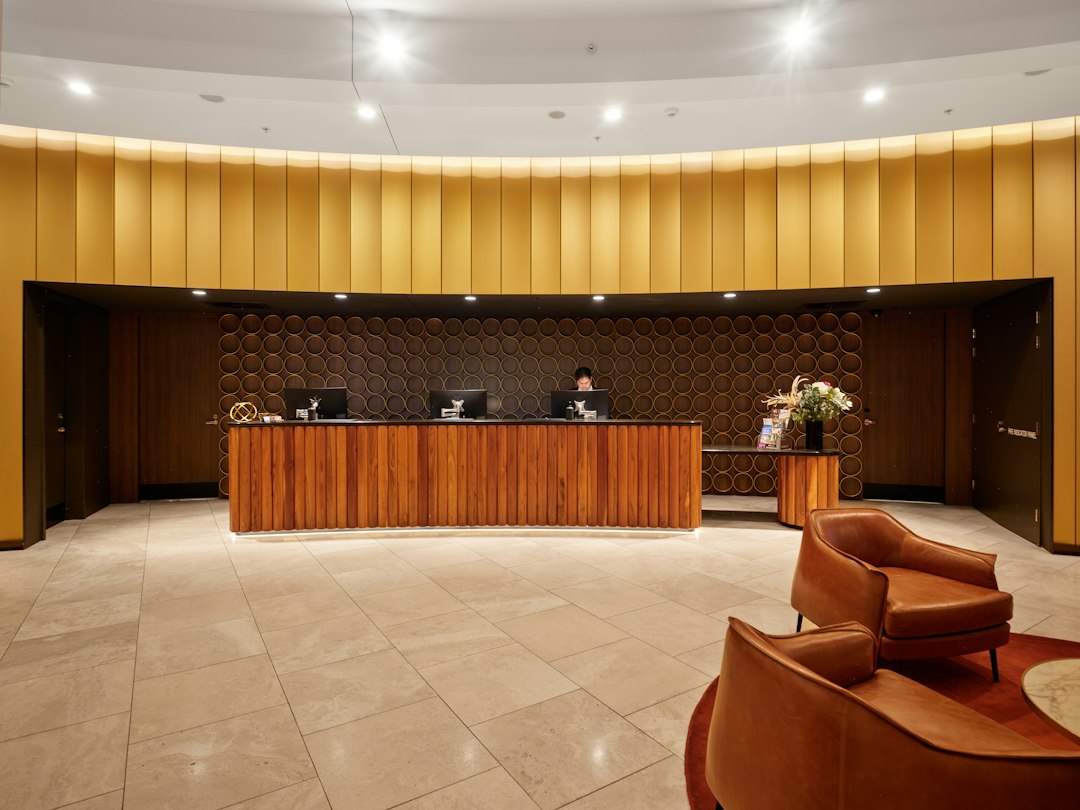
- Gaps hide in four places: coverage you do not have, a limit that is too low, a setting that pays less than you expect, and a condition that voids cover.
- Guests' belongings, a short lost-income period and an old building value are each something a hotel policy may leave short unless you check.
- For every gap there is one line to find in your policy and one question to put to your agent.
Gap 1: Does my policy pay when a guest's belongings are stolen?
Often only in part. Your liability policy is built for injuries and damage you cause, and a guest's stolen laptop or jewelry is a different question, covered by an add-on that insurers call innkeeper's liabilityInnkeeper's Liability Coverage for a hotel or lodging business if a guest's belongings are lost, stolen, or damaged while in your care. Insurers call it innkeeper's liability. more →.
State laws also limit what a hotel owes for a guest's things, and the limit often depends on following the state's rules. Missouri's law, for example, caps most guest property at $200 in total unless the hotel agrees in writing to more, applies only if a copy of the law is posted at the registration desk and in every guest room, and does not apply if the loss comes from the staff's willful negligence or wrongdoing. (Source: Missouri Revised Statutes) Other states differ, and a low legal cap does not stop a guest from making a claim. Look at your liability coverage to see what is written for property in your care.
The wider question is covered in what insurance a hotel needs.
What to say to your agent. “Is there a limit for guests' belongings, what is it per guest and per year, and does it apply to items left at the front desk or in a room safe?”
Gap 2: How long would my policy pay for lost room income after a fire?
Only for the period your policy names, and that can be shorter than a rebuild. A room you cannot rent tonight cannot be sold again later, so lost income that runs out early comes out of your pocket.
Coverage for income lost while rooms are out of service is what insurers call business interruption. It generally pays until the property should reasonably be repaired, not until bookings return to normal. A further add-on covers the slow climb back after reopening, and one insurance glossary describes it as lasting up to 60 days, extendable by endorsement. (Source: Menlo Insurance) A hotel whose busy season falls in the closure can lose far more than an average month suggests. See how to tell if your coverage is enough.
What to say to your agent. “How many months of lost income does my policy pay, how long does the add-on after reopening last, and is it based on my busiest months?”
Gap 3: Is my building insured for what it would cost to rebuild today?
Check two settings on your property policy: whether it pays what rebuilding costs new or what the building was worth after wear, and whether a rule cuts your payout if the value on the policy is too low.
Maine's insurance regulator explains the first: replacement cost pays to repair or replace without subtracting depreciation, while the other method takes it off. Paying what the property was worth after wear is what insurers call actual cash valueActual Cash Value (ACV) What your damaged or stolen property was worth the day you lost it, after subtracting wear and age. Insurers call this payout method actual cash value. more →. The second is a rule that makes you insure for a set share of the value or have the payout reduced; insurers call it coinsuranceCoinsurance A property-policy rule that requires you to insure for a set share of your property's value, or the insurer cuts your payout. Insurers call this coinsurance. more →. The regulator's example has you insure for less than the rule requires, and the payout shrinks by the same share, less the deductible. (Source: Maine Bureau of Insurance) A building value set several years ago can fall below that line as costs rise. Here is the effect with a common 80% rule and round numbers.
| What happens | Amount | Insurer pays | You pay |
|---|---|---|---|
| Rebuilding the hotel today would cost | $10M | ||
| The rule requires insuring at least 80% of that ($10M × 80%) | $8M | ||
| The policy value, set years ago, is | $6M | ||
| The insurer pays this share of any loss ($6M ÷ $8M) | 75% | ||
| Your deductible is | $10K | ||
| A kitchen fire causes a loss; the insurer pays its share less the deductible (75% × $400K − $10K), and you pay the rest ($400K − $290K) | $400K | $290K | $110K |
Illustration only, with round numbers. It is not a statement of what any policy pays; your own policy wording governs.
An older or historic building adds a third question: the extra cost of rebuilding to today's building code, which insurers call ordinance or law coverageOrdinance or Law Coverage Coverage for the extra cost of rebuilding to today's building code after a loss, including tearing down the undamaged part when the code requires it. Insurers call it ordinance or law coverage. more →. The boutique hotel insurance guide goes deeper on older buildings, and what the contents of your business cover explains how to value furniture and equipment.
What to say to your agent. “Is the building valued at replacement cost, what percentage does the policy require, and when was the value last updated?”
Gap 4: Could a sprinkler or alarm that is out of service void my fire coverage?
It can, if your policy carries a protective safeguard endorsementProtective Safeguard Endorsement A policy add-on requiring you to keep named safety systems, such as sprinklers or a monitored alarm, working, or the insurer may deny a related claim. Insurers call it a protective safeguard endorsement. more →: an add-on that makes fire coverage depend on keeping named safety systems working. The systems are listed on a schedule in your policy.
One industry analysis of the standard form says that where the conditions are not met there is no coverage for loss caused by fire, and lists automatic sprinklers, automatic fire alarms and commercial cooking exhaust and extinguishing systems among the systems that can be scheduled. (Source: International Risk Management Institute) Hotels and motels see an estimated 3,900 fires a year, in federal data for 2014 to 2016. (Source: U.S. Fire Administration) A sprinkler zone shut off during a renovation is the kind of thing this clause can turn on, so check your own policy wording and ask your agent. A lapse like this is also one of the five insurance mistakes hotel owners make.
What to say to your agent. “Which systems are on my schedule, who do I tell if one is shut off, and what does the policy say about how it must be maintained?”
Gap 5: Am I covered if guests' card and ID data is stolen from my systems?
Often not fully. Liability and property policies are generally written for injuries and physical damage, so a breach of your booking or front-desk system needs its own coverage, which insurers call cyber liability.
IBM's 2026 report puts the global average cost of a data breach at $4.99 million, up 12% and a record high. (Source: IBM) That is an average across all industries, not a figure for a hotel, but it shows how fast the costs of investigating, notifying guests and recovering add up. Some hotels carry only a small add-on to another policy; hotel cyber insurance explains the difference between that and a separate policy.
What to say to your agent. “Do I have cover for a data breach, is it an add-on or its own policy, and what does it pay for?”
Common questions about hotel coverage gaps
Ask your agent to point to each item on your declarations page and the list of forms attached to your policy, with the limit beside it. If a line does not exist, that is the gap.
Usually not. An umbrella adds liability limits on top of your other policies. It does not add lost-income months, a current building value or protection from a fire-safety clause.
It depends on the wording. Some policies leave out pests or cap the payment for them with a smaller limit, so ask your agent to show you where it is written and what the limit is.
Find the gaps in your hotel policy
Send us your current policy and we will mark which of these five it has, and what the fix would look like.