
5 insurance mistakes hotel owners make
Five mistakes in a hotel's commercial insurance cost owners the most: leaving the pool out or understating it on the application, insuring the building and lost income at last year's numbers, assuming the state's cap on guest belongings applies without a posted notice and a safe, treating regular housekeeping or laundry staff as outside contractors, and buying before reading the franchise agreement and loan terms. Each can show up as a declined application, a reduced claim payment or an audit bill, and each is cheaper to fix before it happens. They sit across the five core coverages a hotel buys (general liability, commercial property, business income, workers' comp and innkeeper's liability) and liquor liability if you pour.
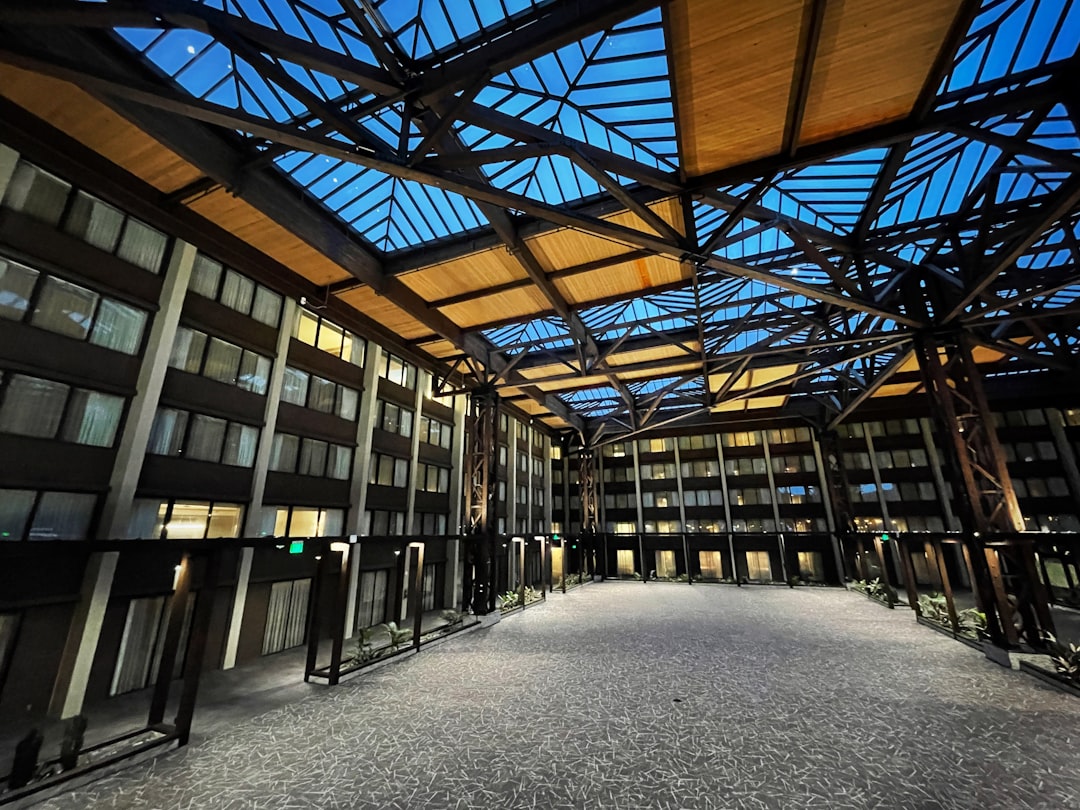
- An application answer that is wrong, even by accident, can let an insurer cancel your policy back to the day it started. The pool is the answer underwriters look at hardest.
- A building insured below what the policy requires can have a partial loss paid at a reduced share, so the property value needs a fresh look each year.
- The state's low cap on what you owe for guests' belongings can depend on a posted notice and a safe. Ask your agent to show you where each protection is written.
Mistake 1: What happens if I understate my pool on the application?
The insurer can refuse a claim, or cancel the policy back to the day it began, even if the wrong answer was an honest one. The pool is the biggest liability question a hotel underwriter asks, so its details are the answers to get exactly right.
Picture an owner who lists a fenced outdoor pool with a lifeguard in summer, then adds an indoor spa, drops the lifeguard and never mentions either change. The premium stays lower, and the gap may not come to light until a guest is hurt and the insurer reads the file. Child pool and spa drownings averaged 376 a year in 2021 to 2023, which is why insurers look closely. (Source: U.S. Consumer Product Safety Commission, June 2026)
Insurers check the application after a claim. In 2022 a New York appeals court let an insurer cancel two policies back to their start because the owner kept answering no to a question about a swimming pool on apartment buildings. The court held that a misstatement that matters to the insurer is enough, even if innocent or unintentional. (Source: Insurance Journal) Rules differ by state, but the test is similar: would the insurer have written the policy had it known?
The fix. Describe every pool, spa and splash area: indoor or outdoor, fenced or not, whether a lifeguard or trained operator is on duty, and where the inspection records are kept. Tell your agent again whenever any of it changes. An honest answer may raise the price or point you to a specialty market, but a wrong one puts any later claim at risk. See five coverage gaps in a typical hotel policy for what else the pool touches.
Mistake 2: What happens if my building value is out of date?
Many property policies include a rule that you insure the building for a set share of what it would cost to rebuild, usually 80%. If you fall below it, the insurer can pay a partial loss at a reduced share. Insurers call this rule coinsuranceCoinsurance A property-policy rule that requires you to insure for a set share of your property's value, or the insurer cuts your payout. Insurers call this coinsurance. more →. (Source: International Risk Management Institute)
Rebuilding costs rise, so a value set three or four years ago can fall short without anyone noticing. Here is the arithmetic on a building that would cost $1,000,000 to rebuild, with an 80% rule and $600,000 of coverage:
| What happens | Amount |
|---|---|
| Rebuilding the building would cost | $1M |
| The policy requires you to insure it for 80% of that ($1M × 80%) | $800K |
| You insured it for | $600K |
| A kitchen fire causes a partial loss of | $200K |
| The insurer pays the share you carried against the share required ($200K × $600K ÷ $800K) | $150K |
| You pay the rest yourself ($200K − $150K) | $50K |
Illustration only, with round numbers and the deductible left out. It is not a statement of what any policy pays; your own policy wording governs.
Lost income has the same trap in time rather than dollars. Rooms that cannot be sold during repairs cannot be sold later, so a limit sized to a short shutdown, or to last year's slower season, can run out before the rooms reopen. Ask how many months the policy pays and whether it pays for an extra period after reopening.
The fix. Ask your agent for a fresh rebuilding-cost estimate each year, whether your policy carries the 80% rule or an agreed-value setting, and how many months of lost-income coverage you have. Is this enough coverage? walks through the questions.
Mistake 3: Does the state's cap on guest belongings protect me automatically?
Not always. Many states limit what a hotel owes for a guest's lost or stolen belongings, but some of those limits depend on a safe being offered and a notice being posted. Coverage for this exposure is called innkeeper's liabilityInnkeeper's Liability Coverage for a hotel or lodging business if a guest's belongings are lost, stolen, or damaged while in your care. Insurers call it innkeeper's liability. more →.
Pennsylvania's law says a hotelkeeper is generally not liable unless it fails to keep a metal safe, suitable locks and a copy of the law posted in at least 10 conspicuous places; it also caps what it need accept at $300 from one guest. (Source: 48 Pa.C.S. 1323, via FindLaw) Missouri's $200 cap applies only if the notice is posted. (Source: Missouri Revised Statutes 419.010) Louisiana limits liability for belongings not handed over to $500 if the hotel provides a safe and posts notice of it. (Source: Louisiana Civil Code art. 2945)
Picture a hotel that has a safe at the desk but never posted the notice, after a guest reports a stolen laptop. The statute's protection may not be there to lean on, and the cap would not set the limit of the claim.
The fix. Learn your state's notice and safe rules, post the notice where the law says and keep a safe available. Then ask your agent to show you the limit for guests' belongings on your declarations page, and whether theft by staff and bedbug claims are inside it. The state-by-state caps are in how much hotel insurance costs.
Mistake 4: Can I pay housekeepers or laundry staff as outside contractors?
Rarely, and not safely. A person who works your shifts, follows your rules and uses your carts and machines is usually treated as an employee, and an injury or a year-end review of your payroll is where that surfaces.
Housekeeping is one of the largest jobs in the industry: 420,800 maids and housekeeping cleaners worked in accommodation in 2025. (Source: Bureau of Labor Statistics) Insurers expect those payrolls on the hotel's workers' comp policy. Washington's rules, for instance, list housekeeping, laundry, maintenance, shuttle service and valets among the hotel's own jobs. (Source: Washington Administrative Code 296-17A-4905)
Two bills can follow. At the year-end review, which insurers call a premium audit, the payroll you left off is added and you owe the difference. And if the person is hurt first, the claim can turn into a dispute over whether they were an employee at all. Some states, Missouri among them, also have rules that can make a hotel answerable for the workers of a company it hires; the Missouri workers' comp page explains.
The fix. Put regular staff on payroll. If you hire a true outside company, such as a laundry service, ask for its proof of insurance showing its own workers' comp before it starts. Read what a premium audit looks at and what workers' comp covers.
Mistake 5: What happens if I buy coverage before reading my franchise agreement and loan terms?
You can end up with a program that is fine on its own terms but short of what the contract asks for, and a contract that is not met can put the agreement or the loan in default. Neither the franchisor nor the lender adjusts to fit the policy, so the policy has to be built to fit them.
If you are buying a franchised hotel, you should already have the franchisor's disclosure document: the Federal Trade Commission's franchise rule says it must be given at least 14 calendar days before you sign a binding agreement or pay. (Source: Federal Trade Commission franchise rule, via Cornell Law School) The insurance section of the agreement is the list your agent should work from. Each brand has its own, and this page names no limits.
Lenders add their own terms, commonly a clause naming them on the building coverage, a rebuilding-cost basis and a minimum number of months of lost income. Picture an owner who buys a program that matches last year's lender letter, then renews a loan on new terms and misses the new minimums. The lender may require the gap to be fixed, sometimes with coverage it buys and charges to the owner.
The fix. Hand your agent the insurance section of the franchise agreement and the loan insurance clause before quoting, and again at each renewal. Ask for the extra liability layer, which insurers call umbrella or excess liabilityUmbrella/Excess Liability Extra liability coverage on top of your other policies that pays when a big claim uses up their limits. Insurers call it umbrella or excess liability. more →, to be checked against both. Start with what a franchise agreement requires and what a certificate of insurance is.
Common questions about hotel insurance mistakes
Yes. Tell your agent in writing as soon as you notice it, so the insurer can correct the application or reprice the policy. A correction before a claim is far safer than a discovery after one.
Not automatically. It depends on the kind of claim, its size and your record. A pool injury claim limits your options more than an isolated property loss. Do not skip reporting a claim to protect your rate, because a late report can put the coverage at risk; ask your agent.
At every renewal, and any time something changes: a renovation, a brand change, a new pool or spa, a new bar or restaurant, a refinanced loan or a shuttle van.
Find out which of these mistakes your policy may be hiding
Send us your current policy and your application answers, and we will compare them with how your hotel actually runs.