
I own a hotel — what insurance do I need?
Most hotels and motels need five core coverages: general liability, for a guest who is hurt in the lobby or at the pool; commercial property, for the building, rooms and the systems that run them; business income, for the income you lose while rooms are out of service after covered damage; workers' comp, for staff hurt on the job; and innkeeper's liability, for a guest's belongings lost or stolen while in your care. Two more depend on the property: liquor liability if you pour drinks, and commercial auto if the hotel owns a shuttle van. An umbrella, cyber coverage and employment practices liability, for lawsuits from your own employees, are commonly added on top.
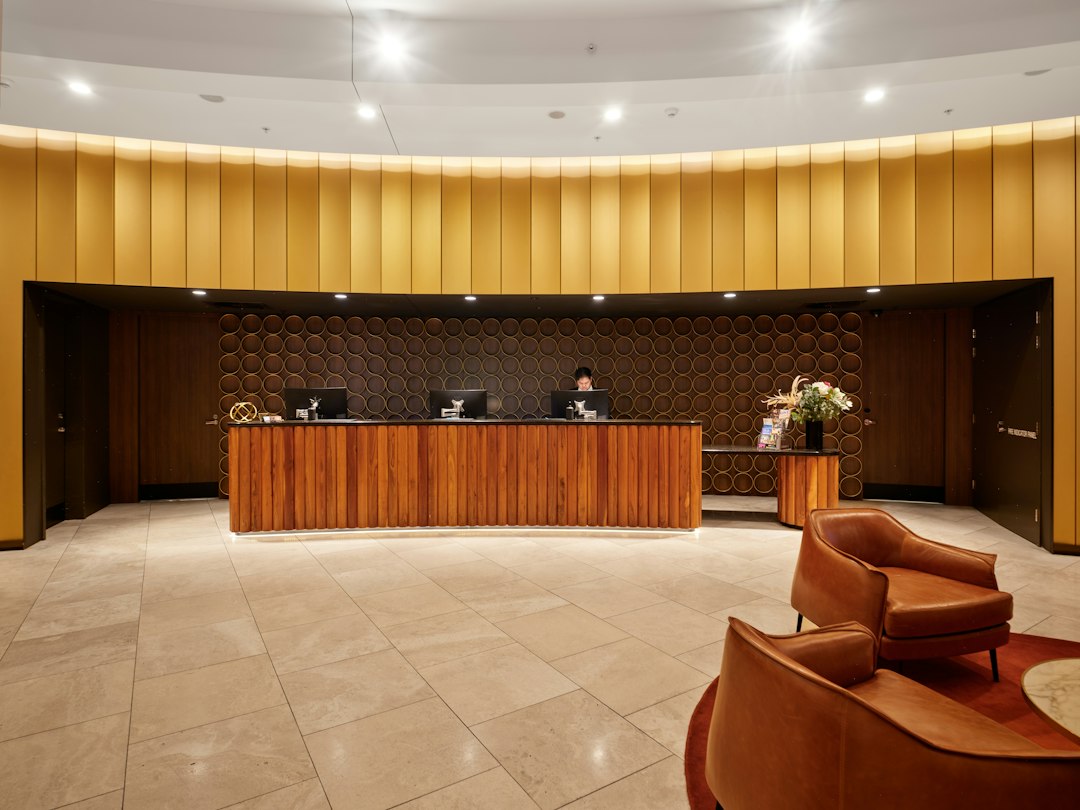
- Five core coverages carry a hotel or motel: general liability, commercial property, business income, workers' comp and innkeeper's liability. Liquor liability depends on whether you pour, and commercial auto on whether you own a shuttle.
- The pool is the liability question an insurer asks about first, so have your drain, fencing and inspection records ready.
- A franchise agreement or a lender can ask for more than these. Their requirements are written in your own documents.
What happens when a guest gets hurt?
Your liability coverage is designed to pay for your defense and for a covered claim when a guest or visitor is hurt on your property, or has their own property damaged. Every hotel and motel needs it from the day it opens, and the pool is the part an insurer looks at hardest.
A guest slips in the lobby or a child is hurt in the pool. Coverage for injuries and damage your business causes to other people is what insurers call general liabilityGeneral Liability (GL) Coverage for injuries and property damage your business causes to other people, plus certain advertising claims. Insurers call it general liability. more →.
Pools carry the most serious injuries. An average of 376 children under 15 died in pool or spa drownings each year from 2021 to 2023, and nearly 80% of them were under five. (Source: Consumer Product Safety Commission) That figure covers all pools, with no breakdown for hotels. Federal law also requires public pools and spas, which the same agency says include hotels and motels, to have compliant drain covers, plus a second anti-entrapment system where there is a single blockable main drain. (Source: Consumer Product Safety Commission) Expect your insurer to ask about drains, fencing and inspection records.
You probably need this if you have any guest rooms, a lobby or a parking lot. Here is how liability coverage works.
What if the building is damaged and I can't sell rooms?
Two coverages answer this. Property coverage pays to repair or rebuild the building, furnishings and systems. Lost-income coverage pays the profit you would have made and the bills that keep coming while rooms are out of service because of damage your property policy covers.
The building. Property coverage should include the structure, room furnishings, kitchen and laundry equipment, the roof and the building systems. Insure it at what it would cost to rebuild and replace new today, which is not the same as what you paid. Hotel and motel fires are not rare: an estimated 3,900 were reported each year in 2014 to 2016, with about $100 million in property loss, and cooking is the leading cause. (Source: U.S. Fire Administration) Older buildings raise questions about rebuilding to current code; see boutique hotel insurance.
The income. A room that sits empty for a month cannot be sold later, so lost income is the loss that keeps growing after the repair work starts. State insurance regulators describe this coverage as replacing income lost when a covered physical loss, like a fire, disrupts the business, and it can pay payroll, taxes, loan payments and rent for a temporary location. (Source: NAIC) Insurers call it business interruption. Check how many months your income coverage pays, whether it keeps paying while occupancy builds back, and how it treats your busy season.
You probably need this if you own the building, or your lease or loan makes you insure it. A property policy is where both usually start.
Do I need workers' comp?
Almost certainly, if you have employees. Most states require it, and it is priced on payroll, which in a hotel is mostly housekeeping, front desk, maintenance and kitchen staff.
Insurance that pays an employee's medical bills and lost wages after a work injury, such as a housekeeper's back strain, a maintenance fall or a laundry burn, is workers' compensationWorkers' Compensation Insurance that pays medical bills and lost wages when an employee is hurt or sick because of work. Insurers call it workers' compensation. more →, and everyone calls it workers' comp. In the federal injury data for accommodation businesses, the rate of cases with days away, restricted duty or job transfer was 2.3 per 100 full-time workers in 2024. (Source: Bureau of Labor Statistics)
Who counts as an employee and what each state requires differ, so workers' comp for hotels goes through the rules and the price, and here is what workers' comp covers.
You probably need this if anyone works for you besides yourself, including part-time and seasonal staff.
What if a guest's belongings are lost or stolen?
A separate coverage, which insurers call innkeeper's liabilityInnkeeper's Liability Coverage for a hotel or lodging business if a guest's belongings are lost, stolen, or damaged while in your care. Insurers call it innkeeper's liability. more →, is designed to respond when a guest's belongings are lost, stolen or damaged while in your care. Your general liability policy is not built for this, so confirm that it is on your program.
State law limits what a hotel owes for guest property, but usually only if you follow the state's notice and safe rules. Missouri's cap is $200 in total unless you agree to more in writing, and the section does not apply to a lodging establishment that has not posted it. (Source: Missouri Revisor of Statutes) New York limits what you owe for property a guest deposits to $1,500 unless there is a special written agreement. (Source: New York State Senate) The limits are low and conditional, so the guest-property limit on your own policy matters.
You probably need this if guests leave bags, laptops or valuables in rooms, at the desk or in a storage room.
Do I need liquor liability if my hotel pours drinks?
Yes, if you sell or serve alcohol in a bar, a banquet room or room service. The standard liability policy is built to leave out claims from serving alcohol when that is part of your business, so a separate policy is the usual answer.
The claim it exists for: a guest drinks too much at your bar, drives away and hurts someone. Coverage for that is liquor liabilityLiquor Liability Coverage if your business is sued after serving or selling alcohol to someone who then injures another person or causes damage. Insurers call it liquor liability. more →. The standard liability form excludes it for a business that serves alcohol as part of its trade, while a business that pours only at an occasional event may fall outside the exclusion; an endorsement some insurers use can widen it. (Source: International Risk Management Institute) Liability for a guest who drank at your bar depends on the state, so ask your agent how your policy reads for a wedding open bar or a free welcome drink.
You probably need this if alcohol is sold or given away on the property. The price of liquor liability coverage depends on how much you pour and how late.
What else might I need?
Beyond the five core coverages and liquor liability, auto coverage depends on whether the hotel owns vehicles, and an umbrella, cyber coverage and coverage for lawsuits from your own employees are commonly added as the property grows.
An umbrella. Extra liability coverage that sits on top of your liability and liquor policies and pays when a serious claim runs past their limits; insurers call it an umbrella. You probably need this if a franchise agreement or lender asks for higher limits than your base policy carries. How to tell if you need an umbrella.
Cyber. Your front desk and booking systems hold card numbers and ID details. The global average cost of a data breach reached $4.99 million in 2026, across all industries. (Source: IBM) Cyber coverage is designed to respond to that; hotel cyber insurance goes into detail.
Employee claims. Coverage for when a current or former employee sues over harassment, discrimination or a firing; insurers call it employment practices liability. You probably need this if you have more than a handful of employees, or any turnover.
Vehicles. A shuttle van or courtesy car your hotel owns needs commercial auto coverage. When an employee drives a personal car on your errand, the injured person can sue the hotel; coverage for vehicles you do not own is what insurers call hired and non-owned autoHired and Non-Owned Auto Liability coverage for accidents in vehicles your business does not own, such as rentals or an employee's personal car used on a work errand. Insurers call it hired and non-owned auto. more →.
If your hotel runs its own restaurant, the restaurant guides cover the kitchen side. Here is why the whole business is insured together. To price it, start with what to prepare for a hotel quote and what hotel insurance costs.
Common questions about what insurance a hotel needs
Only part of it. Workers' comp is required by state law for most employers. Most of the rest is required by contract, through your loan, your lease or your franchise agreement, rather than by law.
The same five core coverages apply. Details such as exterior corridors, a pool, and rooms rented by the week change how an insurer prices and which insurers will quote, so give your agent those facts up front.
Often not by itself. Cars parked by your staff are usually a separate add-on to your liability program. If you offer valet, ask your agent to show you where it is written.
Find out which of these your hotel actually needs
Tell us about your rooms, your pool, your staff and any franchise or loan paperwork, or send us your current policies, and we will show you which coverages fit and where the gaps are.