
Convenience Store Insurance Market Guide:
Carrier Appetite, Underwriting Red Lines & How Coverage Gets Placed
There is no single "best" insurance carrier for convenience stores — there is the right market for your store's product mix. Dry stores with daytime hours fit generalist business owner's policy (BOP) markets at roughly $184 per month; fuel, alcohol, foodservice, and 24-hour operations push accounts toward food-retail and petroleum specialists; loss-hit and non-sprinklered stores land in excess and surplus (E&S) lines. This guide maps who writes what, the red lines that trigger declines, and how an independent broker places each profile.
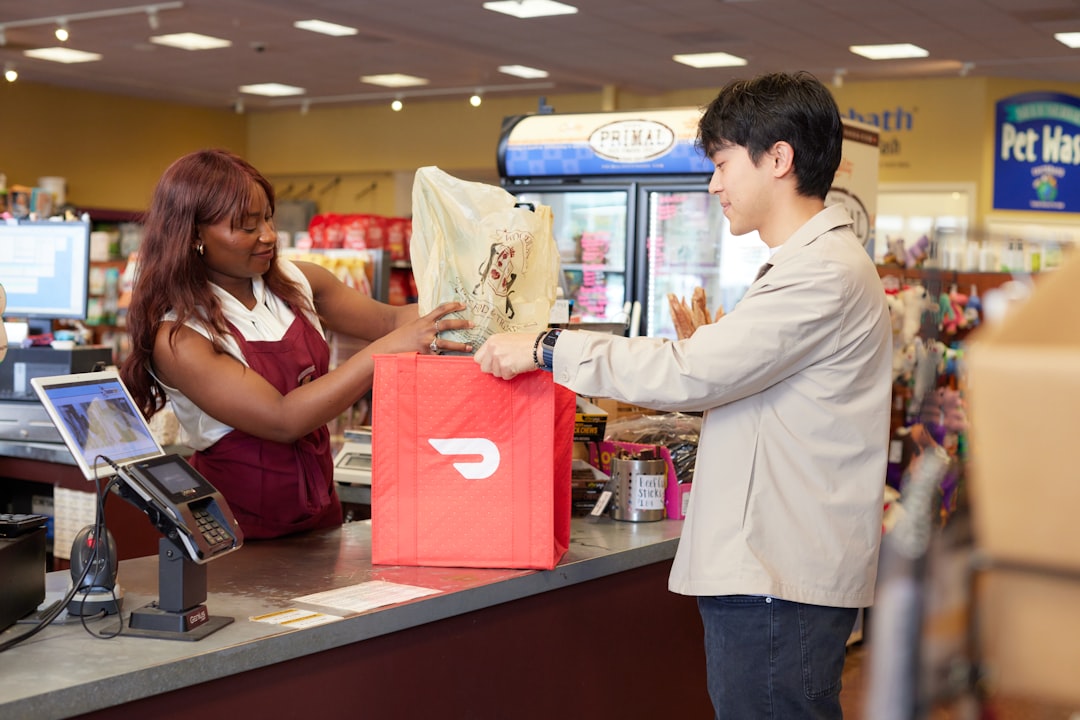 Photo by Matthew Zheng
on Unsplash
Photo by Matthew Zheng
on Unsplash
- The convenience store insurance market splits into three tiers: generalist small-business BOP markets for dry, daytime stores (benchmark general liability around $72/month per Insureon); admitted food-retail and petroleum specialists like Crum & Forster's Food Specialty unit, Society Insurance's gas station and convenience store program, and Federated Insurance for fuel-heavy operations; and excess and surplus lines for the profiles standard markets decline.
- Product mix is the classification engine: alcohol percentage (a roughly 25–30% alcohol share typically re-tiers the account), fuel and underground storage tanks (UST), foodservice with grease cooking, and 24-hour operation each move a store between market tiers.
- Convenience store work carries a workplace homicide rate roughly 14× private industry overall (NIOSH/CDC: 6.8 vs 0.48 per 100,000 workers) — which is why security controls, cash handling, and camera retention sit at the center of underwriting reviews for late-hour stores.
- Fuel sellers face a federal floor: EPA underground storage tank financial responsibility of $1 million per occurrence for petroleum marketers under 40 CFR 280 Subpart H — and generalist BOP pollution exclusions do not satisfy it.
- Declines are usually about the file, not the store: undisclosed alcohol or fuel share, missing UST compliance records, no documented security program, and unexplained loss frequency are the red lines brokers see most.
How insurance carriers classify convenience stores and grocery stores
Carriers classify convenience stores by product mix, not by signage: the percentages of revenue from alcohol, fuel, prepared food, and tobacco — plus operating hours — determine which markets will quote. A dry daytime store is a mainstream retail risk; the same footprint selling fuel and beer at 2 a.m. is a specialty account.
The classification starts with what most owners consider background detail. Underwriters reviewing a convenience store or grocery submission read the product mix line by line, because each revenue stream maps to a different loss engine: alcohol brings dram shop liability, fuel brings underground storage tank (UST) pollution exposure (unpacked in our fuel station & convenience store insurance guide), prepared food brings fire and contamination, and late hours bring robbery and workplace violence. Our convenience store insurance guide covers the underlying coverage program; the convenience store industry page summarizes how we work these accounts. This page is about the market itself — who actually writes each profile.
| Store profile | How underwriters see it | Typical market fit |
|---|---|---|
| Dry store, daytime hours, no fuel | Mainstream retail; broadest appetite | Generalist BOP markets |
| Beer & wine, closes by 11 p.m. | Standard with liquor liability attached | Generalist BOP + standalone liquor line |
| Full liquor or alcohol-led revenue | Re-tiered once alcohol reaches roughly 25–30% of sales | Food-retail specialists; some regionals |
| Fuel + convenience store | UST financial responsibility + pollution underwriting | Petroleum/c-store specialists |
| Foodservice — non-grease (pizza, hot dogs, sandwiches) | Acceptable to most specialty programs | Food-retail specialists |
| Foodservice — grease cooking (fryers, grills) | Fire-suppression underwriting; UL 300 systems expected | Specialists with restaurant appetite; otherwise E&S |
| 24-hour operation | Robbery/violence exposure; security program required | Specialists; several standard markets decline outright |
| Small neighborhood or specialty/ethnic grocery | Financial-health screens (sales per square foot) and sprinkler status drive eligibility | Food-retail specialists; E&S when non-sprinklered |
Two rating anchors sit under every quote. General liability (GL) for convenience stores benchmarks around $72 per month — $857 per year — at $1 million per occurrence / $2 million aggregate limits, according to Insureon's convenience-store policyholder benchmarks. Workers' compensation (WC) prices off payroll under NCCI class code 8006 for grocery/convenience retail — loss costs are filed state by state, so the rate on any given account comes from that state's filing rather than a national number — which is why Insureon benchmarks convenience store WC near $82 per month while full grocers — heavier payrolls, more cutting and stocking injuries — average about $175 per month. Everything above those anchors is product-mix pricing.
Who actually writes convenience store insurance: the three market tiers
The convenience store insurance market operates in three tiers: generalist small-business carriers writing dry and low-alcohol stores on a business owner's policy (BOP), admitted food-retail and petroleum specialists built for fuel, foodservice, and grocery exposure, and excess and surplus (E&S) lines for the profiles both of those decline.
Tier 1 — Generalist small-business markets
For a store with no fuel, modest or no alcohol, and reasonable hours, the small-business BOP market is competitive and fast. Insureon's benchmarks put the convenience store BOP — property plus general liability in one form — at about $184 per month ($2,208 per year) with a $1,000 deductible, and a retail umbrella at roughly $59 per month per $1 million of additional limit. Pricing across this tier is close enough that form details matter more than premium; our convenience store insurance cost guide breaks down the 2026 numbers by store profile. The trade-off: generalist appetite is narrow. In our placement experience, many generalist BOP carriers decline or heavily restrict fuel sales, 24-hour operation, and alcohol-led stores — the account "fits" only as long as the store stays simple.
Tier 2 — Admitted food-retail and petroleum specialists
This is where most real-world convenience stores — fuel, foodservice, late hours, or meaningful alcohol — get placed, and where program depth shows up in the form language:
- Crum & Forster (Food Specialty): a dedicated food-retail underwriting unit writing admitted multiline programs for independent supermarkets, grocery stores, and convenience stores, paired with risk engineering services and self-insured-retention programs for larger accounts (appetite page verified live, July 2026). Specialist grocery underwriters in this tier screen financial health — sales per square foot — and building protection before quoting, and non-sprinklered grocery buildings are routinely declined.
- Society Insurance: a dedicated gas station and convenience store program whose published features read like a c-store loss history in reverse — building coverage broadened to include canopies, fuel tanks, and gas pumps; business income coverage that includes equipment breakdown and utility service interruption with no distance limitation; selectable 24-, 48-, or 72-hour waiting periods; and employee dishonesty coverage (program page verified live, July 2026). Society's page also flags that other carriers "routinely apply" protective safeguards endorsements that can exclude coverage — a denial trap we cover in the convenience store claims guide.
- Federated Insurance: the petroleum-marketer route — its Petro Shield commercial program, developed with industry trade associations, covers business property, commercial vehicles, fuel the business hauls, and pollution events, making it a fit for fuel-forward operations and multi-site petroleum marketers with convenience retail attached (industry page verified live, July 2026).
- Berkshire Hathaway GUARD: a main-street small-commercial market whose published retail appetite includes grocers and convenience-type stores across its WC, BOP, commercial auto, and umbrella lines — a useful admitted option for straightforward stores that have outgrown Tier 1 (retail industry page verified live, July 2026).
Tier 3 — Excess and surplus (E&S) lines
Excess and surplus (E&S) lines carriers write what the admitted market declines: 24-hour urban stores with loss history, non-sprinklered older buildings, stores with lapsed coverage, and fuel operations with prior pollution or crime claims. E&S paper is a legitimate bridge — but the forms trade breadth for access. Expect stricter protective safeguards conditions, lower crime and spoilage sublimits, defense costs sometimes inside the limits, and no state guaranty fund behind the policy. The broker's job on an E&S placement is to name every one of those trade-offs before binding, then build the file that moves the store back to the admitted market at renewal.
| Market tier | Best fit | Watch for |
|---|---|---|
| Generalist BOP markets | Dry or beer & wine stores, daytime hours, no fuel | Narrow appetite; fuel/24-hour/alcohol growth can force a mid-term market change |
| Food-retail & petroleum specialists (admitted) | Fuel + c-store, foodservice, grocery, late hours, multi-site | Financial-health and sprinkler screens; grease cooking and hours restrictions vary by program |
| E&S / surplus lines | Loss-hit, non-sprinklered, lapsed, or 24-hour urban profiles | Protective safeguards conditions, lower sublimits, defense inside limits, no guaranty fund |
Eight underwriting red lines that get convenience stores declined or non-renewed
Most convenience store declines trace to eight recurring red lines: undisclosed alcohol or fuel share, missing underground storage tank compliance records, uncontrolled late-hour operation, grease cooking without certified suppression, non-sprinklered buildings, ignored crime-coverage conditions, coverage lapses, and unexplained loss frequency. In our experience placing retail food accounts, the file — not the store — is usually what fails.
- 1. Undisclosed alcohol share. Alcohol percentage is a rating input, and crossing the roughly 25–30% of revenue threshold typically re-tiers the account. When an audit or renewal reveals alcohol share materially above the application, carriers treat it as a misrepresentation problem, not a pricing adjustment — and dram shop exposure in the majority of states with liquor liability statutes makes them quick to walk.
- 2. Fuel without the UST file. The EPA requires petroleum marketers to demonstrate underground storage tank financial responsibility of $1 million per occurrence under 40 CFR 280 Subpart H ($500,000 for non-marketers handling 10,000 gallons or less per month) — and a generalist BOP with a pollution exclusion satisfies none of it. Submissions without tank age, testing records, and the financial responsibility mechanism documented go to the bottom of the pile. Our requirements-by-state guide covers the full statutory stack.
- 3. Late hours without a security program. The NIOSH/CDC workplace violence data (6.8 homicides per 100,000 convenience store workers vs 0.48 for private industry) is the reason 24-hour operation is underwritten so hard — several standard markets simply decline it. Crime Prevention Through Environmental Design (CPTED) programs — visibility, lighting, cash controls, drop safes — have been associated with 30–84% robbery reductions in NIOSH-reviewed studies, and a documented program is often the difference between a specialist quote and a decline.
- 4. Grease cooking without certified suppression. Food-retail programs commonly accept non-grease foodservice (pizza, hot dogs, sandwiches) but restrict or decline fryer and grill operations without UL 300 wet-chemical suppression over the cooking line. Adding a fryer without telling your carrier is the foodservice version of red line #1.
- 5. Non-sprinklered or unimproved older buildings. Specialist grocery underwriters routinely treat non-sprinklered buildings as flat declines, and buildings past roughly 30 years old get reviewed for electrical, plumbing, and roof updates. Commercial property eligibility is decided at the building level before the store's operations are even read.
- 6. Ignored crime-coverage conditions. Crime forms split money and securities from stock, and condition recovery on forced-entry evidence, anchored safes, and cash maximums. A store that runs $3,000 in the till against a $1,000 cash maximum has a coverage gap the underwriter will price for — or a claim denial waiting.
- 7. Coverage lapse. A lapse reads as either financial distress or an unreported loss. Either way, admitted markets re-underwrite from scratch and E&S becomes the realistic bridge until a clean year rebuilds the record.
- 8. Loss frequency without a corrective story. The Hartford's 2025 claims analysis puts the average customer slip-and-fall claim around $45,000 — and frequency, not severity, is what non-renews retail accounts. Two slip-and-falls with sweep logs, camera retention fixes, and a documented response read very differently than two claims with no story.
The specialty coverage lines that separate convenience store carriers
Convenience store carriers differentiate less on price than on five form details: crime coverage structure, spoilage sublimits and waiting periods, liquor liability availability, UST/pollution coverage, and protective safeguards conditions. Two policies that cost within $500 of each other can pay thousands of dollars apart on the same loss.
- Crime. Look for the money-and-securities limit versus the stock limit, employee dishonesty coverage, and the conditions: forced-entry evidence, anchored safe, cash maximums. Specialist programs publish these as features; generalist forms bury them as conditions.
- Spoilage and equipment breakdown. Market-typical spoilage sublimits run $10,000–$25,000 — often below a full walk-in's contents — and 12–24 hour waiting periods on utility interruption can outlast the 4-hour window FoodSafety.gov gives refrigerated product. Society's program, as one live example, publishes selectable 24/48/72-hour waiting periods and folds equipment breakdown into business income with no distance limitation on service interruption — exactly the kind of form detail a broker comparison surfaces.
- Liquor liability. GL excludes liquor liability for alcohol sellers; the question is whether the market attaches a liquor liability line in-house or forces a second carrier. In-house attachment matters in mandatory states (Illinois requires dram shop coverage at license application), and pricing swings on alcohol share.
- UST / pollution. Petroleum specialists build the EPA financial responsibility mechanism into the program; everyone else leaves it to state funds or standalone tank policies. If you sell fuel, this line decides your market tier before anything else does.
- Umbrella and cyber. A retail umbrella benchmarks near $59 per month per $1 million of limit (Insureon), and lease and franchise agreements increasingly require it over the $1M/$2M primary; see our umbrella coverage page. Point-of-sale systems put card data in scope for cyber liability — still frequently skipped at this account size, and still the cheapest line on the schedule.
How an independent broker places a convenience store account
A convenience store placement runs in five steps: build the underwriting file, pick the market tier the profile actually fits, compare forms on the five specialty lines above, structure the program, and close the contractual loop. Done in that order, the market competes for the account instead of declining it.
- Step 1 — Build the underwriting file. Product-mix percentages (alcohol, fuel, foodservice, tobacco, lottery), operating hours, fuel volumes and UST records, security and camera program, sales and square footage, five years of loss runs with a narrative on every claim. The file answers the red-line questions before they are asked.
- Step 2 — Pick the tier. Dry and daytime goes to Tier 1 for speed and price. Fuel, foodservice, late hours, or meaningful alcohol goes straight to the food-retail and petroleum specialists — submitting those profiles to generalist markets burns time and stamps declines on the record. Loss-hit or lapsed goes to E&S with a 12-month plan back to admitted paper.
- Step 3 — Compare forms, not premiums. Crime conditions, spoilage sublimits and waiting periods, liquor attachment, UST mechanism, protective safeguards endorsements. This is where the $500 premium difference hides a $20,000 claim difference.
- Step 4 — Structure the program. BOP or package as the base, liquor liability attached or placed standalone, umbrella over the top, cyber added while it is cheap. Multi-line placement with one specialist usually beats a patchwork on both price and claim coordination.
- Step 5 — Close the contractual loop. Lease requirements ($1M/$2M GL plus additional insured status is the standard ask), franchise program minimums, fuel supply agreement requirements, and lottery retailer bonding — confirmed by certificate before binding, not after.
The placement decision is also a claims decision: the market you choose is the adjuster you get. Slip-and-fall response, camera retention, and spoilage documentation — the operational side of all of this — is covered step-by-step in our convenience store insurance claims guide, linked above.
When the cheap BOP met the fuel pumps
A pattern we see regularly in retail food placements: a store adds fuel or extends to late hours, keeps the generalist BOP it bought when it was a simple dry store, and renews on price for a few more years. Then a routine renewal question — or a claim — surfaces the fuel share and the hours, and the carrier non-renews. Now the account is shopping with a non-renewal on the record, no UST financial responsibility documentation, and thirty days on the clock.
The rebuild is the placement process above run in reverse under time pressure: assemble the tank records and security program the file never had, place the account with a petroleum/c-store specialist whose form actually matches the operation, and price the umbrella into the program. The premium usually lands higher than the old BOP — because the old BOP was priced for a store that no longer existed. The lesson we repeat: when the operation changes, the market should change with it, on your schedule rather than the carrier's.
Composite pattern from multiple placements; details anonymized and generalized to protect client confidentiality.
Frequently asked questions about convenience store insurance carriers
There is no universal "best" carrier — there is the right market for your product mix. Dry, daytime stores fit generalist BOP markets; stores with fuel, foodservice, meaningful alcohol, or late hours fit admitted food-retail and petroleum specialists such as Crum & Forster's Food Specialty unit, Society Insurance's convenience store program, and Federated Insurance; loss-hit or non-sprinklered stores typically need excess and surplus (E&S) lines.
An independent broker's value is matching the profile to the tier on the first submission — every mismatched submission costs time and stamps a decline on the account's record.
The most common triggers are operational drift and loss frequency: alcohol or fuel share that grew past what the application disclosed, a move to longer hours, added cooking equipment, or repeat claims — the average customer slip-and-fall runs about $45,000 per The Hartford's 2025 claims analysis, and frequency non-renews retail accounts faster than severity.
A non-renewal is recoverable: rebuild the underwriting file with the current operation documented, add the corrective story on every claim, and submit to the market tier that actually writes the new profile.
Yes — fuel changes your market tier before anything else about the store is considered. Petroleum marketers must demonstrate EPA underground storage tank financial responsibility of $1 million per occurrence under 40 CFR 280 Subpart H, and most generalist BOP carriers exclude pollution and decline fuel risks entirely.
Fuel-forward stores belong with petroleum/c-store specialists whose programs build in the UST mechanism, cover canopies, tanks, and pumps as building property, and underwrite fuel hauling where applicable.
It narrows them significantly: several standard markets decline 24-hour convenience stores outright, and the specialists that remain underwrite the security program hard. The exposure is real — NIOSH/CDC data puts convenience store workplace homicide rates at 6.8 per 100,000 workers versus 0.48 for private industry overall.
A documented CPTED-style program — lighting, visibility, cash controls, drop safe, camera retention — has been associated with 30–84% robbery reductions in NIOSH-reviewed studies and is often the difference between a specialist quote and a decline.
Excess and surplus (E&S) lines are non-admitted carriers that write risks the standard market declines — for convenience stores, that usually means loss history, non-sprinklered buildings, lapsed coverage, or high-exposure 24-hour locations. E&S quotes commonly carry stricter protective safeguards conditions, lower crime and spoilage sublimits, and no state guaranty fund protection.
Treat E&S as a bridge: bind it with every trade-off named, run 12 clean months with documented controls, and re-market to admitted carriers at renewal.
Insureon's benchmarks: general liability about $72/month ($857/year) at $1M/$2M limits, a BOP about $184/month ($2,208/year), workers' compensation near $82/month for convenience stores versus roughly $175/month for grocers, and a retail umbrella around $59/month per $1 million of limit. Full-program costs scale with product mix — from roughly $3,000–$5,500 per year for a dry store to $9,000–$20,000+ once fuel and alcohol are in play.
Market tier moves those numbers less than product mix does; the specialists earn their premium back in form breadth. Full scenario math is in our cost guide, with quick answers in the convenience store insurance FAQ.
Bind the new policy before the old one cancels — never the reverse — and match effective dates to the minute. A lapse of even a few days reads as a red flag to every future underwriter, pushes the account toward E&S, and can breach lease and franchise insurance covenants that require continuous coverage.
Time the move 60–90 days before renewal: that window is long enough to market the account properly and short enough that loss runs stay current with carriers.
Not sure which market your store actually fits?
Ask about carrier appetite for your product mix — fuel, alcohol, foodservice, hours — and what underwriters will want to see in your file.
Have us shop the market for your store's actual profile
We place convenience store and grocery accounts across generalist, specialist, and E&S markets — send us your product mix and renewal date, and we'll tell you which tier your store fits and what the file needs before submission.