
What do I need to prepare for a restaurant depot insurance quote?
To get an insurance quote for a restaurant depot (a cash-and-carry warehouse that sells to restaurants), have ready your split of sales between businesses and the public, your forklifts and floor layout, cold storage, delivery setup, the value of your stock at its busiest, your shelf height and sprinklers, and your claims and payroll records. This page lists what an agent asks and why. It covers the six core commercial coverages a depot buys (general liability, commercial property, inland marine for forklifts and power equipment, equipment breakdown and spoilage, business income and workers' comp), not personal insurance.
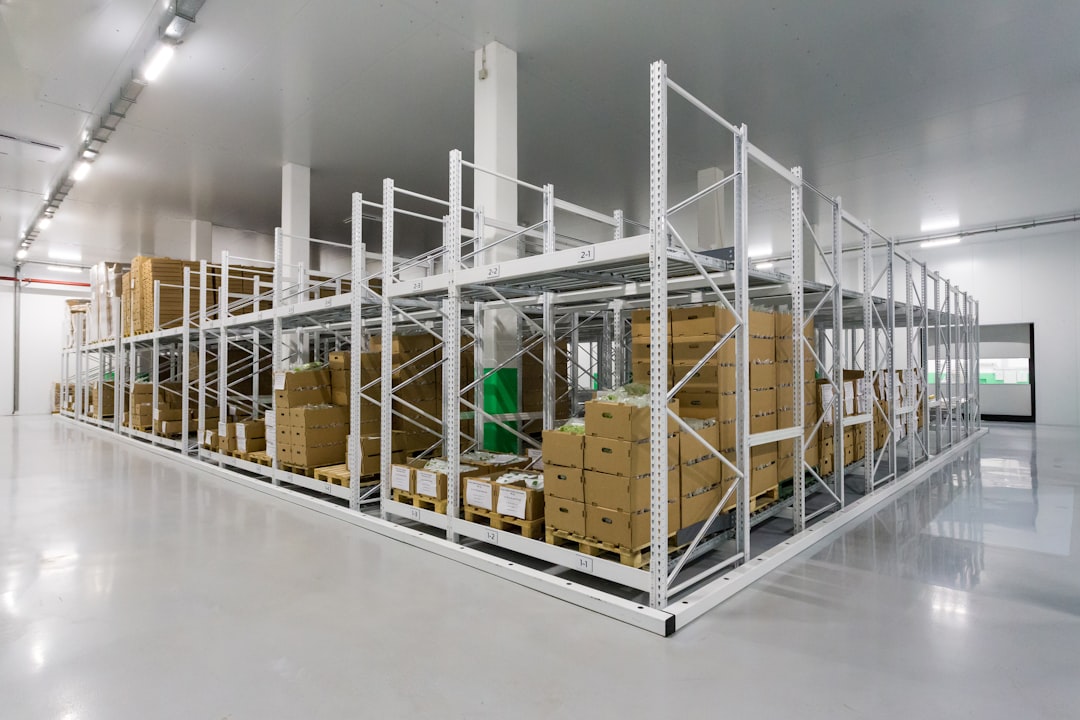 Photo by Petr Magera
on Unsplash
- The first questions are about who buys: the share of sales to businesses versus the public decides how your depot is rated and how many insurers will look at it.
- Forklifts among customers, shelf height against sprinkler design, cold storage and stock value at its peak are the details that set the price of your six core coverages.
- Pull claims history, payroll by job, equipment and training records, sprinkler and refrigeration service reports, and the insurance pages of your lease before you ask.
What should you have ready about who buys from you and what you sell?
Know your split between sales to businesses and sales to the public, your mix of food and non-food stock, and whether you serve meals, sell alcohol or sell goods under your own label. These answers decide how your depot is classed and which insurers can look at it.
- Business versus public sales: workers' comp rating bureaus keep separate store classes for wholesale and retail grocery, and a depot can fit either. Pennsylvania's bureau lists a wholesale grocery class apart from a retail one, and so does New York's board. (Source: Pennsylvania Compensation Rating Bureau) (Source: New York Workers' Compensation Board) Ask your agent how your state's bureau draws the line.
- Food versus supplies and equipment: perishable stock means spoilage questions; packaging and appliances change what the stock is worth and how it burns.
- On-site dining or prep, and delivery: a counter that serves food adds food-illness and cooking-fire risks; delivery is covered below.
- Alcohol, including cooking wine: say if you sell any. Coverage for a customer harmed after you served or sold them alcohol is separate from the standard liability policy; liquor liability is the name insurers use. Ask how your policy treats cooking wine.
- Your own label or imports: if your name is on the package, you may be treated as the maker if the food harms someone. That is a product liability question, so say who makes the goods.
The general version for any business is in what to prepare for a business insurance quote.
What should you have ready about forklifts and the sales floor?
List every piece of power equipment, who runs it, and how forklift lanes are kept apart from customer aisles. A customer hurt among pallets and forklifts is the first liability question an underwriter, the person who reviews your business for the insurer, asks about a depot.
- The equipment: forklifts, power pallet jacks and compactors; whether you own, lease or borrow them, and whether vendors bring their own. Owned equipment is usually insured as property or under inland marine, so give the make, year and value of each machine.
- Who drives: staff only? Do shoppers ever use a pallet jack or ride a lift?
- Separation: how are forklift routes kept from customer aisles: marked lanes, times of day, barriers, spotters?
- Training records: federal workplace-safety rules require each operator to be trained and evaluated at least once every three years. Have the certificates and the dates. (Source: Occupational Safety and Health Administration)
Those workplace-safety rules protect employees, not shoppers, and no public count of customer injuries on cash-and-carry floors was found, so an insurer goes by what you describe. The liability coverage that answers a customer's claim is separate from workers' comp, which answers an employee's.
What should you have ready about cold storage and delivery?
Count and size your walk-in coolers and freezers, note their age, service schedule, temperature alarms and backup power, and list every vehicle and driver you send out. Both change the coverages you need.
- Refrigeration: the number of walk-ins and freezers, their square footage, age, last service date, alarms and a generator or other backup. Coverage that pays for stock lost when the power goes out or a cooler stops is called spoilage coverageSpoilage Coverage An add-on to a property policy that pays for stock that spoils when refrigeration fails or the power goes out. Insurers call it spoilage coverage. more →; coverage that pays to repair the machine is equipment breakdown coverageEquipment Breakdown Coverage Coverage for the sudden mechanical or electrical failure of equipment such as a walk-in cooler, a boiler or an elevator, which a standard property policy leaves out. Insurers call it equipment breakdown coverage. more →. A policy can ask for service records as a condition, so ask your agent to show you where it is written.
- Refrigerant: say if any system uses ammonia. The federal process-safety rule starts at 10,000 pounds of it in one system, far above a typical depot's packaged units, but a large central system is worth mentioning. (Source: Occupational Safety and Health Administration)
- Your own trucks: number of vehicles, driver names and license details, and how far they go. These need commercial auto.
- Staff using their own cars: errands or deliveries in a worker's car call for coverage on vehicles the business does not own; insurers call it hired and non-owned autoHired and Non-Owned Auto Liability coverage for accidents in vehicles your business does not own, such as rentals or an employee's personal car used on a work errand. Insurers call it hired and non-owned auto. more →.
What should you have ready about your stock, your shelves and your sprinklers?
Know the value of your stock at its busiest, how tall it is stacked, how wide your aisles are, and what type of sprinklers cover the whole building and when they were last inspected. These answers set the property price.
- Average and peak stock: the value of everything you keep for sale, and the value at the holiday peak. Insurers call this your business personal propertyBusiness Personal Property (BPP) The things inside your business you would have to replace after a loss, such as furniture, equipment, inventory, and supplies. Insurers call this business personal property. more →. A limit set to the average can leave a gap at the peak. Also say whether the number is at your cost or at selling price. See what business personal property is.
- Shelf and rack height, and aisles: the model fire code treats storage taller than 12 feet (6 feet for the most flammable goods) as high-piled storage with extra rules on aisles and sprinklers. Places use different editions or codes, so your local fire marshal confirms the trigger. (Source: 2021 International Fire Code, chapter 32, as adopted locally)
- Sprinklers and alarms: the type, the last inspection report, whether they cover the whole building, and whether an alarm is monitored. Warehouse fires between midnight and 6 a.m. were 18% of the total but 40% of the property damage. (Source: National Fire Protection Association) That report counts stand-alone warehouses only, so it stands in for your storage space, not a depot.
These details feed your property coverage. For how they affect the match with insurers, read why a restaurant depot is hard to insure.
What documents, headcount and lease terms should you have in hand?
Bring your claims history, payroll split by job, the number of locations and states, and the insurance pages of any lease or loan.
- Claims history, three to five years: the report your insurer keeps of every claim, which insurers call a loss runLoss History / Loss Run Your record of past claims, and the report from your insurer, usually covering five years, that lists them. Insurers call the record loss history and the report a loss run. more →. Get one for every policy, workers' comp included.
- Payroll by job: floor and warehouse staff, drivers, cashiers and office. Workers' comp is priced by job type (in Washington, by hours worked). Grocery wholesalers recorded 4.2 injury and illness cases per 100 full-time workers in 2024, against 2.3 across private industry. (Source: Bureau of Labor Statistics)
- Locations and states: every address, its square footage and the state it sits in. See multiple locations on one policy if you have more than one.
- Lease or lender terms: the insurance section of your lease or loan, and your landlord's name and address, so the proof of insurance they ask for matches. See what a certificate of insurance is and when a landlord requires insurance.
- Any cancellation or non-renewal: say so, with the reason.
Answers that match your documents go to pricing without back-and-forth. Send them through the restaurant depot quote form, or read what insurance a restaurant depot needs first.
Frequently asked questions about preparing a restaurant depot insurance quote
Ask your current insurer or agent in writing for the claims report on every policy, workers' comp included, and ask each earlier insurer for the years it covered you. Request them before you start shopping so they are current when the file goes out.
It changes how you are described, not whether you can be insured. Say the real split. A depot that is mostly business sales and one that is mostly shoppers can be rated in different classes and shown to different insurers, so a wrong answer can cause trouble later.
Anvo works with established depots and does not write a brand-new one or a one-person operation without a real warehouse. If you have run a depot or a warehouse before, bring that record: the years, the locations and any claims.
Be careful. Insurers often work only with the first agent to bring them your account, so two agents sending the same file can leave you with fewer quotes. If you use two, agree in writing which insurers each approaches.
Have your answers ready? Send them over.
We'll read your answers and documents, and take your file to the insurers that write restaurant depots and cash-and-carry warehouses.