
What do I need to prepare for a hotel insurance quote?
To get a hotel insurance quote, have ready your property type, room count, building details, franchise papers, answers on the pool, bar, events and shuttles, five years of claims reports and payroll by job. This page lists what a good agent asks a hotel owner and why. It covers the five core commercial coverages a hotel buys (general liability, commercial property, business income, workers' comp and innkeeper's liability) and liquor liability if you pour, not personal insurance.
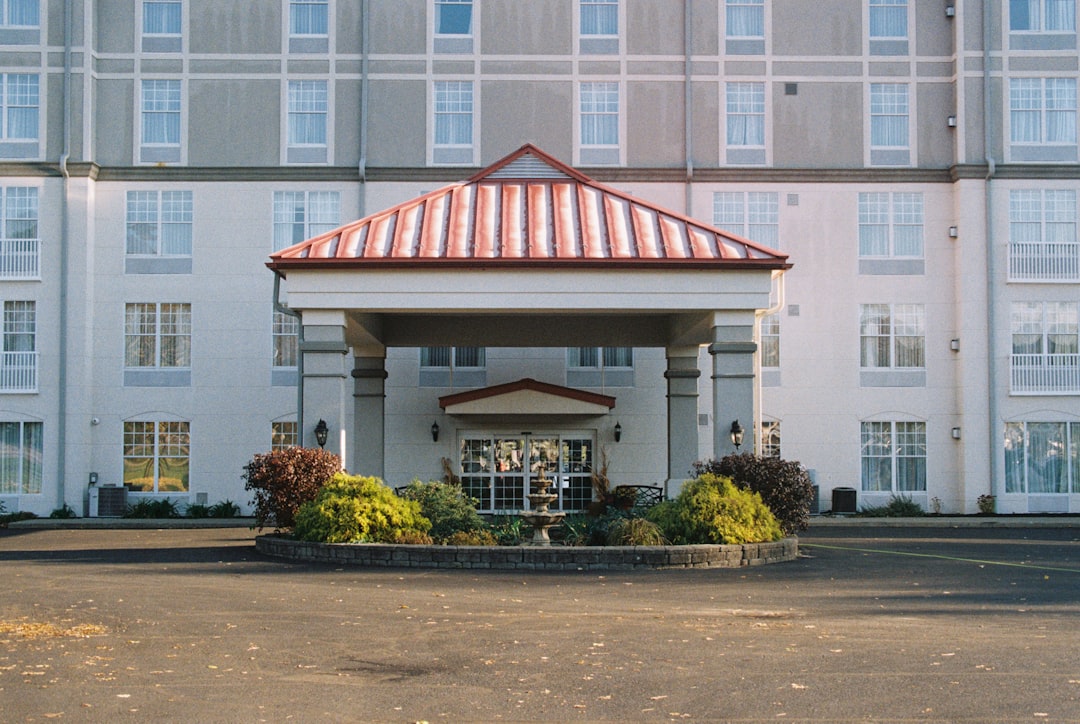 Photo by Adrian Hernandez
on Unsplash
- Each answer decides which insurers can quote you. Property type, rooms with kitchenettes, a pool and a bar sort a hotel into different markets before any price is set.
- Bring the insurance pages of your franchise agreement and any loan papers. Those contracts set limits the quote has to meet.
- Five years of claims reports, payroll split by job and a building fact sheet let the file go to pricing without a second round of questions.
What should you have ready about the property itself?
Start with what kind of property it is, how many rooms it has, and who stands behind it: you alone, a franchise brand or a management company. Those answers decide which insurers look at you at all.
- Hotel or motel, and room count: insurance cost per room available to rent ran about $528 a year for limited-service hotels and $2,464 for resorts (2022 data), so type and size move the price a lot. (Source: CBRE Hotel Research, February 2024)
- Kitchenettes: we ask whether any room has a kitchenette or cooking appliance, because it changes which insurers will quote. Anvo does not write hotels or motels with kitchenettes.
- Years open and who runs it: Anvo writes established hotels, independent or franchised, and hotels fit better than motels. We do not write a hotel that has not opened, or a single property run by a first-time owner.
- Franchise or independent: bring the insurance section of the franchise agreement. A franchisor must give you its disclosure document at least 14 calendar days before you sign or pay, and the agreement is attached to it. (Source: Federal Trade Commission, Franchise Rule § 436.2) The agreement, not the quote, sets the required coverage.
- Own or lease, and any loan: a lender or landlord often has to be named on the policy. See what a certificate of insurance is.
What should you have ready about the building?
Year built, construction, roof age and fire protection set the property price. Fire is the loss that can close a whole hotel, and insurers look closely at how the building is protected.
- Size and age: floors, interior or exterior corridors, year built, frame or masonry construction, and the age of the roof, wiring, plumbing and heating and cooling.
- Protection: sprinklers in every room or only some, a monitored fire alarm, smoke alarms in each room, and any fire-suppression system over a commercial kitchen. Hotels and motels have an estimated 3,900 fires a year in the US, and cooking is the main cause. (Source: U.S. Fire Administration, 2014–2016 data)
- Rebuild value: the date and author of your last property valuation. If the building is insured for much less than it would cost to rebuild, a payout can be cut. Older and boutique buildings may also need cover for the code upgrades a rebuild would trigger, which insurers call ordinance or law coverageOrdinance or Law Coverage Coverage for the extra cost of rebuilding to today's building code after a loss, including tearing down the undamaged part when the code requires it. Insurers call it ordinance or law coverage. more →; see insuring a boutique hotel.
- Income: average occupancy, yearly room revenue and your busy and slow months. A room unrented tonight is revenue you cannot get back, so the lost-income coverage is sized on these numbers.
What should you have ready about the pool, the bar and events?
Describe each amenity as it really runs: the pool and spa, any bar or restaurant, banquets and shuttles. The pool is the biggest single liability question an underwriter asks, and the bar decides whether you need alcohol coverage at all.
Pool and spa
Indoor or outdoor, fenced, lifeguard or not, who maintains it and holds the operator certificate, and whether the drain covers meet federal law. The Virginia Graeme Baker Pool and Spa Safety Act requires compliant drain covers on public pools and spas, a group that the federal product-safety agency says includes hotels and motels. (Source: U.S. Consumer Product Safety Commission) Your state health department sets the rest of the pool rules. Pool and spa drownings of children under 15 average 376 a year. (Source: U.S. Consumer Product Safety Commission, June 2026)
Bar, restaurant and events
Does the hotel run its own bar or restaurant, or lease it to someone else? What are the hours and the share of sales from alcohol? Do you offer minibars, free drinks, banquets or weddings with an open bar? The standard liability policy leaves out claims from serving alcohol; that is a separate policy, and insurers call it liquor liabilityLiquor Liability Coverage if your business is sued after serving or selling alcohol to someone who then injures another person or causes damage. Insurers call it liquor liability. more →. A leased restaurant should carry its own coverage and send you proof.
Shuttles, valet and long stays
Do you own a shuttle van or courtesy car? Who drives, and does a valet park guests' cars? Vans you own need commercial auto; staff using their own cars for errands need coverage for vehicles the business does not own, which insurers call hired and non-owned autoHired and Non-Owned Auto Liability coverage for accidents in vehicles your business does not own, such as rentals or an employee's personal car used on a work errand. Insurers call it hired and non-owned auto. more →. Also say whether rooms rent by the hour, or by the week or month, and whether any are listed on short-term-rental sites; leaving that out can put a claim at risk.
What should you have ready about your staff?
Have a head count and payroll for each job: housekeeping, front desk, maintenance, laundry and kitchen. Workers' comp is priced by job type, and one hotel can fall into more than one class.
Accommodation businesses recorded 2.3 cases per 100 full-time workers in 2024 that kept an employee off work or on restricted duty. (Source: Bureau of Labor Statistics)
- Payroll by job, part-time and seasonal: the first-year price is an estimate, and a premium audit after the year compares it with your actual payroll.
- Contract cleaners and laundry: say who is on your payroll and who is a contractor. An audit can treat a contractor with no insurance of their own as your employee.
More in workers' comp coverage.
What claims history and paperwork should you have ready?
Gather five years of claims reports for every policy, a note on any claim, and your booking and payment system details. Underwriters read the claims reports first, and a clean, explained file moves straight to pricing.
- Claims reports, five years: the report your insurer keeps of past claims. Insurers call it a loss runLoss History / Loss Run Your record of past claims, and the report from your insurer, usually covering five years, that lists them. Insurers call the record loss history and the report a loss run. more →. Get one for every policy, workers' comp included, and add two lines on each claim: what happened and what changed.
- Cancellations, non-renewals and franchise notices: say so, with the reason. A quality-score or default notice from your brand also counts.
- Card and guest data: where you take cards, which booking and front-desk systems you use, whether passport or ID copies are kept, and any past breach. The global average cost of a data breach reached $4.99 million in 2026. (Source: IBM Cost of a Data Breach Report) See hotel cyber insurance.
- Guest-property notices: whether you post your state's notice and offer a safe, which can preserve the legal cap on what you owe for a guest's belongings.
Send it through the hotel quote form. If you want the price side first, read what hotels pay, or why hotels are hard to insure if an insurer has turned you down.
Frequently asked questions about preparing a hotel insurance quote
Ask your current insurer or agent in writing for a claims report on every policy, workers' comp included, and ask each earlier insurer for the years it covered you. Request them before you start shopping so they are current.
Ask the seller or the old agent for the property's claims reports, and give your own record from other properties you have run. A new owner of an established hotel usually starts without the old owner's record, so the building's history matters.
Usually not. They change which insurers look at you and what the policy leaves out. Leaving either off the application is the real risk, because a claim tied to something you did not disclose can be denied. Check your own policy wording and ask your agent.
Be careful. Insurers often work only with the first agent to bring them your account, so two agents sending the same file can leave you with fewer quotes. If you use two, agree in writing which insurers each approaches.
Have your answers ready? Send them over.
We'll read your answers and documents, and take your file to the insurers that write hotels like yours.