
Why is it hard to get insurance for a grocery store?
A grocery store puts a lot of stock in refrigerators, wet floors, a deli with hot oil, alcohol and long hours under one roof, and many standard insurers want only the simpler part of that mix. A decline usually means one insurer's appetite doesn't fit your store, not that your store can't be insured; programs for food retail and specialty markets exist for accounts that general insurers turn away. This page covers the commercial policies a grocery store buys (liability, property, workers' comp and lost income), not personal insurance.
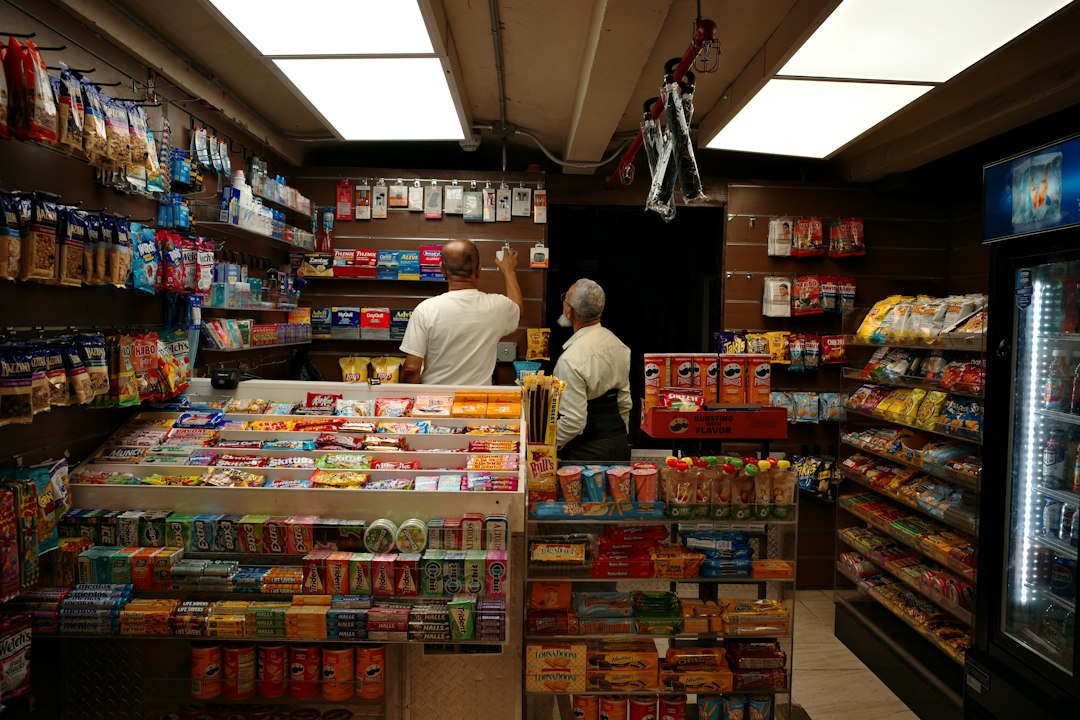 Photo by Matthew Zheng
on Unsplash
- Most grocery declines trace to a short list: refrigeration, deli and hot food, alcohol share, slip claims, and an older building without sprinklers.
- A decline letter reflects one insurer's appetite. Its reason tells you whether to fix something, wait, or go to a different market.
- Before you apply, gather your fire-protection and refrigeration records, read your own claims reports, and tell the application the whole story.
What do underwriters worry about in a grocery store?
Five things drive most grocery declines: injuries and slip claims, cooking, refrigeration, alcohol and tobacco, and an older building without fire protection. None is an automatic no on its own, but stacked together they push you outside a standard insurer's comfort zone.
Every application goes through the insurer's review of your business. Insurers call this underwritingUnderwriting The insurer's review of your business to decide whether to offer coverage, on what terms, and at what price. Insurers call this underwriting. more →, and for a grocery store it comes back to five questions.
- How often do customers and staff get hurt? Grocery stores recorded 4.0 injury and illness cases per 100 full-time workers in 2024, against 2.3 for private industry overall. (Source: Bureau of Labor Statistics) Carts, wet produce floors and parking lot ice feed the customer side: the average slip, fall or customer-injury claim on a small-business policy reached $45,000 in 2025, up from $20,000 in 2015. (Source: The Hartford, via Insurance Journal)
- What do you cook? Fryers, grills and smokers raise the fire question. Cooking caused 33% of fires in stores and offices from 2017 to 2019. (Source: U.S. Fire Administration)
- How much cold storage do you run, and how well is it kept? Walk-ins and cases are a large property value after the building, and when they fail the stock spoils.
- How much of your sales is alcohol and tobacco? Some insurers re-tier a store once the share passes a threshold of their own, so the share is the first thing checked. That claim lands on a separate liquor policy.
- Is the building old, and does it have sprinklers? In our placement experience, an older building with no sprinklers is among the most common reasons an insurer declines a grocery store.
Worked example: imported and private-label goods. These are harder to place, not a no. If you import a product, or your store name is on it, an insurer pictures you in the maker's position when the product hurts someone, and a supplier overseas is hard to recover from. Supplier records and proof you can trace a lot of food to the shelf get a better answer. Programs for food retail write these stores; many general insurers don't.
What does a decline letter actually mean?
A decline is one insurer saying your store falls outside its appetite, meaning what it chose to write.
- "Ineligible class." Your kind of store isn't on that insurer's list, for example because of deli cooking or the alcohol share. The answer is a different market.
- "Loss history." Your claims record crossed that insurer's line. Burglary and theft made up 20% of small-business claims in the same Hartford data, so a theft claim alone rarely tells the story; a short account of what changed after each claim helps. (Source: The Hartford, via Insurance Journal)
- "Unable to accommodate." A catch-all, often pointing to one feature: a building with no sprinklers, overnight hours, an open claim or a thin application. Ask your agent which one.
Most commercial applications ask whether any insurer has declined you. Answer truthfully, with the reason. A gap in coverage or a non-renewal is read the same way, so explain it before the underwriter has to ask. Applying to a string of poorly matched insurers is one of the common grocery store insurance mistakes.
What should I fix before applying?
Fix what an underwriter can check; each item turns a question into a document.
- Fire protection, with current records. Sprinkler and monitored-alarm reports, and for any deli or hot food counter, a serviced hood and suppression system with a current tag. Automatic extinguishing systems were present in only 22% of the larger fires in occupied nonresidential buildings from 2017 to 2019. (Source: U.S. Fire Administration) Many property policies require you to keep named safety systems working, or the insurer may deny a related claim; insurers call it a protective safeguard endorsementProtective Safeguard Endorsement A policy add-on requiring you to keep named safety systems, such as sprinklers or a monitored alarm, working, or the insurer may deny a related claim. Insurers call it a protective safeguard endorsement. more →. Check your own policy wording and ask your agent.
- Refrigeration service logs. A service contract, dated logs, temperature alarms and backup power show an underwriter the cold storage is looked after. Ask your agent how your policy treats a power cut that starts at the utility.
- Floor-safety routine. Mats, spill checks and mopping logs show how fast you act on a wet floor.
- Claims reports, read before the insurer reads them. Your record of past claims, and the insurer's report listing them, is your loss history and loss runsLoss History / Loss Run Your record of past claims, and the report from your insurer, usually covering five years, that lists them. Insurers call the record loss history and the report a loss run. more →. Pull five years from every insurer, check that closed claims show closed, and note what changed after each.
- The application, told straight. Real alcohol and tobacco share, real hours, any imports or private label, and any sales to restaurants or other stores. Your policy covers the business you describe: insurance covers the whole business.
- Age checks. ID scanning and written training for every cashier who sells alcohol or tobacco.
Why does a food retail program or specialty market behave differently from a generalist?
A standard insurer prices a broad book of small businesses and excludes what it doesn't understand. Programs built for food retail, and specialty markets, price the specific risk instead, so you may pay more but keep the coverage.
Most small businesses buy from an insurance company licensed by their state, with its rates filed there and a state safety-net fund behind it; insurers call it an admitted carrierAdmitted Carrier An insurance company licensed by your state, with its rates filed there and a state safety-net fund behind it if it fails. Insurers call it an admitted carrier. more →. Their packaged forms suit the average shop, so a deli, a large alcohol share or an old building can come back declined or excluded. Food retail programs, run by teams that write independent and specialty grocers, build in what a general package leaves out, such as spoiled stock and broken refrigeration. An application without the alcohol split, the fire-protection records or the claims reports gets fewer quotes, because each underwriter assumes the worst.
When licensed insurers say no, the next market is insurers your state permits but does not license: the surplus linesExcess and Surplus Lines (E&S) Coverage from insurers your state permits but does not license, used for risks standard insurers decline. Insurers call this the excess and surplus lines market. more → market. It wrote $131 billion of premium in 2024, about 12% of the U.S. property and casualty market, with no state guaranty fund behind its policies. (Source: National Association of Insurance Commissioners) See licensed versus surplus-lines insurers for the trade-offs.
What makes a grocery store easier to place?
A grocery store is placeable when an underwriter can see the whole operation on paper: what you sell, what you cook, how the cold storage and building are protected, and how you have handled claims. We ask for those items before any application goes out. Anvo is an independent agency that places established grocery stores, big or small, specialty grocers, stores with a deli or hot food, and multi-store owners, with standard insurers and, where needed, food retail programs and the surplus-lines market through wholesale access. We don't write a start-up that hasn't opened, or a stand-alone corner shop with one owner behind the counter.
- What you sell: alcohol and tobacco share, imports, private label, and sales to restaurants or other stores.
- How you operate: deli and hot food equipment, meat and fish cutting, hours, delivery vans or apps.
- Size: square footage, weekly sales, number of stores, owned or leased buildings.
- Documents: five years of claims reports, current policy summary pages, refrigeration service logs, sprinkler, alarm and hood records, recent health inspections, and the insurance pages of your lease.
Food inspectors use the federal Food Code as a model for their own rules, and underwriters read inspection results as a sign of food-safety discipline. (Source: U.S. Food and Drug Administration) The full list is in the grocery store insurance quote checklist. Anvo is licensed in Kansas, Missouri, New York, Pennsylvania and Massachusetts; for other states, an agency can hold a non-resident license, so ask us. Call +1 (913) 845-9688 or use the contact page.
Questions owners ask about grocery store declines
Underwriters usually ask for five years of claims reports, so a bad year stays in view about that long. Each clean year after it, plus a written account of what you fixed, makes it read as history rather than a pattern.
Rarely. A higher deductible can lower the price once an insurer wants you, but it doesn't change whether your type of store fits that insurer's appetite.
It can narrow the list of insurers, and the standard liability policy doesn't cover alcohol sales, so tell your agent before you add it. Check your own policy wording and ask your agent.
Not automatically. It can be broader than a standard package for a hard-to-place store, but its forms aren't filed with the state. Read the exclusions and check the insurer's financial strength rating before you sign.
Declined before? Find the market that fits your grocery store.
Send us the decline letter and your claims reports. We'll tell you what the underwriter saw and which part of the market fits.