
How much does grocery store insurance cost?
What a grocery store pays for insurance is set by its own numbers: sales and floor space, whether it sells alcohol, whether it cooks or cuts meat on site, payroll, state and claims history, so two stores of the same size can pay very different amounts. This page does not give one price; it shows what one large grocery store paid for each coverage, what published sources say about smaller stores, and what moves the number. It covers the five core commercial coverages a grocery store buys (general liability, commercial property, equipment breakdown and spoilage, business income and workers' comp), plus liquor liability when the store sells alcohol.
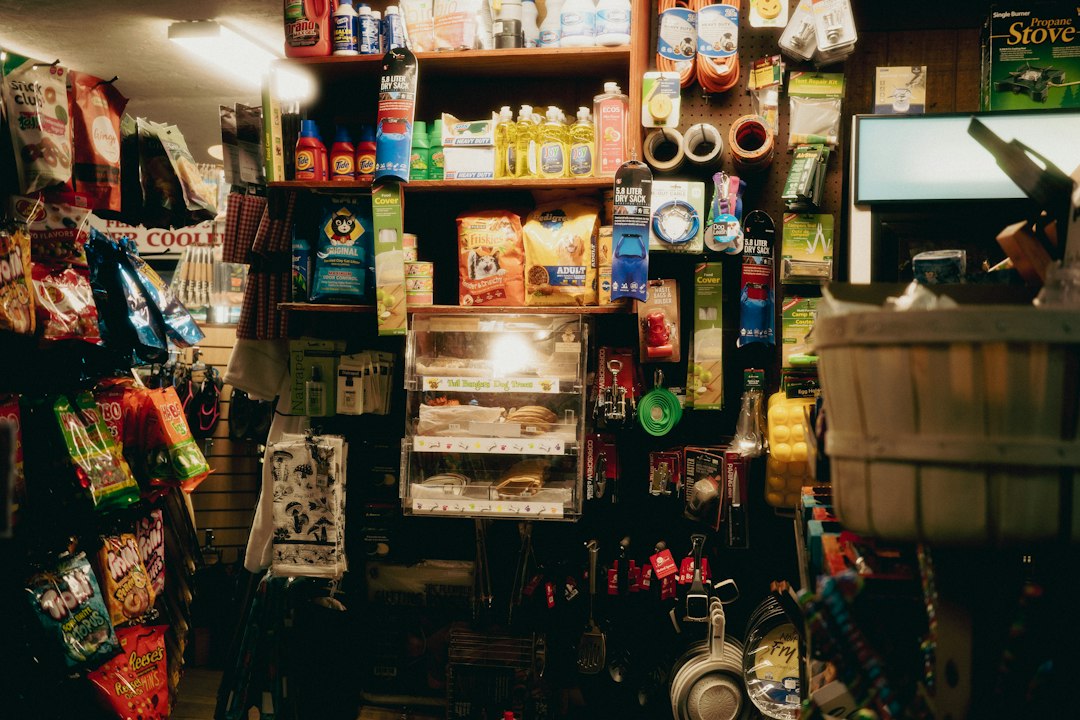 Photo by Fabio Sasso
on Unsplash
- There is no honest single price for "a grocery store." Sales, floor space, alcohol, hot food, meat cutting, payroll, claims and state set the number for each store.
- One large grocery store that owns its building paid about $70K a year for all its policies in 2026 (an anonymized Anvo client). Published figures for small independent grocers run from a few thousand dollars to five figures a year.
- State matters most through workers' comp: across the eight states we cover, the 2024 Oregon rate study puts workers' comp rate levels between 82% and 182% of the study median.
What does a grocery store pay?
No public source we could find gives a full-program grocery price together with the size of the store behind it, so the example below comes from our own book. One large grocery store that owns its building paid about $70K a year in 2026 for its package, umbrella, workers' comp and delivery van, and the table shows each line.
The store owns its building, worth about $11M, and holds about $1.5M of equipment, fixtures and stock, with a payroll of about $700K. Its property and liability coverage sit in one policy, the kind that combines them for a small business; insurers call it a business owner's policyBusiness Owner's Policy (BOP) One bundled policy that combines liability and property coverage for a small business, usually for less than buying them separately. Insurers call it a business owner's policy. more →. Property includes spoiled stock and equipment breakdown, and liability is $1M per incident and $2M a year. For what each line covers, see what insurance a grocery store needs.
| Coverage | What it covers | Yearly price |
|---|---|---|
| Property | The building, equipment and stock, with spoilage and equipment breakdown | About $33K |
| General liability | Customers hurt in the store, $1M per incident and $2M a year | About $24K |
| Umbrella | $2M of extra liability on top of the policy above | About $6.7K |
| Workers' comp | Medical bills and lost wages for staff hurt at work, on a payroll of about $700K | About $4.6K |
| Commercial auto | One delivery van | About $1.3K |
| Total | All five lines together | About $70K |
Source: Anvo client account, anonymized, 2026. Amounts are rounded annual premiums at the 2026 renewal; property and general liability are written together as one package of about $57K. An illustration of one large store, not a quote and not a range for the industry.
A smaller store prices very differently. One independent-grocer cost guide says a full commercial package for small to mid-sized independent grocers runs "a few thousand dollars to well into five figures per year." (Source: Wexford Insurance, 2026) A smaller store with no building to insure sits well below the example above.
Workers' comp rises with payroll, and grocery work hurts people more often than average: grocery stores recorded 4.0 injury and illness cases per 100 full-time workers in 2024, against 2.3 across private industry. (Source: Bureau of Labor Statistics)
A lower price is not always the better deal. In each of these three anonymized stores, the first quote was missing something; the table shows what was added and which way it moved the price. The direction is the usual one, not a promise, and checking whether your coverage is enough comes before comparing prices.
| Business | First quote had | Corrected program has | Yearly price |
|---|---|---|---|
| A store with a deli counter and fryers | Priced as a store that sells only packaged goods; no questions about the fryers or the hood fire-suppression system | Hot-food equipment disclosed, with the hood system's service records on file | Up, for the higher fire risk of hot food; the records give the insurer something to price on |
| A store that adds beer and wine during the year | No liquor liability; the standard liability policy generally leaves out claims for a business that sells alcohol | Liquor liability added, priced on alcohol's share of sales | Up, because alcohol's share of sales is one thing insurers price on |
| A store with a walk-in cooler and open display cases | Nothing for spoiled stock or lost income when refrigeration breaks down or the power fails | Cover for spoiled stock and lost income from a breakdown or power failure | Up, for the added cover; service records on the equipment can help support a claim |
What each gap could have cost the owner: if fire coverage depends on keeping the hood system serviced and the service lapses, a fire loss could be denied. A claim by someone hurt by a customer who bought alcohol could sit outside the liability policy. A weekend breakdown could leave the spoiled stock as the owner's own loss.
Illustration only, with anonymized stores and no dollar figures. Whether a claim like these is covered depends on the policy wording; it is not a statement of what any policy pays. Ask your agent to show you where each one is written in your own program.
What would move this number?
Six things move a grocery store's price. Some you control; the rest you can document.
- Alcohol share — up as it rises. The standard liability policy generally leaves out claims for a business that sells alcohol. (Source: International Risk Management Institute) The separate policy is liquor liabilityLiquor Liability Coverage if your business is sued after serving or selling alcohol to someone who then injures another person or causes damage. Insurers call it liquor liability. more →. Insurers ask what share of your sales is beer, wine or liquor, so tell your agent when you add it. See liquor liability coverage.
- Hot food, fryers and smokers — up, and conditions follow. Cooking was the most common cause of fires in stores and offices, at 33% of them, in 2017–2019. (Source: U.S. Fire Administration) Insurers often attach a clause that makes fire coverage depend on keeping named safety systems working; they call it a protective safeguard endorsementProtective Safeguard Endorsement A policy add-on requiring you to keep named safety systems, such as sprinklers or a monitored alarm, working, or the insurer may deny a related claim. Insurers call it a protective safeguard endorsement. more →. (Source: International Risk Management Institute, January 2025)
- Meat or fish cut on site — changes your workers' comp class. Workers' comp is priced by job class, and states group grocery work differently. Washington's full-line grocery class includes in-store bakeries and delis, but puts an in-store pharmacy in a class of its own. (Source: Washington Administrative Code 296-17A-6402) Ask your agent how your payroll is split.
- Payroll and the mix of jobs — up as payroll grows. The starting price is an estimate; the insurer checks your real payroll afterward in a year-end premium audit.
- Refrigeration and its records — can help. Coolers and walk-ins are both the biggest property value after the building and the biggest spoiled-stock exposure. Cover for spoiled stock is an add-on that many owners assume they already have; insurers call it spoilage coverageSpoilage Coverage An add-on to a property policy that pays for stock that spoils when refrigeration fails or the power goes out. Insurers call it spoilage coverage. more →. A service contract and temperature logs give an insurer something to price on and help document a loss.
- Claims history — up with each claim, especially repeated ones. Workers' comp uses a number that compares your injury claims with similar stores, where 1.0 is average; insurers call it the experience modifierExperience Modification Factor (E-Mod) A number, with 1.0 as average, that raises or lowers your workers' compensation price based on your claims compared with similar businesses. Insurers call it the experience modification factor. more →. On liability, the average slip, fall or customer-injury claim on small-business policies reached $45,000 in 2025, up from $20,000 in 2015. (Source: Insurance Journal, reporting The Hartford)
How much does the state change the price?
The state changes the price mainly through workers' comp rates, and less directly through whether a person hurt by a drunk driver can sue the store that sold the alcohol. The workers' comp ranking below is Oregon's 2024 rate study, where 1 is the most expensive of 51 jurisdictions and 100% is the study median. (Source: Oregon Department of Consumer and Business Services)
- Kansas — ranked 35th, at 83% of the median. Kansas's highest court ruled in 2019 that people hurt by a drunk driver cannot sue the liquor vendor that served them. (Source: Insurance Journal)
- Missouri — ranked 16th, at 120%. The state's one alcohol claim is against a seller licensed to sell by the drink for use on the premises, proved by clear and convincing evidence. (Source: Missouri Revised Statutes 537.053)
- New York — ranked 3rd, at 182%, the highest of the eight. State law lets anyone hurt by a drunk person sue whoever unlawfully sold them the alcohol, for actual and punitive damages, with no on-premises limit. (Source: New York General Obligations Law 11-101)
- Pennsylvania — ranked 21st, at 105%. Workers' comp is required from the first employee, and part-time and family workers count, which matters in a family-run store. (Source: Pennsylvania Department of Labor & Industry)
- Massachusetts — ranked 31st, at 89%. State law bars selling alcohol to an intoxicated person on licensed premises; ask your agent how your license class is treated. (Source: Massachusetts General Laws c. 138, s. 69)
- Louisiana — ranked 9th, at 129%. State law treats drinking, not selling, as the cause of an intoxicated person's injuries, and shields permit holders from most off-premises claims over sales to adults. (Source: Louisiana Revised Statutes 9:2800.1)
- Maryland — ranked 37th, at 82%, the lowest of the eight. Its highest court declined in 2013 to let people hurt by a drunk customer sue the seller, absent a special relationship. (Source: Maryland Court of Appeals, 2013)
- Washington — ranked 12th, at 123%. Washington charges most workers' comp premium by hours worked rather than payroll, and bars selling liquor to anyone apparently under the influence. (Source: Washington Department of Labor & Industries) (Source: RCW 66.44.200)
A favorable court rule lowers one kind of claim risk; it does not remove the need for liquor liability when you sell alcohol. For the state's workers' comp rules, see workers' comp for grocery stores.
Frequently asked questions about grocery store insurance cost
A clean year protects you from a claims surcharge, but it doesn't freeze the price. Higher sales and payroll raise the base the premium is figured on, and the cost of rebuilding and of lawsuits can rise across the market. Ask your agent to show which of those moved your number.
Usually, yes. An owner insures the building itself, while a tenant often insures its stock, equipment and the improvements the lease names. Read the insurance clause in your lease before comparing prices.
Often, yes. Many insurers offer installments, and a down payment plus monthly payments is common. Installments can carry fees or interest, so ask for the total cost of each plan.
Find out what your grocery store would pay
Send us your sales, payroll, alcohol share and current policies, and we'll price your store against the markets that write grocery stores like yours.