
Why is it hard to get insurance for a food manufacturing business?
One bad batch can reach many buyers at once. Allergens, a past recall, thin records and national reach narrow the choice of insurers for a food maker's product liability, recall and property coverage. A decline usually means one insurer's program does not fit your plant, not that you cannot be insured.
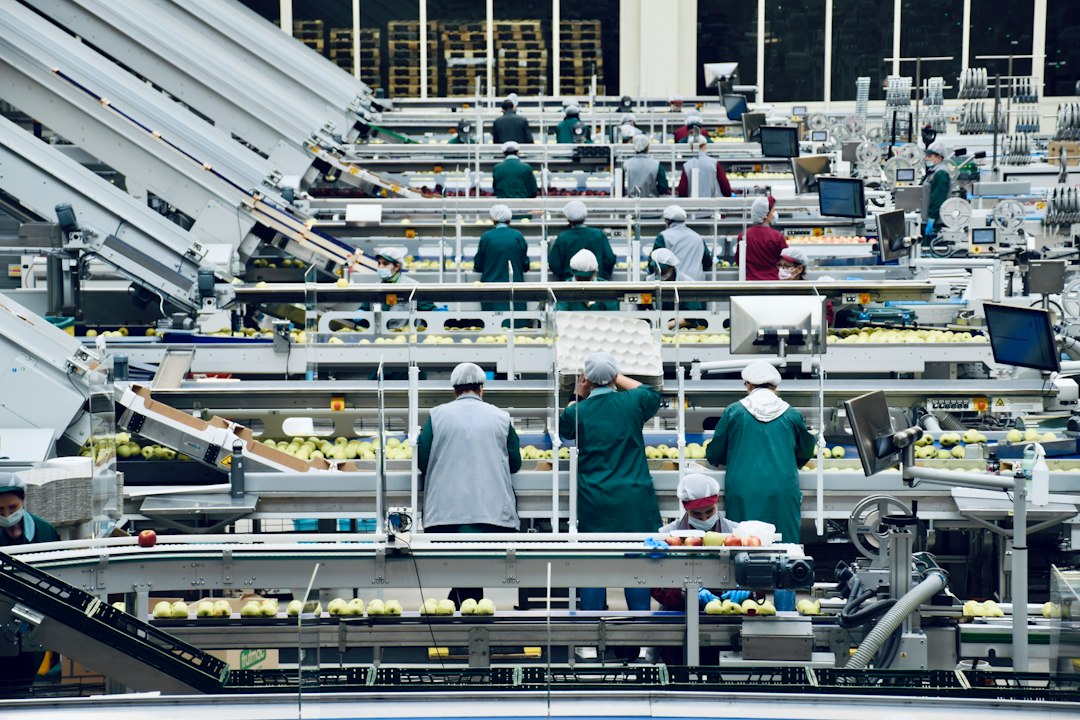 Photo by Arno Senoner
on Unsplash
- A decline usually traces to one of eight things in the table: what you make, a past recall, missing records, allergens, making food for other brands, reach, cold storage or an infused product.
- A decline letter reflects one insurer's appetite. Its reason tells you whether to fix something, wait, or try a different kind of insurer.
- The first fixes cost time, not money: a dated food-safety plan, a closed-out recall file and an allergen list by product line.
What worries an insurer about a food manufacturing business?
Eight things, mostly about how bad one batch could get and whether you can prove you control it. A few are set by your product; most of the rest you can improve.
| What worries the insurer | Why | What to fix first |
|---|---|---|
| What you make: slaughter, meat packing, rendering, seafood, raw ready-to-eat food | The worst contamination outcomes, and USDA history counts | Nothing to change. Keep inspection and pathogen-test records, and expect a specialty insurer. |
| A past recall or serious claim | A weighty signal; it can narrow your choice of insurers | A written, closed-out corrective-action file |
| No written food-safety plan, or thin sanitation records | An insurer cannot rate what is not written | Write and date the plan. Keep sanitation and temperature logs. |
| Allergens without proof of control | A label error can force a recall with no one hurt | An allergen list by line, cleaning checks between runs, label checks |
| Making food for other brands | The insurer reads your customers' products and the promises you sign | Send the contract. List your customers and what runs on shared lines. |
| Reach across many states | A recall grows with where the product went | Lot codes, a practice trace, your top customers' required limits |
| Cold storage with no backup | One refrigeration failure can ruin a run and force a recall | Backup power, alarms with logs, service records, a spoilage limit sized to peak stock |
| Hemp or infused products, some supplements | The rules can be unclear, so some insurers may not write them | Say so first, and expect a specialty insurer |
One data point shows why the records matter. About one-third of the reports in the federal Reportable Food Registry from 2009 to 2014 involved undeclared allergens. (Source: FDA) Foreign material such as metal or plastic can also start a recall with no injured customer, so keep your line inspection records as well as your label checks.
Start with the first three you control: the written plan, the recall file and the allergen list. Our guide to common food manufacturing insurance mistakes shows what happens when they are skipped.
What does a decline letter actually mean?
Usually that your product or reach sits outside that insurer's program. It rarely means the business cannot be insured, and a past recall does not by itself make a plant uninsurable. FDA sorts recalls into classes: Class I when there is a reasonable chance of serious harm or death, and Class III when harm is not likely. (Source: FDA) If you have had a recall, ask the agent whether its class changes how an insurer sees it.
Insurers that write food makers commonly fall into three groups. Standard package insurers write food as one class among many, and take the simpler plants. Specialty food programs build recall and spoilage cover in beside product liability. Excess and surplus linesExcess and Surplus Lines (E&S) Coverage from insurers your state permits but does not license, used for risks standard insurers decline. Insurers call this the excess and surplus lines market. more → insurers are insurers your state lets sell there without licensing them. They often take the harder risks, on stricter terms. Our guide to licensed versus surplus lines insurers explains the trade-off.
Picture a sauce maker whose standard insurer declined to renew after a minor recall two years earlier. The owner had no written account of what went wrong, so the file read as an open question. She wrote up the cause, the fix and the clean record since, and a specialty program took the account with recall and spoilage limits written in. The recall had not changed. The paper trail had.
When a letter arrives, ask the agent for the reason in plain words. "Ineligible class" points to a different group of insurers. A claims-history reason points to your recall or claims file. A catch-all points to one feature on the table above, and you can ask which one. Our guide to how a policy covers the whole business helps you read the rest of what you have.
What does Anvo ask a food maker for?
Five things: what you make and how far it ships, your written food-safety and recall plans, your customer contracts, five years of claims, and a note on anything that went wrong.
- A product list and the states you ship to, so we know which insurers can look at you.
- The food-safety plan and the recall plan, even if they are rough drafts.
- The insurance pages of your customer contracts, including any co-packing agreement.
- Five years of claims reports from every prior insurer.
- A short note on any recall, claim or citation: what happened and what you changed.
The full list, with where to find each item, is in our food manufacturing insurance quote checklist. Anvo is an independent agency licensed in Kansas, Missouri, New York, Pennsylvania and Massachusetts. We place accounts with standard insurers and, where needed, with surplus lines insurers through wholesale access. We write food makers and packers that sell to stores, restaurants or distributors, including newer businesses that are already selling and co-packers. We do not write a home kitchen or a plant that makes anything other than food. Call +1 (913) 845-9688 or use the quote form.
Frequently asked questions about getting food manufacturing insurance
Not by itself. It can mean the standard insurers do not write your kind of plant. These insurers are generally not licensed in your state, and a state's fund for failed insurers may not stand behind their policies. Ask your agent how the terms differ from a standard policy.
An insurer with no plan to read may decline or price high. A dated plan with sanitation and temperature logs is a low-cost fix.
Ask for the reason in writing. It is usually your product, your reach or your claims or recall history sitting outside that insurer's program. Insurers call this a non-renewal, and it is not a ruling on your plant.
Turned down once? Send us the letter
Send the decline letter or your current policy with your product list when you request a quote.