
I own a food manufacturing business — what insurance do I need?
A food manufacturer needs six core coverages: product liability, for someone made sick by your food; product recall and contamination, for your cost to pull bad product; general liability, for a visitor hurt at your plant; commercial property with equipment breakdown, for plant, machines and stock; workers' comp, for staff hurt on the job; and business interruption, for lost income. Two more depend on the business: spoilage coverage for refrigerated or frozen product, and commercial auto for delivery vehicles. An umbrella, employment practices liability (for lawsuits from your own employees) and cyber liability are common add-ons.
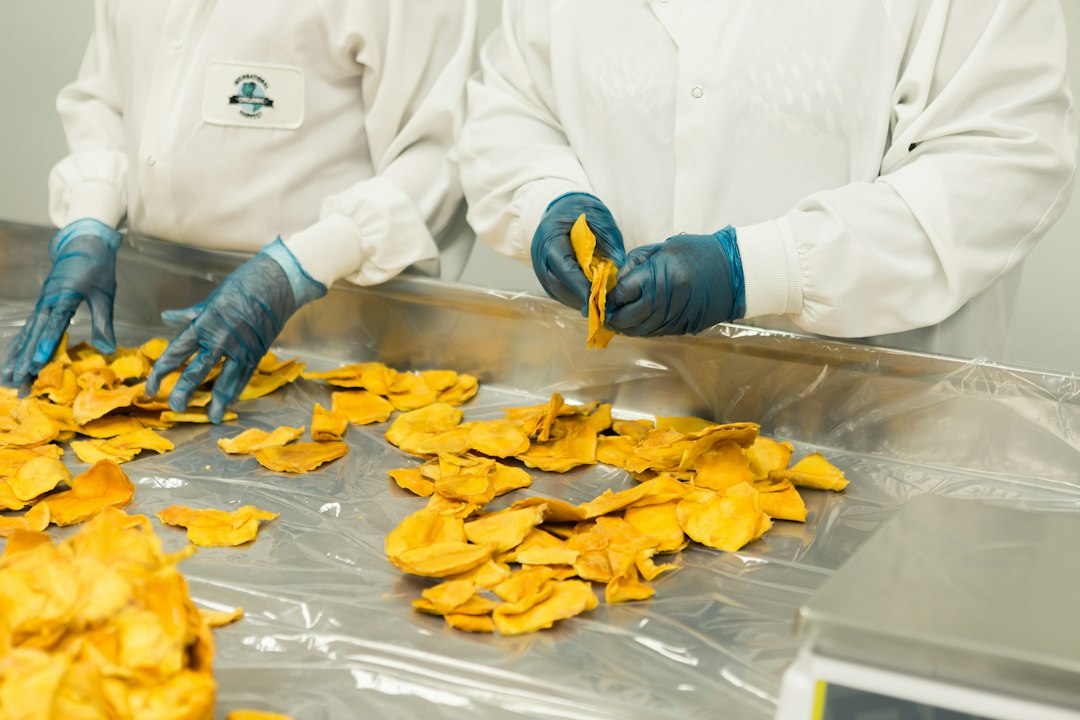 Photo by No Revisions
on Unsplash
- Six core coverages carry most food makers: product liability, product recall and contamination, general liability, commercial property with equipment breakdown, workers' comp and business interruption. Spoilage coverage and commercial auto depend on the business.
- A standard liability policy generally leaves out the cost of pulling your own product back. That takes a separate recall coverage.
- State law requires workers' comp and auto liability. Buyers, landlords and lenders require most of the rest.
Which coverage does each requirement come from?
State law requires workers' comp and auto liability on vehicles you drive. A buyer's agreement, a lease or a loan asks for most of the rest. The table shows which is which.
| Coverage | Pays for | You need it if | Who requires it |
|---|---|---|---|
| Product liability | Medical bills and legal defense when your food hurts or sickens someone | You sell food to anyone | Buyers' agreements, often; otherwise recommended |
| Product recall and contamination | Your cost to pull, test and destroy bad product | Your product reaches stores or distributors | Recommended; read any contract that moves recall cost to you |
| General liability | A visitor, driver or vendor hurt at your plant | Anyone but staff enters the plant | Landlord, lender and buyers |
| Commercial property with equipment breakdown | The plant, machines and stock after a fire; a machine that breaks down | You own or lease a plant, machines or stock | Lender, and a landlord under a lease |
| Workers' comp | Medical bills and lost wages for hurt staff | Anyone is on your payroll | State law, past a headcount that varies by state |
| Business interruption | Lost income while the plant is shut after a covered loss | A month closed would strain payroll or loan payments | Recommended; a lender may ask |
| Depend on the business | |||
| Spoilage coverage (depends on the business) | Cold or frozen stock lost to a power cut or breakdown | You make or hold refrigerated or frozen product | Recommended; a buyer or lease may ask |
| Commercial auto (depends on the business) | Accidents in trucks or vans you own | You own vehicles that deliver product | State law, and buyers |
The state-law row varies. Missouri's law starts at five employees. (Source: Missouri Revised Statutes 287.030) Massachusetts sets no minimum headcount. (Source: Massachusetts General Laws c. 152, s. 25A) Our workers' comp laws by state index links the page for each of the eight states this guide covers.
Often, your landlord and lender will have specific insurance requirements you must meet to stay in compliance. Read the insurance section of each lease, loan and buyer agreement before you sign.
Does my liability policy pay for a recall?
Generally no. Product liability pays when your food hurts someone. Recall coverage pays your own cost to pull bad product off the market, and a standard liability policy can leave that cost out.
A standard liability policy usually has an exclusion for the cost of withdrawing, inspecting, repairing or replacing your own product, often called the "recall of products, work or impaired property" exclusion. (Source: International Risk Management Institute glossary) A separate contaminated products policy is the usual way to cover recall costs. Wording differs, so ask your agent to show you the recall exclusion in your policy and where recall is covered.
Picture a sauce maker who finds a mislabeled allergen on one lot. Nobody is hurt, so no liability claim exists, but the plant still pays to pull, test and destroy the product. Recall coverage is designed for that cost. A recall can start on a firm's own initiative, at FDA's request or by FDA order. (Source: U.S. Food and Drug Administration) Meat, poultry and egg-product plants answer to USDA instead.
Our guide to product recall and contamination insurance explains what recall coverage pays. Product liability carries one yearly limit, so a food maker with several plants should read how shared liability limits work. See also the product liability page.
What covers the plant, the machines and a shutdown?
Commercial property pays to repair or replace the plant, machines and stock after a fire or similar loss. Business interruption pays the income you lose while the plant is shut after a covered loss. Many insurers sell them together.
Equipment breakdown coverageEquipment Breakdown Coverage Coverage for the sudden mechanical or electrical failure of equipment such as a walk-in cooler, a boiler or an elevator, which a standard property policy leaves out. Insurers call it equipment breakdown coverage. more → pays to repair or replace a machine that breaks down, such as a mixer, oven or compressor. Equipment breakdown is commonly an add-on to the property policy, so check that it is on yours. Insure machines at what they cost to replace today.
Ask whether your property policy sets conditions on cleaning or safety systems, and keep service records. See commercial property coverage.
Business interruption is added to the property policy. Check how many months it pays and how long it waits before it starts. See business interruption coverage.
What covers the people at my plant?
General liabilityGeneral Liability (GL) Coverage for injuries and property damage your business causes to other people, plus certain advertising claims. Insurers call it general liability. more → pays when a visitor, driver or vendor is hurt at your plant or their property is damaged. Workers' comp pays your own employees' medical bills and lost wages after a work injury.
Food plants record 3.3 recordable injury and illness cases per 100 full-time workers, against 2.3 across private industry. (Source: Bureau of Labor Statistics) Ask your agent to split your payroll by job, because line, warehouse and office work are priced differently.
Most people on your payroll count. Whether a hauler, temp or contractor counts depends on how your state treats them; ask your agent and check your state's page. Our guide to workers' comp for food manufacturers covers the rules and the price. Here is what general liability and workers' comp cover.
Which coverages depend on my business, and which are add-ons?
Spoilage coverage and commercial auto depend on what you make and how you ship. A few more can apply, and three add-ons sit on top. None count toward the six core coverages.
Spoilage. Spoilage coverageSpoilage Coverage An add-on to a property policy that pays for stock that spoils when refrigeration fails or the power goes out. Insurers call it spoilage coverage. more → pays for cold or frozen stock lost when power fails or a machine breaks down. Match its limit to the value of your stock at its peak, and ask whether a power cut off your site counts. See cold-chain food manufacturing insurance.
Trucks and vans. Every vehicle you own needs the state's minimum auto liability, and commercial auto carries it. If staff drive their own cars on work errands, hired and non-owned auto coverageHired and Non-Owned Auto Liability coverage for accidents in vehicles your business does not own, such as rentals or an employee's personal car used on a work errand. Insurers call it hired and non-owned auto. more → responds to those trips.
Other companies' recall costs. A co-packer is a business that makes food for other brands. If you sell ingredients or co-pack, a customer's recall can trace back to you. Insurers call that cover third-party recall, and a co-packing contract may say who pays. See co-packer contract insurance.
Pollution and cargo. Pollution liability covers a release such as ammonia from refrigeration, or wastewater discharge; ask whether your liability policy leaves pollution out. Cargo coverage applies if you ship in your own or hired trucks. See cargo and inland marine.
Add-ons. An umbrella sits on top of your liability policies and pays when a serious claim runs past their limits; here is how to tell if you need one. Employment practices liabilityEmployment Practices Liability (EPLI) Coverage if an employee sues you over how you hired, treated, or fired them, such as discrimination or wrongful termination. Insurers call it employment practices liability. more → responds to lawsuits from your own employees. Cyber liability responds to a data breach or a system lockout.
To check your limits, see is this enough coverage? To price the program, start with what to prepare for a food manufacturing quote and what food manufacturing insurance costs.
Common questions about what insurance a food manufacturer needs
Not that we found. FDA and USDA set food-safety rules, and the licensing pages we read ask for applications, plan reviews and inspections rather than proof of insurance. Confirm with the agency that licenses your plant.
Tell your agent before you start. A new allergen line, a new product category or new co-packing work can change how your policy is written and priced, so ask your agent to show you where your products are described.
Often, yes. A co-packer makes food under other brands' labels, and contracts like these commonly ask for named coverage for the brand and a clear answer on who pays for a recall. The agreement you hold is the authority.
Check which of these your food plant needs
Send us what you make, who buys it and how it is stored, along with your current policies, with a quote request.