
5 coverage gaps in a typical food manufacturing policy
A typical food manufacturing policy can have five common gaps, in four kinds: two missing coverages (a customer's recall costs, and income lost when a supplier shuts), a recall limit sized for one product, machines paid at depreciated value, and a safety promise you must keep up. Each comes down to one line in your policy.
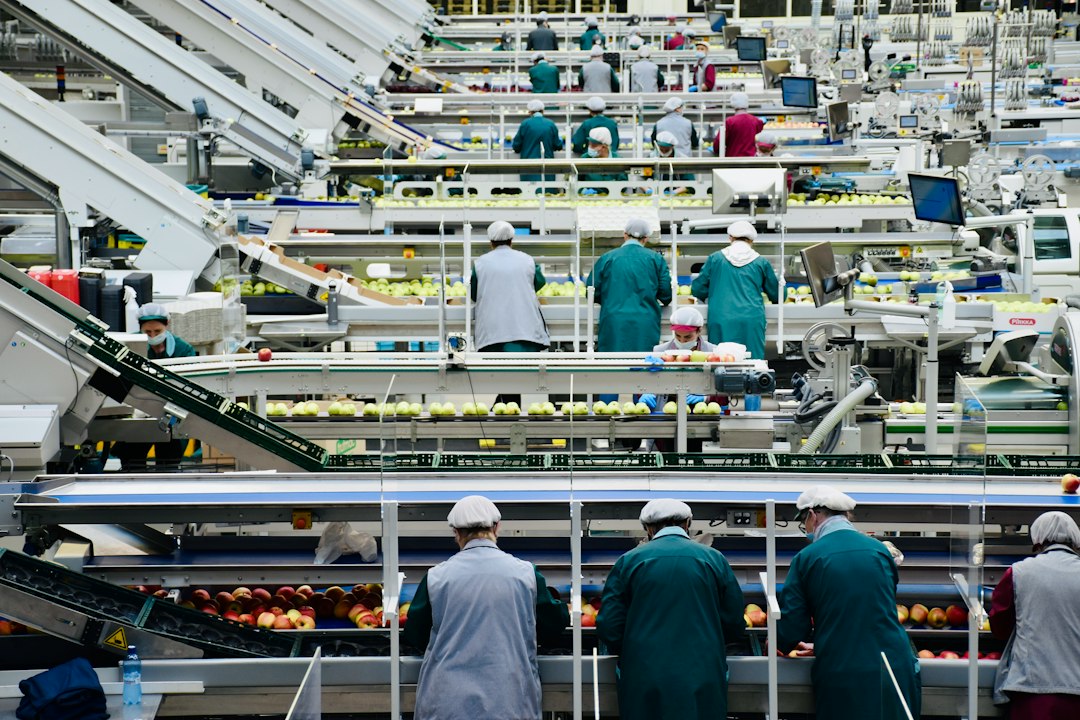 Photo by Arno Senoner
on Unsplash
- Gaps hide in four places: coverage you do not have, a limit that is too low, a setting that pays less than you expect, and a condition that can void cover.
- Recall cover that pays your own costs may not pay a customer's costs, and a limit sized for one product may be small for a full production day.
- For every gap there is one line to find in your policy and one question to put to your agent.
Which five gaps do food makers find in their policies?
Five gaps come up often. They fall into four kinds, because two of them are missing coverage. A co-packer, used in the table below, is a business that makes food for other brands. Our guide to what insurance a food manufacturer needs lists the full set.
| Gap | Kind | How to spot it | Fix |
|---|---|---|---|
| 1. A customer's recall costs | Missing coverage | Recall wording names only your costs | Add recall cover for others' costs |
| 2. A recall limit for one product | Limit too low | Limit is under one day's output | Size it to your widest lot |
| 3. Machines at depreciated value | Wrong setting | Policy says actual cash value | Switch to replacement cost |
| 4. A supplier or co-packer shuts | Missing coverage | Income cover needs damage at your plant | Add cover for named suppliers |
| 5. A safeguard you must keep up | Condition that can void cover | A schedule lists sprinklers or alarms | Service dates and notice duty |
Gap 1: Does my recall coverage pay a customer's costs, or only mine?
Often only yours. Recall cover for your own product is one thing. Cover for a customer's recall, when your ingredient forces them to pull their finished product, is a separate add-on.
Picture Ines, who sells spice blends to a brand that bottles them. One of her lots tests positive, and the brand recalls 200,000 jars. Her contract passes the brand's costs back to her. Her recall policy is written for her own costs only, so the brand's bill may fall to her.
Third-party recall is recall cover for other companies' costs. It matters most if you sell ingredients or make food for other brands. Read how recall and contamination cover works, and ask whether your contracts push a customer's costs onto you.
What to say to your agent. “Does my recall cover pay a customer's costs if my ingredient causes their recall, and where is that written?”
Gap 2: Is my recall limit enough if one production day goes to every buyer?
It may not be. A recall limit sized for one product can be small when a single day's production has gone to every buyer you sell to.
Picture Raj, who makes frozen meals. He buys a recall limit that fits one product at one buyer. Then one day's output ships to six distributors, and a positive test forces a pull from all of them. The cost of retrieval, testing and destruction passes the limit, and he may pay the rest himself.
One production day can reach every buyer you sell to, so the size of a pull follows where the product went. A recall limit chosen for one product can be too small for that. Ask your agent how your limit was chosen and what it is, then compare it with the cost of pulling your widest lot. Read how shared limits work too.
What to say to your agent. “What is my recall limit, is it per product or per year, and does it cover one full production day sent to all my buyers?”
Gap 3: Will my machines be paid at new prices or used prices?
Check one setting on your property policy: whether it pays what a machine costs to replace new, or what it was worth after wear. On a packaging line that is years old, the two can be far apart.
Actual cash valueActual Cash Value (ACV) What your damaged or stolen property was worth the day you lost it, after subtracting wear and age. Insurers call this payout method actual cash value. more → pays what the item was worth after age and wear. The other setting pays to replace it with a new one. The setting applies to the machines your property coverage protects. It also applies to equipment breakdown coverageEquipment Breakdown Coverage Coverage for the sudden mechanical or electrical failure of equipment such as a walk-in cooler, a boiler or an elevator, which a standard property policy leaves out. Insurers call it equipment breakdown coverage. more →, which pays to repair a machine that breaks down. Here is one packaging line after a covered fire, with round numbers.
| What happens | Amount | Insurer pays | You pay |
|---|---|---|---|
| A covered loss destroys a packaging line; a new one costs | $400K | ||
| The old line was worth, after age and wear | $150K | ||
| Your deductible | $10K | ||
| Actual cash value: the insurer pays the old line's worth less the deductible ($150K − $10K) | $140K | $260K | |
| Replacement cost: the insurer pays a new one less the deductible ($400K − $10K); you pay the deductible | $390K | $10K |
Illustration only, with round numbers. It is not a statement of what any policy pays; your own policy wording governs.
Read what the contents of your business cover and how to value them.
What to say to your agent. “Are my machines valued at replacement cost, when did we last update the values, and does a breakdown use the same setting?”
Gap 4: Am I covered for lost income when a key supplier or co-packer shuts?
Often not. Standard income cover generally responds to a covered loss at your own plant. A supplier's or co-packer's shutdown is a different event.
Picture Mei, whose noodle plant buys all its starch from one mill. The mill has a fire, and her plant sits idle for six weeks with nothing to run. Her plant is untouched, so her income cover may have nothing to respond to, and her payroll runs for six weeks with no sales.
Contingent business interruption is income cover that names the suppliers or customers you depend on. It usually asks you to name each one. Compare your own business interruption coverage with the list of businesses you could not operate without.
What to say to your agent. “If my main supplier or co-packer shuts, is my lost income covered, which businesses must be named, and how long is the waiting period?”
Gap 5: Could a lapsed safety system or plan cost me a claim?
It can. A protective safeguard endorsementProtective Safeguard Endorsement A policy add-on requiring you to keep named safety systems, such as sprinklers or a monitored alarm, working, or the insurer may deny a related claim. Insurers call it a protective safeguard endorsement. more → makes fire cover depend on keeping named systems, such as sprinklers or a monitored alarm, working. The systems are listed on a schedule in your policy.
Picture Carlos, whose application says the plant has sprinklers serviced yearly and a monitored alarm. The alarm contract lapses and nobody tells the insurer. After a fire, the insurer may ask whether the alarm was working, and the wording could let it reduce or deny the claim even if the lapse did not start the fire. Whether it can is a question for the policy wording and an attorney. Carlos is left paying for the rebuild while the claim is argued.
Ask which systems are on your schedule and who services them. If your application describes a written food-safety plan, keep that plan current too. The five insurance mistakes food manufacturers make are a separate list.
What to say to your agent. “Which systems are on my schedule, who do I notify if one is out of service, and what did my application promise?”
Common questions about food manufacturing coverage gaps
Take the five "What to say to your agent" questions above and ask your agent to show the line in your policy that answers each. If a line does not exist, that is the gap.
Start with the gap that matches a contract you signed, then the recall limit, since those can be the largest bills. Ask your agent for each fix priced separately.
Usually yes for coverage you add, because it pays for a new risk. Ask for the price of each fix separately so you can decide which ones are worth it.
Find the gaps in your food manufacturing policy
Send us your current policy with a quote request.