
I run trucks from more than one yard or in more than one state — do I need multiple policies?
Usually not. Most fleets with several yards carry one program that lists every truck and every yard. Check three things: whether the yards share one yearly liability limit, whether each truck is listed with the yard where it is parked, and what changes when a truck starts running in a new state.
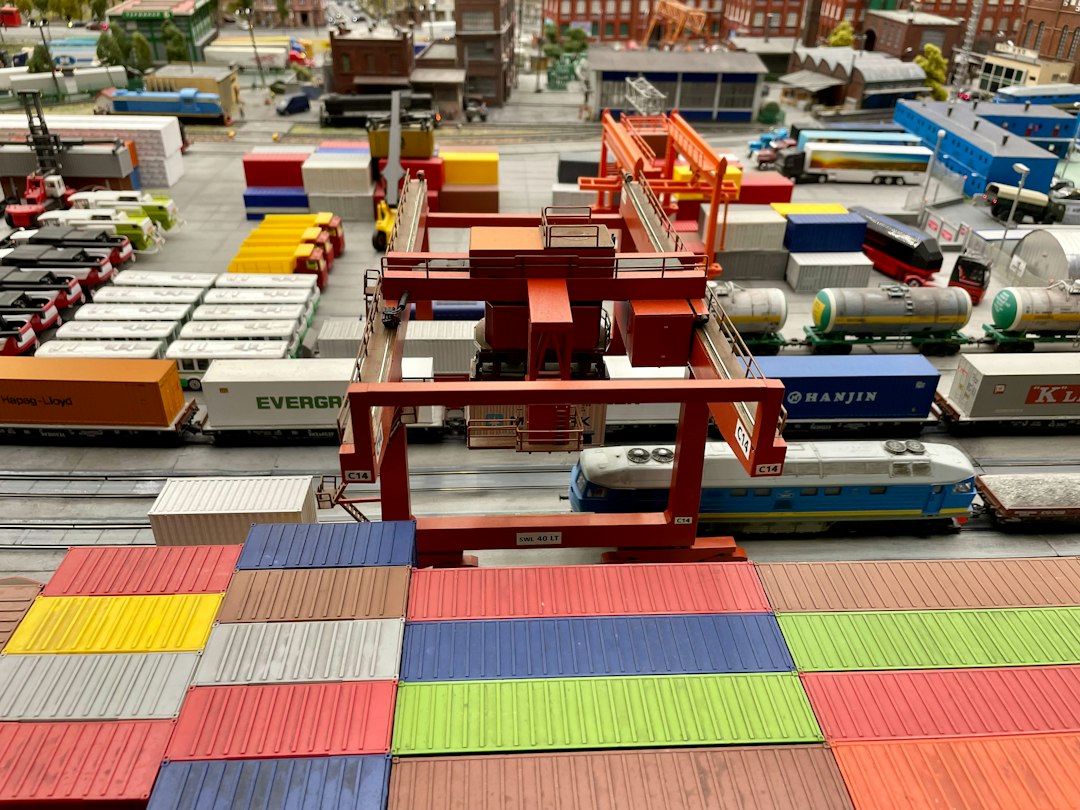 Photo by Tasha Kostyuk
on Unsplash
- One program that lists every truck and every yard is common. A separate policy makes sense when ownership or a contract calls for one.
- If your yards share one yearly liability limit, two large claims at one yard can leave the others without it. Ask whether each yard can have its own yearly limit.
- A truck that moves to a new yard or starts running in a new state is a change to report to your agent before it happens, not at renewal.
Do I need a separate policy for each yard?
Usually not. One program that lists every truck and yard on its commercial auto, general liability, commercial property and workers' comp policies is common, with one renewal and one set of paperwork.
Insurance follows the business, not the lot. If one company runs trucks from three yards, that company is the policyholder and each yard is a location on its policies. A yard left off the list is a gap. Our guide to why the whole business is insured together explains why. To see the mechanics, read how one policy covers several locations.
A separate policy is the right answer when either of these is true:
- Different owners. One yard sits in a separate company, or has a different partner.
- A contract. A landlord, lender or customer agreement can ask for its own limits or its own named party for one yard. Read the insurance section before you place the policy.
If neither applies, one program is the usual answer. This holds whether you haul other people's goods for pay or carry only your own.
What does my policy need to know about each truck and yard?
Which truck sits at which yard, and how far it runs. Your policy lists each truck with the place it is parked, and that place and the distance drive the price.
The garaging addressGaraging Address The place a vehicle is parked and based. Insurers use it to set the rating territory, so it must be where the vehicle actually sits. more → is the place a truck is parked and based. Insurers use it to set the rating territory, so it has to be where the truck actually sits. A state regulator's list of factors insurers use to rate medium and heavy trucks includes the postal code where a truck is garaged, the radius of operations, the miles driven in each state and where the truck is stored. (Source: state insurance regulator, report on medium and heavy truck insurance, 2025)
The radius of operationsRadius of Operations How far from its garage a vehicle normally travels: local (up to 50 miles), intermediate (50 to 200) or long distance (over 200). Insurers call it radius of operations. more → is how far a truck normally runs from its garage. Insurers use three bands: local, up to 50 miles; intermediate, 50 to 200 miles; and long distance, over 200 miles, measured in a straight line from the garage. (Source: International Risk Management Institute, radius class definition) Give your agent the radius as your trucks run it, not as you hope to run it. List each truck at the yard where it is parked, so a truck that runs 200 miles is not filed as a local one.
The parts and shop equipment at each yard belong on your property coverage, with a limit for each yard.
What if I start running trucks from a new yard or into a new state?
Tell your agent before the first truck moves. A new yard or a new state is a change to your policy, to your registrations and fuel tax, and to how your payroll is rated.
Your insurance. Your policy lists each truck and where it is parked. A truck moved to a new yard, or a route that now crosses a state line, is a change to report, because the address and the miles in each state both feed the price. Send your agent the new address, the trucks that will be based there, the states they will run in, the opening date and the lease's insurance section.
Registration and fuel tax. Apportioned registrationApportioned Registration (IRP) One registration for trucks that run in several states, with the fees split by miles driven in each. It covers plates only, not operating authority or insurance. Often called IRP. more → is one registration for heavy trucks that run in several states, with fees based on where the truck travels. The rule goes by the truck's weight and the states it runs in: a truck over 26,000 pounds, or one with three or more axles, that runs in two or more states. (Source: state licensing department, apportioned registration page) A fuel tax agreementFuel Tax Agreement (IFTA) One quarterly fuel tax return for trucks that run in several states, with the tax split by miles and fuel used in each. Often called IFTA. more → lets such a truck file one quarterly fuel tax return for all the states it drives in. (Source: state tax department, fuel tax agreement page, 2026) Neither is an insurance filing.
Workers' comp payroll. Rules for which state a driver's pay counts toward can differ; two examples follow. In Pennsylvania, the rating bureau's manual sends the payroll of an interstate trucker with operating authority to the state where it has a terminal or base. (Source: workers' comp rating bureau, basic manual, 2023) Washington prices by hours worked and counts at most 520 hours a quarter for each worker. (Source: state labor and industries department, trucking page) To see the other six states, read our workers' comp laws by state. A new state's payroll also shows up at the year-end review of your payroll, called a premium audit, so report it when it starts. Our guide to what a premium audit is explains it.
State truck rules and contracts. Some states regulate trucks that haul goods within the state with a permit or registration. Our guide to truck fleet insurance requirements by state lists what we found for each of the eight states. Often, your landlord and lender will have specific insurance requirements you must meet to stay in compliance. To see what a yard lease asks for, read what a landlord requires for a truck yard. Our guide to the coverages a truck fleet needs shows what else to update.
Common questions about insuring several truck yards
Often, though not always. One program means one renewal and one set of paperwork, but every truck and yard is still priced on its own use, payroll and claims. A yard with a poor claims record can raise the price of the whole program.
Usually, if you tell your agent before it opens. Some policies cover a new location for a short time at a capped amount, so check your wording rather than assuming.
A place where a truck is regularly parked at night can count as its garaging address. Ask your agent to list that place on your policy and to show you how the policy treats a truck parked away from your own yard.
Set up one program for all your yards
Bring your truck list, the address of each yard and the states you run in, and we will go through it with you.