
My landlord requires insurance for my truck yard or terminal — what do I actually need?
A yard or terminal lease commonly asks for liability coverage at set limits with the landlord named on it, property coverage on what you keep there, and proof before you move in. Find the insurance section, match each line to your policy, and send the landlord a certificate plus the written add-ons.
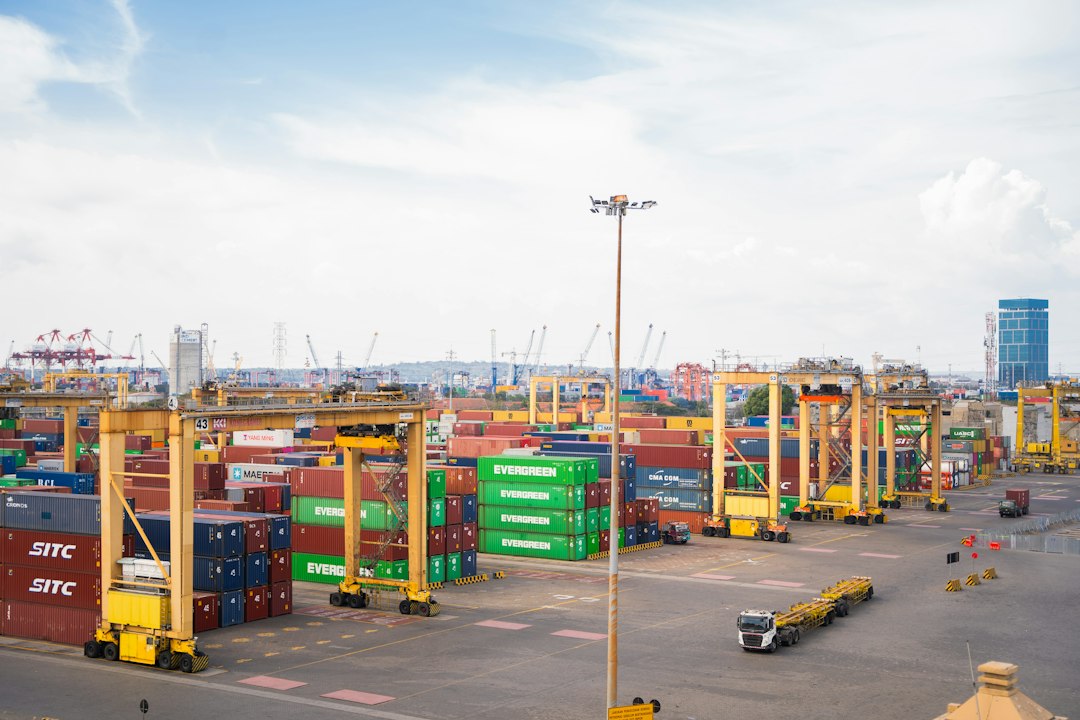 Photo by Haris Illahi
on Unsplash
- Often, your landlord and lender will have specific insurance requirements you must meet to stay in compliance. The numbers are in your lease, not in this guide.
- The landlord's protection comes from written add-ons to your policy, not from the certificate. Send both.
- The landlord's own policy usually insures the building, not your trucks, parts or shop equipment. Those need your own coverage.
What does a truck yard lease ask for, and what do I send back?
Yard leases commonly ask for liability limits, the landlord named on your policy, property cover and proof before you move in. Find each line in your lease and send what the last column says.
There is no standard yard lease, and it asks the same of a fleet that hauls for pay and a fleet that carries only its own goods. Two public industrial leases show the kind of wording a lease can use, not a norm. One asks for general liability of $2M per incident and $5M for the year. (Source: U.S. Securities and Exchange Commission, filed industrial lease, 2011) The other asks for $1M and $2M. (Source: U.S. Securities and Exchange Commission, filed industrial lease, 2004) Your lease may ask for more, less or something different.
| The lease says | It means | What to send back |
|---|---|---|
| Liability of a set amount per incident and per year | Your liability policy shows both numbers, or higher | Certificate showing both limits |
| Landlord, and often its lender, named on your policy | Each one is added to your liability policy by name | Copy of the written add-on, not only the certificate |
| Your insurer gives up the right to recover from the landlord | After it pays you, your insurer cannot pursue the landlord | Copy of that add-on; ask your attorney about mutual versions |
| Your policy pays first | The landlord's insurance is not asked to share a claim | The add-on wording that says so |
| Property cover on what you keep in the yard and shop | Parts, tools, shop equipment and fixtures you add are insured | Certificate showing the property limit |
| An extra liability layer for a higher total | An umbrella can count toward the limit | Certificate listing the umbrella and the policy under it |
| Wording on parked trucks, fuel or wash bays | Each can call for separate wording on your policy | Your questions to the landlord in writing, and your agent's answer |
| Hazardous materials kept on site | Ordinary liability wording can exclude a spill; ask your agent what yours says | Your agent's answer on what your policy says |
| Warning to the landlord if the policy ends | Your insurer sends the landlord notice a set number of days ahead | Your agent's word on whether your insurer will agree |
Your own lease governs. Where a clause decides who bears a loss, ask your attorney.
What do the insurance words in my lease actually mean?
Three phrases do most of the work: naming the landlord on your policy, giving up your insurer's right to recover from the landlord, and two limit numbers. Your insurer issues the first two in writing; a certificate cannot.
- Naming the landlord on your policy. An additional insuredAdditional Insured Another person or business covered under your liability policy for claims tied to your work or property, such as a landlord or general contractor. Insurers call them an additional insured. more → is a party added to your liability policy so it is defended and paid if a claim comes from your operations. A lease may name the landlord, its lender or both.
- Giving up the right to recover. A waiver of subrogationWaiver of Subrogation A policy add-on where your insurer gives up the right to pursue a party you agreed by contract not to blame after a loss. Insurers call it a waiver of subrogation. more → stops your insurer from going after the landlord for money it paid you. Whether that suits you, and whether the landlord gives up the same right, is a question for your attorney.
- The two numbers. A pair such as "$1,000,000 and $2,000,000" means the most the policy pays for one incident and the most it pays for the year, the aggregate limitAggregate Limit The most your policy will pay for all claims combined during the policy year, no matter how many there are. Insurers call this the aggregate limit. more →.
A certificate of insuranceCertificate of Insurance (COI) A one-page proof of your coverage, showing the insurer, policy number, and limits, that you hand to a landlord or client. Insurers call it a certificate of insurance. more → is the one-page proof of coverage that you hand over. It summarizes what you bought. Your policy wording decides what is covered. Our guide to what a certificate is shows each box on the form.
Picture an owner who signs a yard lease and sends only a certificate. The lease also asked for the landlord to be named on her policy by a written add-on, and nobody issued it. A visitor is hurt in the yard and sues the landlord. Her insurer may not treat the landlord as covered, and the landlord may look to her under the lease.
Does my landlord's insurance cover my trucks, parts and shop equipment?
Usually not. A landlord's policy is usually written for its own building and its own liability; check your lease and ask your agent. Your trucks, parts and shop equipment need your own policies.
Your trucks sit on your commercial auto policy. It pays for injury and damage your trucks cause to other people and, if you buy the physical damage part, for repairing or replacing the trucks. Your property coverage is built for the tools, parts and shop equipment inside a yard building, so set its limit to what you hold at your fullest, not an average month. Your general liability coverage answers a claim from a visitor or driver hurt on your dock or walking your yard.
Settle who insures improvements you pay for, such as a fuel tank, a wash bay, a canopy or fencing. Policies differ on whether they count as part of the building or as your contents, so write the answer into the lease.
A lease for a truck, trailer or other equipment is a different document with different asks. To see what lessors commonly require, read our guide to truck lease insurance.
What can I ask the landlord before I sign?
Ask what the lease wants for parked trucks, fuel, wash bays and hazardous materials, and raise the limit and notice period. The insurance section is easier to change before signing, so send it to your agent first.
- Trucks, fuel and wash bays. Ask the landlord in writing whether trucks parked or serviced on the lot, fuel on site, wash water or hazardous materials need separate insurance wording. Do not assume the general clause covers them.
- The limit. If the number is high, ask whether your liability limit plus an umbrella policy can meet it. That may cost less than raising the base limit. Our guide to when you need an umbrella explains how it works.
- The notice period. Ask your insurer what warning it will give before you agree to a number. A lease that asks for notice your insurer will not give may leave you in breach from the start. Ask your attorney.
To see the state rules that sit under a lease, such as workers' comp, read our guide to insurance requirements by state. To see what changes with a second yard, read one policy or several for several yards.
What should I send the landlord before I move in?
Send a certificate and copies of the add-ons that name the landlord and give up the right to recover. Do not send the whole policy.
Our guide to what a landlord can require covers any business. Put the date you need the certificate by into your request to your agent, so the paperwork is ready before the keys are.
- Send your agent the lease's insurance section and any exhibit.
- Ask for a certificate that shows each limit the lease names.
- Ask for copies of the written add-ons, with the landlord's and lender's names spelled as the lease spells them.
- Send all three to the landlord. Repeat at each renewal and each change of insurer.
Frequently asked questions about truck yard lease insurance
The new insurer issues its own add-ons naming the landlord, and you send a new certificate. The old add-ons end with the old policy, so ask for the new ones to start the day the old policy ends.
Leases commonly ask for proof before you take the space, so send your agent the insurance section first and have the policy built to match it. Whether you would be in breach if you sign without proof depends on your lease; ask your attorney.
Each lease asks for its own proof and may name different parties. Send each landlord a certificate and add-ons that match that lease.
Have your lease's insurance section checked against your policy
Send us your lease's insurance section and we will quote it.