
Cannabis Insurance Cost in 2026:
What the Published Numbers Say, and What Moves Your Quote
Published median premiums for cannabis businesses run about $167 per month for general liability and roughly $506 per month for a commercial package policy, according to Insureon's cannabis cost data. Those medians are a starting point, not a quote: cannabis coverage is placed almost entirely in the non-admitted market, where state surplus line taxes and stamping fees are added on top of the quoted premium, and where the limits your license requires set a floor under what you can buy.
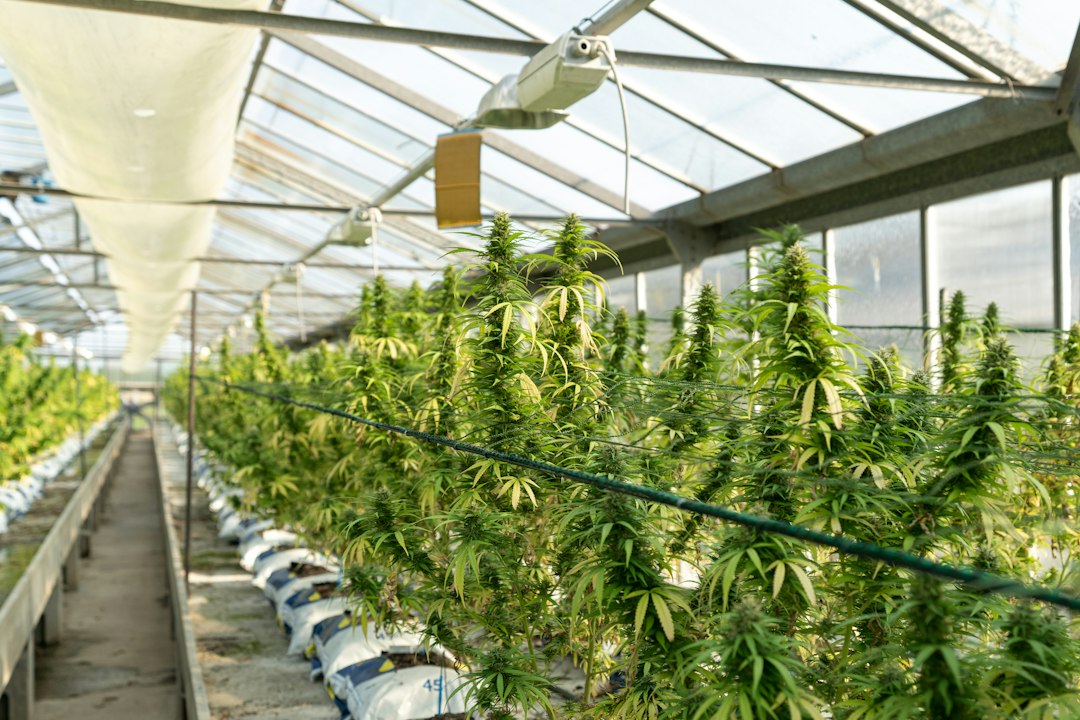 Photo by CRYSTALWEED cannabis
on Unsplash
Photo by CRYSTALWEED cannabis
on Unsplash
- The published medians are modest; the spread is not. Insureon reports a median of $167/month ($2,000/year) for cannabis general liability and $506/month ($6,074/year) for a commercial package policy — but also that 24% of its cannabis policyholders pay under $50/month, which tells you the population is weighted toward very small operations.
- Cannabis pays a multiple of the mainstream small-business rate. The same platform reports a $45/month average for small-business general liability generally. Both are medians of its own applicants, so the comparison is directional — and the two figures carry different page vintages.
- Tax rides on top. Because cannabis is a non-admitted (excess & surplus) class, the premium you are quoted is not the premium you remit. In California the broker owes a 3% surplus line tax plus a 0.18% stamping fee.
- Your license sets a floor. California (for distributor licensees), Massachusetts and Washington all require at least $1,000,000 per occurrence; Massachusetts also caps the deductible at $5,000 and requires general liability and product liability separately.
- There is no federal insurance mandate — and the April 2026 rescheduling did not create one. Adult-use marijuana expressly remained Schedule I, so the market's pricing logic has not been reset.
What cannabis businesses actually pay, by policy type
There is very little public premium data for cannabis, and what exists comes from online placement platforms reporting medians across their own applicant pools. The most complete published set is Insureon's, which reports a median of $167 per month, or about $2,000 per year, for cannabis general liability, and $506 per month, or about $6,074 per year, for a commercial package policy. Workers' compensation for cannabis businesses runs a median of $374 per month, about $4,490 per year.
Those are medians of policies actually bound, which makes them more useful than a carrier's marketing range — and narrower than reality. Insureon's cannabis page also publishes the distribution behind the general liability median: 24% of its cannabis policyholders pay less than $50 per month and 62% pay $100 or less. Those two statistics are not strictly reconcilable as a single distribution — a 50th percentile cannot sit above a 62nd — which tells you Insureon computes them on different bases. What they agree on is the shape: the population is mostly small operators buying a minimum-limit policy, with a smaller group of larger, plant-touching, higher-hazard risks well above the midpoint.
The limits matter as much as the price. Insureon's quoted cannabis figures are for a policy at $1 million per occurrence and $2 million aggregate — with a $7,500 deductible on the general liability policy and $5,000 on the commercial package policy. A cheaper number attached to a lower limit or a larger retention is not a better price; it is a different product, and in several states it is a product that will not satisfy your license.
One vintage caveat, stated plainly. Insureon's cannabis cost pages carry a last-updated date of March 18, 2025. Its general small-business pages have been updated more recently. We are citing the cannabis figures as the best published benchmark available, not as a current-quarter rate, and you should read them as roughly eighteen months old. We re-check this page's sources on a 60-day cycle and will restate the figures when the underlying pages move.
Why cannabis costs a multiple of the mainstream rate
Cannabis general liability costs several times what a comparable non-plant-touching small business pays, and the cleanest way to see it is to compare one publisher's figure against its own. Insureon reports a $45 per month average for small-business general liability across its book, against $167 per month for cannabis — roughly 3.7 times. We show you the arithmetic rather than the ratio alone, because the ratio is the fragile part.
What each figure actually measures
Both numbers are medians or averages of premiums bound by applicants on the same platform, which is what makes the comparison legitimate at all — they differ by segment, not by method. But two things keep it directional rather than precise, and both are worth knowing before you quote the multiple to a lender or a partner:
- The vintages differ. The cannabis figure comes from a page last updated March 18, 2025; the small-business general liability figure from a page updated March 30, 2026. A ratio across two different years is an estimate of a gap, not a measurement of one.
- The populations are both small, and that cuts against the multiple. Insureon describes its general small-business customers as mostly "less than five employees, annual revenue ranging from around $50,000 to more than $200,000, and five years or less in business." A cannabis cultivator or distributor at that revenue is an unusual risk; a mainstream retailer is not. Some of the gap is the class and some is composition, and the published data cannot separate them.
What the gap is not is a mystery. Three structural facts explain most of it, and none of them are going away quickly: the class is written almost entirely outside the admitted market, where there is no rate filing and no residual-market backstop; the product is consumed, which puts product liability at the center of the exposure rather than at the edge of it; and the cash-intensity of the business makes crime and theft coverage a real line item rather than an afterthought. Our cannabis carrier market guide covers which markets will actually look at the class and on what terms.
Surplus line tax: the premium you are quoted is not the premium you remit
Cannabis is placed in the excess & surplus (non-admitted) market, and non-admitted premium carries state taxes and fees that admitted premium does not. In California the surplus line broker owes a 3% premium tax on taxable surplus line premium, plus a 0.18% stamping fee to the California Surplus Line Association. On a $10,000 cannabis program that is roughly $318 added to the invoice before any broker fee — small in isolation, and routinely the reason a quote and a binder do not match.
This is the most common surprise in a first cannabis placement, and it is structural rather than negotiable. If you are new to the distinction, we keep a dedicated explainer on admitted versus excess & surplus insurance: in short, an admitted carrier files its rates with the state and is backed by that state's guaranty fund, while a non-admitted carrier does neither — it trades rate freedom for the absence of that backstop. Cannabis sits in the second category almost everywhere, which is why the class can be written at all and also why it carries the tax.
Two practical consequences for budgeting. First, compare quotes tax-inclusive or not at all; a quote presented gross of surplus line tax will always look better than one presented net of it, and the difference is bookkeeping rather than value. Our guide to comparing insurance quotes covers the rest of the normalization. Second, rates and fees are state-specific — the 3% / 0.18% figures above are California's, and your state's will differ — so ask your broker for the schedule that applies to your placement rather than assuming.
Your license sets a floor under the price
You cannot shop below your license. State cannabis rules specify minimum limits, and in some states they also specify the deductible and the policy structure — which means the cheapest compliant program is bounded from below by regulation rather than by the market. The most common pattern in the rules we have verified is $1,000,000 per occurrence and $2,000,000 in the annual aggregate.
What three states require, verified against the regulations
| State | Minimum limit | Structural terms that affect price |
|---|---|---|
| California — 4 CCR § 15308 | $1,000,000 per occurrence / $2,000,000 aggregate (distributor licensees) | Aggregate requirement means a single-occurrence-only policy will not satisfy the rule. |
| Massachusetts — 935 CMR 500.105 | $1,000,000 per occurrence / $2,000,000 aggregate | General liability and product liability required separately — two policies, not one. Deductible capped at $5,000 per occurrence. An establishment that documents an inability to obtain the coverage may post $250,000 in escrow instead. |
| Washington — WAC 314-55-082 | Not less than $1,000,000 | No aggregate stated in the rule. |
Three cost consequences follow from that table. The $5,000 Massachusetts deductible cap removes the most reliable lever for lowering a cannabis premium — you cannot buy the rate down with a large retention there, and note that Insureon's published cannabis general liability figure carries a $7,500 deductible, which is above the Massachusetts cap. The separate product liability requirement means two premiums rather than one, which is a structural cost rather than a coverage upgrade. And the $250,000 escrow alternative is the rule conceding that the coverage is not always obtainable — a useful thing to know about a market before you assume a quote is available at any price.
This page covers how the requirements translate into premium; the requirements themselves, state by state, are their own subject and we treat them separately in our guide to cannabis insurance requirements by state. See also general liability, product liability and umbrella & excess for how the limits stack.
The drivers that decide where in the range you land
The published medians answer "what do cannabis businesses pay" and not "what will I pay," and the distance between those two questions is almost entirely license type and payroll. A retail dispensary, a cultivator and a distributor are three different underwriting problems that happen to share a regulatory category.
License type
Insureon's dispensary-specific page reports a commercial package policy median of $548 per month, about $6,574 per year — modestly above the $506/month, $6,074/year all-cannabis figure, with general liability and workers' compensation medians identical to the broader set at $167 and $374 per month. The spread between a dispensary and the overall class is therefore narrower than most buyers expect at the package-policy level. Where license type bites hardest is in the lines the medians do not cover: crop and stock-throughput valuation for cultivators, equipment breakdown for extraction, commercial auto and cargo for distributors.
Payroll, and why workers' compensation is often the biggest line
At a published median of $374 per month ($4,490 per year), workers' compensation is more than twice the cannabis general liability median. It is also the line that scales most directly with growth, because it is rated on payroll: a cultivation operation that doubles its trim staff doubles the base that premium is calculated on. For most operators past their first few hires, workers' compensation — not liability — is the largest insurance line item.
Property values, and the two that get understated
Neither Insureon page states a median for commercial property, and both say the same thing about why: the value of the property determines the premium. In cannabis that valuation is the part most often got wrong, in two specific places — living plants, which are a different valuation question from finished inventory, and build-out, where a leasehold improvement in a cultivation or extraction facility can exceed the value of everything else on the schedule. Both flow into business interruption, which is rated off the same declared values.
Three scenarios, built only from the published medians
Because the only public cannabis premium data is a set of per-line medians, the honest way to build a scenario is to add those medians together and show the arithmetic — not to assert a total. The table below does exactly that. These are illustrative sums of published medians, not quotes, not Anvo rates, and not predictions. Every figure in the "annual" column is the sum of the Insureon medians named in the same row; nothing is estimated, interpolated or scaled.
| Scenario | Lines the published medians cover | Sum of those medians, annual | What the medians do not cover |
|---|---|---|---|
| Small — owner-operated single site, minimal payroll | General liability only, at $1M/$2M | ~$2,000 ($167/mo × 12) |
Property, crime, and any contractual limits above $1M. Note 24% of this population pays under $50/month, so the low end sits well below the median. |
| Mid-size — staffed dispensary on a package policy | Commercial package policy + workers' compensation | ~$11,064 ($548/mo dispensary CPP + $374/mo WC, × 12) |
Excess limits, crime beyond the package form, and any auto exposure. |
| Larger — cultivator, extractor or distributor | Cultivation, extraction, distribution — no published median reaches this profile | Not publicly benchmarked | Crop and stock-throughput valuation, equipment breakdown, commercial auto and cargo — the lines that dominate a larger operator's premium are precisely the ones no public median covers. |
The variability caveat, stated once and meant. Two operators with the same license type, the same revenue and the same state can be quoted several times apart on the strength of their property schedule, their loss history, their security documentation and which of a small panel of markets is open that quarter. A sum of medians tells you the order of magnitude to budget for and nothing narrower. Add your state's surplus line tax and fees on top of whichever row applies, as described above, and then get the exposure priced.
Did the April 2026 rescheduling change what cannabis insurance costs?
Not for most operators, and the reason is in the scope of the order rather than in the market's reaction to it. The rescheduling published in the Federal Register on April 28, 2026 moved FDA-approved products to Schedule III; adult-use marijuana expressly remained Schedule I. A state-licensed dispensary, cultivator or distributor is in the same federal position it was in before.
That matters for pricing because, in our reading of this market, the capacity constraint in this class has been driven far less by actuarial uncertainty than by federal illegality. Carriers stay out of cannabis primarily because of the reinsurance and banking consequences that follow from federal status, rather than because the loss experience is unknown. Until the scheduling question reaches the part of the market that writes adult-use operators, the structural facts in the sections above — non-admitted placement, surplus line tax, a small panel of willing markets — are what set the price. There is also no federal insurance mandate in any line for cannabis operators, so every requirement you are meeting is a state or contractual one.
We watch this actively, including the pending federal safe-harbour legislation for insurers writing the class, and we will restate this section if the position changes. For the current market panel, see the cannabis carrier market guide; for the full coverage picture, the cannabis business insurance guide.
The cheapest quote and the compliant quote are rarely the same quote
The pattern we see most often when an operator brings us a cannabis renewal to review is not that the price was wrong. It is that the price was achieved by moving a term the license does not allow to move. A retention set above a state deductible cap. One combined policy where the rule asks for general liability and product liability separately. An aggregate limit quietly absent on a rule that names one. Each of those lowers the premium legitimately in a class where it would be fine, and in cannabis each of them is a certificate that gets rejected.
The lesson we draw is about reading order rather than about coverage: price a cannabis program by establishing the regulatory floor first, then the tax and fee load, then shop the remainder. Operators who shop the premium first almost always end up re-shopping, and the second pass costs more than the first one saved.
Details anonymized and generalized to protect client confidentiality.
Frequently asked questions about cannabis insurance cost
Published median figures are about $2,000 per year for cannabis general liability and about $6,074 per year for a commercial package policy, according to Insureon's cannabis cost data, with workers' compensation at roughly $4,490 per year. Those are medians of bound policies on one placement platform, not quotes.
Read them as a starting point with a long right tail: the same source reports that 62% of its cannabis general liability policyholders pay $100 per month or less, which means most of that population sits well below the published midpoint, and larger plant-touching risks pay considerably more.
Three structural reasons: the class is written almost entirely in the non-admitted market where few carriers compete, the product is consumed so product liability sits at the center of the exposure, and the business is cash-intensive so crime coverage is a real line rather than an add-on.
For scale, the same platform that reports $167 per month for cannabis general liability reports a $45 per month average across small business generally. Treat the multiple as directional — the two figures carry different page vintages and both populations skew very small.
Surplus line tax is a state tax on premium placed with a non-admitted carrier, and because cannabis is placed in the non-admitted market almost everywhere, yes — it will apply to your placement. In California the rate is 3% of taxable surplus line premium plus a 0.18% stamping fee.
Rates are state-specific, so ask your broker for the schedule that applies to your placement. The practical point is to compare quotes on the same basis: a premium quoted before tax and fees will always look cheaper than the same premium quoted after.
That is set by your state license, not by the market. In the three state rules verified for this page, the minimum is at least $1,000,000 per occurrence: California's 4 CCR § 15308 and Massachusetts' 935 CMR 500.105 both add a $2,000,000 annual aggregate, and Washington's WAC 314-55-082 requires not less than $1,000,000 without stating an aggregate.
Your landlord, your lender or a wholesale customer may require more than the state does. Contractual requirements routinely exceed statutory ones, and they are the ones most often discovered late.
Sometimes, but not everywhere — and Massachusetts is the clearest counter-example. 935 CMR 500.105 caps the per-occurrence deductible on a marijuana establishment's required policies at $5,000, which removes the lever entirely at that limit.
Note that Insureon's published cannabis general liability figure is quoted at a $7,500 deductible, which is above the Massachusetts cap. A benchmark premium built on a retention your state does not permit is not a benchmark you can buy.
No. There is no federal insurance mandate for state-licensed cannabis operators in any line. Every insurance requirement a licensed operator meets comes from a state rule or a private contract.
That is a different question from whether federal law affects your premium — it does, heavily, by keeping most carriers out of the class.
Not for state-licensed adult-use operators. The rescheduling published in the Federal Register on April 28, 2026 moved FDA-approved products to Schedule III, and adult-use marijuana expressly remained Schedule I.
Because the capacity constraint in this class has been driven far more by federal illegality than by unknown loss experience, a change that does not reach adult-use operators does not reset their pricing.
For any operator with meaningful payroll, workers' compensation. Its published cannabis median of $374 per month is more than twice the $167 general liability median, and unlike liability it scales directly with headcount because it is rated on payroll.
Operators budgeting from the general liability figure alone routinely under-plan by the larger number.
At the package-policy level the gap is narrower than most buyers expect: Insureon reports a $548 per month median commercial package policy for dispensaries against $506 for cannabis businesses overall, with identical general liability and workers' compensation medians.
License type matters most in the lines those medians exclude — crop and stock-throughput valuation for cultivators, equipment breakdown for extraction, auto and cargo for distributors.
Because property premium is driven by declared values, and cannabis values are too heterogeneous for a median to mean anything. Both Insureon cannabis pages say exactly this — the value of your business property determines the premium — and decline to state a figure.
The two valuations most often understated are living plants, which are not the same valuation question as finished inventory, and leasehold build-out, which in a cultivation or extraction facility can exceed everything else on the schedule.
The levers that work in this class are underwriting-information levers rather than structural ones: an accurate and current property schedule, documented security and inventory controls, clean separation of licensed and unlicensed activity, and a complete submission that lets a limited panel of markets price you rather than decline you.
The levers that do not work are the ones that breach the regulatory floor described above. Our list of questions to ask your insurance broker is a reasonable starting checklist.
The cannabis premium medians come from Insureon pages last updated March 18, 2025, so read them as roughly eighteen months old. The small-business general liability comparison figure comes from a page updated March 30, 2026. The California tax and stamping-fee rates and the three state limit rules were verified in October 2026.
We re-check every source on this page on a 60-day cycle and restate the figures when the underlying pages move. Terms are defined in our insurance glossary.
Not sure whether your cannabis quote is priced or just cheap?
Ask about the tax load, the state floor, and which terms a licensing authority will reject.
Get a cannabis insurance benchmark for your actual operation
Send us your license type, your property schedule and your current declarations page. We will tell you where you sit against the floor your state sets and what the placement should cost tax-inclusive.