
Cannabis Business Insurance:
Coverage, Cost, and Why Most Carriers Still Say No
Cannabis businesses are insurable, but almost never by the standard admitted carriers that write ordinary retail, manufacturing, or trucking risks. Coverage for licensed cannabis operators is written mainly in the excess and surplus lines market, on policies where, in our experience placing this class, product liability is frequently carved out of general liability and has to be bought back deliberately. This guide covers what the April 2026 federal rescheduling actually changed, which coverages a licensed operator needs, what drives the premium, and how placement really works.
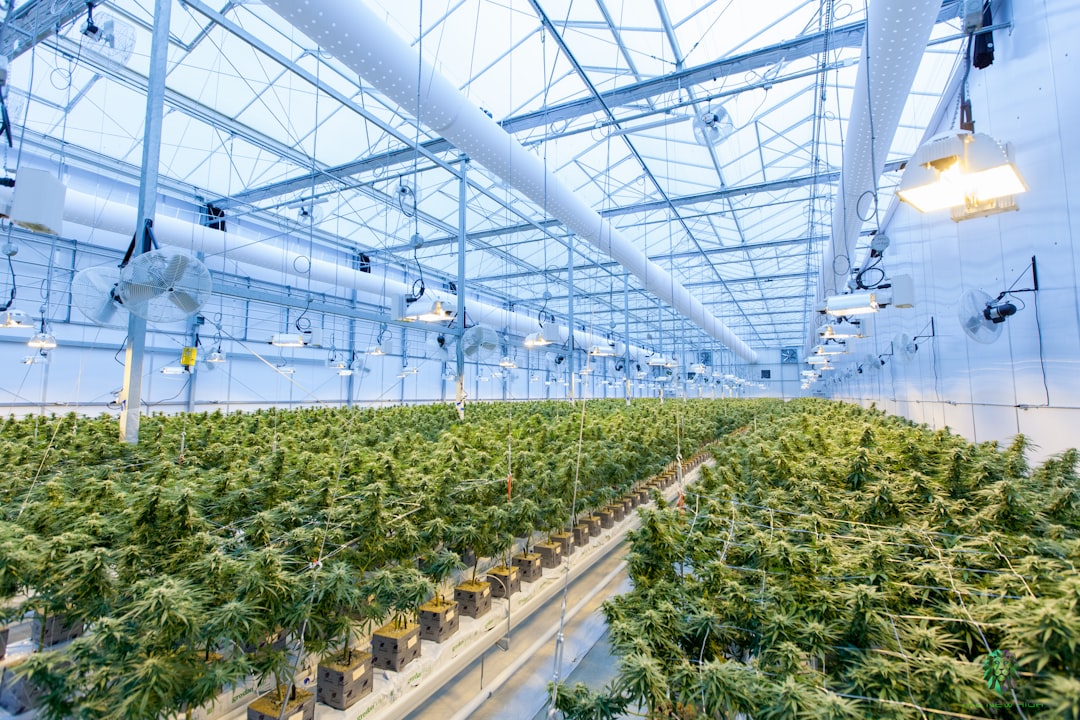
- The 2026 rescheduling was partial, not general. Effective April 28, 2026, marijuana in a Food and Drug Administration approved drug product, and marijuana held under a state medical marijuana license, moved from Schedule I to Schedule III of the Controlled Substances Act. Everything else — including all adult-use, recreational product — remained Schedule I.
- Most cannabis coverage is non-admitted. The National Association of Insurance Commissioners reports that most commercial insurance for cannabis-related businesses is still written in the non-admitted market, which means no state guaranty fund backstop and different rate and form rules — our admitted vs. excess & surplus guide explains what that changes for a buyer.
- Product liability is the coverage most often missing. On the cannabis program we access, general liability is sold both with and without products and completed operations coverage, and in our experience the cheaper quote is the one without. Assume the exclusion is there and read the form.
- Standard limits may be too small. The National Association of Insurance Commissioners notes that most cannabis policies are written at $1 million per occurrence and $2 million aggregate, while many operators need $5 million to $10 million or more.
- Cash is an underwriting problem, not just a banking one. Roughly 70% of cannabis-related businesses operated primarily in cash as of late 2025, which drives crime, employee dishonesty, and premises security underwriting.
Where cannabis actually sits under federal law in 2026
As of September 2026, cannabis is split across two federal schedules at once. A final order from the Acting Attorney General, published in the Federal Register on April 28, 2026 and effective the same day, placed marijuana in Food and Drug Administration approved drug products, and marijuana subject to a state medical marijuana license, into Schedule III of the Controlled Substances Act. Every other form of marijuana — including all adult-use product — expressly remains in Schedule I.
That distinction matters more to an insurance buyer than the headlines suggested. The rule text is unusually direct about it: any form of marijuana other than an approved drug product or product held under a state medical marijuana license "remains a schedule I controlled substance," and the people handling it remain subject to the full Schedule I control and sanction regime. A dispensary selling adult-use flower in a state where that is legal did not change federal status in April 2026. A licensed medical operator, in the same building, largely did. The final order also created an expedited Drug Enforcement Administration registration path for state medical marijuana licensees, and tied that registration to the state license: if the state license is suspended, revoked, or expires, the federal registration is automatically suspended with it.
The broader rescheduling is still an open proceeding
Whether marijuana as a whole moves to Schedule III is a separate question, and it is still being decided. On the same day the partial order published, the Drug Enforcement Administration noticed a hearing on the general rescheduling proposed back in May 2024, to commence June 29, 2026 and conclude no later than July 15, 2026. That proceeding follows Executive Order 14370, issued December 18, 2025 and published at 90 FR 60541, which directed the Attorney General to complete the rescheduling rulemaking in the most expeditious manner permitted by federal law. A final rule on general rescheduling had not published as of this review. The Drug Enforcement Administration maintains a running index of the rescheduling actions.
Two practical consequences follow for anyone buying insurance right now. First, do not let a broker tell you cannabis "is Schedule III now" and price a submission on that basis — for most adult-use operators it is not, and underwriters know it. Second, expect the market to keep moving. Coverage terms, available limits, and carrier appetite in this class have historically tracked federal posture, and a general rescheduling would be the largest single change in decades.
Why standard carriers decline cannabis — and what the surplus lines market means for you
Most standard insurance companies will not write a plant-touching cannabis business at any price, because the federal conflict creates enforcement, reinsurance, and banking exposure they have chosen not to take. Coverage instead comes from the excess and surplus lines market, where a smaller group of specialty insurers writes the class on non-standard forms. The National Association of Insurance Commissioners has said plainly that most commercial insurance for cannabis-related businesses is still found in the non-admitted market.
Cannabis is not one risk, and the placement path differs by what you actually do. A cultivator or an extraction facility underwrites much more like a manufacturing risk than a retail one. A distributor moving product between licensed sites looks like wholesale distribution with a contraband problem attached. A transporter is a commercial fleet account whose cargo most standard forms refuse to name. And a landlord renting space to a licensed operator is a commercial real estate account that many carriers will non-renew the moment they discover the tenant. Identify which of these you are before you shop, because the market for each is different.
Admitted versus excess and surplus, in two paragraphs
An admitted insurer is licensed by your state, files its rates and forms with the state, and is backed by the state guaranty fund if it becomes insolvent. An excess and surplus lines insurer — also called non-admitted or surplus lines — is not licensed in that state for this business, does not file rates and forms the same way, and is not backed by the guaranty fund. In exchange it gets the freedom to write risks the admitted market refuses, and to design the policy language around them.
For a cannabis buyer, three things follow. Surplus lines premium usually carries a state surplus lines tax and stamping fee on top of the premium, so the number on the invoice is not the number on the quote. The policy form is manuscript rather than standard, so two quotes at the same limit can cover materially different things. And carrier financial strength matters more than usual, because there is no guaranty fund behind it — ask for the insurer's A.M. Best rating before you bind, not after.
Which cannabis operations are actually placeable
"Cannabis is uninsurable" is a myth that survives because most agencies have no market for it. The cannabis operator program we access writes across the value chain: retailers and dispensaries, non-storefront delivery to home, indoor and outdoor cultivators, growers, processors, distributors, transporters hauling product between licensed sites, and manufacturers — including both non-combustible and combustible hydrocarbon extraction, which is the single hardest cannabis class to place. Ancillary businesses that never touch the plant — point-of-sale software, packaging suppliers, consultants, security firms — are usually easier still, and sometimes placeable in the standard market, though many business owner's policy carriers still exclude any cannabis-derived revenue. Read your own policy before assuming ancillary status protects you.
Geography still governs. Cannabis coverage can only be placed where the underlying operation is legal, and individual programs carve out additional states of their own. In our market access, cannabis operator business is unavailable in Idaho, Hawaii, and Louisiana regardless of the risk quality, and unavailable anywhere cannabis is not legal at all — which includes our home state of Kansas, where only hemp and cannabidiol products are permitted.
What a licensed cannabis operation actually needs to carry
A complete cannabis program is built from six or seven separate parts, and in our experience reviewing cannabis submissions the two that go missing most often are product liability and a property form that covers stock across the grow-to-sale lifecycle rather than finished goods only. General liability alone does not do the job, and in this class it frequently does not even include products coverage.
The stack below is the working list we use when we review a cannabis submission. Not every operator needs every line, but every operator should be able to say why they declined the ones they skipped.
| Coverage | What it does for a cannabis operator | Who needs it most |
|---|---|---|
| General liability | Third-party bodily injury and property damage at your premises — the slip-and-fall in the dispensary lobby, the delivery driver hurt in your loading area. On the cannabis operator program we access it is offered with or without products liability; confirm which one you bought. | Every licensee. In our experience it is the line most often demanded by a lease or a supply contract; check your own state's license conditions for whether it is also a condition of licensure. |
| Product liability | Claims that your product injured a consumer, or was mislabeled, contaminated, or misrepresented — the exposure edibles and vapes create. On the program we access it is available on either an occurrence or a claims-made basis; if you buy claims-made, the retroactive date matters enormously. | Anyone who grows, processes, manufactures, or sells consumable product. |
| Commercial property and stock | Buildings, improvements, equipment, and — the hard part — plants and product. The cannabis property form we place includes property coverage from seed through sale, meaning stock is covered across the grow-to-sale lifecycle rather than only as finished goods. | Cultivators, processors, manufacturers, dispensaries with meaningful on-hand inventory. |
| Crime and employee dishonesty | Theft of cash and product, and internal theft. In a business that is roughly 70% cash-primary, this is a frequency line, not a catastrophe line. | Dispensaries and delivery operations above all. |
| Commercial auto and cargo | Owned and hired vehicles, plus the product in transit. Standard auto and standard cargo forms commonly exclude marijuana as contraband — transporters need a form that names it as covered property. | Distributors, transporters, and any licensee doing home delivery. |
| Workers' compensation | Statutory employee injury coverage. Trimming, harvesting, and extraction all generate real injury frequency. Whether and when it is mandatory is set by your state's workers' compensation statute rather than by the cannabis license, and it varies by state — check your state's rule. | Any licensee with employees. |
| Business interruption | Lost income while you rebuild after a covered property loss. Cannabis operators are unusually exposed here because a suspended license or a destroyed grow room cannot simply be replaced with rented capacity. | Cultivators and manufacturers with single-site operations. |
| Product recall and contamination | The cost of getting product back off shelves — separate from product liability, which pays for the injury. Recall sublimits embedded in a liability policy are usually far smaller than the real cost of a state-mandated recall. | Manufacturers, processors, and anyone selling under their own brand. |
| Cyber liability and management liability | Point-of-sale and seed-to-sale tracking systems hold customer and patient data. Directors and officers, and employment practices liability, matter as soon as you take outside capital or grow past a handful of employees. | Multi-location and investor-backed operators. |
| Umbrella and excess | Limits above the primary. The mechanism for closing the gap between the $1 million to $2 million primary limits the National Association of Insurance Commissioners reports as typical for this class and the $5 million to $10 million a contract or investor may demand. | Anyone whose lease, license conditions, or supply contract requires more than primary limits. |
The exclusion audit buyers almost never get
Because these are manuscript surplus lines forms, the exclusions are where the real coverage decisions live. The ones worth checking on your own policy, line by line:
- Products and completed operations: present in some cannabis general liability forms, absent in others. Ask for the endorsement schedule, not the marketing sheet.
- Health hazard and cannabinoid exclusions: broad exclusions for bodily injury arising from the ingestion or use of cannabis will hollow out the product cover you thought you bought.
- Vape hardware and lithium-ion battery exclusions: a large share of cannabis product-injury litigation involves vape devices, and a battery exclusion moves that exposure back onto you.
- Voluntary versus mandated recall: many forms respond only to a recall ordered by a regulator. If you pull product yourself because your own testing came back wrong, check whether anything responds.
- Crop and outdoor stock: outdoor cultivation is often excluded or heavily sublimited for weather, and "crop" is not the same thing as "stock" on most property forms.
- Pesticide, mold, and heavy metal: contamination exclusions that specifically defeat the most common cannabis product-liability allegations.
Our guide to product recall and contamination insurance walks through the recall-versus-liability distinction in more depth; the mechanics are the same in cannabis as in food, with tighter limits and fewer markets.
What cannabis insurance costs, and what underwriters ask before they price it
There is no meaningful average premium for cannabis insurance, because the class spans a two-person delivery licensee and a hydrocarbon extraction plant, and those are not the same risk within an order of magnitude. What is stable is the shape of the pricing: on the cannabis operator program we access, monoline general liability starts around $500 plus surplus lines taxes and fees and business personal property starts around $250 per location, and the premium climbs from there with revenue, square footage, insured values, and what you do to the plant.
The appetite envelope
The cannabis operator program we access is built for small and mid-sized operators rather than for multi-state operators: it targets accounts at $15 million in sales and under, up to 35,000 square feet per location, and up to $5 million in total insured value per location. In our experience, an operation materially larger than that moves to a layered placement through a wholesale broker, and the timeline lengthens accordingly. The separate cannabis-tenant lessor's risk program we access runs on a parallel envelope — up to $5 million total insured value, 35,000 square feet, no more than 30% vacancy, three stories maximum — and that program excludes buildings that also house consumption lounges, bars, daycares, medical facilities, or operations open past midnight. Other markets set their own envelopes; treat these as one program's terms, not as the market's.
The seven things that actually move your premium
- Where you sit in the value chain: retail, cultivation, processing, manufacturing, extraction, distribution, transport, or delivery. Combustible hydrocarbon extraction is the hardest cannabis class to place in our market access, because of the fire and explosion exposure, and it requires occupancy classification and hazardous-location electrical work that property underwriters will inspect.
- Revenue and inventory values: the two numbers that drive both liability and property rating. Get your peak on-hand stock value right, not your average.
- Indoor versus outdoor cultivation: outdoor growing adds weather and theft exposure that many forms sublimit or exclude outright.
- Building construction, protection, and location: ordinary property underwriting, applied to a building that often has heavy electrical load, high humidity, and a lot of value packed into a small footprint.
- Cash handling and physical security: safes, drop procedures, camera coverage, alarm certification, and how much cash sits on site overnight.
- Payroll and job classifications: the driver of the workers' compensation line, and one where trimming and extraction classify very differently.
- Loss history and compliance record: prior claims, prior recalls, and any state regulatory action. A clean state compliance file is worth real money in this class.
What to have ready before you submit
Cannabis submissions get declined for incompleteness as often as for risk. Assemble your state license and license conditions, a description of every operation performed at each address, revenue by activity, peak inventory values, a schedule of buildings and equipment, payroll by class, five years of loss runs, your standard operating procedures for testing and recall, your security and cash-handling protocol, and copies of any lease or supply contract that imposes an insurance requirement. If you use vendors that need to be named as additional insureds, list them upfront. A submission with all of that attached is quoted in days; a partial one waits behind everything else on the underwriter's desk.
Cannabis is the most consistent decline on our entire carrier panel
We keep an internal appetite guide covering every carrier we are appointed with, and it records what each one will and will not write. Cannabis, marijuana, hemp, and cannabidiol operations are the single most consistent decline in that guide — the one exposure that shows up as a hard no across essentially the whole standard, admitted side of our panel, in every state we are licensed in. That is not a comment on the quality of cannabis operators. It is a structural position those carriers have taken on federal risk, and it does not vary by loss history or by how good your security is.
The practical lesson we draw from it: if a cannabis operator is being told "no" repeatedly, that is the expected outcome of shopping the standard market, not evidence the risk is uninsurable. The work is knowing which surplus lines programs write the class and what each one requires — and being honest that the coverage on the other side is non-admitted, differently worded, and needs to be read rather than assumed.
Details anonymized and generalized to protect client and carrier confidentiality.
Frequently asked questions about cannabis business insurance
Yes. Licensed cannabis operators in states where cannabis is legal buy commercial insurance routinely, and specialty insurers write the class. What has not changed is that most of that coverage comes from the excess and surplus lines market rather than from standard admitted carriers.
Federal legislation that would remove the remaining barriers for insurers — the Clarifying Law Around Insurance of Marijuana Act — has been introduced but not enacted, according to the National Association of Insurance Commissioners.
Not broadly, and not yet. The final order effective April 28, 2026 moved only two things to Schedule III: marijuana in a Food and Drug Administration approved drug product, and marijuana held under a state medical marijuana license. All other marijuana, including adult-use product, expressly remained in Schedule I.
A separate proceeding on whether marijuana as a whole should move to Schedule III went to hearing on June 29, 2026. Until a final rule issues there, most adult-use operators should assume the placement market is unchanged.
Because of the conflict between state legality and federal law, not because of loss experience. Standard carriers face uncertainty about enforcement, reinsurance treaty language, and banking relationships, and most have resolved it by excluding the class entirely.
The decline is usually categorical. A spotless loss history and excellent security do not change the answer at a carrier whose underwriting guidelines exclude cannabis revenue outright.
It means the insurer is not licensed in your state for this line, does not file its rates and forms the way an admitted carrier does, and is not backed by your state's insurance guaranty fund if it becomes insolvent. In exchange, it can write risks the admitted market refuses and can tailor the policy wording.
Practically: expect surplus lines tax and stamping fees on top of premium, expect non-standard policy language that has to be read rather than assumed, and check the insurer's financial strength rating before binding.
Often not. On the cannabis operator program we access, general liability is offered in two versions — with products and completed operations coverage, and without it — and in our experience the cheaper quote is usually the one without. Confirm which you bought by reading the declarations and endorsement schedule.
Even where products coverage is included, watch for health-hazard, cannabinoid, vape-hardware, and battery exclusions that can remove most of the exposure you were trying to insure.
Most cannabis policies in the market are written at $1 million per occurrence and $2 million aggregate. The National Association of Insurance Commissioners has noted that operators may actually need limits of $5 million to $10 million or more, which is the gap umbrella and excess layers exist to close.
Your real requirement is usually set by a contract rather than by a statute — a lease, a supply agreement, or an investor covenant. Read those first, then buy to the highest number in them.
Rarely, and not the way you need. Standard commercial property forms are not built to value living plants, harvested material, and finished product differently, and many exclude cannabis stock outright. The cannabis property form we place includes property coverage from seed through sale, so stock is covered across the grow-to-sale lifecycle rather than only as finished goods.
Outdoor cultivation is the sharpest edge: weather and theft exposure on outdoor grows is frequently sublimited or excluded even on cannabis forms, so read the schedule rather than the summary.
Yes, through a lessor's risk program built for cannabis tenants. This is a distinct product from the operator policy, and it exists because many standard property carriers will non-renew a landlord on discovering a cannabis tenant, sometimes mid-term.
On the cannabis-tenant lessor's risk program we access, appetite runs to $5 million total insured value and 35,000 square feet per location, no more than 30% vacancy, and three stories, and that program excludes buildings that also house consumption lounges, bars, daycares, or medical facilities. Other markets set their own limits.
Yes. Standard commercial auto and standard motor truck cargo forms commonly exclude contraband, and many treat marijuana as contraband regardless of state legality. A transporter needs a form that names cannabis as covered property, not one that is silent on it.
Underwriters in this niche look closely at vehicle tracking, manifest procedures, chase-vehicle protocols, and whether product is ever left in a vehicle overnight.
It depends far more on what you do than on how big you are. On the one cannabis operator program we access, monoline general liability starts near $500 plus surplus lines taxes and fees, and business personal property starts near $250 per location — and in our experience a combustible extraction facility underwrites and prices very differently from a comparable non-combustible one.
The main drivers are your position in the value chain, revenue, peak inventory value, indoor versus outdoor cultivation, building construction and protection, cash handling, payroll by class, and loss history.
Anywhere the underlying operation is legal and our program is open. The cannabis operator program we access is unavailable in Idaho, Hawaii, and Louisiana, and cannabis coverage cannot be placed in states where cannabis is not legal at all — including Kansas, where only hemp and cannabidiol products are permitted.
Where we are licensed and cannabis is legal, we can generally quote. See our industry pages for the adjacent classes we write, including manufacturing, distribution, fleets, and commercial real estate.
Your state license and its conditions, a description of every operation performed at each address, revenue by activity, peak inventory values, a schedule of buildings and equipment, payroll by classification, five years of loss runs, testing and recall procedures, your security and cash-handling protocol, and any lease or supply contract that imposes an insurance requirement.
Complete submissions in this class are quoted in days. Incomplete ones sit, because underwriters here have more submissions than capacity and triage accordingly.
Not sure whether your cannabis policy actually covers your product?
Ask about the exclusions to check, the limits your contracts require, or how surplus lines placement works for your license type.
Start a quote for your cannabis business
We place licensed cannabis operators — retail, cultivation, processing, manufacturing, extraction, distribution, transport, delivery — and landlords renting to cannabis tenants. Send us your license and your current policy and we will tell you what is actually covered.