Ghost Kitchen Insurance:
Product Liability, Multi-Brand Traceability, and Why Your Restaurant BOP Won't Cover Delivery-Only Operations
Ghost kitchens, virtual kitchens, and commissary-tenant operators carry a fundamentally different risk profile from a dine-in restaurant — most slip-and-fall exposure disappears, but product liability, food contamination, platform contractual indemnification, and the multi-brand traceability problem all expand. A standard restaurant BOP written for a sit-down concept routinely under-covers all four. This article explains the four coverage gaps that show up most often in delivery-only operations, the four operating models that drive carrier appetite, and the program structures that close the gaps.
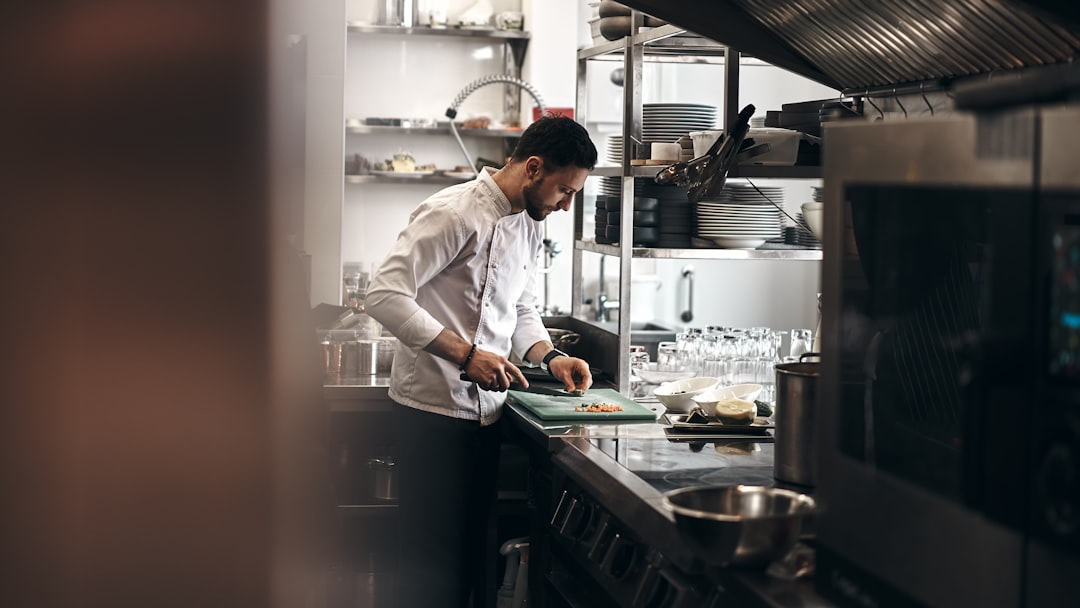 Photo by Pylyp Sukhenko
on Unsplash
Photo by Pylyp Sukhenko
on Unsplash
- Delivery-only operations invert the traditional restaurant risk profile: dine-in slip-and-fall exposure shrinks, but product liability, food contamination, and contractual indemnification to delivery platforms expand.
- A standard restaurant BOP commonly leaves four gaps for ghost kitchens — sublimited or excluded product/completed operations, missing CG 21 51 fungi/bacteria carve-back, no commissary tenant's legal liability, and no cyber for the order-aggregation stack.
- Multi-brand operators running 3–10 virtual concepts out of one kitchen face a traceability problem on foodborne-illness claims that most generalist programs don't anticipate.
- Most admitted small-business carriers (Society Insurance, Acuity, Hartford small business) are cautious or declining on delivery-only operators; specialty restaurant programs and the E&S market write the segment with appropriate forms.
- Single-kitchen ghost kitchen first-year programs typically run $7,500–$22,000 depending on revenue, brand count, commissary vs. owned-license operating model, and product mix.
Delivery-only kitchens carry a different risk shape than a sit-down restaurant — and a generic restaurant BOP isn't built for it
Ghost kitchens (also called virtual kitchens, cloud kitchens, dark kitchens, or commissary kitchens) prepare food exclusively for off-premise delivery. There is no dining room, no front-of-house, no liquor service, and often no walk-up counter. That single change in operating model collapses some of the traditional restaurant risk inventory and expands others — and it produces an underwriting profile that admitted small-business carriers writing classic full-service or QSR concepts are not always set up to read correctly.
Four operating models drive how the program needs to be structured:
- Independent delivery-only operator on its own license — single brand, single license, owned or leased commercial kitchen, exclusively third-party delivery (DoorDash, Uber Eats, Grubhub, ezCater, Caviar) with optional first-party (operator's own website or app). Closest to a traditional QSR but without dine-in.
- Multi-brand / brand-of-brands operator — one operator runs 3–10 virtual brands out of one kitchen on one health-department license. Each brand is positioned to a different audience (e.g., burger concept, wing concept, healthy-bowl concept) but the food is prepared on shared cookline, shared coolers, shared dishpit. This is the operating model where the multi-brand traceability problem (Section 4) becomes acute.
- Commissary / shared-kitchen tenant — operator licenses a stall or station inside a shared commercial kitchen run by a host (CloudKitchens, REEF Technology, Kitchen United, ChefReady, The Hood Kitchens, and many regional operators). The host holds the commercial-property lease and the master health-department permit; tenants operate under the host's license framework with separate certificates of insurance, contractual indemnification flowing in both directions, and shared common areas.
- Virtual brand on a host restaurant's license — an existing dine-in restaurant adds a virtual brand (or licenses one in from a brand-of-brands platform) and produces it from the same kitchen as its main concept. This is the operating model with the most insurance-program ambiguity, because the host restaurant's existing BOP was rated for the host concept's revenue mix and may not contemplate the virtual brand's added product and contractual exposures.
The risk profile inverts in three predictable ways. First, classic restaurant general-liability slip-and-fall claims drop sharply because there are no guests on premises — but third-party platforms physically pick up product from the kitchen, which creates a different liability surface (loading-zone bodily injury, parking-area injury to platform drivers treated as invitees, and product handling at the moment of pickup). Second, product liability and product-completed operations exposure expand: every meal is consumed off-premise, often hours after preparation, with no opportunity for the operator to course-correct on plating issues or temperature drift in transit. Third, platform contracts shift contractual risk: most platform agreements require the kitchen to indemnify the platform for foodborne-illness, allergen, foreign-object, and product-quality claims arising from the kitchen's food. That indemnification flows through the kitchen's commercial general liability — and a contractual liability exclusion or sublimit can leave the operator funding the defense and indemnity itself.
Four gaps that show up in 70%+ of ghost kitchen submissions Anvo reviews
Most admitted-market restaurant BOPs assume a guest-facing concept with on-premise food consumption, in-house alcohol service or none, and product/completed operations as a relatively rare claim type. Ghost kitchens break each of those assumptions. Four coverage gaps show up repeatedly when an existing restaurant BOP is reviewed against an actual delivery-only operation.
Gap 1 — Sublimited or excluded product/completed operations
Read in context with the full restaurant coverage inventory, the general liability coverage line, and the product liability coverage line.
A standard ISO CG 00 01 commercial general liability form covers "products-completed operations hazard," but BOP forms tailored for QSR and full-service restaurants commonly cap product/completed operations aggregate at $1M or less and may apply specific exclusions for high-volume off-premise consumption profiles. For a delivery-only operator, every dollar of revenue is products-completed-operations exposure — there is no on-premise dining at all. A foodborne-illness outbreak affecting 40–80 customers can produce aggregate claims in the $300K–$1.5M+ range when defense, settlement, and recall costs are stacked. If the BOP applies a $500K product/completed operations sublimit, a single multi-claimant outbreak can collapse the sublimit on the first event.
Gap 2 — No CG 21 51 fungi/bacteria carve-back, no standalone food contamination coverage
The standard ISO commercial general liability form excludes bodily injury or property damage arising from "fungi" and "bacteria" via the CG 21 67 exclusion (or, in some forms, through pollution-exclusion language). A buy-back endorsement (CG 21 51 or carrier-specific equivalent) restores coverage for bacteria-related foodborne illness — but it must be specifically endorsed onto the policy, and many BOPs aimed at small-business restaurants either omit it or sublimit it heavily. Standalone food contamination insurance is a separate coverage line that pays for spoilage, accidental contamination, malicious product tampering, government-ordered closure, and notification/recall expense. The two coverages do different things and are not interchangeable: GL with a bacteria carve-back covers third-party bodily-injury claims arising from contamination; standalone food contamination covers the operator's own first-party costs to remediate, recall, notify, and reopen. A delivery-only operator should usually carry both.
Gap 3 — No commissary tenant's legal liability or shared-kitchen contractual gap
Operators who lease space inside a shared commercial kitchen (CloudKitchens, REEF, Kitchen United, ChefReady, regional commissary operators) sign tenant agreements that require additional insured status to the host, waiver of subrogation on property and GL, and contractual indemnification for damage to the host's premises, equipment, or other tenants. A standard small-business GL written without "tenant's legal liability" coverage may not respond cleanly to a fire originating at the operator's station that damages an adjacent tenant's equipment, or to a refrigeration failure caused by a piece of the operator's equipment that affects the host's master walk-in. The contractual liability exclusion in the standard CG 00 01 form has carve-outs for "insured contracts," but commissary tenant agreements are not always drafted to fall cleanly inside the insured-contract definition. The consequence is that the operator can be on contractual hook for $25K–$200K+ in landlord-side property damage that the GL refuses, and that same operator can be exposed under another tenant's subrogation action without the right additional insured language.
Gap 4 — Cyber liability shaped for the order-aggregation stack, not just POS
A traditional restaurant cyber endorsement typically focuses on point-of-sale credit-card breach exposure. Ghost kitchens have a different cyber surface area: the kitchen runs an aggregation layer (Otter, Cuboh, Chowly, Ordermark, OrderOut, ItsaCheckmate) that pulls orders from DoorDash, Uber Eats, Grubhub, ezCater, and the operator's own first-party site into one ticket-printer or kitchen display system. That aggregation layer holds order history, customer PII, payment tokenization data, and (in some configurations) credit-card data depending on the integration. A breach of the aggregation tool, an outage of the aggregator's API, or a credential-stuffing attack on the operator's platform-merchant accounts can shut down ticket flow for hours. Cyber business interruption is the more practical exposure than the headline data-breach exposure: a 4-hour aggregation-layer outage during a Friday dinner peak can cost $2,000–$8,000+ in lost revenue depending on volume, and a generic small-business cyber endorsement may not respond to "third-party platform outage" without being specifically endorsed for system-failure / dependent system business interruption.
The contract layer that pushes risk back to the kitchen
Ghost kitchens sit at the intersection of three contract regimes — the lease or commissary license, the delivery-platform merchant agreements, and (for multi-brand operators) the brand licensing or franchise agreement. Each contract regime moves risk in a specific direction, and the insurance program needs to absorb every flow that lands on the kitchen.
Commissary and shared-kitchen license terms
Commissary operators run on tenant license agreements rather than traditional commercial leases. The license typically requires the tenant to carry $1M/$2M general liability with the host added as additional insured (CG 20 11 manager or lessor of premises endorsement, sometimes CG 20 26 designated additional insured), waiver of subrogation on both property and GL (CG 24 04), workers' compensation with waiver of subrogation on the host, food contamination coverage with notice requirements running to the host, and equipment-of-others coverage if the tenant uses host-owned shared equipment (combi ovens, walk-ins, dishpit, ice machines). Many commissary licenses also impose a contractual indemnity broader than the typical lease — covering not just the host but other tenants the host may face claims from. That broader indemnity is what makes the contractual liability carve-back inside CG 00 01 — and the insured-contract definition in particular — operationally important for commissary tenants.
Platform merchant agreements
DoorDash, Uber Eats, Grubhub, ezCater, Caviar, and similar platforms operate on standardized merchant agreements that the operator signs at onboarding and that the platform updates unilaterally. Three clauses move material risk to the kitchen on essentially every platform agreement Anvo has reviewed: (1) broad indemnification running from the merchant to the platform for any claim arising from the merchant's food, including foodborne illness, allergen exposure, foreign-object claims, contamination, and product-quality complaints; (2) certificate of insurance / additional insured requirements that name the platform as additional insured under the merchant's GL on a primary and non-contributory basis (CG 20 01 + CG 20 38 type endorsements); (3) data-handling representations requiring the merchant to comply with the platform's data and PCI requirements, with corresponding indemnity if the merchant's systems leak platform-provided customer data. The combined effect: a foodborne-illness claim on a platform-delivered order pulls the platform onto the operator's GL as an additional insured, channels the platform's defense costs through the operator's policy, and leaves the operator's GL aggregate to absorb both first-party and platform-routed exposures.
Virtual brand licensing and franchise agreements
Operators running licensed virtual brands (e.g., a virtual wing concept licensed in from a multi-brand platform, or running someone else's intellectual property under a virtual-restaurant license) sign brand-licensing agreements that frequently include: minimum insurance requirements ($1M/$2M GL, $5M umbrella, product liability with specific limits, food contamination minimums); brand-protection indemnification running from the operator to the brand owner; brand-quality standards that, if violated, void the operator's right to use the IP. These obligations move with the operator across kitchens — meaning a single multi-brand operator running 6 licensed virtual brands signs 6 separate insurance-requirement matrices, and the GL/umbrella program has to satisfy the highest applicable limit set across all of them.
Direct-to-consumer first-party operations
Operators who run their own ordering site (Toast TakeOut, Square Online, Olo, BentoBox, Chowbus, ChowNow, custom Shopify) take on additional first-party exposures that platform-only operators avoid: PCI compliance for card processing, ADA-accessibility exposure on the website, marketing claim exposure (CAN-SPAM, telephone consumer protection if SMS marketing is used), and direct customer-data handling. The cyber endorsement on a generalist BOP rarely covers all of those exposures cleanly.
When eight virtual brands share one kitchen, which brand's product caused the contamination?
Multi-brand operators are the most common ghost kitchen model in 2026 — running a single licensed kitchen with 3–10 distinct virtual brands, each presented to delivery-platform consumers as an independent restaurant. Underwriters and claims professionals look at multi-brand kitchens differently from single-brand operators because of the traceability problem: when an outbreak affects 60 customers across three platforms over a 36-hour window, attributing the contamination to a specific brand, recipe, ingredient lot, or station is materially harder than at a single-brand restaurant.
Why traceability is structurally harder
Most multi-brand kitchens use shared cookline (one set of fryers, one combi oven, one flat-top), shared cold storage (one walk-in, one reach-in line), shared dishpit and prep stations, and shared staff who rotate across brands. A pathogen introduced in a shared cooler can reach products under multiple brands; a cross-contact allergen incident on a shared cutting board can touch any brand sharing that station. Per-brand recall and notification costs scale with the number of affected brands, but ingredient-level traceability — which the FDA Food Traceability Rule (Rule 204 under FSMA) increasingly demands at points along the supply chain — is rarely architected at the brand level inside a multi-brand kitchen. Brand-level traceability requires receiving logs, station logs, and order-level logs to be cross-linked in a way that lets a forensic team move from a sick customer back to a brand back to a recipe back to a lot of an incoming ingredient. Most multi-brand kitchens have receiving logs and order-level logs but lack the station-level link in the middle.
Allergen cross-contact as a high-frequency claim type
Multi-brand kitchens running, e.g., a vegan brand alongside a wing concept on shared fryer oil have inherent allergen and dietary-claim exposure. The FDA's Big 9 allergens (milk, eggs, fish, shellfish, tree nuts, peanuts, wheat, soybeans, and sesame as added by the FASTER Act effective January 2023) all have cross-contact pathways through shared equipment, shared oil, shared utensils, and shared prep surfaces. A "vegan" or "gluten-free" claim made on the platform menu without operational separation between brands is a misrepresentation exposure that flows through GL personal-and-advertising-injury coverage (Coverage B) — which has its own limits and exclusions distinct from the bodily-injury Coverage A side. Personal-and-advertising-injury claims tied to dietary-claim representations have grown as a small but meaningful claim category in food-service litigation.
FDA recall and notification obligations under FSMA
The FDA Food Traceability Rule (21 CFR Part 1, Subpart S) imposes record-keeping obligations on certain "Food Traceability List" foods at points along the supply chain. Most ghost kitchens are end-of-supply-chain food preparers, not subject to most of the rule's recordkeeping mandates as written, but multi-brand kitchens that hold inventory, do their own further processing, or ship between locations can pull obligations into scope. Beyond FSMA, a multi-brand operator dealing with a multi-state outbreak interacts with state health departments, the platform(s) involved, and (depending on severity) the FDA. The notification burden runs against revenue at the same time the operator is defending claims, which is why food contamination first-party coverage with a clear notification expense provision becomes operationally important. A regional outbreak across 3 brands, 2 states, and 2 platforms typically runs $40K–$120K in notification, recall, public-relations, and disposal costs even before any third-party bodily injury claims are paid.
Carrier underwriting on multi-brand operators
Underwriters writing multi-brand kitchens typically look at: brand count and brand-mix risk score (a kitchen with 8 brands across multiple cuisines and dietary positions reads as higher risk than 3 brands in adjacent cuisines), shared-equipment map (separate fryers for vegan/gluten-free reads as lower risk than fully shared), receiving and lot-tracking discipline (digital receiving and station-log integration moves the account from E&S consideration toward specialty restaurant program eligibility), prior loss history at the kitchen and across the operator's other locations, and platform mix (operators with first-party plus 3+ third-party platforms read as more diversified than single-platform exclusive operators).
Most admitted small-business carriers are cautious — specialty restaurant programs and the E&S market write the segment
Ghost kitchens are a relatively young underwriting class, and admitted small-business carriers writing classic restaurant BOPs differ in how aggressively they will write delivery-only operations. The market splits into three tiers, and most well-structured ghost kitchen programs in 2026 land in tiers 2 and 3.
Tier 1 — Admitted small-business / restaurant BOP carriers (cautious or limited appetite)
Carriers that historically write a wide swath of small-restaurant BOP business — Society Insurance, Acuity, Cincinnati, Hartford small business, Travelers Select, Liberty Mutual small commercial, Auto-Owners — all have varying appetite for ghost kitchens. Society Insurance has historically been a leading restaurant BOP writer but applies hospitality and on-premise consumption assumptions in its rating that can produce poor pricing or declination on delivery-only operators. Most of these carriers will write a hybrid concept (dine-in plus delivery virtual brands on the same license) with a primary-revenue restriction on the delivery side, but pure delivery-only operators with three or more brands typically do not fit the appetite. The path through admitted small-business carriers tends to require: single brand or two brands maximum, owned license (not commissary tenancy), sub-$1M revenue, and a documented food-safety program.
Tier 2 — Specialty restaurant programs (the most common placement)
Specialty restaurant programs designed to write the broader restaurant universe — Erie Restaurant Program, Philadelphia Insurance Restaurants, Tokio Marine HCC Restaurants, Distinguished Programs Restaurants, Markel American Restaurants, Heritage Restaurants, ICW Group hospitality, CIBA, Great American Restaurants — write ghost kitchens with appropriate underwriting. These programs have product-liability and food-contamination forms built into the package, support the CG 21 51 fungi/bacteria carve-back as standard or low-cost option, and accept commissary-tenant operating models. Cost levels for a single-brand single-kitchen operator at $1M–$3M revenue typically run $7,500–$15,000 first year through specialty restaurant programs; multi-brand operators at $2M–$5M revenue typically run $12,000–$22,000. The specialty programs price the multi-brand traceability discount or surcharge based on brand count, separation discipline, and prior loss history.
Tier 3 — Excess & Surplus market (multi-brand high-revenue, prior loss, or unusual concepts)
The Excess & Surplus market — Lloyd's of London syndicates accessed via wholesalers (RT Specialty, Amwins, CRC Group, Burns & Wilcox, Worldwide Facilities), Lexington / AIG E&S, Scottsdale / Nationwide E&S, Markel Specialty, Burlington, James River, Western World, Kinsale, Nautilus / W.R. Berkley — writes ghost kitchens that fall outside specialty restaurant program appetite: 6+ brand multi-brand operations, $5M+ revenue, prior foodborne-illness claims, dietary-claim losses, novel concepts (delivery-only meal-kit, frozen-meal direct-ship, multi-state ghost kitchen networks). E&S placements are non-admitted (no state guarantee fund), often manuscript-formed (specific exclusions and carve-backs negotiated), and priced 25–75% above admitted/specialty equivalents. The trade-off the operator gets in exchange is broader form, higher limits, and willingness to write the structural risk that admitted markets decline.
Recommended program structure for a single-kitchen ghost kitchen
A clean program for a single-kitchen multi-brand operator at $2M–$5M revenue typically includes: $1M/$2M general liability with CG 21 51 fungi/bacteria carve-back endorsed and product/completed operations matching the per-occurrence limit; $250K–$500K standalone food contamination including notification, recall, and government closure; commercial property covering owned equipment and tenant improvements with $25K–$100K equipment-of-others sublimit if commissary tenant; workers' compensation under NCCI Class 9082 (most kitchen labor) with a separate driver class if any first-party delivery; cyber liability with system-failure / dependent system business interruption endorsement covering the order-aggregation stack ($500K–$1M tower); commercial umbrella $5M with full follow-form including liquor (if any beer/wine for delivery), product, and contractual liability; commercial auto if owned delivery vehicles (most don't), or a hired and non-owned auto endorsement plus a brief 1099-driver discussion if independent contractors deliver for the kitchen directly. Total program in the $12,000–$22,000 first-year range for that profile through a specialty restaurant program.
Four virtual brands, one BOP — and a $190,000 outbreak the BOP refused
Multi-brand ghost kitchen operator running four virtual brands (a wing concept, a burger concept, a salad/bowl concept, and a breakfast-sandwich concept) out of a leased commercial kitchen in a mid-size Midwestern metro. Annual revenue ~$2.4M across the four brands, weighted ~55% to the wing and burger concepts. Existing program: a generic small-business BOP from a regional admitted carrier — $1M/$2M GL with $500K product/completed operations sublimit, no CG 21 51 fungi/bacteria carve-back, no standalone food contamination, no commissary-style equipment-of-others coverage, generic $50K cyber endorsement focused on POS data breach. Total premium ~$8,200/year — priced cleanly because the carrier had rated it as a small QSR with single-concept assumptions.
A foodborne illness outbreak attributed to a Salmonella contamination in a shared station's egg-and-mayonnaise prep affected 38 customers across three of the four brands over a 30-hour window in late spring. The platforms began routing complaints in within 12 hours. Total exposure stacked up across three buckets: ~$95K in third-party bodily-injury claims (medical, lost wages, settlement); ~$55K in first-party costs (operator-funded recall and disposal, notification to platforms and state health, three days of operational closure, deep clean and re-permit); ~$40K in defense and indemnification routed through platform additional-insured demands. Total ~$190K. The BOP responded to roughly $50K — exhausted the product/completed operations sublimit on the third-party bodily-injury claims, applied the bacteria exclusion to deny the rest of the bodily-injury side, declined the first-party costs (no food contamination coverage on the form), and applied the cyber endorsement to nothing because nothing on the cyber side triggered. ~$140K out of pocket on the operator. Restructured the program through a specialty restaurant program (Tier 2 placement): $1M/$2M GL with CG 21 51 endorsed and product/completed operations at full $1M/$2M, $500K standalone food contamination with notification and recall, $100K equipment-of-others for the commissary equipment, cyber upgraded to a $750K tower with system-failure / dependent system business interruption covering the aggregation layer, $5M umbrella full follow-form. New premium ~$13,600/year — a $5,400 increase over the prior BOP, with material coverage expansion on every line that the outbreak had exposed.
Details anonymized and generalized to protect client confidentiality.
Frequently asked questions about ghost kitchen and virtual kitchen insurance
Yes. Ghost kitchens have a structurally different risk profile from a dine-in restaurant — slip-and-fall exposure shrinks, but product liability, food contamination, and contractual indemnification to delivery platforms expand. A standard restaurant BOP rated for a sit-down concept commonly sublimits or excludes the exact exposures that drive a delivery-only operator's claim activity.
The most common gaps are sublimited or excluded product/completed operations, missing CG 21 51 fungi/bacteria carve-back, no commissary tenant's legal liability, and a cyber endorsement shaped for POS rather than for the order-aggregation stack.
Sublimited or excluded product/completed operations on the GL, combined with the absence of CG 21 51 fungi/bacteria carve-back. Every dollar of revenue in a delivery-only operation is products-completed-operations exposure, and a single multi-claimant foodborne illness outbreak can produce $300K–$1.5M+ in stacked claims.
Standalone food contamination coverage is a separate line and pays for the operator's first-party costs (notification, recall, government-ordered closure). It does not duplicate the GL — operators should usually carry both. See the restaurant insurance FAQ for additional context on related coverage gaps.
Product liability and product-completed operations under the standard ISO CG 00 01 form covers third-party bodily injury or property damage arising from food consumed off-premise after preparation. For a ghost kitchen, this is the primary GL exposure category — there are no on-premise customers — and the per-occurrence and aggregate limits matter much more than they do for a comparable dine-in restaurant.
Most BOP forms aimed at small restaurants apply a sublimit on product/completed operations. A ghost kitchen should confirm that the products-completed operations aggregate matches the GL aggregate, and that the bacteria carve-back is endorsed.
Commissary tenant agreements (CloudKitchens, REEF, Kitchen United, ChefReady, regional commissary operators) typically require $1M/$2M general liability with the host added as additional insured (CG 20 11 or CG 20 26), waiver of subrogation on property and GL (CG 24 04), workers' compensation with waiver of subrogation, food contamination coverage, and equipment-of-others coverage if the tenant uses host-owned shared equipment.
The contractual indemnity in the tenant license is typically broader than a standard commercial lease — covering the host plus other tenants — which makes the contractual liability carve-back inside the GL operationally important. Confirm with your broker that the insured-contract definition picks up your specific commissary license; see the state-by-state restaurant insurance requirements guide for adjacent lease and dram-shop frameworks.
It depends on the delivery model. Third-party platform drivers (DoorDash, Uber Eats, Grubhub) are not the kitchen's drivers — the platform contracts directly with the driver and covers the driver's commercial auto exposure under the platform's own program. The kitchen's commercial auto only needs to respond to the kitchen's own owned vehicles or to a hired-and-non-owned auto exposure.
If the kitchen operates first-party delivery using its own employees and vehicles, full commercial auto liability and physical damage are required at the kitchen's level. If the kitchen uses 1099 contractors for first-party delivery, hired-and-non-owned auto plus a careful review of the contractor agreement is usually the right structure — and the kitchen should not assume the contractor's personal auto policy responds when the contractor is on a delivery.
Yes — but the cyber form needs to be shaped for a delivery-only stack, not a traditional restaurant POS form. Ghost kitchens run an order-aggregation layer (Otter, Cuboh, Chowly, Ordermark, OrderOut, ItsaCheckmate) that pulls orders from multiple platforms into a single ticket flow. A breach or extended outage of that aggregation layer is the practical cyber exposure, more than the headline data-breach risk.
System-failure and dependent-system business interruption endorsements respond to that exposure. A 4-hour aggregation-layer outage during a Friday dinner peak can cost $2,000–$8,000+ in lost revenue, and a generic small-business cyber endorsement may not respond unless specifically endorsed for dependent-system BI.
Multi-brand kitchens face a structural traceability problem on contamination claims because shared cookline, shared coolers, and shared dishpit make brand-level attribution difficult. When an outbreak affects 60 customers across three brands and two platforms over a 36-hour window, attributing the contamination to a specific brand, recipe, ingredient lot, or station requires receiving logs, station logs, and order-level logs to be cross-linked — which most multi-brand kitchens do not architect at the brand level.
Underwriters look favorably on operators that maintain separate-fryer or separate-station discipline for high-allergen or vegan brands, integrate digital receiving with station logs, and maintain an order-by-brand audit trail. Those discipline points move an account from E&S consideration toward specialty restaurant program eligibility.
A clean single-kitchen single-brand operator at $1M–$2M revenue typically runs $7,500–$12,000 first-year through a specialty restaurant program. A multi-brand operator at $2M–$5M revenue running 3–6 virtual brands typically runs $12,000–$22,000 first-year. Operators in commissary-tenant settings usually price slightly lower on commercial property but add $500–$1,500/year for tenant's legal liability and equipment-of-others.
Cost drivers are: brand count and brand mix, operating model (independent license vs. commissary tenant), revenue, claim history, allergen-cross-contact discipline, and platform mix. E&S placements for accounts outside specialty appetite typically run 25–75% above the equivalent specialty restaurant program rate. For claim-handling protocol when an outbreak occurs, see the restaurant insurance claims guide.
Not sure if your current restaurant BOP covers your ghost kitchen operation?
Ask AI which coverage gaps Anvo most often finds in delivery-only and multi-brand kitchens.
Have an independent broker pressure-test your ghost kitchen program
Anvo writes ghost kitchen and virtual kitchen programs across admitted, specialty restaurant program, and E&S markets. We'll review your existing BOP against your platform contracts and your commissary license — and tell you exactly where the gaps are.