
3PL & Warehouse Insurance for Food Distributors:
Coverage Gaps in Third-Party and Multi-Tenant Operations
Food distributors that operate from leased warehouse space, use third-party logistics (3PL) providers, or share multi-tenant cold storage facilities face insurance gaps that do not exist in owner-occupied, single-tenant operations. The three most common gaps: bailee liability for goods held in your care that are not your property; landlord additional insured and property requirements that your standard GL policy may not satisfy; and contractual indemnification clauses in 3PL and warehouse agreements that shift liability to the distributor without corresponding insurance coverage. This article covers each exposure and the specific coverage structures needed to close them.
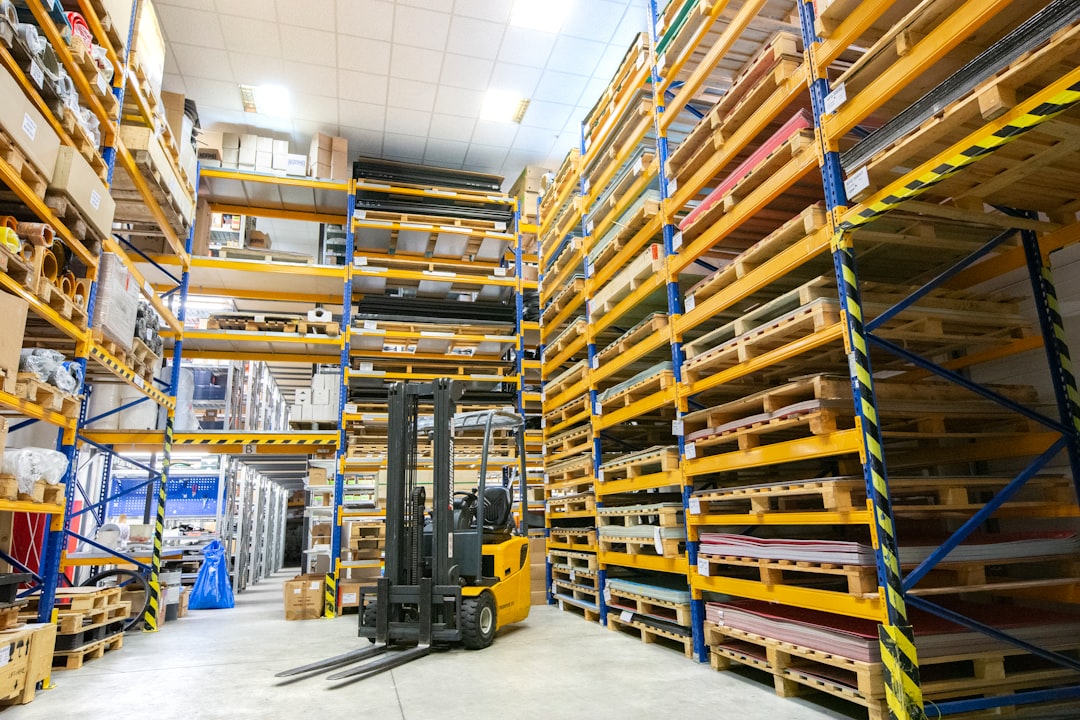
- Bailee liability — your responsibility for goods belonging to others while in your care, custody, or control — is excluded from standard general liability and commercial property policies. Food distributors holding customer product in leased warehouse space need a separate bailee's customer policy or warehouse legal liability coverage, typically $250,000–$1M+ depending on the maximum value of goods stored at any time.
- Commercial warehouse leases almost universally require tenants to carry general liability ($1M/$2M minimum), commercial property or contents coverage, and to name the landlord as additional insured — but roughly 40% of food distribution warehouse leases we review also require tenant's legal liability, business interruption coverage for the landlord, and waiver of subrogation endorsements that many standard policies do not include without specific endorsement.
- 3PL service agreements routinely contain broad indemnification clauses requiring the food distributor to hold the 3PL harmless for losses arising from the distributor's product — including product liability, recall costs, and contamination claims — even when the 3PL's own handling contributed to the loss. Without contractual liability coverage and careful policy alignment, the distributor bears these costs uninsured.
- Multi-tenant food distribution facilities create liability stacking: multiple businesses sharing dock space, racking, refrigeration systems, and common areas produce overlapping exposures where determining which tenant's policy responds to a loss — a forklift collision in a shared aisle, a refrigeration system failure affecting multiple tenants' product — is often disputed between carriers.
- OSHA considers the "host employer" in multi-tenant warehouses jointly responsible for general safety conditions in shared spaces. Warehouse injuries to workers employed by other tenants or by the 3PL can generate workers' compensation subrogation claims and general liability claims against the food distributor even when the distributor's own employees were not involved.
Why 3PL and warehouse operations create distinct insurance gaps for food distributors
Third-party logistics arrangements and leased warehouse operations introduce a layer of contractual and liability complexity that does not exist when a food distributor owns its own facility and handles its own warehousing. The core issue is that standard commercial insurance programs — general liability, commercial property, and commercial auto — are designed around the insured's own operations, own property, and own employees. When a food distributor stores other companies' goods, shares space with other tenants, or relies on a 3PL to handle, store, or ship product on the distributor's behalf, the coverage assumptions underlying those standard policies no longer match the actual risk profile.
The U.S. third-party logistics market reached approximately $270 billion in revenue in 2024, with food and beverage representing one of the largest 3PL end-use segments. According to the International Warehouse Logistics Association (IWLA), over 60% of food distributors with annual revenue above $5 million use at least one 3PL provider for warehousing, cross-docking, or last-mile delivery — and that percentage is growing as distributors seek to reduce capital expenditure on owned facilities and expand geographic reach without proportional facility investment.
The insurance challenge is not that coverage is unavailable — it is that the standard commercial insurance program most food distributors carry — detailed in our complete food distribution insurance guide — was not structured for the specific exposures 3PL and warehouse operations create. Filling the gaps requires understanding where the standard program stops and where specialized endorsements, additional policies, or contractual protections begin.
Bailee liability: covering goods in your care that you do not own
Bailee liability is the legal responsibility a food distributor has for goods belonging to others while those goods are in the distributor's care, custody, or control — typically in a warehouse or cross-dock facility. Standard general liability policies exclude damage to property in the insured's care, custody, or control (the "CCC exclusion"), and standard commercial property policies cover only the insured's own property. A food distributor holding $500,000 of a grocery chain's frozen product in its warehouse has no coverage under either standard policy if that product is damaged by a fire, refrigeration failure, or water event.
What bailee's customer / warehouse legal liability coverage provides
Warehouse legal liability (WLL) or bailee's customer coverage — the terms are functionally interchangeable in the food distribution context — covers the distributor's legal liability for damage to or destruction of goods belonging to customers and held in the distributor's warehouse. This coverage responds to losses caused by fire, theft, water damage, refrigeration failure (if endorsed), and other perils specified in the policy. Coverage limits are typically set based on the maximum aggregate value of customer goods on-site at any given time, with common limits ranging from $250,000 to $2 million for mid-size food distribution operations.
WLL is distinct from cargo/inland marine coverage, which applies to goods in transit. Once product arrives at the warehouse and is accepted into storage, cargo coverage typically ceases and bailee/WLL coverage begins. A distributor that has cargo coverage for goods on its trucks but no WLL for goods in its warehouse has a gap at the loading dock — the exact point where product changes hands and coverage transitions.
Key underwriting factors for warehouse legal liability
| Underwriting Factor | What Carriers Evaluate | Impact on Premium/Availability |
|---|---|---|
| Maximum values stored | Peak aggregate value of customer goods on-site at any time | Primary determinant of limit and premium — $500K peak vs. $2M peak can mean 3–4x premium difference |
| Temperature-controlled vs. ambient | Whether facility stores refrigerated/frozen product requiring active temperature management | Refrigerated storage adds 25–40% to WLL premium due to mechanical breakdown and spoilage exposure |
| Fire protection | Sprinkler systems, fire suppression, distance to fire response | Non-sprinklered warehouses may face declinations or significant surcharges |
| Security and access controls | Fencing, cameras, access logs, alarm systems | Affects theft sublimit availability; weak security may result in theft exclusion |
| FSMA compliance documentation | Sanitary transportation records, temperature logs, traceability under Rule 204 | FSMA-compliant operations are preferred; non-compliance may limit carrier appetite |
| Contractual terms with customers | Limitation of liability clauses, declared values, standard warehouse receipts | Distributors using IWLA-standard terms with contractual liability caps generally get better rates than those with unlimited liability warehouse agreements |
Warehouse lease insurance requirements: what landlords actually demand
Nearly every commercial warehouse lease requires the tenant to carry specific insurance coverages and to provide the landlord with certificates of insurance (COIs) proving those coverages are in place. The minimum requirements — $1 million per occurrence / $2 million aggregate general liability, commercial property or contents coverage, and naming the landlord as additional insured on the GL policy — are standard and well understood. The requirements that catch food distributors off guard are the ones beyond this baseline: tenant's legal liability for the building structure, waiver of subrogation endorsements on both property and liability policies, and business interruption coverage for the landlord's lost rental income if the tenant's operations cause a building loss.
Standard vs. expanded lease insurance requirements
| Requirement | Standard (Nearly Universal) | Expanded (Common in Food/Cold Storage Leases) |
|---|---|---|
| General liability | $1M occ / $2M agg minimum | $2M occ / $5M agg, or $1M GL + $5M umbrella with landlord as additional insured on umbrella |
| Additional insured | Landlord named on GL | Landlord + property manager + lender named on GL and umbrella, often with specific endorsement forms (CG 20 26 or CG 20 37) |
| Property / contents | Tenant's own contents at replacement cost | Tenant's contents + tenant's improvements and betterments + landlord's fixtures (if tenant-installed refrigeration becomes a fixture) |
| Waiver of subrogation | Sometimes on property only | Waiver of subrogation on both property and GL — required to prevent the tenant's carrier from suing the landlord after a loss |
| Tenant's legal liability | Often not required | Required in many food/cold storage leases — covers the tenant's liability for damage to the leased building structure itself |
| Business interruption | For tenant's own lost income | Landlord's loss of rental income coverage — tenant pays for BI coverage protecting landlord's rent stream if tenant causes a building loss |
The additional insured gap
The most common lease compliance failure we see in food distribution operations is not a missing policy — it is a mismatch between what the lease requires and what the additional insured endorsement actually provides. A standard additional insured endorsement (ISO CG 20 10 or CG 20 37) adds the landlord to the general liability policy for claims arising out of the tenant's ongoing operations or the tenant's premises. But many leases require "blanket additional insured" status that extends to completed operations, or require the additional insured endorsement to apply to the umbrella policy as well — and standard umbrella forms often do not follow the underlying GL's additional insured provisions automatically. This results in a landlord who believes they are covered by the tenant's $5 million umbrella finding out after a major loss that the umbrella does not respond to their claim.
3PL service agreement indemnification: where liability shifts to the distributor
Third-party logistics service agreements between food distributors and 3PL providers almost universally contain indemnification provisions that allocate liability between the parties — and in practice, these provisions tend to favor the 3PL. The typical structure: the 3PL assumes liability for losses caused by its own gross negligence or willful misconduct, but the food distributor indemnifies the 3PL for all claims arising from the distributor's product, product defects, contamination, labeling errors, or regulatory non-compliance. In food distribution, where a significant portion of losses involve product condition, FSMA compliance, or contamination claims that are difficult to attribute to a single party, this indemnification structure can leave the distributor responsible for losses the 3PL's handling contributed to.
Common 3PL indemnification provisions and their insurance implications
- Product indemnification: The distributor indemnifies the 3PL for any claims arising from the distributor's product, including product liability, contamination, and recall. This is reasonable on its face — but in practice, it means the 3PL that stored a perishable product at the wrong temperature can argue the underlying claim is a "product" claim subject to the distributor's indemnification obligation, shifting defense and settlement costs to the distributor's product liability carrier.
- Limitation of 3PL liability: Most 3PL agreements cap the 3PL's liability at a per-unit or per-pound declared value (commonly $0.50–$2.00 per pound), regardless of the actual product value. A $150,000 load of specialty frozen seafood stored at a 3PL facility that suffers a refrigeration failure may be subject to a 3PL liability cap of $10,000–$20,000 under the contractual terms — the remaining $130,000+ loss falls to the distributor unless the distributor has its own warehouse legal liability or cargo coverage that extends to goods held at third-party locations.
- Insurance requirements flowing both directions: 3PL agreements typically require the distributor to carry $1M–$5M general liability, product liability, and commercial auto coverage, and to name the 3PL as additional insured. Many also require the distributor to carry product recall insurance — a coverage that many mid-size food distributors have not yet purchased because they view recall risk as a manufacturer's exposure rather than a distributor's exposure.
- Contractual liability coverage: The distributor's standard GL policy excludes liability assumed under contract (the "contractual liability exclusion") unless the liability arises from an "insured contract." Most GL policies define "insured contract" to include lease agreements and certain tort liability assumptions — but broad indemnification provisions in 3PL service agreements may not qualify. Without a contractual liability endorsement or careful review of the GL policy's insured contract definition, the distributor may be assuming liability it has no coverage for.
Multi-tenant warehouse liability: when shared space creates shared exposure
Multi-tenant food distribution warehouses — facilities where two or more independent businesses share dock space, racking, refrigeration infrastructure, and common areas — create overlapping liability exposures that are difficult to assign to any single tenant's policy. A forklift collision in a shared aisle involving one tenant's equipment and another tenant's employee produces a workers' compensation subrogation claim, a general liability claim, and potentially a property damage claim across multiple policies simultaneously. Determining which tenant's coverage responds first, and whether any policy excludes the loss because it occurred in a shared space, is the central challenge of multi-tenant warehouse insurance.
Common multi-tenant exposure scenarios
| Scenario | Policies Potentially Triggered | Common Coverage Dispute |
|---|---|---|
| Forklift collision in shared aisle — Tenant A's driver injures Tenant B's employee | Tenant A's GL, Tenant B's workers' comp (subrogation against Tenant A), landlord's GL | Tenant A's GL may exclude "employer's liability" if the injured party was treated as a borrowed servant; Tenant B's WC carrier subrogate claims may be barred by waiver of subrogation in the lease |
| Shared refrigeration failure destroys product belonging to three tenants | Each tenant's bailee/WLL policy (for customer goods), each tenant's property policy (for own goods), landlord's property policy (for equipment), potentially equipment breakdown policy | If the refrigeration system is landlord-owned, tenants' property policies may not cover the loss because the "cause" (equipment failure) was not the tenant's equipment; bailee policies may exclude losses from building systems the tenant does not control |
| Water damage from Tenant A's operation affects Tenant B's stored product | Tenant A's GL (property damage to Tenant B), Tenant B's property/bailee (own and customer goods), landlord's property | Tenant A's GL responds to Tenant B's claim, but if Tenant A's GL limit is exhausted and umbrella does not extend to multi-tenant property damage, Tenant B's own carrier may deny coverage for a loss "caused by" a third party |
| Slip and fall in common loading dock area — delivery driver injured | All tenants' GL policies (if dock is "shared premises"), landlord's GL | Each tenant's carrier argues the common area is the landlord's responsibility; the landlord's lease makes tenants jointly responsible for shared area maintenance |
OSHA's multi-employer worksite doctrine
OSHA applies a multi-employer worksite policy in shared warehouse facilities. Under this policy, a "host employer" — typically the primary tenant or the landlord — can be cited for OSHA violations in common areas even if the hazard was created by a different tenant. For food distribution tenants in multi-tenant facilities, this means your workers' compensation experience modification factor and your general liability claims history can be affected by safety conditions you do not fully control. OSHA citations also become part of the public record and can affect carrier underwriting appetite for your next renewal.
Coverage checklist for food distributors using 3PL or leased warehouse space
A food distributor operating from leased warehouse space or using 3PL providers needs six coverage layers beyond the standard commercial insurance program to address the gaps described above. The total additional cost for these layers typically ranges from $5,000 to $25,000 per year for a mid-size food distribution operation — a fraction of the uninsured exposure a single warehouse loss or 3PL contractual dispute can create.
Required coverage layers
- Warehouse legal liability / bailee's customer coverage: Covers your legal liability for damage to goods belonging to others while in your warehouse. Limits based on peak aggregate customer goods value on-site. Essential if you store, cross-dock, or hold any product that is not yours. Typical cost: $2,000–$8,000/year for $250K–$1M limits.
- Tenant's legal liability endorsement (on commercial property): Covers your liability for damage to the leased building structure — a peril specifically excluded from standard GL policies. Required by most cold storage and food-grade warehouse leases. Typical cost: included in property policy or $500–$2,000/year as endorsement.
- Additional insured endorsement aligned to lease: Ensure your GL and umbrella both provide additional insured status to all parties required by the lease — landlord, property manager, lender — using the endorsement forms specified. Verify the umbrella follows form to the underlying GL's additional insured provisions. Typical cost: minimal if structured at policy inception; costly to add mid-term.
- Waiver of subrogation endorsements (property and GL): Prevents your carrier from suing the landlord (or other tenants) after paying a loss. Required by virtually all commercial warehouse leases. Failure to obtain this endorsement can put you in breach of the lease even if you have all required coverage limits. Typical cost: 2–5% surcharge on affected policies.
- Contractual liability review / endorsement: Confirm your GL policy's "insured contract" definition encompasses the indemnification provisions in your 3PL and warehouse agreements. If it does not, a contractual liability endorsement may be needed. Cost: varies; the review itself is the critical step.
- Product recall insurance (if using 3PL for food storage/handling): If your 3PL agreement makes you responsible for recall costs arising from your product — and most do — product recall insurance ($150K–$500K limits typical for mid-size distributors) covers the costs of product retrieval, destruction, customer notification, and regulatory compliance that your standard GL policy excludes. Typical cost: $3,000–$12,000/year depending on product types, volume, and recall history.
Total additional program cost estimate
| Coverage Layer | Small Operation (1 location, <$500K goods) | Mid-Size (1–3 locations, $500K–$2M goods) | Larger (3+ locations, $2M+ goods) |
|---|---|---|---|
| Warehouse legal liability | $1,500–$4,000 | $4,000–$8,000 | $8,000–$20,000+ |
| Tenant's legal liability | $500–$1,000 | $1,000–$2,000 | $2,000–$5,000 |
| AI/waiver endorsements | $300–$800 | $800–$2,000 | $2,000–$5,000 |
| Product recall | $2,000–$5,000 | $5,000–$12,000 | $12,000–$30,000+ |
| Total additional cost | $4,300–$10,800 | $10,800–$24,000 | $24,000–$60,000+ |
Closing the gaps above is a placement exercise as much as a coverage one. To confirm what your buyers and lenders actually require, read our food distribution insurance requirements by state; for how warehouse and bailee risks get placed across admitted, program, and specialty markets, see our food distribution carrier market guide. Distributors running ammonia refrigeration or storing dry ice in shared facilities should also review the coverage gaps in our food distribution hazmat insurance guide, and when a warehouse loss does occur, our food distribution claims guide walks the response.
The 3PL agreement nobody read until the freezer failed
A mid-size frozen food distributor in our book used a 3PL for cold storage at two locations — approximately $800,000 of customer product stored between the two facilities at any given time. The distributor had a standard commercial insurance program: $1M/$2M GL, $1M commercial property, $1M cargo, $5M umbrella. No warehouse legal liability. No product recall. The distributor had signed the 3PL's standard service agreement without legal review — as most mid-size operators do.
When the refrigeration system at one 3PL location failed over a weekend, approximately $340,000 of frozen seafood and protein was destroyed. The 3PL's liability under its service agreement was capped at $0.50 per pound — total 3PL payout: roughly $12,000. The distributor's cargo policy did not cover goods at rest in a third-party facility (cargo coverage applies to goods in transit). The distributor's commercial property policy did not cover goods the distributor did not own. The distributor's GL policy excluded property in the insured's care, custody, or control — but the goods were arguably in the 3PL's care, not the distributor's, creating a coverage gap in both directions. The total uninsured loss to the distributor — product replacement, customer credits, expedited replacement shipping — exceeded $280,000.
We restructured the program with warehouse legal liability ($1M limit covering goods at both owned and third-party locations), product recall coverage ($250K limit), and negotiated revised 3PL terms that increased the per-pound liability cap and added a 3PL insurance requirement for bailee coverage. Total annual premium increase: approximately $9,500. The distributor had been exposed to a $280,000+ loss for lack of $9,500 in coverage.
Details anonymized and generalized to protect client confidentiality.
Frequently asked questions about 3PL and warehouse insurance for food distributors
Generally no. Standard motor truck cargo (inland marine) policies cover goods in transit — on your trucks, in transit to a destination. Once goods arrive at a warehouse and are accepted into storage, cargo coverage typically ceases. Goods stored at a 3PL facility require either warehouse legal liability / bailee's customer coverage on your policy, or confirmation that the 3PL's own bailee coverage is adequate and names you as an additional insured.
The transition point — the loading dock — is where many food distributors discover they have a gap. Review both your cargo policy and your 3PL agreement to understand exactly when responsibility and coverage transfer.
General liability covers third-party bodily injury and property damage claims arising from your operations — a customer slipping on your warehouse floor, for example. Warehouse legal liability (WLL) covers your legal responsibility for damage to goods belonging to others while in your care. Standard GL policies specifically exclude property in the insured's "care, custody, or control," which is exactly what WLL covers. You need both: GL for injury and third-party property claims, WLL for customer goods in your warehouse.
Yes. The 3PL's insurance typically covers the 3PL's own liability — not yours. Most 3PL service agreements cap the 3PL's liability at $0.50–$2.00 per pound regardless of actual product value, and the 3PL's insurance responds only to losses the 3PL is legally liable for. If the loss arises from your product (contamination, defect, FSMA non-compliance), the 3PL's indemnification clause typically shifts liability back to you. You need your own warehouse legal liability, product liability, and potentially product recall coverage to protect against losses at 3PL facilities.
A waiver of subrogation prevents your insurance carrier from suing the landlord (or another tenant) to recover money the carrier paid on your claim. For example: if the landlord's faulty electrical wiring causes a fire that destroys your inventory, your property carrier pays your claim and then normally has the right to "subrogate" — to sue the landlord to recover what it paid. A waiver of subrogation in the lease, matched by a waiver of subrogation endorsement on your policy, prevents this. Landlords require it to protect themselves; your carrier charges a small surcharge (typically 2–5% of the affected policy premium) to provide it.
Warehouse legal liability for food distributors typically costs $1,500–$8,000 per year for small to mid-size operations with $250,000–$1 million in maximum stored goods value, and $8,000–$20,000+ for larger operations with multiple locations or higher stored values. Refrigerated and cold storage facilities pay 25–40% more than ambient-temperature warehouses due to mechanical breakdown and spoilage exposure. The primary cost driver is the maximum aggregate value of customer goods on-site at any given time.
Yes. Under OSHA's multi-employer worksite doctrine, a "host employer" or "controlling employer" in a shared facility can be cited for safety violations in common areas even if the hazard was created by another tenant. More practically, if your forklift driver injures another tenant's employee in a shared aisle, that employee's workers' compensation carrier can subrogate (seek reimbursement) against your general liability policy. Your GL policy would respond to this claim as a third-party bodily injury, but the claim still affects your loss history and potentially your renewal pricing.
Not sure if your warehouse or 3PL coverage has gaps?
Ask a question about your 3PL agreement, warehouse lease requirements, or bailee liability coverage.
Get a warehouse and 3PL coverage review for your food distribution operation
We'll review your lease requirements, 3PL agreements, and current insurance program to identify gaps — and structure coverage that actually matches your contractual obligations.