
Food Distribution Insurance: The Complete Guide
Coverage, Cost, and Compliance for Distributors and Wholesalers
Food distribution companies need a core program of commercial auto, general liability, workers' compensation, cargo, and product liability insurance — at minimum. The right program is shaped by fleet size, the products you move, your storage operations, and what your buyers and lenders contractually require. This guide covers what you need, what it typically costs, and how to build a program that actually protects your operation.
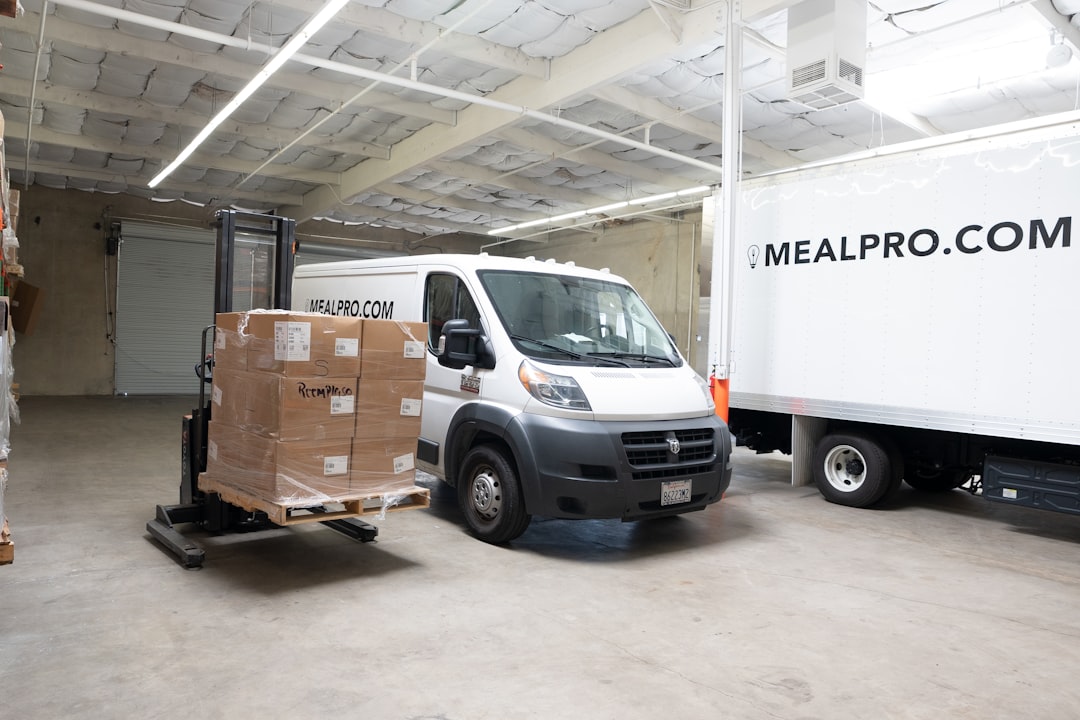
- Every food distribution operation needs at minimum: commercial auto, general liability, workers' compensation, cargo, and product liability. Most operations should also carry a commercial umbrella and commercial property coverage.
- FMCSA requires for-hire carriers in interstate commerce to maintain a minimum of $750,000 in commercial auto liability for non-hazardous goods in vehicles over 10,001 lbs — but major buyer contracts routinely demand $1M–$5M.
- Total annual premiums for a typical mid-size food distributor (5–15 trucks, $3M–$10M revenue) run $25,000–$65,000 per year, with commercial auto accounting for 40–55% of that total.
- Product liability is not optional in food distribution — FDA's FSMA traceability and recall rules create significant exposure even when your operation did nothing wrong. Spoilage, mislabeling, and allergen contamination are the most frequent triggers.
- Contractual requirements from grocery chains and foodservice buyers typically exceed statutory minimums by a meaningful margin — build to the contract, not the floor.
What insurance does a food distributor actually need?
Food distributors need six core coverages: commercial auto liability, general liability, workers' compensation, cargo (inland marine), product liability, and a commercial umbrella. Most operations with warehousing also need commercial property. Each coverage addresses a different risk zone — the road, the warehouse floor, the product itself, and the contracts you sign.
Below is the full coverage inventory for a food distribution operation, organized by whether the coverage is required, strongly recommended, or situational depending on your specific operation.
| Coverage | What It Protects | Typical Requirement Level | Common Limits |
|---|---|---|---|
| Commercial Auto Liability | Bodily injury and property damage from your trucks and vehicles | Required — federal (FMCSA) + contractual | $1M–$5M per occurrence |
| General Liability | Third-party bodily injury, property damage, and advertising injury at your facility or from your operations | Required — virtually all warehouse leases and buyer contracts | $1M/$2M (occurrence/aggregate) |
| Workers' Compensation | Medical costs and lost wages for employees injured on the job | Required — state law in all Anvo-licensed states | Statutory limits; employer's liability $500K–$1M |
| Cargo / Inland Marine | Loss or damage to goods in transit or in temporary storage | Required by most shipper and receiver contracts | Varies by load value; $100K–$1M+ per occurrence |
| Product Liability | Bodily injury or property damage caused by products you distributed or stored | Required — buyer contracts; critical under FSMA exposure | $1M/$2M, often endorsed onto GL policy |
| Commercial Umbrella | Excess limits above your auto, GL, and employer's liability | Required by most major buyers; strongly recommended for all | $2M–$25M excess |
| Commercial Property | Your building, warehouse equipment, inventory, and fixtures | Required by landlords; essential for owned facilities | Replacement cost value of building and contents |
| Product Recall / Contamination | Recall expenses, disposal costs, and business income loss from a contamination or recall event | Strongly recommended; often excluded from base GL | $250K–$2M+ |
| Business Interruption | Lost income if a covered property loss shuts down your operations | Recommended for operations with owned or leased facilities | 12–24 months of gross profit |
| Cyber Liability | Data breach response, ransomware, and electronic supply chain disruption | Increasingly required by large retail buyers; recommended for all | $1M–$5M |
The coverages above are not purchased in isolation — they work as a system. Commercial auto responds first to an accident. The umbrella steps in if damages exceed the auto limit. If the accident involved a product contamination or spoilage claim, product liability triggers. A broker's job is to ensure these layers connect properly and that no gap exists between them.
Operational risk zones for food distribution companies
Food distribution losses cluster in four operational zones: the road (commercial auto accidents, cargo theft, fuel spills), the warehouse (forklift accidents, loading dock injuries, cold storage failures), the product itself (contamination, spoilage, allergen mislabeling, FSMA recall obligations), and the contract (gaps between what a policy covers and what a buyer's COI requires). Understanding which zones pose the greatest financial exposure for your operation guides coverage prioritization.
Road — Fleet and Transit Risk
Commercial auto is the single largest premium line for most food distributors, and with good reason: the average commercial truck accident costs $70,000 in damages and legal fees, according to the Federal Motor Carrier Safety Administration — and severe accidents with injuries can easily exceed $1 million. Food distribution fleets face additional exposures beyond typical trucking: temperature excursion claims if a reefer unit fails in transit, cargo theft at unsecured stops, and FMCSA hours-of-service compliance exposure that affects both claims and carrier appetite.
For-hire food carriers operating interstate in vehicles 10,001 lbs or heavier must maintain a minimum of $750,000 in liability under FMCSA 49 CFR Part 387. Hazardous materials transport triggers higher minimums of $1M–$5M depending on commodity type. However, contractual requirements routinely demand more — $1M or $2M per occurrence is the standard in most shipper contracts, and $5M is not unusual for national grocery chain accounts.
Warehouse and Facilities Risk
Warehouse and cold storage operations create three primary exposure categories. Workers' compensation is the most frequent: the Bureau of Labor Statistics reports that warehousing and storage workers experience approximately 4.8 injuries per 100 full-time equivalent employees per year — higher than the overall private industry rate of 2.7. Forklift accidents, loading dock falls, cold storage slip-and-falls, and repetitive strain injuries from heavy lifting are the most common claims in food distribution. See our state-by-state requirements guide for workers' comp thresholds by state.
Facility-level general liability covers third-party bodily injury and property damage at your premises — a delivery driver injured at your dock, a customer injured during a facility pickup, or property damage to a neighboring tenant from a forklift incident. Most warehouse leases require $1M–$2M in GL limits and name the landlord as additional insured. Cold storage equipment failure resulting in inventory loss is typically covered under commercial property and business interruption, not general liability.
Product Risk — FSMA, Contamination, and Recall
FDA's Food Safety Modernization Act (FSMA) Sanitary Transportation Rule and Food Traceability Rule create significant product liability exposure for food distributors, even when the contamination originated upstream. Under the FSMA Food Traceability Rule, distributors of "foods on the Food Traceability List" must maintain records linking Key Data Elements at each Critical Tracking Event — and failure to produce those records within 24 hours of an FDA request creates independent regulatory exposure. This creates a product liability tail that follows your distribution chain regardless of fault.
Standard general liability policies include product liability but often have exclusions for recall costs, first-party contamination losses, and gradual spoilage. A product recall endorsement or standalone policy fills the gap: it covers the direct cost of the recall (withdrawal, disposal, notification, lab testing), business income loss during the recall period, and in some forms, third-party claims from downstream buyers. For food distributors handling high-risk categories (ready-to-eat, allergen-sensitive, temperature-controlled), this coverage is not optional — it's what determines whether a recall is survivable. See our food distribution claims guide for how to handle a recall when it occurs.
Contractual Risk — COI Gaps
Contractual risk is the risk that your insurance program, while technically valid, does not satisfy the certificate of insurance (COI) requirements in your buyer, landlord, or lender contracts. This is distinct from regulatory compliance: you can be fully FMCSA-compliant and still lose a major account because your commercial auto limit is $1M and the buyer requires $3M. COI gaps are among the most common issues we see when taking on new food distribution clients — programs built to regulatory minimums that can't satisfy a national account's requirements without mid-term endorsements.
The most common contractual minimums we see in food distribution buyer contracts: commercial auto $1M–$5M per occurrence; general liability $1M per occurrence / $2M aggregate; umbrella/excess $2M–$25M; workers' comp statutory / employer's liability $1M. Named insured and additional insured status requirements vary significantly by buyer.
Federal and state insurance requirements for food distributors
Food distributors operating in interstate commerce face federal insurance requirements from FMCSA (commercial auto liability minimums for motor carriers) and from FDA (FSMA compliance obligations that create product liability exposure). State-level requirements govern workers' compensation coverage, which is mandatory for most employers in all five states where Anvo is currently licensed. For a full state-by-state breakdown, see our food distribution insurance requirements by state article.
FMCSA Financial Responsibility Requirements
Any food distribution company operating as a for-hire motor carrier in interstate commerce must register with FMCSA and maintain the following minimum liability coverage, filed via BMC-91 or BMC-91X:
| Cargo Type | Vehicle Weight | Minimum Liability |
|---|---|---|
| Non-hazardous property | 10,001 lbs or more (GVWR) | $750,000 |
| Non-hazardous property | Under 10,001 lbs | No federal minimum; state rules apply |
| Hazardous materials — certain types | Any weight | $1,000,000–$5,000,000 depending on commodity |
| Oil (in bulk) | Any weight | $1,000,000 |
| Hazardous waste | Any weight | $5,000,000 |
Private carriers — companies transporting their own goods in their own vehicles — are not subject to FMCSA financial responsibility filing requirements, though they must still comply with applicable Federal Motor Carrier Safety Regulations (FMCSRs) if they operate commercially registered vehicles over 10,001 lbs in interstate commerce.
FSMA and Product Liability Exposure
FDA's Food Safety Modernization Act does not mandate a specific insurance coverage amount. However, FSMA creates three types of exposure that make product liability insurance essential rather than optional. First, the Sanitary Transportation of Human and Animal Food rule requires food distributors to maintain sanitary conditions during transport — violations can result in regulatory action and civil liability. Second, the Food Traceability Rule (Rule 204) requires extensive record-keeping for foods on the Food Traceability List; distributor failures can extend liability for a recall that originated elsewhere in the supply chain. Third, the Preventive Controls rules create due diligence standards — distributors with documented programs can sometimes limit exposure; those without them face broader liability. Source: FDA FSMA overview.
Workers' Compensation Requirements by State
Workers' compensation is mandatory for most food distribution employers in all five states where Anvo currently writes business. The key thresholds: Kansas requires coverage when payroll exceeds $20,000; Missouri requires it for employers with five or more employees; Pennsylvania, New York, and California require it as soon as you employ a single worker. Given the injury rates in warehousing and trucking, most food distributors should carry workers' comp regardless of legal threshold — a single serious forklift injury can generate hundreds of thousands of dollars in medical and wage-replacement costs.
How food distribution insurance programs are structured
A well-structured food distribution insurance program has three tiers: a primary layer (commercial auto, GL, workers' comp, cargo, product liability), a property layer (commercial property, business interruption, equipment breakdown), and an excess/specialty layer (umbrella, product recall, cyber). These layers should be designed to work together — with consistent additional insured language, matching policy periods, and no gaps between the end of one policy's coverage and the beginning of another.
Primary Layer: Liability and Workers' Comp
Commercial auto and general liability are typically purchased from the same carrier or on a coordinated basis to avoid gaps in coverage. Workers' compensation is usually purchased separately. Product liability is either endorsed onto the GL policy or, for larger operations or those with significant recall exposure, written on a standalone product liability/contaminated products policy. The primary layer is where most claims are resolved — the umbrella is there for the tail.
The Commercial Umbrella: Why It's Not Optional
A commercial umbrella provides excess limits above your commercial auto, general liability, and employer's liability policies. For most food distributors, a $5M umbrella adds relatively modest premium — typically $3,000–$8,000 per year — but it's the difference between surviving a serious trucking accident and losing the business. It's also contractually required by almost every major grocery chain and foodservice account. The umbrella must "follow form" with the underlying policies to avoid triggering coverage gaps — this is one of the most common errors in self-assembled programs.
Carrier Appetite for Food Distribution
Food distribution attracts a relatively concentrated set of specialty carriers and managing general agents. Commercial auto for food distributors is written by a mix of national writers (Travelers, Sentry, Protective, Westfield) and specialty program carriers. Product liability for food-related businesses has become more selective since COVID-era supply chain disruptions — carriers have tightened underwriting for operations with poor traceability documentation, cold chain gaps, or prior recall events. Working with a broker who places food distribution accounts regularly matters: carriers share placement history, and a broker with an established track record gets better access and pricing than a generalist placing food distribution for the first time.
- Strong-appetite operations: Established distributors with 3+ years of loss history, documented food safety programs, qualified drivers with clean MVRs, GPS-tracked fleets, and buyer contracts with national chains.
- Harder-to-place operations: New ventures without loss history, operations with prior recall events, distributors with undocumented cold chain procedures, high driver turnover, or operations involving high-risk commodity categories (raw meat, shellfish, allergen-heavy products).
- When to use a program market: Specialty program carriers often offer better pricing and broader coverage for food distribution than standard markets. If your broker isn't quoting program markets, ask why.
What food distribution insurance costs: ranges and drivers
Total annual insurance premiums for a food distribution company typically range from $8,000–$25,000 for small operations (1–3 trucks, under $2M revenue) to $25,000–$65,000 for mid-size operations (5–15 trucks, $3M–$10M revenue) to $65,000–$150,000+ for larger operations (15+ trucks, $10M+ revenue). Commercial auto is the largest premium driver, typically accounting for 40–55% of the total program cost. These are estimates with significant variability — your actual premiums depend on loss history, fleet type, payroll, commodity, state of operation, and carrier market conditions.
The five primary premium drivers for food distribution insurance: (1) Fleet size and vehicle type — more trucks and heavier vehicles mean higher premiums; reefer and refrigerated units typically carry higher cargo premiums than dry van. (2) Driver profiles — MVR violations, CDL age, and turnover rates materially affect auto premiums; a fleet with a high proportion of drivers under 25 or with recent violations can pay 30–50% more per unit than a clean-record fleet. (3) Claims history — three years of loss runs is the standard underwriting window; a frequency problem (many small claims) often penalizes pricing more than a single large loss. (4) Payroll and operations — workers' comp premiums are calculated as a rate per $100 of payroll, and warehouse/forklift workers carry higher rates than clerical staff. (5) State of operations — California, New York, and Pennsylvania consistently produce higher premiums than Kansas or Missouri due to higher litigation rates, higher medical costs, and more aggressive regulatory environments.
For a detailed breakdown with scenario cost tables, see our dedicated food distribution insurance cost guide for 2026.
When the program was "fine" — until the buyer read the COI
A regional food distributor came to us mid-year after nearly losing a major grocery chain account. They had carried the same insurance program for five years — purchased through a generalist broker — and had never had a claim. The program was technically compliant with FMCSA minimums and state workers' comp requirements. The problem: their commercial auto limit was $1M per occurrence, and the grocery chain's new vendor agreement required $3M. Their general liability aggregate was $2M, and the buyer required $5M. And their umbrella started at $5M excess, which didn't pick up until the underlying $1M auto limit was exhausted — leaving a $2M gap relative to the buyer's requirement.
We restructured the program with a $3M primary auto limit, a broader umbrella that followed form correctly, and a revised GL structure that satisfied the buyer's COI requirements. The total premium increase was about $4,200 per year — far less than the cost of losing the account. The lesson: a "compliant" program and a "contract-ready" program are not the same thing, and the gap between them is usually discovered at the worst possible moment.
Details anonymized and generalized to protect client confidentiality.
Frequently asked questions about food distribution insurance
At minimum, food distributors operating as for-hire carriers in interstate commerce must carry $750,000 in commercial auto liability (FMCSA requirement for non-hazmat goods in vehicles over 10,001 lbs) and workers' compensation as required by their state. In practice, most food distribution companies also need general liability, cargo, and product liability coverage — and major buyer contracts typically require higher limits and additional coverages beyond the regulatory minimums.
See our full breakdown of food distribution insurance requirements by state for details on federal, state, and contractual obligations.
Most commercial general liability (CGL) policies include products-completed operations coverage, which covers bodily injury or property damage caused by products you distributed. However, standard CGL policies typically exclude recall costs, first-party contamination losses, and certain spoilage claims — those require a separate product recall or contaminated products endorsement. For food distributors with significant perishable or high-risk product exposure, a standalone product liability or contaminated products policy is worth evaluating alongside the base GL.
Yes. Commercial auto liability covers damage your truck causes to other people and their property — it does not cover damage to the cargo you're carrying. Cargo insurance (inland marine) covers loss or damage to goods while in transit, including theft, accident damage, temperature excursion losses (for refrigerated goods), and loading/unloading damage. Most shipper and receiver contracts require cargo insurance as a condition of doing business, and most food distribution operations have significant cargo exposure that a commercial auto policy simply doesn't address.
FDA's Food Safety Modernization Act creates product liability and regulatory exposure for food distributors that a standard general liability policy may not fully address. FSMA's Sanitary Transportation Rule requires documented food safety procedures during transport; the Traceability Rule (Rule 204) requires distributors to maintain and produce Key Data Elements within 24 hours of an FDA request. These obligations create documentation and compliance burdens, and failures can extend your liability for a recall that originated elsewhere in the chain. Product liability, product recall, and cyber (for digital record-keeping) coverages are the primary insurance responses to FSMA exposure.
A commercial umbrella provides excess liability limits above your commercial auto, general liability, and employer's liability policies. It activates when an underlying policy limit is exhausted — for example, if a trucking accident produces $3M in damages and your commercial auto limit is $1M, a $5M umbrella would cover the remaining $2M. For food distributors, the umbrella also typically satisfies major buyer COI requirements that exceed underlying policy limits. The umbrella must "follow form" with the underlying policies — this means it should mirror the same coverage forms and not exclude anything the underlying policies cover, a critical detail that's easy to get wrong.
For an established food distribution operation with clean loss history, a full program quote typically takes 5–10 business days from submission to binding. You'll need to provide three years of loss runs, driver MVRs for all fleet operators, a vehicle schedule, payroll by employee classification, and descriptions of your operations and storage facilities. New ventures without prior loss history, operations with recent claims, or accounts with complex commodity exposures may take longer as carriers evaluate the risk more carefully. Working with a broker who specializes in food distribution accounts typically shortens this timeline significantly.
Not sure if your current program covers everything your operation needs?
Ask our AI assistant a specific question about food distribution insurance coverage, requirements, or costs.
Start a quote for your food distribution business
Anvo places insurance for food distributors and wholesalers across the country. Tell us about your operation and we'll put together a program built around your fleet, your facilities, and the contracts you need to satisfy.