
Food Distribution Insurance Cost 2026:
What to Expect and What Drives Your Premium
Food distribution insurance programs typically cost $8,000–$25,000 per year for small operations (1–3 trucks), $25,000–$65,000 for mid-size operations (5–15 trucks), and $65,000–$150,000 or more for larger fleets. Commercial auto is the dominant cost driver, typically accounting for 40–55% of total annual premium. These ranges reflect 2026 market conditions and real placements from Anvo's food distribution book — your actual premium depends on your specific operation, loss history, state, and carrier market conditions.
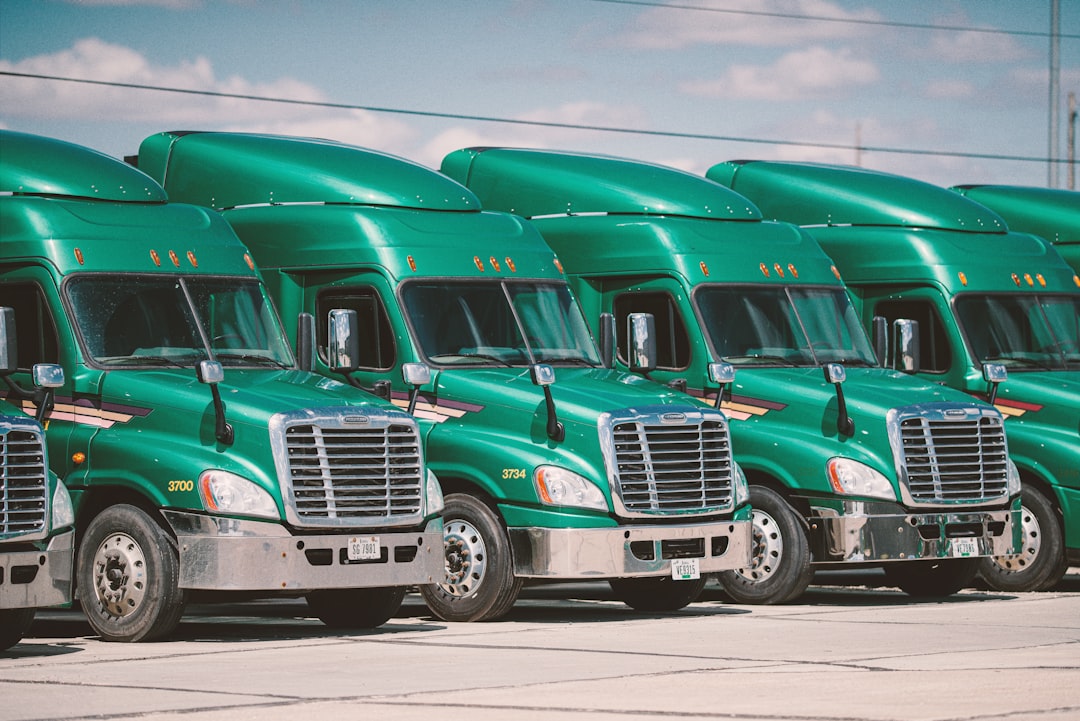 Photo by Marcin Jozwiak
on Unsplash
Photo by Marcin Jozwiak
on Unsplash
- Total annual insurance cost for a typical food distributor ranges from $8,000–$150,000+ depending on fleet size, payroll, operations, and loss history. The range is wide because the industry spans owner-operators to regional distribution networks.
- Commercial auto is the largest single cost line for most food distributors — $3,000–$10,000+ per truck per year. It accounts for 40–55% of total program premium for fleet operations.
- Workers' comp for food distribution typically runs at $4.00–$8.00 per $100 of payroll for warehouse/driver classifications — significantly higher than office or retail rates due to injury frequency in warehousing and trucking.
- Claims history is the single biggest pricing variable after fleet size. A distributor with a clean three-year loss record can pay 25–40% less than an equivalent operation with two at-fault accidents in the same period.
- California, New York, and Pennsylvania operations typically pay 20–40% more than equivalent Kansas or Missouri operations for the same coverage profile, due to litigation rates, medical costs, and state regulatory environments.
Food distribution insurance cost by business size (2026)
The most reliable way to estimate your food distribution insurance cost is to start with your fleet size and total payroll, then adjust for claims history, state, and commodity type. The scenarios below use consistent assumptions to allow comparison — your operation may fall between categories or have specific characteristics that shift cost significantly in either direction.
| Operation Size | Fleet / Payroll | Est. Annual Premium Range | Assumptions |
|---|---|---|---|
| Small | 1–3 trucks, $300K–$700K payroll | $8,000–$25,000 | Clean loss history, drivers 25+, Midwest operations, dry van or light reefer, $1M auto / $1M GL / $2M umbrella / statutory WC |
| Mid-Size | 5–15 trucks, $700K–$2.5M payroll | $25,000–$65,000 | Clean to moderate loss history (1 at-fault in 3 years), mixed fleet (reefer + dry), Midwest / mid-Atlantic operations, $1M–$3M auto / $2M GL / $5M umbrella |
| Larger | 15–40 trucks, $2.5M–$6M payroll | $65,000–$150,000 | Moderate loss history (2–3 claims in 3 years), refrigerated fleet, multi-state operations including CA or NY, $3M–$5M auto / $2M GL / $10M umbrella |
| Regional/Large | 40+ trucks, $6M+ payroll | $150,000+ | Varies widely; typically requires loss-sensitive or large-account pricing structures; experience modification (Ex-Mod) becomes the primary lever |
These ranges assume a complete program: commercial auto, general liability, workers' compensation, cargo/inland marine, product liability, and a commercial umbrella. They do not include commercial property, product recall, cyber liability, or business interruption — those add $2,000–$15,000+ annually depending on facility size and exposure.
A note on variability: the spreads above are wide because food distribution is not a monolithic class. A regional dry goods distributor hauling shelf-stable packaged products in the Midwest has a fundamentally different risk profile from a multi-state cold chain operator handling raw seafood in California. Both call themselves food distributors. Their insurance programs — and costs — look very different.
Commercial auto: your biggest insurance cost as a food distributor
Commercial auto insurance for food distribution vehicles typically costs $3,000–$10,000 per truck per year for a standard fleet with clean loss history in a non-coastal state. Refrigerated units (reefer trucks) run higher — $5,000–$12,000 per unit — due to the added cargo exposure and higher vehicle values. Fleets with recent at-fault accidents, younger drivers, or operations in California or New York can pay 30–60% above these benchmarks.
What moves commercial auto pricing
The five biggest levers on commercial auto premiums for food distributors:
- Driver MVR history: A clean driving record is the single most controllable pricing variable. Even one at-fault accident in the past three years can increase per-unit pricing by 15–30%. Two incidents can trigger non-standard market pricing or declination from preferred carriers. Driver qualification files, annual MVR checks, and a written driver selection policy are underwriter requirements that also drive better pricing.
- Driver age and experience: Drivers under 25 carry materially higher accident rates and result in surcharges of 20–40% above standard pricing. Drivers with less than two years of CDL experience may be excluded from coverage or require endorsement. A fleet with a high proportion of experienced, mature drivers with clean MVRs is one of the strongest underwriting positives a food distributor can present.
- Loss history (three years of loss runs): Underwriters look at three years of loss runs as the standard evaluation window. Frequency problems — multiple small claims — typically hurt pricing more than a single large loss, because frequency signals systemic risk. If your operation has had two or more at-fault accidents in three years, expect either a rate surcharge or market difficulty.
- Vehicle type and radius of operations: Longer radius operations (300+ miles from home terminal) carry higher rates than local delivery fleets. Refrigerated and flatbed units typically cost more to insure than standard dry van due to higher cargo values and different accident profiles.
- State of operations: California's commercial auto market is among the most expensive in the country — expect premiums 35–55% above equivalent Midwest rates for the same fleet. New York and New Jersey are similarly elevated. Kansas and Missouri are among the more favorable markets.
FMCSA and CSA scores as underwriting signals
Carriers increasingly use FMCSA's Compliance, Safety, Accountability (CSA) BASICs scores to evaluate food distribution fleets. High scores in the Unsafe Driving or Hours of Service BASICs are direct underwriting concerns and can trigger declination or surcharge from standard carriers. Maintaining DOT compliance — completed and retained driver qualification files, ELD compliance, DVIR completion, drug and alcohol testing programs — is not just a regulatory obligation; it's a material factor in commercial auto pricing and availability. Review your SMS public record on the FMCSA portal before going to market.
Workers' compensation costs for food distribution operations
Workers' compensation premiums for food distribution are calculated as a rate per $100 of payroll, applied to each job classification. Warehouse workers (NCCI class code 8018 — wholesale/distribution) typically run at $4.00–$8.00 per $100 of payroll in most states. Truck drivers (NCCI class code 7231 for local/7228 for long-haul) run at $6.00–$12.00+ per $100. Clerical and administrative staff run at $0.25–$0.75 per $100. The overall rate for a typical food distribution operation, blended across all classifications, tends to fall between $3.50 and $7.00 per $100 of total payroll.
Experience modification factor (Ex-Mod)
Once a food distribution operation has been in business for three or more years, workers' comp premiums are adjusted by an experience modification factor (Ex-Mod). An Ex-Mod of 1.00 means your loss experience matches the industry average; 0.85 means 15% below average (a credit — lower premium); 1.25 means 25% above average (a debit — higher premium). For a food distribution operation spending $30,000 per year on workers' comp, the difference between an Ex-Mod of 0.85 and 1.25 is $12,000 annually. Managing the Ex-Mod through injury prevention, return-to-work programs, and prompt claim reporting is one of the highest-leverage cost controls available to food distributors.
State-by-state workers' comp rate variation
Workers' comp rates vary significantly by state, regulated by each state's insurance department and (in most states) filed through NCCI. California has its own rating bureau (WCIRB) and consistently produces the highest rates in the country — warehouse and distribution workers in California can pay 50–80% more than equivalent Midwest operations for the same classification. New York runs similarly elevated. Pennsylvania has seen moderation in recent years but remains above the national median. Kansas and Missouri are generally among the more favorable workers' comp markets for food distribution employers.
Cost of general liability, cargo, product liability, and umbrella
Beyond commercial auto and workers' compensation, food distributors need general liability ($1,500–$4,000/year), cargo/inland marine ($1,500–$6,000/year depending on load values), product liability ($1,500–$5,000/year when written standalone), and a commercial umbrella ($2,500–$10,000/year for $5M–$10M limits). These four lines together typically add $7,000–$25,000 to the annual program cost, though they represent a smaller share of total premium than commercial auto.
| Coverage Line | Typical Annual Cost | Key Pricing Factors |
|---|---|---|
| General Liability | $1,500–$4,000 | Revenue, number of locations, products sold, prior claims |
| Cargo / Inland Marine | $1,500–$6,000+ | Per-load value, commodity type (refrigerated vs. dry), annual freight revenue, theft exposure, transit radius |
| Product Liability (standalone) | $1,500–$5,000 | Product types, revenue, recall history, food safety program documentation, commodity risk category |
| Commercial Umbrella ($5M) | $2,500–$8,000 | Underlying limits, auto fleet size, prior losses, state |
| Commercial Property | $3,000–$15,000+ | Building value (owned vs. leased), contents/inventory value, cold storage equipment, location, construction type |
| Product Recall / Contamination | $2,000–$8,000 | Revenue, product categories, prior recall history, food safety certifications |
| Cyber Liability ($1M) | $1,500–$4,000 | Revenue, number of records, supply chain integration, security controls |
A note on product liability and GL bundling: most food distributors with revenue under $10M will find product liability is included in (or endorsed onto) their commercial general liability policy at no separate cost, or for a modest additional premium of $500–$1,500. Standalone product liability policies become more relevant and better-priced for larger operations, those with prior recall events, or those handling high-risk commodity categories where GL carriers may limit products-completed operations sub-limits.
How to get better pricing on food distribution insurance
Food distribution insurance pricing is not fixed — it reflects underwriting risk, and underwriters reward operations that demonstrate good risk management. The five most actionable levers for food distributors seeking better pricing: clean driver MVRs, documented food safety programs, low Ex-Mod from strong safety culture, clean and complete loss runs, and working with a broker who places food distribution accounts regularly and has relationships with program carriers.
What underwriters want to see
When a food distribution account goes to market, underwriters are evaluating a specific set of risk signals. Presenting these well — through a complete, well-organized submission — directly affects the quality of quotes you receive. Operations that present well get access to more carriers at better pricing; disorganized or incomplete submissions often end up in surplus lines markets at 20–40% premium over standard markets.
- Three years of clean loss runs: Loss runs with zero or minimal claims are the single strongest underwriting signal. If you've had claims, provide a written explanation of what changed operationally since the incident — underwriters respond to demonstrated remediation.
- Driver qualification files: Completed DQ files for all CDL drivers, with annual MVR checks, drug and alcohol testing records, and DOT physicals on file. Missing DQ documentation is a common reason food distribution accounts get substandard pricing or declination.
- Food safety documentation: Written FSMA sanitary transportation procedures, cold chain protocols, and Preventive Controls documentation signal professional operations to product liability underwriters. Carriers writing food distribution will ask — have the documents ready.
- GPS and telematics data: Fleets using GPS tracking and in-cab telematics increasingly get premium credits from commercial auto carriers — typically 3–8%. The data also helps in claims defense. If you have it, mention it in the submission.
- Safety programs and training records: Written safety manuals, forklift operator certifications, and documented safety training reduce both frequency and the Ex-Mod trajectory. Underwriters at workers' comp carriers give credit for formal safety programs.
The program market advantage
Food distribution is a specialty class — most of the most competitive pricing comes from program markets and managing general agents (MGAs) that underwrite food distribution exclusively. These carriers understand the class, have aggregated loss data to price it accurately, and often provide broader coverage forms than standard markets. If your broker is only going to three or four admitted carriers, you may be missing the programs that would offer the best combination of price, coverage, and capacity for your operation. Asking "what program markets are you quoting?" is a reasonable question to ask your broker.
How state of operations affects food distribution insurance costs
State of operations is a material pricing variable for food distribution insurance — particularly for commercial auto and workers' compensation. California, New York, and New Jersey consistently produce the highest premiums nationally; Kansas and Missouri are among the most favorable. For a mid-size food distributor expanding from a Midwest base into California, the incremental annual insurance cost attributable to California operations alone can run $10,000–$30,000 depending on fleet size and payroll in that state.
| State | Relative Commercial Auto Cost | Relative Workers' Comp Cost | Notes |
|---|---|---|---|
| Kansas (KS) | Base / Favorable | Base / Favorable | Low litigation environment; favorable workers' comp market; NCCI state |
| Missouri (MO) | Slightly above KS | Base / Favorable | Metro KC operations attract slightly higher auto rates than rural; NCCI state |
| Pennsylvania (PA) | Moderately elevated | Elevated (improving) | Higher litigation environment; Philadelphia metro especially elevated for auto; state fund option for WC |
| New York (NY) | Significantly elevated | Significantly elevated | NYC metro is among the most expensive auto markets nationally; NY WC has own rating structure; employer assessment surcharges apply |
| California (CA) | Highest (35–55% above KS) | Highest (50–80% above KS) | WCIRB-rated state; high medical costs; active plaintiff bar for trucking; LA/Bay Area metro most expensive; CARB regulations affect fleet compliance costs |
Multi-state operations are rated on a per-state basis — your workers' comp policy is rated against the payroll attributable to each state, and commercial auto rates reflect the garaging state and primary operational territory. For operations that operate across state lines but garage vehicles in a lower-cost state, underwriters may accept a blended rate — but you'll need accurate documentation of where vehicles operate and where employees are based.
How one fleet cut its auto premium by 28% without reducing coverage
A mid-size food distributor with a 12-truck reefer fleet came to us at renewal after three years with the same carrier. Their auto premium had increased 22% over that period — each renewal brought a modest increase, and no one had shopped the account in years. When we pulled their loss runs, the story was clear: three claims over five years, two of which were not at-fault (a parked vehicle hit in a lot, a rear-end by another driver). One at-fault accident, now four years old, had been treated as a permanent rating factor by the incumbent carrier.
We went to market with the full submission — complete DQ files, clean MVRs for all current drivers, telematics data showing improved safety scores, and a written narrative explaining the loss history and the operational changes made since the at-fault incident. Three program carriers quoted. The best quote came in 28% below the renewal figure — for the same limits and a broader coverage form. The client saved $14,300 per year and got a policy with a lower deductible for cargo claims. The incumbent's renewal was never competitive because they hadn't re-underwritten the account in two years.
Details anonymized and generalized to protect client confidentiality.
Frequently asked questions about food distribution insurance costs
Food distribution insurance typically costs $8,000–$25,000 per year for small operations with 1–3 trucks, $25,000–$65,000 for mid-size operations with 5–15 trucks, and $65,000–$150,000+ for larger fleets. Commercial auto is the largest cost driver, typically 40–55% of total annual premium. These are 2026 market benchmarks — your actual cost depends on fleet size, payroll, loss history, state, and commodity type.
Commercial auto insurance for food distribution trucks typically runs $3,000–$10,000 per truck per year for dry van operations with clean driver history in a non-coastal state. Refrigerated units (reefer trucks) run higher — $5,000–$12,000 per unit — due to higher vehicle values and cargo exposure. California and New York operations can run 35–55% higher than equivalent Midwest rates for the same fleet profile.
California's commercial insurance costs are elevated by several structural factors: a more active plaintiff bar in commercial trucking litigation, higher medical and wage costs that inflate workers' compensation and injury settlements, California's own workers' compensation rating bureau (WCIRB) that reflects those higher costs, and stricter regulatory requirements (including CARB emissions compliance) that increase operational complexity and insured exposure. Commercial auto premiums for the same fleet profile typically run 35–55% higher in California than in Kansas or Missouri.
A $5M–$10M commercial umbrella typically adds $2,500–$10,000 to a food distribution company's annual premium — a relatively modest incremental cost given the protection it provides. For a mid-size operation spending $40,000 per year on its base program, adding a $10M umbrella typically runs $5,000–$8,000 more, or roughly 12–20% of the base cost. Given that a single serious trucking accident can easily exceed $1M in damages — and that most major buyer contracts require umbrella coverage — the umbrella is among the best-value coverages in the program.
Higher deductibles do reduce premiums, but the tradeoff requires careful analysis for food distribution operations. Commercial auto deductibles of $1,000–$5,000 are standard; increasing to $10,000–$25,000 can reduce per-unit auto premiums by 8–15%. Workers' comp deductible programs (also called "large deductible" or "loss-sensitive" plans) are most relevant for operations spending $75,000 or more annually on workers' comp and require solid cash flow to fund frequent small claims. For most small-to-mid-size food distributors, large deductibles shift cash flow risk without improving long-term costs meaningfully — the better levers are clean driver records, safety programs, and consistent shopping of the program market.
Want to know where your quote should land?
Tell our AI assistant about your fleet size, state, and operations and get a rough benchmark before you go to market.
See where your quote should land based on your profile
Tell us about your fleet, your operations, and your current program. We'll put together a comparison quote from our food distribution carrier network and show you where you stand relative to the market.