
Food Distribution Insurance Requirements by State:
What the Law and Your Contracts Actually Require
Food distribution companies face three distinct layers of insurance requirements: federal regulations from FMCSA and FDA, state-mandated workers' compensation and commercial vehicle minimums, and contractual minimums imposed by grocery chains, foodservice operators, and lenders. Understanding which layer drives the highest requirements in your specific operation is the starting point for building a compliant program.
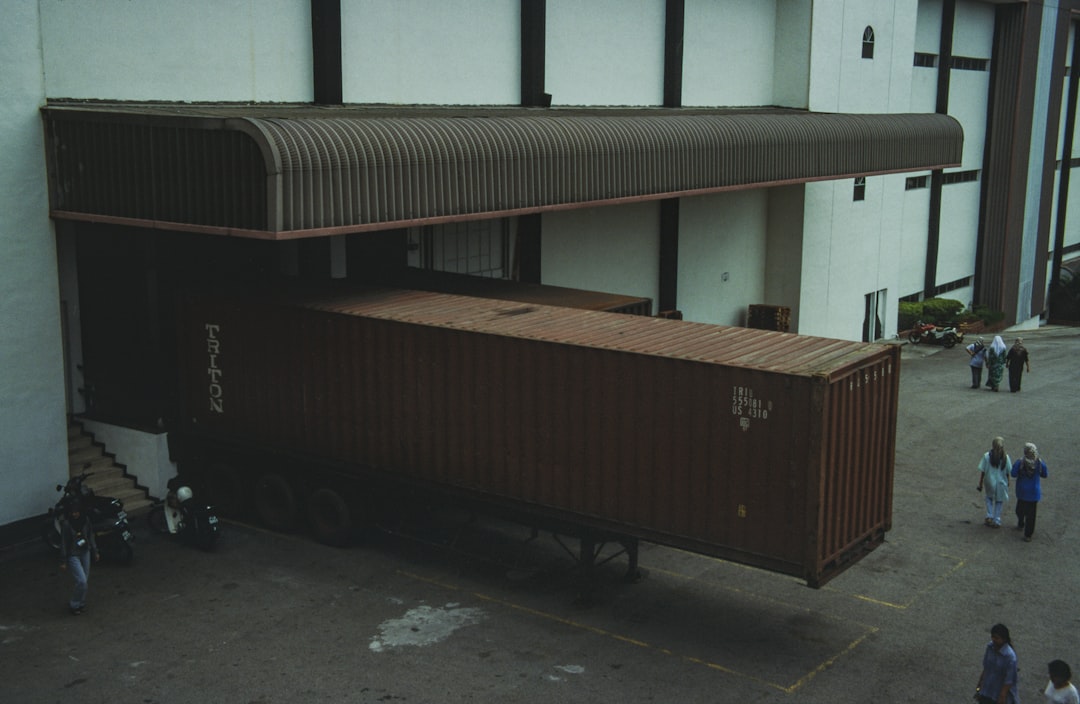 Photo by Matthew Jackson
on Unsplash
Photo by Matthew Jackson
on Unsplash
- For-hire food distribution carriers operating vehicles 10,001 lbs or heavier in interstate commerce must carry a minimum of $750,000 in liability coverage under FMCSA 49 CFR Part 387 — and must file proof with FMCSA (BMC-91 or BMC-91X).
- Workers' compensation is mandatory for most employers in all five states where Anvo is currently licensed (KS, MO, PA, NY, CA) — thresholds vary.
- FDA's FSMA Sanitary Transportation Rule does not mandate a specific insurance amount, but it creates traceability and recall obligations that make product liability and recall insurance critical exposures, not optional extras.
- Contractual requirements from grocery chains and large foodservice buyers routinely exceed statutory minimums — a $2M general liability limit and a commercial umbrella are often required to land or keep major accounts.
- Private carriers (transporting goods they own) and for-hire carriers (transporting others' goods) are subject to different FMCSA rules. Most food distribution operations function as for-hire carriers.
The three layers of food distribution insurance requirements
Food distribution insurance requirements come from three distinct sources: federal regulations (primarily FMCSA and FDA), state law (workers' compensation statutes and state commercial vehicle rules), and private contracts with buyers, lenders, and landlords. Each layer has different enforcement mechanisms and different consequences for non-compliance.
Federal requirements set the floor for carriers operating in interstate commerce — FMCSA's financial responsibility minimums apply regardless of which states your trucks cross. State requirements primarily govern workers' compensation and, in some states, additional commercial vehicle minimums for intrastate operations. Contractual requirements are imposed by whoever you're doing business with — and they often set the real ceiling.
In practice, most food distributors find that their largest buyer's certificate of insurance (COI) requirements exceed both federal and state minimums. A $750,000 FMCSA minimum matters for regulatory compliance, but a national grocery chain demanding $5M in commercial auto liability means that's your real minimum for that contract. We've seen distributors lose or nearly lose major accounts because their program was built to the statutory floor, not the contractual ceiling.
What FMCSA and FDA require from food distributors
Two federal agencies drive the most significant insurance-related obligations for food distributors: the Federal Motor Carrier Safety Administration (FMCSA) governs financial responsibility for trucks in interstate commerce, and the Food and Drug Administration (FDA) governs food safety and traceability under FSMA — which creates the product liability exposure that makes product recall and contamination insurance critical.
FMCSA Financial Responsibility Minimums
FMCSA requires for-hire motor carriers operating in interstate commerce to maintain minimum levels of financial responsibility — and to file proof of that coverage with FMCSA using a BMC-91 (insurance) or BMC-91X (surety bond) form. The carrier's insurance company, not the carrier itself, must file the form directly with FMCSA.
| Commodity Type | Vehicle Weight | Minimum Liability | Regulation |
|---|---|---|---|
| Non-hazardous goods (most food products) | 10,001 lbs GVWR or heavier | $750,000 | 49 CFR 387.9 |
| Non-hazardous goods | Under 10,001 lbs GVWR | $300,000 | 49 CFR 387.9 |
| Hazardous materials (certain classes) | Any weight | $1,000,000 – $5,000,000 | 49 CFR 387.9 |
| Household goods carriers | Any weight | $750,000 | 49 CFR 387.9 |
Important: Private vs. for-hire carriers. FMCSA financial responsibility filing requirements apply to for-hire carriers — those transporting goods for compensation. A food distributor transporting inventory it owns to its own customers is typically classified as a for-hire carrier. A manufacturer moving its own goods between its own facilities in its own trucks may be classified as a private carrier and may not be subject to FMCSA filing requirements, though it still needs commercial auto insurance. If you're unsure of your classification, your FMCSA operating authority registration determines it.
The FMCSA minimum of $750,000 is also the regulatory floor — it does not reflect the actual liability exposure of a modern food distribution fleet. A serious accident involving a 40,000-lb loaded reefer truck can generate claims well in excess of $750,000. Most underwriters recommend $1M minimum, and large buyer contracts routinely require more. For the full picture on commercial auto insurance for food distribution fleets, see our food distribution insurance overview.
FDA FSMA: Sanitary Transportation and Traceability Rules
The Food Safety Modernization Act (FSMA) does not require food distributors to carry a specific dollar amount of insurance. What it does is impose legal obligations around sanitary transportation practices, temperature control, traceability, and recall readiness — and those obligations create significant insurance exposure.
Key FSMA rules affecting food distributors include:
- Sanitary Transportation Rule (21 CFR Part 1, Subpart O): Requires carriers and shippers to ensure food is transported under sanitary conditions — including written agreements about temperature ranges, vehicle sanitation, and prior cargo. Non-compliance creates regulatory liability and strengthens plaintiff arguments in contamination lawsuits. FDA FSMA
- Food Traceability Rule (21 CFR Part 1, Subpart S): Requires distributors handling foods on the Food Traceability List (FTL) — including fresh produce, shell eggs, nut butters, and ready-to-eat foods — to maintain traceability records and respond to FDA traceability record requests within 24 hours. Failure to comply in a recall event compounds the liability.
- Preventive Controls for Human Food (21 CFR Part 117): Applies primarily to manufacturers, but distributors who repack or relabel food take on additional obligations under this rule.
The direct insurance implication: FSMA compliance creates a documented standard of care. If a contamination or recall event occurs and your operation was not FSMA-compliant, that non-compliance becomes a contributing factor in any related lawsuit. Product liability insurance — specifically policies that cover food contamination and recall costs — is the primary coverage responding to these exposures. For distributors handling temperature-sensitive products, see also our guide on perishable and cold-chain distribution insurance.
State insurance requirements for food distributors
State insurance requirements for food distributors primarily center on workers' compensation — which is mandated by law for most employers in virtually every state — and state commercial vehicle financial responsibility laws for intrastate operations. State minimums for commercial auto liability typically mirror or fall below FMCSA minimums for interstate carriers, but workers' compensation thresholds vary materially by state.
Workers' Compensation
Workers' compensation insurance covers employees injured on the job — medical treatment, lost wages, and rehabilitation. For food distributors, the workforce classification challenge is significant: warehouse workers, forklift operators, delivery drivers, and office staff all carry different risk classifications and premium rates. Misclassifying employees at audit is one of the most common and costly errors in food distribution insurance programs.
| State | Workers' Comp Required When... | Key Notes | State Source |
|---|---|---|---|
| Kansas (KS) | Employers with gross annual payroll over $20,000 (non-agricultural) | Coverage is required once payroll exceeds $20,000 in a calendar year. Agricultural workers and certain casual workers are exempt. Virtually all food distribution operations with any full-time staff meet this threshold. Sole proprietors and partners are excluded by default but may elect coverage. | Kansas DOL |
| Missouri (MO) | 5 or more employees (construction: 1 or more) | Employers with fewer than 5 employees are exempt unless in construction. However, most food distribution operations employ 5 or more workers across warehouse and driver roles and are therefore required to carry coverage. | Missouri DWC |
| Pennsylvania (PA) | 1 or more employees | No minimum employee threshold — coverage is required for virtually all employers with any employees. Sole proprietors and partners are excluded by default but may elect coverage. | PA DLI |
| New York (NY) | 1 or more employees (including part-time) | One of the broadest coverage mandates in the country — applies to virtually all employers, including those with part-time workers. Corporate officers are included unless they opt out. Non-compliance penalties in NY are among the most severe of any state. | NY WCB |
| California (CA) | 1 or more employees | Required for all employers, including day laborers and part-time workers. CA workers' comp rates for warehouse and driver classifications are among the highest in the country due to the state's benefit levels and litigation environment. Misclassifying drivers as independent contractors carries significant exposure post-AB5. | CA DIR |
State Commercial Auto Requirements for Intrastate Operations
Food distributors operating exclusively within a single state (intrastate carriers) are not subject to FMCSA financial responsibility filing requirements — but they are still subject to state commercial vehicle insurance laws and state DMV/PUC registration requirements. Most states require proof of liability insurance as a condition of commercial vehicle registration.
In practice, the minimum liability limits for state-registered commercial vehicles in most states are lower than FMCSA's $750,000 interstate minimum. However, an intrastate food distribution operation with significant vehicle or cargo values should not treat the state minimum as a practical coverage target — it is a regulatory floor, not a risk-informed limit.
California is the notable exception among our licensed states: the California Public Utilities Commission (CPUC) regulates certain for-hire carriers operating intrastate, and CA-specific requirements may apply to food distributors operating fleets within the state. California also enforces AB5, which affects how food distribution companies classify delivery workers — misclassification creates both labor law liability and workers' compensation exposure.
What your buyers, lenders, and landlords require
Contractual insurance requirements from grocery chains, foodservice operators, lenders, and warehouse landlords typically exceed both federal and state minimums — and they are enforced through contract, not regulation. Failure to maintain required coverage can result in contract termination, withheld payments, or breach of contract claims, independent of any regulatory penalty.
Buyer and Vendor Requirements (Grocery Chains, Foodservice Operators)
Large grocery chains and national foodservice operators impose certificate of insurance (COI) requirements on their suppliers and distributors as a standard condition of doing business. These requirements are set by the buyer's risk management department and typically do not negotiate down. Common requirements we see from major accounts:
| Coverage | Typical Minimum (Mid-Size Buyer) | Typical Minimum (Major Chain / National Account) |
|---|---|---|
| General Liability | $1M per occurrence / $2M aggregate | $2M per occurrence / $4M aggregate |
| Commercial Auto Liability | $1M combined single limit | $1M – $5M combined single limit |
| Workers' Compensation | Statutory limits | Statutory limits + $1M employer's liability |
| Umbrella / Excess Liability | $2M – $5M | $5M – $25M+ |
| Product Liability | Included in GL policy | Sometimes required as a separate policy with higher limits |
| Cargo / Motor Truck Cargo | $100,000 per load | $250,000+ per load, or shipper-specified value |
These ranges are illustrative, not universal — every buyer contract specifies its own requirements. The practical implication: when you're pursuing a new distribution contract with a major buyer, request their standard vendor insurance requirements before you finalize your renewal. We've seen distributors win contracts they couldn't actually fulfill because their existing coverage fell short of the COI requirements buried in the vendor agreement.
Lender and SBA Loan Requirements
Commercial lenders financing food distribution equipment, vehicles, or facilities typically require:
- Commercial property insurance on financed property at replacement cost value, with the lender listed as loss payee.
- Commercial auto physical damage on financed vehicles, with the lender or lessor listed as loss payee or additional insured.
- Business interruption insurance on owner-occupied facilities, in amounts sufficient to cover loan obligations during a prolonged shutdown.
SBA-backed loans add additional requirements: the SBA requires life insurance on key principals for larger loans, and SBA lenders routinely require all-risk property coverage meeting or exceeding the loan balance.
Warehouse and Lease Requirements
Commercial warehouse leases for food distribution facilities typically require tenants to maintain general liability insurance ($1M–$2M), commercial property coverage for tenant improvements and inventory, and workers' comp — with the landlord named as additional insured on the GL policy. For 3PL and cold storage operations with complex tenant liability structures, warehouse legal liability coverage is often a separate lease requirement. See our guide on 3PL and cold storage warehouse insurance for more detail on those structures.
How contract gaps cost one distributor a major account
When the contract required more than the program covered
A regional food distributor came to us mid-contract year after a large grocery chain notified them that their current certificate of insurance didn't meet the vendor agreement's requirements. Their existing program had $1M in commercial auto liability — the chain required $5M. They had no umbrella policy.
The distributor was technically in breach of their vendor agreement and at risk of losing the account. We placed a commercial umbrella that filled the gap within a few days, and the account was preserved. The premium for the umbrella was a fraction of the revenue at risk. The lesson: the time to match your coverage to your contracts is before you sign them, not after you receive a notice of non-compliance from your buyer's compliance department.
Details anonymized and generalized to protect client confidentiality.
When contractual requirements exceed the law — and what to do about it
The three layers of food distribution insurance requirements don't always align. Federal law sets a floor for interstate carriers. State law sets a floor for workers' compensation. But the real ceiling in most food distribution programs is set by the largest buyer's COI requirements — and those contractual minimums often exceed both federal and state floors by a significant margin.
The practical framework for building a compliant food distribution program:
- Step 1 — Identify your FMCSA status. Are you a for-hire interstate carrier, a for-hire intrastate carrier, or a private carrier? Your operating authority registration determines which FMCSA financial responsibility rules apply. If you hold an MC number, you are subject to FMCSA filing requirements and the $750,000 minimum.
- Step 2 — Confirm state workers' comp requirements for every state where you employ workers. If you have employees in multiple states, you may need workers' comp policies covering all relevant jurisdictions. Multi-state operations should confirm that their policy has the correct state endorsements.
- Step 3 — Collect COI requirements from every active and prospective buyer contract. This is the step most distributors skip. The variance between buyers can be significant — one buyer may require $1M auto, another may require $5M. Your program needs to satisfy the highest requirement you'll face, not just the most common one.
- Step 4 — Build the program to the ceiling, not the floor. Structure your primary layers and umbrella to satisfy your highest contractual requirement. The premium difference between a program built to the statutory floor and one built to contractual requirements is usually modest relative to the revenue at risk.
For a complete overview of how these coverages fit together into an integrated food distribution program, see our food distribution insurance guide. For guidance on what to do when a claim occurs — reporting timelines, evidence preservation, and the mistakes that most consistently hurt outcomes — see our food distribution claims guide.
Frequently asked questions about food distribution insurance requirements
There is no single "minimum" — the required coverage depends on whether you're a for-hire or private carrier, which states you operate in, and what your buyer contracts require. Federal law (FMCSA) requires for-hire interstate carriers to carry a minimum of $750,000 in liability. State law typically requires workers' compensation for most employers with employees. Buyer contracts often require $1M–$2M in general liability and may require a commercial umbrella of $2M–$5M or more.
The practical minimum for a food distribution company active in the market is typically: $750,000–$1M commercial auto liability, $1M/$2M general liability, statutory workers' comp, cargo coverage matching your maximum load values, and a commercial umbrella at whatever limit your largest buyer requires. Many distributors with significant accounts need $5M+ in total liability limits once the umbrella is included.
Yes — for-hire carriers operating in interstate commerce and holding MC (Motor Carrier) authority from FMCSA are required to maintain active financial responsibility filings with FMCSA. The filing is made by your insurance company using a BMC-91 form (for liability insurance) or BMC-91X (for surety bond). If your filing lapses, FMCSA can revoke your operating authority.
Private carriers — companies transporting their own goods in their own vehicles — are generally not subject to FMCSA filing requirements, though they still need commercial auto insurance. Most food distribution companies that deliver to customers' facilities function as for-hire carriers and do need MC authority and the associated financial responsibility filing.
FSMA does not mandate a specific insurance policy or dollar amount. What FSMA does is impose sanitary transportation, temperature control, and traceability requirements that create significant product liability exposure if not followed. A contamination or recall event in a non-FSMA-compliant operation generates stronger legal claims against the distributor.
The practical implication: product liability insurance and product recall coverage are essential for FSMA-covered distributors — not because the law requires them, but because FSMA compliance creates a documented standard of care, and failure to meet it directly affects the legal liability exposure from any contamination event. Distributors handling fresh produce, shell eggs, or any food on the FDA's Food Traceability List have heightened exposure under FSMA's traceability rules.
In Missouri, workers' compensation is required for employers with 5 or more employees (and 1 or more employees in the construction industry). Most food distribution operations — with warehouse staff, drivers, and supervisors — easily exceed this threshold and are required to carry coverage.
Missouri employers with fewer than 5 employees are technically exempt from the mandate but remain exposed to employee injury claims. Even if legally exempt, carrying workers' comp is typically advisable given the physical nature of food distribution work. Kansas-based operations with any employees are also subject to state workers' comp requirements; Kansas requires coverage for employers with 1 or more employees in most industries.
Grocery chains typically require food distributors to carry at minimum: $1M per occurrence / $2M aggregate in general liability (with products/completed operations), $1M combined single limit in commercial auto liability, statutory workers' compensation, and a commercial umbrella of $2M–$5M. Many national chains require $5M–$10M in total liability limits and additional insured status on all primary liability policies.
These are general ranges — every chain's vendor agreement specifies its own requirements, and those requirements can vary by product category, contract size, and distribution channel. The most reliable approach is to request the buyer's standard vendor insurance requirements before finalizing your renewal so your program is confirmed compliant before you need to provide a certificate.
For-hire carriers transporting goods in interstate commerce in vehicles 10,001 lbs GVWR or heavier are required to register with FMCSA and obtain operating authority (an MC number). Operating without required FMCSA registration is a federal violation and can result in civil penalties and out-of-service orders.
Private carriers (transporting their own goods) and carriers operating exclusively intrastate (within a single state) may not need FMCSA registration, but they are still subject to state commercial vehicle registration and insurance requirements. If your operation has grown to include contract delivery for other companies or you've added routes that cross state lines, your FMCSA status should be reviewed to confirm compliance.
Not sure if your current coverage meets your requirements?
Ask your preferred AI about food distribution insurance requirements.
Check whether your current program meets your actual requirements.
We'll review your existing coverage against your FMCSA obligations, state requirements, and buyer COI requirements — and identify any gaps before they become a problem at renewal or contract time.