
Auto Repair Shop Insurance Claims Guide:
What to Do When a Customer's Car — or Your Shop — Takes the Hit
An auto repair shop insurance claim follows a predictable sequence — document the incident, notify your carrier promptly, preserve evidence, and manage the customer relationship while the adjuster works. Which policy responds depends on what happened: garagekeepers pays for damage to customer vehicles in your care, general liability pays for injuries and completed-work damage, and commercial property pays when your own building and equipment burn, flood, or get burglarized. This guide walks through the process, the most common auto repair claims and their real costs, and the denial traps that catch shops at the worst possible moment.
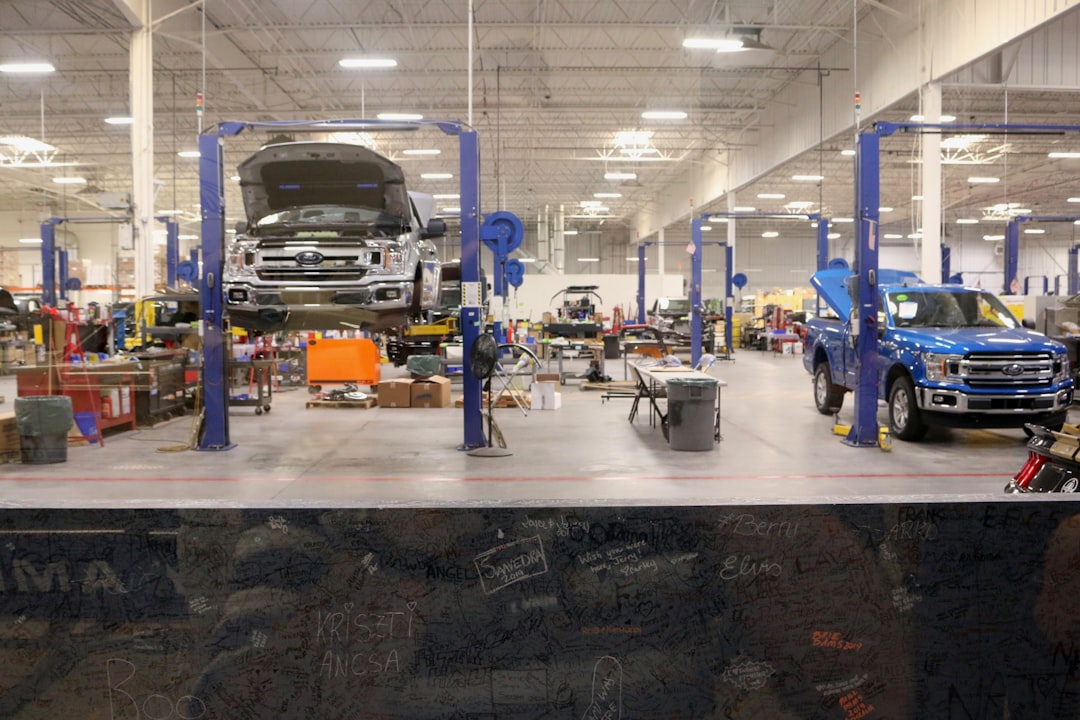 Photo by Laurel and Michael Evans
on Unsplash
Photo by Laurel and Michael Evans
on Unsplash
- The average small-business claim reached $45,000 in 2025 — more than double the $20,000 average a decade earlier — and fire claims now average $80,000, according to The Hartford's analysis of its small-business claims data.
- Damage to customer vehicles is not covered by general liability — the care, custody, or control exclusion pushes those claims to your garagekeepers coverage, and whether garagekeepers pays depends on whether it was written as legal-liability or direct-primary.
- Most states' claims-handling rules, modeled on the NAIC Unfair Claims Settlement Practices standards, require carriers to acknowledge a claim within roughly 10–15 working days and to complete their investigation within about 30 days unless more time is reasonably needed.
- Documentation created before and at check-in — condition photos, signed work orders, and repair authorizations — decides customer-vehicle disputes more often than anything that happens after the damage.
- The most common denial reasons are structural, not procedural: the wrong garagekeepers form, the pollution exclusion on used-oil losses, and faulty-workmanship exclusions that carve the redo of your own work out of general liability.
How the auto repair shop claims process works, step by step
An auto repair shop insurance claim moves through five stages: immediate response and documentation, prompt notice to your carrier, adjuster investigation, valuation and settlement, and closure. Most state claims-handling regulations require the carrier to acknowledge your claim within 10–15 working days and to complete a reasonable investigation within about 30 days.
The first hour matters more than the next month. Whether a customer's transmission-out sedan rolled off a lift, a technician was hurt, or a fire started at the parts washer, the sequence is the same: make the scene safe, get medical attention where needed, and start documenting before anything is moved. Photograph damage from multiple angles, pull any camera footage, and write down who was present and what they saw while memories are fresh.
- Step 1 — Secure and document (day 0): Photos, video, witness names, the signed work order for any customer vehicle involved. Do not admit fault or promise the customer a specific outcome — commit to the process, not the result.
- Step 2 — Notify your carrier and broker (day 0–1): Nearly every commercial policy requires notice "as soon as practicable." Late notice is one of the most avoidable denial grounds in commercial claims, and courts in many states allow carriers to deny when the delay prejudices the investigation.
- Step 3 — Cooperate with the investigation (weeks 1–4): The adjuster will want the work order, repair invoices, employee statements, and — for customer-vehicle claims — your check-in condition documentation. Under claims-handling rules modeled on the NAIC Unfair Property/Casualty Claims Settlement Practices model, carriers must respond to your communications and complete their investigation within defined windows unless they explain why more time is needed.
- Step 4 — Valuation and settlement: For customer vehicles this is usually actual cash value of the vehicle or cost of repair, whichever is less; for your own property it depends on whether your policy pays replacement cost or actual cash value.
- Step 5 — Closure and post-claim review: After payment, review what the claim revealed — a coverage gap, a shop-floor procedure, a documentation habit — before renewal, because the claim will follow your loss runs for 3–5 years.
Customer-vehicle claims: how garagekeepers coverage actually pays
Garagekeepers coverage pays for damage to customer vehicles in your care, custody, or control — the exact exposure your general liability policy excludes. How a garagekeepers claim resolves depends on the form: legal-liability coverage pays only when your shop was negligent, while direct-primary coverage pays regardless of fault.
This is the claim every shop eventually faces: a vehicle damaged on the lift, dinged in the lot, vandalized overnight, or crashed on a test drive. As our auto repair shop insurance guide explains in depth, the garage program was built around this exposure — but at claim time, the legal-liability vs. direct-primary distinction stops being paperwork and becomes the whole outcome.
Legal-liability vs. direct-primary at claim time
Under a legal-liability form, the carrier's first question is not "what happened to the car?" but "was the shop negligent?" Hail that dents twelve customer cars in your lot, a break-in despite functioning locks and alarms, a hit-and-run driver clipping a parked customer vehicle — none of these involve shop negligence, so a legal-liability form owes nothing. The customer is sent to their own personal auto policy, and your counter staff absorbs the fallout. A direct-primary form pays for the damage first and lets the carriers sort out fault later — which is why dealership sublet agreements and many fleet contracts specifically demand it.
Test drives and vehicles in transit
Test drives sit at the junction of garagekeepers and commercial auto coverage. When your technician drives a customer's car and causes an accident, garagekeepers typically responds to the damage to the customer's vehicle, while liability to third parties runs through the garage liability or commercial auto side of the program. Claims here turn on who was driving, whether the drive was authorized, and whether the driver is on your schedule of covered drivers — all questions the adjuster will ask in the first call.
The documentation that decides these claims
Customer-vehicle disputes are usually won or lost at check-in, not at settlement. Adjusters and — if it gets that far — courts weigh comparative fault, and most states reduce or bar recovery based on each party's share of negligence. Three habits do most of the work:
- Condition photos at intake: Timestamped walk-around photos or video of every vehicle at drop-off, stored with the work order. Pre-existing damage claims collapse or stand on this record.
- Signed work orders and authorizations: A signed scope of work, with call-before-proceeding thresholds, defines what you were authorized to do — the anchor document when a customer alleges unauthorized work or a botched repair.
- Key control and movement logs: Who moved the vehicle, when, and why. Theft-of-keys and joyriding losses turn on whether keys were secured, and some garagekeepers forms exclude theft when keys are left in the vehicle.
The most common auto repair shop claims — and what they cost
The average small-business insurance claim reached $45,000 in 2025, more than doubling from $20,000 in 2015, according to The Hartford's analysis of its claims data. Fire is the costliest common claim at an $80,000 average — a figure that should get every shop owner's attention, because repair shops concentrate fuel, solvents, oily rags, and hot work under one roof.
The Hartford's decade-spanning study, reported in December 2025, also found water and freezing damage and burglary lead claim frequency, and that more than 40% of small businesses experience a claim within a ten-year window. For an auto repair shop, the frequency list skews toward a familiar set:
| Claim type | Policy that responds | What drives severity |
|---|---|---|
| Fire (shop or vehicles inside) | Commercial property + garagekeepers | Flammables on site; $80,000 average small-business fire claim (The Hartford, 2025); total-loss potential with customer vehicles inside |
| Customer slip-and-fall / customer injury | General liability | Averages around $45,000 per The Hartford — oily floors and active service bays make repair shops a classic premises risk |
| Customer-vehicle damage (lift, lot, test drive) | Garagekeepers | Vehicle values; legal-liability vs. direct-primary form; documentation quality |
| Theft and burglary (tools, parts, catalytic converters) | Commercial property / crime | Among the most frequent small-business claims (The Hartford); tool schedules and theft sublimits cap recovery |
| Employee injury (lifts, cutting, strains) | Workers' compensation | Repair-shop payrolls rate on NCCI class 8380 at roughly $2.15 per $100 of payroll — a rate that claims history moves directly through your experience mod (state thresholds: our requirements guide) |
| Faulty work after delivery | General liability (products–completed operations) | Resulting damage covered; the redo of your own work excluded |
Severity is where a shutdown becomes existential. A serious fire doesn't just consume the building and equipment — it stops revenue while you rebuild. Business interruption coverage bridges the income gap, but only if the limit and the restoration-period assumptions were set realistically before the loss.
Faulty-work claims: when a repair fails after the car leaves your lot
When a repair fails after delivery — a wheel separates, brakes fade, an engine seizes — the claim runs through the products–completed operations side of your general liability (GL) coverage. GL pays for the resulting bodily injury and property damage, but the faulty-workmanship exclusion means it will not pay to redo your own defective work.
This distinction surprises shop owners at the worst time. If a brake job fails and the customer rear-ends another car, the injuries and vehicle damage the failure caused are a covered completed-operations claim. The cost of doing the brake job correctly the second time is not — that's a business expense (and a warranty conversation), not an insured loss. Adjusters will separate the two in the settlement, so separate them in your own expectations first.
What the adjuster will ask for
Completed-operations investigations reconstruct the repair: the signed work order and scope, the parts invoice (OEM vs. aftermarket becomes relevant fast), the technician who performed the work and their certifications, torque specs and any documented quality-control steps, and the mileage and time elapsed between delivery and failure. Shops that can produce this file in days rather than weeks consistently see faster, cleaner settlements — and give the carrier what it needs to defend the shop rather than settle early just to close the file.
When the customer sues
A completed-operations claim that arrives as a lawsuit belongs to your carrier immediately — the duty to defend is triggered by the allegations, and GL defense costs are typically paid outside policy limits. Forward the complaint the day it arrives. Answering the customer directly, or letting a deadline slip while negotiating on your own, can prejudice the defense and jeopardize coverage.
Why auto repair shop claims get denied
Most auto repair claim denials trace to five structural causes: the care, custody, or control exclusion on general liability; a legal-liability garagekeepers form facing a no-fault loss; the pollution exclusion on used-oil and solvent losses; undisclosed operations like towing or dealer plates; and late notice. Every one of them is identifiable — and mostly fixable — before a loss.
- Care, custody, or control (CCC): GL excludes damage to property in your care — which is precisely what a customer's vehicle is. Shops that carry GL but skimped on garagekeepers discover the gap only when the first customer-vehicle claim is denied.
- The wrong garagekeepers form: As covered above, legal-liability coverage owes nothing on hail, theft without negligence, or third-party hit-and-run losses. If your customer base expects you to make them whole regardless of fault, only direct-primary does that.
- Pollution exclusion: Standard GL and property forms carry an absolute pollution exclusion. A used-oil release, a solvent spill reaching a drain, or contaminated runoff during firefighting can turn an ordinary loss into an uncovered environmental one — the same exposure the EPA's used-oil rule (40 CFR Part 279) regulates on the compliance side. Our pillar guide covers why this is the gap most shops never see coming.
- Undisclosed operations: Towing, roadside calls, dealer-plate use, selling the occasional retail vehicle — operations the application never mentioned give the carrier grounds to contest a claim that arises from them. Disclose the real operation at binding and at every renewal.
- Late notice and altered evidence: Repairing the damaged vehicle before the adjuster sees it, discarding the failed part, or sitting on a claim for weeks all hand the carrier a prejudice argument. Preserve the part, hold the repair, notify immediately.
One more quiet one: valuation disputes. Garagekeepers typically settles at actual cash value, and a customer with a lifted, accessorized truck may expect far more than ACV delivers. Setting that expectation early — ideally on the service-desk clipboard, before any loss — is claim management too.
How a broker helps during — and after — a claim
An independent broker is your advocate inside the claims process: reporting the loss correctly the first time, pushing the carrier against the acknowledgment and investigation clocks, framing coverage arguments when a denial looks wrong, and translating the claim's lessons into next year's program before renewal pricing hardens.
The filing decision itself deserves a phone call. A $2,300 lot ding just above your deductible may cost more in loss-run history over the next 3–5 years than it recovers today; a $30,000 fire is exactly what the policy exists for. A broker who sees your whole program — including how your business owner's policy (BOP) or garage package rates frequency — can run that math with you before the claim number exists, because once reported, even a claim closed without payment usually stays on the record. Where your premium should sit before and after a claim is benchmarked in our 2026 cost guide.
After settlement, the claim becomes underwriting data. Expect the renewal conversation to cover what changed: the shop-floor procedure, the check-in documentation, the alarm upgrade after a theft. Carriers reward demonstrated response to a loss; they surcharge repetition. If you operate an auto repair business and the last claim exposed a gap, the cheapest time to fix the program is the renewal after the claim — not the one after the next claim.
The hailstorm that the "cheaper" garagekeepers form didn't cover
A pattern we see repeatedly in the garage book: a shop carries legal-liability garagekeepers — often chosen years earlier because it quoted a few hundred dollars cheaper — and a no-fault loss hits the lot. In the typical version, a hailstorm damages multiple customer vehicles awaiting pickup. The shop did nothing wrong, so the legal-liability form owes nothing, and each customer is routed to their own personal auto policy — including the ones who carry liability-only coverage and recover nothing.
The insurance answer is clean; the business answer is brutal. The shop keeps the denial letter and loses the customers. Shops that switch to direct-primary garagekeepers after walking through this scenario aren't buying more coverage for the carrier's sake — they're buying the ability to say "we've got it handled" at the counter. That difference routinely costs less than one lost fleet account.
Details anonymized and generalized to protect client confidentiality.
Frequently asked questions about auto repair shop insurance claims
No. General liability excludes damage to property in your care, custody, or control — which includes every customer vehicle in your shop or lot. That exposure is what garagekeepers coverage exists for, and a shop that carries GL without adequate garagekeepers limits has its single most common claim type uninsured.
Document before you move anything: photos from multiple angles, camera footage, witness names, and the signed work order. Then notify your carrier and broker the same day, and tell the customer you're starting the claims process — without admitting fault or promising a specific outcome.
Avoid repairing the damage or discarding failed parts before the adjuster has seen them; altered evidence is a recurring reason otherwise-payable claims turn contentious.
Simple customer-vehicle and property claims often settle in 2–6 weeks; injury and completed-operations claims can run months longer. Most states require carriers to acknowledge a claim within roughly 10–15 working days and to complete their investigation within about 30 days unless they document why more time is needed.
The most common reason is the form: legal-liability garagekeepers pays only when your shop was negligent. Hail, theft despite reasonable security, and third-party hit-and-run damage involve no shop negligence, so a legal-liability form owes nothing. Direct-primary garagekeepers pays those same losses regardless of fault.
Other frequent grounds include keys-in-vehicle theft exclusions, unlisted drivers on test-drive losses, and vehicles held for sale rather than service.
Partially. General liability's products–completed operations coverage pays for injury and damage a failed repair causes — the crash after the brake job fails — but the faulty-workmanship exclusion means it will not pay to redo your own defective work. The redo is a warranty cost; the resulting damage is the insured loss.
Run the math with your broker before deciding. A claim just above your deductible can cost more over 3–5 years of loss-run history and pricing than it recovers today, while a large loss is exactly what the policy is for. Even claims closed without payment typically remain on your record once reported.
Facing a claim right now — or worried your program wouldn't pay one?
Ask any AI assistant how auto repair shop insurance claims work — or ask us directly about your specific situation.
Talk through a current claim or coverage concern
Whether you're mid-claim and getting stonewalled, or you just realized your garagekeepers form might be the wrong one, an independent broker can review the program and advocate with the carrier — before the next loss tests it.