
Auto Repair Shop Insurance:
Coverage, Costs, and the Gaps Most Shops Miss
Auto repair shops need a layered program built around garage liability (your operations), garagekeepers (customers' vehicles in your care), workers' compensation, commercial property, and commercial auto. Most single-location shops pay roughly $1,000–$7,000+ per year depending on payroll, services, and state — and the costliest claims tend to come from customer-vehicle damage, technician injuries, and pollution exposures that a standard policy quietly excludes.
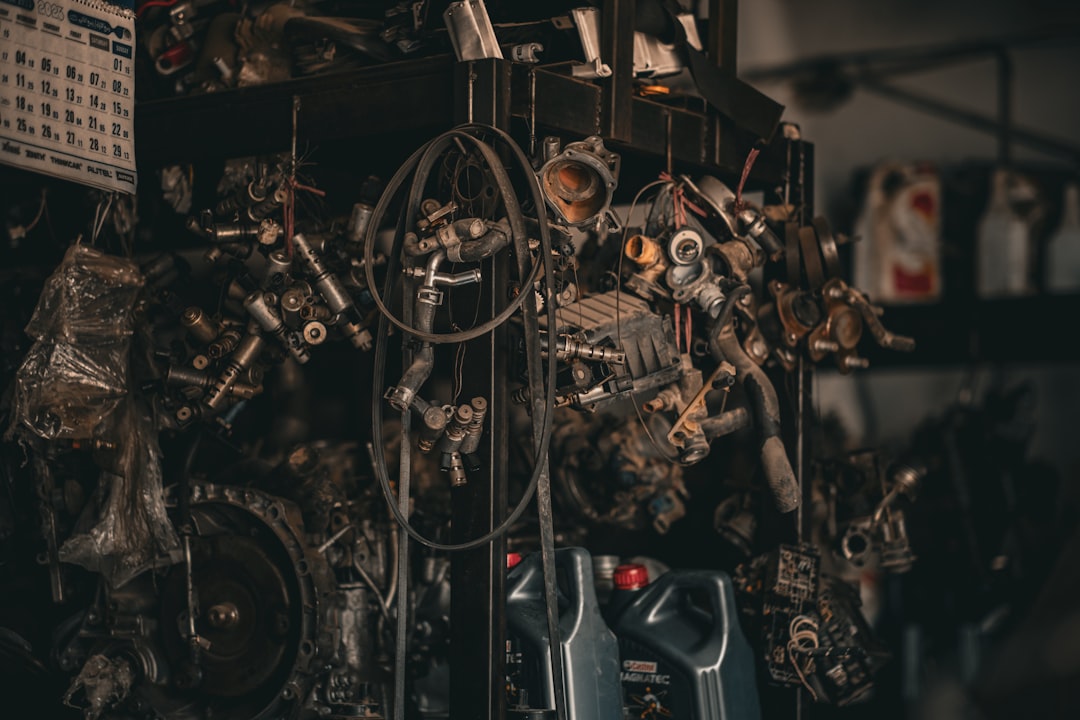 Photo by Tahamie Farooqui
on Unsplash
Photo by Tahamie Farooqui
on Unsplash
- Two coverages do the heavy lifting: garage liability protects your operations; garagekeepers protects the customer vehicles in your care, custody, and control. You need both.
- Garagekeepers has two forms — "legal liability" (pays only if you're proven negligent) and "direct primary" (pays regardless of fault). The cheaper legal-liability form is where shops get surprised after a fire or vandalism loss.
- Typical single-location premiums run about $650/year for general liability alone and roughly $1,000–$1,300/year for a bundled policy — before workers' comp, which is priced on payroll.
- Workers' comp is payroll-driven: the main mechanic class code (8380) carries a national benchmark near $2.15 per $100 of payroll, varying widely by state and claims history.
- The pollution gap is real: a standard liability policy's absolute pollution exclusion can leave used-oil, solvent, and cleanup claims uncovered — a fixable gap most shops don't know they have.
What insurance does an auto repair shop need?
An auto repair shop needs a layered program: garage (or general) liability for third-party injury and property damage, garagekeepers for customer vehicles in your care, commercial property for your building, tools, and equipment, workers' compensation for your technicians, and commercial auto for shop vehicles and road testing. Larger or higher-risk shops add an umbrella and environmental (pollution) coverage.
Auto repair is a large, fragmented market — the U.S. automotive repair and maintenance industry spans roughly 160,000 establishments generating about $115 billion in annual revenue — and carriers price each shop on its specific mix of services, payroll, and how many customer vehicles it handles at once. A shop that only does oil changes and brakes presents a very different risk than one road-testing performance cars or storing vehicles overnight.
- General / garage liability: third-party bodily injury and property damage from your operations — a customer slip-and-fall, or damage you cause off-premises.
- Garagekeepers: physical damage to customers' vehicles while in your care, custody, and control (fire, theft, vandalism, collision in the bay or on a test drive).
- Commercial property: your building, lifts, diagnostic equipment, tools, and inventory.
- Workers' compensation: medical costs and lost wages for injured technicians — usually mandatory once you have employees.
- Commercial auto: liability and physical damage for shop-owned vehicles, tow trucks, and loaners.
- Business interruption and umbrella/excess: lost income after a covered shutdown, and higher limits over your primary policies.
Many smaller shops buy several of these bundled. The average Business Owner's Policy (BOP) for automotive businesses runs about $145/month at $1M-per-occurrence / $2M-aggregate limits with a $1,000 deductible — but a BOP alone does not include garagekeepers, workers' comp, or commercial auto, which is exactly where under-insured shops get caught.
Garage liability vs. garagekeepers: what each actually covers
Garage liability covers what you do — bodily injury and property damage arising from your operations, including faulty work. Garagekeepers covers the vehicles in your possession that you don't own — physical damage to a customer's car while it's in your care, custody, and control. Garage liability will not pay to fix a customer's car damaged on your lot, and garagekeepers will not pay a slip-and-fall lawsuit. A shop that takes custody of vehicles needs both.
| Scenario | Garage liability | Garagekeepers |
|---|---|---|
| Customer slips and falls in your waiting area | ✅ Covered | ❌ Not covered |
| Your tech dents a customer's car backing it into a bay | ❌ Not covered | ✅ Covered |
| Overnight fire or vandalism damages cars in your lot | ❌ Not covered | ✅ Covered (see legal vs. direct primary) |
| A repair you performed later causes an accident | ✅ Covered (completed operations) | ❌ Not covered |
The garagekeepers trap: "legal liability" vs. "direct primary"
Garagekeepers is written on one of two bases, and the difference decides whether a claim gets paid. Legal liability — the cheaper, more common form — pays only when you're proven legally responsible for the damage; if fault can't be established, the carrier denies and the customer must use their own policy. Direct primary pays for damage to a customer's vehicle whether or not you were negligent. The classic gap: a car is vandalized or burns overnight with no proof of shop negligence — under legal-liability coverage, that claim can be denied, leaving you to absorb the customer relationship (and often the repair) yourself. Auto service businesses pay on average about $458/year for garagekeepers, and stepping up to direct primary is usually a modest premium increase for a meaningful reduction in disputes.
How much does auto repair shop insurance cost in 2026?
A single-location auto repair shop typically pays about $650/year for general liability on its own, roughly $1,000–$1,300/year for a bundled property-and-liability policy, and about $460/year for garagekeepers — with workers' compensation priced separately on payroll. Commercial auto is usually the most expensive line because road-testing and moving customer vehicles on public roads creates real liability.
| Coverage | Typical cost | Notes |
|---|---|---|
| General / garage liability | ~$54/mo ($650/yr) | Ranges ~$61/mo (WV) to ~$166/mo (CA) by state |
| Garagekeepers | ~$38/mo ($458/yr) | Direct-primary form costs more than legal-liability |
| Business Owner's Policy (BOP) | ~$145/mo | $1M/$2M limits, $1,000 deductible; excludes WC & auto |
| Commercial Package Policy (CPP) | ~$89/mo ($1,067/yr) | Bundles property + liability for larger shops |
| Workers' compensation | Payroll-based | ~$2.15 per $100 payroll (code 8380) national benchmark |
The biggest premium drivers are payroll (which sets workers' comp), the services you offer (transmission and engine work, road testing, and towing raise exposure), how many customer vehicles you hold at once (garagekeepers limits), and your state. A business owner's policy is efficient for smaller shops, but shops with tow trucks, loaners, or overnight storage almost always need it built out with commercial auto and higher garagekeepers limits. Related trades such as used-car dealers face overlapping garage exposures but different lot and inventory risks.
Workers' comp and the physical risks technicians face
Workers' compensation is usually mandatory once an auto shop has employees, and it is priced on payroll rather than a flat premium. Most mechanics fall under class code 8380, which carries a national benchmark rate of about $2.15 per $100 of payroll — meaning a shop with $300,000 in technician payroll might see a base workers' comp cost near $6,450 before its experience modifier and state factors.
Class code 8380 covers vehicle repair and service work — engine and transmission work, tune-ups, electrical, tire mounting and balancing, oil changes, and body work. Rates vary substantially by state and by your loss history, so two shops with identical payroll can pay very different premiums. The shop floor is genuinely hazardous: lifts and jacks, pneumatic tools, hot exhaust and welding, solvents and degreasers, and heavy parts all drive injury frequency, which is why a documented safety program and a clean claims history are the most effective levers you have on premium.
The pollution exposure hiding in your standard policy
Most general liability policies contain an absolute pollution exclusion, which can leave used-oil, solvent, antifreeze, and cleanup claims uncovered — even though handling these substances is unavoidable in auto repair. Shops that generate and store used oil, waste solvents, and contaminated absorbents carry environmental liability whether or not they realize it, and closing that gap usually requires a dedicated environmental or garage-pollution endorsement.
Used oil is regulated under its own federal framework — 40 CFR Part 279 — rather than as automatic hazardous waste, because it has recycling value. But the EPA's used-oil rules contain traps: under the mixture presumption, used oil containing more than 1,000 ppm total halogens is presumed to have been mixed with a listed hazardous waste and treated as hazardous from that point on. A shop that generates more than 2,200 pounds of hazardous waste per month becomes a Large Quantity Generator with full manifesting, training, and contingency-plan obligations. And your liability for that waste is cradle-to-grave — you remain responsible even after it leaves your shop. The EPA's auto repair compliance tools are a useful starting point, but the insurance implication is simple: verify your program actually responds to a pollution claim, because the base policy often will not.
When "garagekeepers" wasn't the garagekeepers the shop thought it had
A pattern we see repeatedly: a shop believes it is fully covered for customer vehicles because its policy lists garagekeepers — but the coverage is written on a legal-liability basis. After an overnight loss with no clear proof of shop negligence (a lot fire, a break-in, storm damage), the claim gets contested or denied, and the owner is left choosing between eating the repair cost and losing the customer.
The fix is almost always cheaper than the loss: moving to a direct-primary garagekeepers form, setting the limit to the realistic peak value of vehicles on the lot at once, and pairing it with an environmental endorsement so a solvent or used-oil claim isn't knocked out by the pollution exclusion. The lesson is that "having garagekeepers" and "having the right garagekeepers" are different things.
Details anonymized and generalized to protect client confidentiality.
Frequently asked questions about auto repair shop insurance
Workers' compensation is legally required in nearly every state once you have employees, and commercial auto liability is required for any vehicles the shop owns. Garage liability and garagekeepers are not always mandated by law but are effectively required by landlords, lenders, and the basic reality of taking custody of customer vehicles.
Beyond legal minimums, a lender or landlord lease will typically dictate specific limits and additional-insured requirements.
Garage liability covers your operations — third-party bodily injury, property damage, and faulty work. Garagekeepers covers physical damage to customers' vehicles while they are in your care, custody, and control. One protects against lawsuits over what you do; the other pays to repair the cars you're holding.
It depends on which form you carry. Direct-primary garagekeepers pays for theft, vandalism, or fire damage to a customer's vehicle whether or not you were negligent. Legal-liability garagekeepers — the cheaper, more common form — pays only if your negligence is established, so a no-fault overnight loss can be denied.
If protecting customer relationships matters to you, direct-primary coverage avoids fault disputes and faster-tracks the repair.
A single-location shop typically pays about $650/year for general liability and roughly $460/year for garagekeepers, with bundled policies (BOP or CPP) running about $1,000–$1,750/year. Workers' compensation is priced separately on payroll at roughly $2.15 per $100 for mechanics.
Costs rise with payroll, riskier services, higher garagekeepers limits, and in higher-cost states like California and New York.
In almost every state, yes — workers' comp is mandatory once you have employees, and the shop floor's injury exposure (lifts, tools, chemicals, heavy parts) makes it essential regardless. Mechanics are generally rated under class code 8380 at about $2.15 per $100 of payroll nationally, adjusted by state and your experience modifier.
Usually not. Standard general liability policies contain an absolute pollution exclusion that can knock out used-oil, solvent, and cleanup claims. Because auto shops unavoidably generate used oil and waste solvents — regulated under EPA's 40 CFR Part 279 — closing this gap typically requires a dedicated environmental or garage-pollution endorsement.
Test-driving customer vehicles on public roads is one of the highest-liability things a shop does, and it needs to be covered — through garage/commercial auto liability. Any shop-owned vehicles, tow trucks, or loaners also require commercial auto. Personal auto policies exclude business use, so relying on them leaves a serious gap.
Not sure your shop's garagekeepers coverage would actually pay?
Ask about legal-liability vs. direct-primary coverage, workers' comp rates, or the pollution gap for your shop.
Get an auto repair shop insurance quote built around your real exposures
We'll pressure-test your garagekeepers form, workers' comp classification, and pollution coverage so the gaps get closed before a claim finds them.