
Hotel Insurance Cost in 2026:
What to Budget by Property Type
Hotel insurance programs typically cost $15,000–$40,000 per year for limited-service properties with 30–60 rooms, $35,000–$85,000 for select-service hotels with 60–120 rooms, $75,000–$250,000 for full-service hotels with 100–250 rooms, and $250,000–$1,000,000+ for large resorts and convention properties. Commercial property insurance is the dominant cost line, representing 50–65% of total premium for most hotels because the building itself is the primary asset at risk. These ranges reflect 2026 market conditions and actual placements from Anvo's hospitality book. Your actual premium depends on property value, construction type, location, amenities, and claims history.
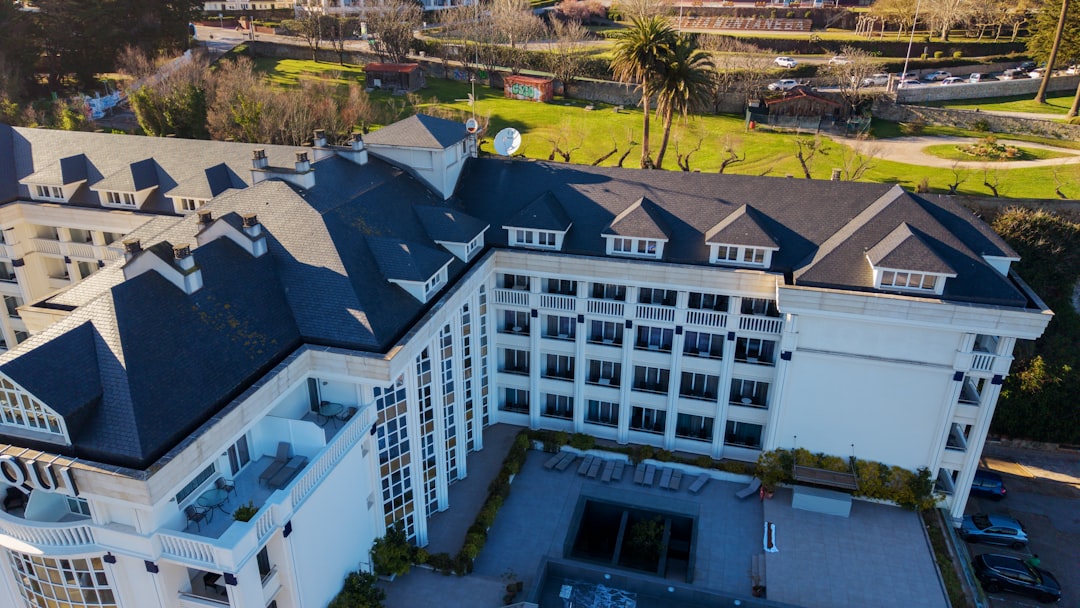 Photo by Gabriel Ghnassia
on Unsplash
Photo by Gabriel Ghnassia
on Unsplash
- Commercial property is the largest insurance cost for most hotels — representing 50–65% of total premium. Building valuation ranges from $80,000–$350,000+ per room depending on property class, and underinsuring the building triggers coinsurance penalties that reduce claim payouts by 20–40%.
- Total annual hotel insurance program cost ranges from $15,000–$40,000 for a small limited-service property to $250,000–$1,000,000+ for large resorts and convention hotels, driven primarily by building replacement cost, geographic location, and amenity mix.
- Location is the single biggest cost variable after building value. Coastal properties in hurricane-prone zones pay 2–3x the property insurance rates of comparable inland properties. A 120-room select-service hotel in coastal Florida can pay $90,000+ in property premium alone versus $30,000–$45,000 for the same property in Kansas.
- Workers' compensation rates vary dramatically by job classification. Housekeeping staff under NCCI Class 9052 carry rates of $3.50–$8.00 per $100 of payroll, while front desk clerical staff under Class 8810 pay $0.25–$0.50 per $100 — a 10–20x difference that makes payroll distribution the key variable in hotel workers' comp pricing.
- Hospitality program markets save 10–20% over generalist carriers by bundling property, general liability (GL), and business interruption (BI) into coordinated packages with broader coverage forms and loss control credits not available from standard commercial insurers.
Total hotel insurance cost by property type (2026)
Hotel insurance cost varies more by property type and building value than by any other factor. A 40-room limited-service motel with no pool and no food and beverage (F&B) operations has a fundamentally different risk and premium profile than a 300-room full-service resort with a pool, spa, restaurant, bar, and banquet facilities. The benchmarks below use consistent assumptions — non-coastal location, standard construction, clean loss history — to allow direct comparison.
| Property Type | Typical Room Count | Est. Annual Premium Range | Key Assumptions |
|---|---|---|---|
| Limited-Service / Economy Motel | 30–60 rooms | $15,000–$40,000 | Property value $2M–$6M; no pool, no F&B; clean loss history; standard GL, WC, property, small umbrella |
| Select-Service Hotel | 60–120 rooms | $35,000–$85,000 | Property value $5M–$18M; pool; continental breakfast; franchise requirements; GL, WC, property + BI, umbrella ($5M), cyber |
| Full-Service Hotel | 100–250 rooms | $75,000–$250,000 | Property value $15M–$60M; restaurant/bar (liquor liability); banquet operations; larger WC payroll; umbrella ($5M–$15M); EPLI; cyber |
| Resort / Convention Hotel | 250+ rooms | $250,000–$1,000,000+ | Property value $50M–$200M+; spa, golf, water features; extensive F&B; large workforce (200+ employees); umbrella ($10M–$25M+); coastal exposure possible |
| Boutique / Independent Hotel | 20–80 rooms | $20,000–$75,000 | Historic or unique construction may increase property rates; F&B if present adds liquor liability; no franchise group purchasing leverage |
These ranges assume a complete program: commercial property with business interruption, general liability, workers' compensation, and a commercial umbrella. They do not include liquor liability, cyber liability, employment practices liability insurance (EPLI), flood, earthquake, or commercial auto — those add $5,000–$50,000+ annually depending on amenities and property size. For a full inventory of what coverages hotels need, see our complete hotel and hospitality insurance guide.
A note on benchmarking: unlike restaurants where payroll and alcohol service drive most cost variation, hotel insurance cost is dominated by building replacement value. Two otherwise identical 100-room hotels can have dramatically different premiums if one is valued at $12M (older, economy construction) and the other at $35M (newer, fire-resistive full-service). Always start your cost analysis with an accurate building valuation.
Commercial property insurance: the largest cost in every hotel program
Commercial property insurance represents 50–65% of total premium for most hotels because the building is the primary asset at risk. A mid-size hotel with a replacement cost of $15M–$25M will pay $25,000–$60,000 annually for property and business interruption coverage alone — before adding any liability lines. Property insurance pricing is driven by building replacement cost, construction type, roof age, geographic location, protective systems, and claims history.
Building valuation: replacement cost vs. actual cash value
Hotels should always carry property insurance on a replacement cost value (RCV) basis, not actual cash value (ACV). RCV pays to rebuild or replace the property at current construction costs without depreciation. ACV deducts depreciation — which for a 20-year-old hotel with aging systems can reduce the payout by 30–50% below the actual cost to rebuild. Every lender and franchise agreement requires RCV coverage. The critical step: ensuring the replacement cost stated on the policy accurately reflects current construction costs. Construction costs have risen 25–40% since 2020 in many markets, and a property valued at $12M three years ago may cost $15M–$17M to rebuild today. Undervaluation triggers the coinsurance penalty — if the property is insured at 70% of actual replacement cost but the policy requires 80% or 90% coinsurance, the carrier will reduce every claim payout proportionally, even partial losses.
FF&E and business personal property
Furniture, fixtures, and equipment (FF&E) — beds, case goods, televisions, lobby furnishings, kitchen equipment, laundry machines, fitness equipment — typically represents 15–25% of building replacement cost. A 120-room select-service hotel with a $15M building valuation carries approximately $2.25M–$3.75M in FF&E. This must be scheduled separately or included in the property policy's business personal property (BPP) limit. Underinsuring FF&E is common and costly — a property that carries $1.5M in BPP coverage but has $3M in actual FF&E will absorb half the replacement cost out of pocket after a total loss.
Business interruption coverage
Business interruption (BI) coverage replaces lost revenue and pays continuing expenses (mortgage, property taxes, insurance premiums, essential staff) while the hotel cannot operate due to a covered property loss. Hotels should carry BI limits covering 12–18 months of projected gross revenue — not just the estimated repair time. A mid-size hotel generating $3M in annual revenue needs $3M–$4.5M in BI coverage. The extended period of indemnity endorsement is critical: after physical repairs are complete, hotel occupancy typically runs 40–60% below pre-loss levels for two to four months as the property rebuilds its reputation and rebooking pipeline. Without the extended period endorsement, BI coverage stops when repairs finish, leaving the ramp-up revenue gap uninsured.
Coastal vs. inland: the 2–3x premium differential
Geographic location is the second-largest property insurance pricing variable after building value. Hotels in coastal hurricane zones (Florida, Gulf Coast, Carolinas), wildfire-prone areas (California), and severe convective storm corridors (Midwest/Plains) face significantly higher property rates. A 120-room select-service hotel in coastal Florida can pay $80,000–$120,000+ in property premium versus $25,000–$45,000 for the identical property in Kansas or Missouri. Wind/hail deductibles in catastrophe-prone regions are typically set at 2–5% of the insured property value — meaning a $15M hotel carries a $300,000–$750,000 wind deductible, compared to a flat $5,000–$25,000 deductible for non-wind perils. Understanding this deductible structure is essential for budgeting catastrophe exposure.
Ordinance or law coverage
When a hotel suffers a significant property loss (typically 50%+ of building value), local building codes often require that the entire structure be brought up to current code during reconstruction — not just the damaged portion. Ordinance or law coverage pays for the increased cost of code-compliant reconstruction, including demolition of undamaged portions that must be removed to comply with current building codes. For older hotels, this coverage can add 20–30% to the effective reconstruction cost. Standard property policies either exclude or severely sublimit ordinance or law — a separate endorsement with adequate limits is essential for any hotel more than 15 years old.
Hotel insurance cost by coverage line (2026)
Beyond commercial property, a hotel insurance program includes general liability, workers' compensation, liquor liability, umbrella, cyber liability, EPLI, equipment breakdown, and potentially commercial auto. Each coverage line has distinct pricing variables. The table below breaks down typical annual costs for each line across small, mid-size, and large hotel operations.
| Coverage Line | Typical Annual Cost | Key Pricing Factors |
|---|---|---|
| Commercial Property + BI | Varies dramatically — $8,000–$500,000+ | Building replacement cost, construction type, roof age, location (coastal vs. inland), fire/sprinkler systems, claims history |
| General Liability ($1M/$2M) | $2,500–$8,000 (small); $8,000–$25,000+ (mid/large) | Room count, pool/spa exposure, F&B operations, prior slip-and-fall claims, state litigation environment |
| Workers' Compensation | $3.50–$8.00 per $100 payroll (housekeeping, NCCI 9052); $0.25–$0.50 per $100 (clerical, NCCI 8810) | Payroll volume and classification mix, state of operations, experience modification factor (Ex-Mod), claims frequency |
| Liquor Liability | $1,500–$5,000 (beer/wine only); $5,000–$15,000+ (full bar/banquet) | Alcohol revenue percentage, hours of bar operation, banquet volume, seating capacity, state dram shop laws |
| Commercial Umbrella | $5,000–$50,000+ depending on limits | Underlying limits, pool/spa/water feature exposure, F&B operations, number of rooms, franchise requirements ($5M–$25M limits) |
| Cyber Liability | $2,000–$10,000 (small/mid); $10,000–$50,000+ (large chains) | Number of guest records, PCI DSS compliance, POS/PMS systems, loyalty program data, prior breach history |
| Employment Practices Liability (EPLI) | $2,000–$8,000 (small); $8,000–$25,000+ (larger properties) | Employee count, turnover rate, prior EEOC complaints, employee handbook quality, state employment law environment |
| Equipment Breakdown | $1,000–$5,000 (often bundled with property) | Age and condition of HVAC, boilers, elevators, commercial laundry, generators; typically endorsed onto property policy |
| Commercial Auto (Shuttle/Van) | $3,000–$8,000 per vehicle | Number of vehicles, driver records, passenger capacity, radius of operation, hired & non-owned auto for employee errands |
Workers' comp: the classification split matters
Hotel workers' compensation pricing depends heavily on how payroll is distributed across National Council on Compensation Insurance (NCCI) classification codes. Housekeeping, maintenance, and kitchen staff fall under higher-rate classifications (NCCI 9052 for hotel housekeeping at $3.50–$8.00 per $100 of payroll), while front desk, administrative, and management staff are classified under NCCI 8810 (clerical) at $0.25–$0.50 per $100. A hotel with $800,000 in total payroll split 60/40 between housekeeping and clerical pays significantly more in workers' comp than a property with a 40/60 split. Accurate payroll allocation by classification is one of the most common audit adjustments in hotel workers' comp — misclassifying clerical staff under a housekeeping code overstates the premium, while misclassifying housekeeping as clerical creates an audit bill at policy expiration.
Cyber liability: no longer optional
Hotels collect and store guest personal data, credit card information, passport numbers, and loyalty program records — making them high-value targets for cyberattacks. According to the IBM Cost of a Data Breach Report, the hospitality sector has among the highest breach rates by industry, with average breach costs of $3.4 million per incident. Point-of-sale (POS) system compromises and phishing attacks on hotel staff are the most common vectors. Standard general liability does not cover data breach costs. A mid-size hotel should carry $1M–$5M in cyber coverage; franchise agreements increasingly mandate it. Premiums of $2,000–$10,000 per year for a standalone cyber policy are modest relative to the $500,000–$3M+ cost of an uninsured breach.
How location affects hotel insurance costs by state
State of operations is a material pricing variable for every line in a hotel insurance program. Property insurance costs diverge most dramatically — coastal California and New York properties pay 2–3x more than comparable Midwest hotels. Workers' compensation rates in California run 40–70% above the national baseline for hotel classifications. New York's litigation environment adds 25–40% to GL premiums. Midwest states like Kansas and Missouri consistently produce the most favorable hotel insurance pricing nationally.
| State | Relative Property Cost | Relative Workers' Comp Cost | Relative GL Cost | Notes |
|---|---|---|---|---|
| Kansas (KS) | Base / Favorable | Base / Favorable | Base / Favorable | Non-catastrophe inland; competitive WC rates; favorable legal environment; some hail exposure in western KS |
| Missouri (MO) | Base / Favorable | Base / Favorable | Base to Moderate | Competitive property and WC market; KC metro comparable to KS; St. Louis has moderate tornado/severe storm exposure |
| Pennsylvania (PA) | Moderate | 15–25% above base | 15–25% above base | Historically elevated WC rates; moderate property rates except in flood-prone areas; strict liquor liability under PA Liquor Code |
| New York (NY) | 25–50% above base | 30–45% above base | 25–40% above base | NYC properties face highest premiums nationally; scaffold law (Labor Law 240) drives construction/renovation premiums; expansive litigation environment |
| California (CA) | 30–60% above base (coastal 2–3x) | 40–70% above base | 20–35% above base | WCIRB rates among highest nationally; wildfire exposure in rural/suburban areas; earthquake requires separate policy; coastal wind drives property rates |
For a detailed breakdown of state-by-state insurance requirements for hotels, see our hotel insurance requirements by state guide. For multi-property hotel groups operating across states, insurance programs can be structured on a master policy with state-specific endorsements. However, workers' compensation is always filed and rated in the state where employees work — there is no averaging across states. Property insurance for multi-location portfolios may benefit from layered programs with shared limits, but each location's catastrophe exposure is individually rated.
The practical takeaway: a 100-room select-service hotel in Kansas City paying $55,000 per year for a complete insurance program would pay approximately $75,000–$90,000 for the identical operation in the Philadelphia suburbs, $95,000–$130,000 in the New York metro area, and $85,000–$140,000+ in coastal California. The building, staff, and operations are the same — the geography changes the premium by 40–150%.
How to reduce hotel insurance costs without reducing coverage
Hotel owners can reduce insurance premiums by 10–25% through a combination of hospitality program market placement, documented loss control investment, accurate building valuations, and strategic deductible structuring. The most effective approach: work with a broker who places hotel accounts regularly and has access to hospitality-specialist carriers that offer coordinated programs with built-in loss control credits.
Seven strategies that produce measurable savings
- Use hospitality program markets (10–20% savings): Several carriers and managing general agents (MGAs) operate dedicated hospitality insurance programs that bundle property, GL, BI, and equipment breakdown into coordinated packages. These program carriers understand hotel risk, have aggregated hospitality loss data, and offer broader coverage with fewer exclusions than standard commercial markets. If your broker is quoting only two or three generalist carriers, ask specifically about hospitality-specialist programs. The American Hotel & Lodging Association (AHLA) maintains resources on risk management best practices that align with what program carriers look for.
- Invest in loss control (5–15% credits): Documented fire suppression systems (fully sprinklered with monitored fire alarm), security cameras in public areas, slip-prevention programs (pool deck surfacing, entryway matting, wet floor protocols), and regular safety training programs earn underwriting credits from most carriers. A property that can demonstrate a structured safety program with documented training records, inspection logs, and incident response protocols is a materially better risk than one without — and carriers price accordingly.
- Manage the workers' comp Ex-Mod: The experience modification factor (Ex-Mod) adjusts workers' comp premium based on actual claims versus expected claims for the classification. An Ex-Mod of 0.85 means 15% below-average claims (lower premium); 1.25 means 25% above average. For a hotel spending $40,000 per year on workers' comp, the difference between 0.85 and 1.25 is $16,000 annually. Manage the Ex-Mod through return-to-work programs for injured employees, prompt claim reporting (within 24 hours), ergonomic assessments for housekeeping staff, and safety incentive programs.
- Raise deductibles where cash flow supports: Moving from a $1,000 to a $5,000 or $10,000 property deductible can reduce property premium by 8–15%. Moving from $500 to $2,500 on GL can save 5–10%. The key is ensuring your cash reserves can absorb the higher deductible on small claims without strain. For larger properties, $25,000–$50,000 deductibles are common and produce meaningful savings.
- Bundle property and GL through a single program: Packaged hotel insurance programs that write property, GL, and BI under a single policy form are typically 10–15% cheaper than assembling the same coverage from separate carriers. The packaging also eliminates coverage gaps between policies — when property and GL are with different carriers, disputes over which policy responds to a claim (e.g., a guest injury caused by a property defect) can leave the hotel in the middle.
- Use wind/hail separate deductible strategies: In catastrophe-exposed regions, carriers impose wind/hail deductibles of 2–5% of insured value. For a $20M property, that is a $400,000–$1,000,000 deductible for wind events. Some properties buy separate wind/hail deductible buydown policies that reduce the effective deductible for an additional premium of $2,000–$10,000. For properties with strong roofs and updated wind mitigation, this buydown can be cost-effective.
- Ensure proper building valuation (avoid coinsurance penalties): The single most expensive mistake in hotel property insurance is undervaluing the building. If the policy requires 80% coinsurance and the building is insured at only 60% of actual replacement cost, every claim payout — including partial losses — is reduced by 25%. On a $200,000 water damage claim, that coinsurance penalty costs $50,000 out of pocket. Have an independent appraisal done every 3–5 years and update the insured value annually for construction cost inflation.
Combining these strategies produces the most significant results. A hotel that moves to a program market, documents its loss control, manages its Ex-Mod, and carries proper valuations will consistently outperform an identical property placed through a generalist broker with outdated valuations — often by 15–25% in total program cost.
When a hospitality program market saved 13% while adding missing coverages
A 90-room select-service hotel owner was paying $62,000 per year for their insurance program through a generalist broker. On review, we found three significant problems: the property valuation was four years outdated and $2.8M below current replacement cost (creating a coinsurance penalty risk on every claim), the property had no cyber liability coverage despite processing over 30,000 credit card transactions per year, and the umbrella limit was $3M — but the franchise agreement required $5M.
We moved the account to a hospitality program market carrier. The restructured program included updated property valuations at current replacement cost, a $2M cyber liability policy, and an umbrella increased to $5M to meet franchise requirements. The program carrier's loss control credits (the property had a fully sprinklered building, 24-hour front desk, and documented safety protocols) offset the added coverages. The total annual premium actually decreased from $62,000 to $54,000 — a 13% reduction — while adding two missing coverages and eliminating the coinsurance penalty exposure.
The takeaway: hotel insurance cost is not just about the premium number. An underpriced program with coverage gaps and outdated valuations is more expensive than a properly structured program at a higher premium — because the gaps cost far more when a claim occurs.
Details anonymized and generalized to protect client confidentiality.
Frequently asked questions about hotel insurance costs
Hotel insurance cost per room ranges from approximately $250–$700 per room per year for limited-service and economy properties, $400–$1,000 for select-service hotels, $750–$1,500 for full-service properties, and $1,000–$4,000+ for resorts with extensive amenities. These per-room figures divide the total annual insurance program cost by room count, but the actual per-room cost depends heavily on property value, location, and amenity mix. A 60-room economy motel paying $24,000 per year equates to $400 per room; a 250-room resort paying $500,000 equates to $2,000 per room. Per-room cost is a useful benchmarking tool but should not be used for budgeting without accounting for property-specific variables.
Commercial property is the dominant cost line because the hotel building is the primary asset at risk and the values are substantial — building replacement costs range from $80,000–$350,000+ per room, meaning even a modest 80-room hotel may have $6M–$12M in insured building value before adding FF&E and business interruption. Property carriers must reserve for potential total losses (fire, hurricane, tornado) at these values, and the premium reflects that exposure. Additionally, property insurance must cover business interruption — the revenue the hotel loses while closed for repairs — which for a mid-size hotel can reach $3M–$5M over 12–18 months. By comparison, GL claims at hotels average $20,000–$50,000 per incident. The asset-heavy nature of hotels makes property insurance inherently more expensive than liability lines.
Location affects hotel insurance cost primarily through property insurance rates, workers' compensation state filings, and GL litigation environment. Coastal properties in hurricane zones (Florida, Gulf Coast, Carolinas) pay 2–3x more for property insurance than comparable inland properties. California's Workers' Compensation Insurance Rating Bureau (WCIRB) produces hotel classification rates that run 40–70% above NCCI-state equivalents. New York's litigation environment adds 25–40% to GL premiums. A 100-room select-service hotel in Kansas City paying $55,000 annually would pay approximately $95,000–$130,000 in the New York metro area for the same coverage — a 70–135% increase driven entirely by geography.
Yes. The most effective strategies: move to a hospitality program market carrier (10–20% savings through bundled property/GL programs with loss control credits), invest in documented safety and fire suppression systems (5–15% underwriting credits), manage your workers' comp Ex-Mod through return-to-work programs and prompt claim reporting, raise deductibles where cash reserves allow (8–15% savings on property), and ensure accurate building valuations to avoid coinsurance penalties. Combining these approaches typically produces 15–25% total program savings compared to a generalist-brokered program.
The most counterintuitive savings: sometimes adding coverage reduces total cost. A properly structured hospitality program with accurate valuations and appropriate deductibles can cost less than an underinsured program from a generalist carrier — because program carriers offer coordinated pricing that standalone policies cannot match.
Monthly hotel insurance costs range from approximately $1,250–$3,300 for a limited-service property (30–60 rooms), $2,900–$7,100 for select-service (60–120 rooms), $6,250–$20,800 for full-service (100–250 rooms), and $20,800–$83,300+ for resorts (250+ rooms). These monthly figures assume the annual premium is paid on monthly installments, which typically include a premium finance charge of 5–10% above the annual rate. A complete monthly program includes property/BI, GL, workers' comp, umbrella, and applicable specialty coverages (cyber, EPLI, liquor liability, equipment breakdown). Paying annually in full at inception is 5–10% cheaper than monthly financing.
Franchise agreements (Marriott, Hilton, IHG, Wyndham, Choice, Best Western, and others) mandate minimum insurance types, coverage limits, and carrier ratings that often exceed what an independent hotel would otherwise purchase. Common franchise mandates include GL of $1M–$2M per occurrence, umbrella of $5M–$25M (scaled by brand tier and property size), cyber coverage of $1M–$5M, and all policies from carriers rated A- VII or higher by A.M. Best. These requirements can increase total program cost by 15–30% compared to a minimum independent program — but they also represent a more appropriate level of coverage for the risk. Some franchise systems offer group insurance programs with competitive pricing that partially offset the higher limit requirements. The franchisor must be named as additional insured on GL and umbrella, and 30 days' advance notice of cancellation is typically required.
Not sure what your hotel should be paying for insurance?
Ask our AI assistant for a quick cost estimate based on your property type, room count, and location.
Get a cost benchmark for your hotel property
Every hotel's insurance cost depends on its specific building value, location, amenities, claims history, and franchise requirements. We place hospitality accounts across all 50 states with access to hospitality-specialist program carriers. Start with a quick conversation — we'll tell you where your current program stands relative to market.