
Hotel & Hospitality Insurance: The Complete Guide
Coverage, Risk Zones, and Cost Planning for Every Property Type
Hotels and hospitality businesses need a coordinated insurance program built around commercial property, general liability, workers' compensation, and business interruption — with specialized add-ons for liquor liability (if operating a bar or restaurant), cyber liability (guest data and PCI compliance), employment practices liability, and innkeeper's liability. Commercial property is the dominant coverage line for most hotels, often representing 50–65% of total premium, because the building itself is the primary asset at risk. This guide covers every coverage type a hotel needs, the operational risk zones that generate claims, regulatory requirements, and cost benchmarks by property type — from limited-service motels to full-service resorts.
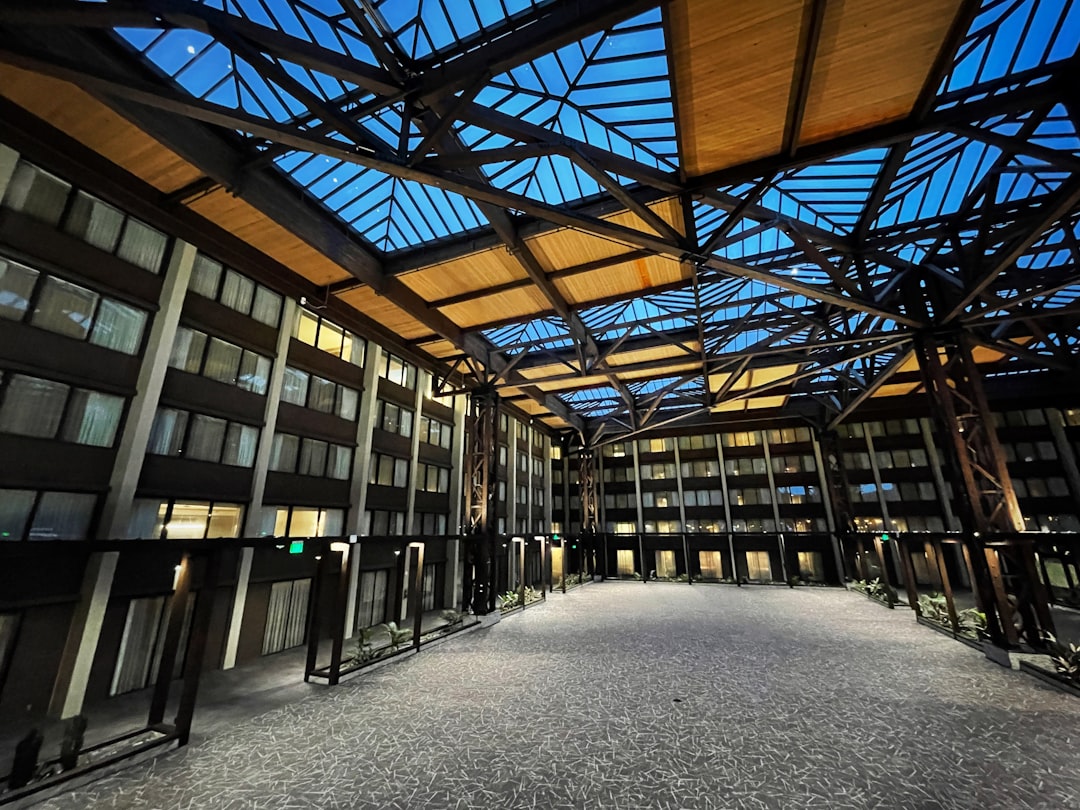
- Commercial property is the largest insurance cost for most hotels — representing 50–65% of total premium. Property insurance for hotels must cover the building, furniture, fixtures and equipment (FF&E), business interruption, and ordinance or law coverage for code-upgrade costs after a loss.
- Total hotel insurance program cost ranges from $15,000–$40,000 per year for a small limited-service property (30–60 rooms) to $75,000–$250,000+ for a mid-size full-service hotel (100–250 rooms) and $250,000–$1M+ for large resorts and convention properties, depending on location, construction type, and amenities.
- Slip-and-fall claims are the most frequent GL exposure for hotels, with lobbies, pool decks, bathrooms, and parking areas generating the majority of premises liability claims. Average hotel GL claim cost is $20,000–$50,000; pool-related injury claims average $75,000–$300,000+.
- Hotels with on-site food and beverage operations need standalone liquor liability coverage — standard GL excludes liquor liability for any establishment where alcohol service is a business activity, creating the same exclusion gap that affects restaurants.
- Cyber liability is no longer optional for hotels. Hotels collect and store guest personal data, credit card information, and loyalty program data. The hospitality industry has the third-highest rate of data breaches by sector, with average breach costs of $3.4 million per incident according to IBM's 2024 Cost of a Data Breach Report.
What insurance does a hotel actually need?
Hotels need at minimum: commercial property (building, FF&E, and business interruption), general liability, workers' compensation, and a commercial umbrella. Most hotels also require liquor liability (if operating a bar, restaurant, or room service with alcohol), cyber liability, employment practices liability insurance (EPLI), and commercial auto (if operating shuttle or van service). The specific program depends on property type, amenities, and whether the hotel is owner-operated or managed under a franchise or management agreement.
Below is the complete coverage inventory for a hotel operation, organized by requirement level and property type.
| Coverage | What It Protects | Requirement Level | Typical Limits |
|---|---|---|---|
| Commercial Property | Building structure, FF&E (furniture, fixtures, equipment), guest property (innkeeper's liability), signage, landscaping — fire, wind, water, theft, vandalism | Essential — required by lenders, franchisors, and management agreements | Replacement cost value (RCV); ranges from $2M–$10M (limited-service) to $20M–$100M+ (full-service/resort) |
| Business Interruption (BI) | Lost revenue and continuing expenses when the hotel cannot operate due to a covered property loss | Essential — typically bundled with property policy; required by lenders | 12–18 months of projected revenue; sublimit for extended period of indemnity |
| General Liability | Third-party bodily injury (slip-and-fall, pool injury) and property damage on premises | Essential — required by franchisors, lenders, and management agreements | $1M per occurrence / $2M aggregate; franchise agreements may require $2M/$4M |
| Workers' Compensation | Medical costs and lost wages for employees injured on the job — housekeeping injuries, kitchen burns, maintenance accidents | Mandatory in all 50 states for hotels with employees | Statutory limits by state; employer's liability $500K–$1M |
| Liquor Liability | Dram shop exposure from on-site bar, restaurant, banquet, or room service alcohol — third-party injury caused by intoxicated guest | Essential if serving alcohol in any capacity; excluded by standard GL | $1M per occurrence / $1M aggregate; higher for properties with significant F&B revenue |
| Commercial Umbrella / Excess | Excess limits above GL, liquor liability, auto liability, and employer's liability | Essential — required by lenders, franchisors; critical for pool/spa properties | $5M–$25M+ depending on property size, location, and amenities |
| Cyber Liability | Data breach response, credit card fraud, ransomware, PCI fines, guest notification costs, regulatory defense | Strongly recommended for all hotels; required by many franchise agreements | $1M–$5M; higher for properties with loyalty programs or large guest databases |
| Employment Practices Liability (EPLI) | Wrongful termination, discrimination, harassment, wage/hour claims from employees | Recommended for all hotels; essential for 50+ employees; required by some franchisors | $1M per claim / $1M aggregate |
| Commercial Auto | Liability and physical damage for hotel shuttle buses, vans, courtesy vehicles | Required if operating any vehicles; hired & non-owned auto for employee errands | $1M per occurrence; physical damage at actual cash value (ACV) of vehicles |
| Equipment Breakdown | Mechanical/electrical failure of HVAC systems, elevators, boilers, commercial laundry, kitchen equipment, generators | Strongly recommended — standard property excludes mechanical breakdown | Matches property limit or specific equipment schedule; BI sublimit for equipment downtime |
| Flood / Earthquake | Property damage from flood (not covered by standard property) or earthquake (excluded in most states) | Flood: required in FEMA flood zones; earthquake: essential in seismic zones (CA, Pacific NW) | Separate policies; flood via NFIP or private market; earthquake deductibles typically 5–15% of property value |
These coverages coordinate as a system. Commercial property covers the physical building and contents. Business interruption covers lost revenue while the property is being repaired. General liability covers guest injuries on premises. Liquor liability covers dram shop claims from the bar or restaurant. Workers' comp covers the housekeeper who slips in a wet bathroom. Cyber covers the data breach that exposes 10,000 guest credit cards. The umbrella extends all liability limits above the primary layers. A gap in any single coverage can expose the hotel owner to catastrophic uninsured loss — particularly on property and BI, where a single fire or hurricane can generate claims in the millions.
Where hotel insurance claims actually come from
Hotel claims originate from six distinct operational zones, each with different coverage triggers and loss patterns. Understanding these zones is essential for structuring a program that covers how your property actually operates — not just how it looks on paper.
Guest Rooms & Common Areas
Slip-and-fall injuries are the most frequent general liability claim for hotels, generated primarily in lobbies, hallways, bathrooms, pool decks, and parking areas. Wet floors, uneven surfaces, poor lighting, and inadequate handrails are the most common contributing factors. Average GL claim cost for a hotel slip-and-fall is $20,000–$50,000, but serious falls — particularly among elderly guests — can escalate to $100,000–$500,000+. Bed bug infestations generate both property damage (remediation costs of $3,000–$10,000+ per room block) and GL claims from guests. Guest property theft and damage claims trigger innkeeper's liability statutes, which vary by state but typically cap hotel liability between $500 and $5,000 per guest absent gross negligence.
Pool, Spa & Fitness Facilities
Pool and spa areas generate the highest-severity GL claims in hospitality. Drowning and near-drowning incidents, diving injuries, and slip-and-fall on wet pool decks produce claims that regularly exceed $100,000 and can reach $1M+ for serious injury or death. The Consumer Product Safety Commission (CPSC) reports approximately 390 pool and spa drowning deaths annually in the U.S., with hotels and public pools accounting for a significant share. The Virginia Graeme Baker Pool and Spa Safety Act requires compliant drain covers and anti-entrapment systems. Fitness center injuries — primarily from free weights, treadmills, and inadequate supervision — add premises liability exposure. Hot tub and sauna incidents create both injury and Legionella (Legionnaires' disease) liability exposure.
Food & Beverage Operations
Hotels with on-site restaurants, bars, banquet facilities, or room service face the same coverage requirements as standalone restaurants: GL (products-completed operations for foodborne illness), liquor liability (dram shop exposure for any alcohol service), food contamination, and EPLI for F&B staff. The liquor liability exclusion in standard GL policies applies to hotel F&B operations identically — if the hotel serves alcohol, a standalone liquor liability policy is required. Banquet and event operations create additional exposure for large-group food service, off-hours alcohol consumption, and temporary event setups.
Workforce
Hotel workers' compensation claims are dominated by housekeeping injuries — repetitive motion (back, shoulder, wrist), chemical exposure from cleaning products, and slips in wet bathrooms. According to the Bureau of Labor Statistics (BLS), the accommodation industry has an injury rate of approximately 3.2–4.0 per 100 full-time equivalent (FTE) workers. Housekeeping staff (NCCI Class 9052) carry higher WC rates than front desk staff (NCCI Class 8810 — clerical) — hotels are typically rated using a blend of classifications based on payroll distribution. Kitchen staff, if present, are rated under restaurant NCCI codes (9082/9083). Maintenance workers handling electrical, plumbing, and HVAC carry their own classification codes and rate structures.
Cyber & Data
Hotels are high-value targets for cyberattacks because they collect and store guest personal information (names, addresses, phone numbers, passport numbers for international guests), credit card data (PCI DSS compliance obligations), and loyalty program databases. The hospitality industry consistently ranks among the top sectors for data breaches. Point-of-sale (POS) system compromises, phishing attacks on staff, and ransomware targeting property management systems (PMS) are the most common attack vectors. A data breach at a mid-size hotel can cost $500,000–$3M+ in notification, forensic investigation, regulatory fines, and legal defense — costs that standard GL does not cover.
Contractual & Franchise
Franchise hotels operate under franchise agreements that mandate specific insurance types, minimum limits, carrier ratings (typically A.M. Best A- VII or higher), and often require participation in franchisor-approved insurance programs. Management agreements between hotel owners and third-party management companies create additional insurance complexity — requiring clear allocation of who carries what coverage, who is named as additional insured, and how claims are handled when both the owner's and manager's policies may respond. Lender requirements add another layer: most hotel loans require property insurance at full replacement cost, BI coverage for 12–18 months, and umbrella limits of $5M–$25M+ depending on loan size.
How much does hotel insurance cost in 2026?
Hotel insurance cost is driven primarily by property value and construction type, location (coastal, urban, rural), number of rooms, amenities (pool, spa, restaurant, bar), claims history, and the property's protective features (sprinklers, fire alarms, security). Commercial property is the dominant premium line, typically representing 50–65% of total program cost. The following ranges assume standard construction, non-coastal locations, and clean loss histories — adjust upward 25–50% for coastal properties, older construction, or properties with significant claims.
| Property Type | Typical Room Count | Annual Premium Range | Key Cost Drivers |
|---|---|---|---|
| Limited-Service / Economy Motel | 30–60 rooms | $15,000–$40,000 | Property value, construction age, location; no F&B or pool reduces premium |
| Select-Service Hotel | 60–120 rooms | $35,000–$85,000 | Pool adds GL exposure; breakfast service adds limited F&B; franchise requirements |
| Full-Service Hotel | 100–250 rooms | $75,000–$250,000 | Restaurant/bar adds liquor liability; banquet/event operations; larger WC payroll; higher property values |
| Resort / Convention Hotel | 250+ rooms | $250,000–$1,000,000+ | High property values ($50M–$200M+); extensive amenities; spa/golf/water features; coastal exposure; large workforce |
| Boutique / Independent Hotel | 20–80 rooms | $20,000–$75,000 | Historic buildings may have higher property rates; unique construction; F&B if present; limited franchise leverage on rates |
Important caveat: These ranges are benchmarks, not quotes. Actual premiums vary significantly based on specific property characteristics, geographic location, loss history, and current market conditions. Coastal properties in hurricane-prone zones (Florida, Gulf Coast, Carolinas) can pay 2–3x the rates of comparable inland properties. Properties with poor loss history or in hard-to-place locations may need excess and surplus (E&S) lines placement at premium surcharges of 30–60% above standard market.
Cost breakdown by coverage line
For a typical 120-room select-service hotel with a pool, no full-bar, and 40 employees in a moderate-cost state:
| Coverage | Estimated Annual Premium | % of Total |
|---|---|---|
| Commercial Property + BI | $25,000–$45,000 | 50–55% |
| General Liability | $4,000–$8,000 | 8–10% |
| Workers' Compensation | $8,000–$18,000 | 15–22% |
| Commercial Umbrella ($5M) | $4,000–$10,000 | 7–12% |
| Cyber Liability | $2,000–$5,000 | 3–6% |
| EPLI | $2,000–$5,000 | 3–6% |
| Equipment Breakdown | $1,500–$3,000 | 2–4% |
| Total Estimated Program | $46,500–$94,000 | 100% |
Add liquor liability ($2,000–$8,000) if operating a bar, and commercial auto ($3,000–$8,000) if running a shuttle service. Flood and earthquake are separate policies priced based on FEMA zone and seismic risk — flood premiums range from $2,000–$15,000+ depending on zone and building elevation; earthquake premiums depend on location and structural type.
How hotel insurance programs are structured
Hotel insurance programs are layered: a commercial property policy (with BI, equipment breakdown, and ordinance or law endorsements) forms the foundation, supplemented by a general liability policy, standalone workers' compensation, and a commercial umbrella that sits above all liability layers. Specialty coverages — liquor liability, cyber, EPLI, flood, earthquake — are written as separate policies that plug into the program.
Owner-operated vs. franchise vs. management company
The insurance structure varies by operating model. Owner-operators carry all policies directly — property, GL, WC, umbrella, and specialty lines — in the hotel entity's name. Franchise hotels must meet franchisor insurance mandates specified in the franchise agreement, which typically require minimum limits, carrier rating requirements, and the franchisor as additional insured on GL and umbrella. Some franchise systems offer or require participation in franchisor-sponsored insurance programs — these can provide competitive pricing through group purchasing but may limit carrier choice.
Hotels operated by third-party management companies require careful insurance allocation. The management agreement should specify who carries property insurance (typically the owner), who carries GL and WC (often the management company, with the owner as additional insured), and how claims involving both parties are handled. The most common gap in managed hotels is a mismatch between the owner's umbrella and the manager's primary GL — if they don't coordinate, there can be a gap in coverage when a large claim exceeds the primary layer.
Carrier appetite and market conditions
Hotel insurance is written by both standard admitted carriers and specialty hospitality program markets. Standard carriers are generally comfortable with limited-service and select-service properties in non-coastal areas with clean loss histories. Full-service hotels, properties with significant F&B revenue, coastal locations, and properties with poor loss history often require specialty hospitality carriers or E&S market placement. Program markets that specialize in hospitality — available through independent brokers with hospitality practice groups — typically offer broader coverage forms, better business interruption terms, and more competitive pricing for well-maintained properties than generalist commercial carriers.
The hospitality property insurance market has been volatile in recent years, particularly for coastal properties. Hurricane exposure in Florida and the Gulf Coast, wildfire risk in California, and severe convective storm losses across the Midwest have driven rate increases of 10–25% annually for property-heavy programs in affected areas. Inland, non-catastrophe-exposed properties in good condition have seen more moderate increases of 3–8%.
Insurance requirements for hotels: statute, franchise, and lender
Hotel insurance requirements come from three layers: state statutes (workers' comp, innkeeper's liability, liquor licensing), franchise or management agreement mandates, and lender/mortgage requirements. In practice, lender and franchise requirements are almost always more demanding than state minimums.
State statutory requirements
Workers' compensation is mandatory in all 50 states for hotels with employees. State thresholds vary — California, New York, and Pennsylvania require WC starting from one employee; Kansas requires it above $20,000 in annual payroll; Missouri at five or more employees. Innkeeper's liability statutes exist in all 50 states and define the hotel's liability for guest property — most states cap liability at $500–$5,000 per guest if the hotel complies with statutory notice requirements (posting liability limits in guest rooms, providing a safe or lockbox for valuables). Failure to comply with posting requirements can remove the statutory cap, exposing the hotel to full liability for guest property losses. Liquor licensing in states with dram shop statutes (43 states per NCSL) creates direct liability for hotels that serve alcohol, requiring liquor liability coverage separate from GL.
Franchise agreement mandates
Major hotel franchise agreements (Marriott, Hilton, IHG, Wyndham, Choice, Best Western, and others) specify minimum insurance requirements that the franchisee must maintain as a condition of the franchise. Typical franchise insurance requirements include: commercial property at full replacement cost, GL of $1M–$2M per occurrence / $2M–$4M aggregate, workers' comp at statutory limits, commercial umbrella of $5M–$25M (scaled by property size and brand tier), cyber liability of $1M–$5M, and all coverages from carriers rated A- VII or higher by A.M. Best. Franchise agreements typically require the franchisor as additional insured on GL and umbrella, with 30 days' advance notice of cancellation or material change.
Lender requirements
Hotel lenders (SBA, CMBS, bank, or private) require property insurance at replacement cost with the lender named as loss payee and mortgagee, business interruption coverage for 12–18 months of projected revenue, flood insurance if the property is in a FEMA-designated flood zone, and commercial umbrella at limits proportional to the loan amount — typically $5M minimum for smaller loans and $10M–$25M for larger financing. Lenders may also require earthquake coverage in seismic zones and terrorism risk insurance (TRIA) in metropolitan areas.
When the business interruption limit was half of what was needed
A 90-room select-service hotel owner came to us after a kitchen fire forced the property to close for four months. The property had commercial property insurance covering the building and contents, and the fire damage claim was paid without dispute. The problem was business interruption: the BI limit was set at $150,000 — roughly three months of revenue. The actual closure lasted four months, and the revenue loss plus continuing expenses (mortgage, property taxes, insurance premiums, essential staff retention) totaled over $280,000. The $130,000 gap came directly out of the owner's pocket.
When we restructured the program at renewal, we set the BI limit at 18 months of projected gross revenue — not three — and added an extended period of indemnity endorsement covering the ramp-up period after reopening, when occupancy typically runs 40–60% below pre-loss levels for two to four months. The additional BI premium was approximately $3,200 per year. That $3,200 would have covered the $130,000 shortfall the owner absorbed.
Details anonymized and generalized to protect client confidentiality.
Frequently asked questions about hotel insurance
Commercial property insurance — including business interruption — is the most critical coverage for most hotels because the building is the primary asset. A fire, storm, or water damage event that forces a hotel to close can generate property repair costs of $500,000–$5M+ and revenue losses of $20,000–$100,000+ per month. Without adequate property and BI coverage, a single major loss can force a sale or foreclosure. General liability is the second priority, particularly for properties with pools, spas, or significant public-area traffic.
Yes — hotels are high-value cybersecurity targets because they store guest personal data, credit card information, and loyalty program records. The hospitality sector has among the highest data breach rates by industry. A breach at a mid-size hotel can cost $500,000–$3M+ in forensic investigation, guest notification, credit monitoring, regulatory fines (PCI DSS non-compliance), and legal defense. Standard GL policies exclude cyber losses. Cyber liability insurance covers first-party costs (forensics, notification, business interruption from system downtime) and third-party defense and damages. Most franchise agreements now require $1M–$5M in cyber coverage.
If your hotel serves any alcohol — including beer and wine at a complimentary breakfast, happy hour, or through room service — the standard GL liquor liability exclusion applies. The exclusion triggers whenever alcohol service is part of the business operation, regardless of whether alcohol is sold or provided complimentary. You need a standalone liquor liability policy. For limited beer and wine service, liquor liability premiums are relatively modest — typically $1,000–$3,000 per year. This is a small cost relative to the exposure: dram shop claims from even a single incident can reach $500,000+.
Innkeeper's liability refers to the hotel's legal responsibility for guest property — luggage, valuables, electronics — while on the premises. Every state has an innkeeper's liability statute that defines and typically limits this liability. Most states cap the hotel's liability at $500–$5,000 per guest, provided the hotel complies with statutory requirements: posting the liability limitation notice in guest rooms (usually on or near the room door), and providing a safe, lockbox, or secure storage option for valuables. If the hotel fails to post the notice or provide safe storage, the statutory cap may not apply, and the hotel could be liable for the full value of lost or stolen guest property.
Franchise hotels must meet specific insurance mandates spelled out in the franchise agreement — minimum coverage types, minimum limits (often higher than state requirements), carrier rating requirements (A.M. Best A- VII+), and the franchisor as additional insured. Some franchisors offer group insurance programs that provide competitive pricing. Independent hotels have more flexibility in structuring their program but don't benefit from franchisor group purchasing power. Independent properties should still carry the same core coverages — the risk profile doesn't change because there's no franchise flag — but they can choose carriers and structure limits based on their specific risk rather than a brand mandate.
Have a hotel insurance question not covered here?
Ask about your specific property type, franchise requirements, or coverage needs.
Need a hotel insurance program review or quote?
We work with hospitality-specialist carriers and program markets to build coordinated programs for limited-service, full-service, and resort properties. Start with a free program review.