
How Much Does Food Manufacturing Insurance Cost in 2026?
In 2026, a small shelf-stable food manufacturer ($1M–$3M revenue) typically budgets roughly $3,000–$15,000+ per year for a core liability and property program, while refrigerated, retail-facing, or recall-sensitive operations commonly run $25,000–$150,000+. The biggest cost drivers are product type, revenue, distribution reach, payroll, claims history, and whether you carry dedicated product recall coverage.
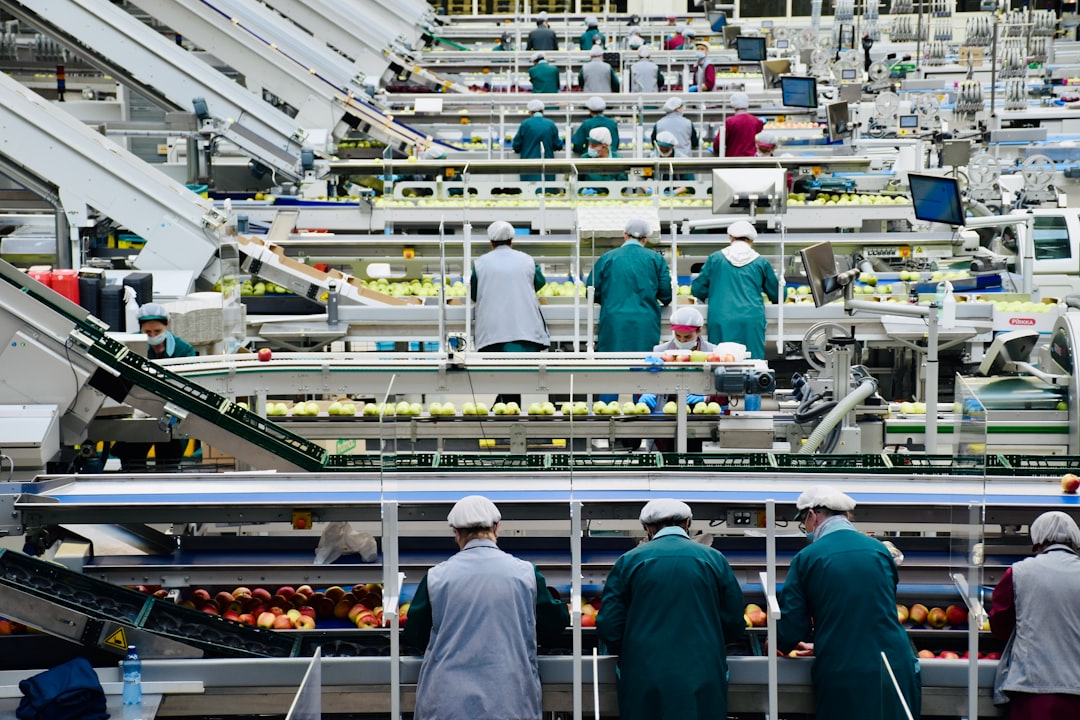 Photo by Arno Senoner
on Unsplash
Photo by Arno Senoner
on Unsplash
- Small shelf-stable food manufacturers ($1M–$3M revenue) typically budget $3,000–$15,000+/year; refrigerated or recall-sensitive operations commonly run $25,000–$150,000+.
- A $1M general liability policy runs approximately $500–$1,500/year; small-facility property coverage runs roughly $1,000–$3,000/year — but workers’ comp is usually the largest single line.
- The average food recall costs upward of $10 million; even a contained recall typically runs $50,000–$500,000 — and recall costs are not covered by standard product liability.
- Product type is the single biggest cost variable: meat, poultry, seafood, and dairy price well above shelf-stable and packaged-goods producers.
- The durable savings come from risk quality and accurate underwriting data — not from shopping the same submission to more carriers.
Food manufacturing insurance cost by business size (2026)
Most food manufacturers pay between roughly $3,000 and $150,000+ per year, depending mainly on size and product type. Small shelf-stable producers sit at the low end; refrigerated, perishable, and nationally-distributed operations sit at the high end because their recall and spoilage exposure is far larger.
| Operation profile | Typical annual program (2026) | What drives it |
|---|---|---|
| Small shelf-stable producer ($1M–$3M revenue) | $3,000–$15,000+ | Lower recall exposure, local/regional distribution, packaged/dry goods |
| Mid-size / multi-product / regional | $15,000–$50,000 | Higher revenue and payroll, broader distribution, more SKUs |
| Refrigerated, perishable, or recall-sensitive / national | $25,000–$150,000+ | Meat/poultry/seafood/dairy, national reach, large recall and spoilage limits |
These ranges come from 2026 small-business insurance benchmarking (Logrock). They are planning numbers, not quotes — two producers with identical revenue can price very differently based on product, claims, and the limits their buyers require.
Product liability and recall: the cost lines unique to food manufacturers
Product liability and product recall are what separate a food manufacturer’s premium from a generic manufacturer’s. A $1 million general liability policy commonly runs $500–$1,500 per year for a small-to-mid manufacturer (MoneyGeek, 2026), but the products-and-completed-operations exposure inside it is priced on your product’s risk, your revenue, and your distribution reach.
Recall coverage is the swing factor. It is priced separately from product liability, on your revenue, distribution footprint, and product hazard — and it matters because the average food recall costs upward of $10 million while even a contained recall runs $50,000–$500,000 (Tivly). With the FDA logging 251 food and beverage recall events in 2025, about five a week (Esko), carriers price this exposure carefully — and a manufacturer carrying recall limits will pay more in premium but is protected against the one event most likely to threaten the business.
Standard product liability does not cover the cost of pulling product from the market. Notification, retrieval, disposal, replacement, and lost production all require a dedicated recall endorsement or standalone contaminated-products policy. For manufacturers distributing beyond a local market, the incremental premium cost is modest relative to the exposure it transfers.
Workers’ compensation costs for food manufacturing operations
Workers’ compensation is usually the single largest line in a food manufacturer’s program. It is priced as a rate per $100 of payroll, set by your state’s governing class codes and adjusted by your experience modification factor — so headcount, wages, and claims history drive it more than revenue does.
Food manufacturing carries above-average injury frequency — cuts and burns, machinery and repetitive-motion injuries, chemical exposure, slips on wet floors, and cold-storage injuries — which puts its workers’ comp class rates above clerical or light-assembly work. The two levers that actually move your workers’ compensation cost are your experience modification factor (a clean multi-year loss history can drop you below the baseline rate) and accurate payroll classification (miscoding production payroll into a higher-hazard class inflates premium). A broker who audits your class codes and payroll split before placement often recovers more than they cost.
For a multi-state food manufacturer, workers’ comp requirements and rate structures vary by state. California, New York, Pennsylvania, and Massachusetts require coverage from the first employee; Florida requires it at four or more non-construction employees; Missouri at five or more. The practical answer for most manufacturers is to carry coverage wherever they have payroll — the exposure is there regardless of the threshold.
Property, equipment breakdown, and business interruption costs
Property and equipment coverage is priced on the replacement value of your facility, production lines, and inventory — not on revenue. Small-facility property coverage commonly runs $1,000–$3,000 per year (MoneyGeek, 2026), but a food manufacturer’s real property exposure is concentrated in two critical add-ons.
Equipment breakdown covers the sudden failure of production and refrigeration equipment — a single production line can cost $500,000+ to replace, so under-scheduling here is a common and expensive mistake. Business interruption with spoilage covers lost revenue when production stops plus the raw-material and finished-goods loss from a refrigeration failure or power outage; for a perishable producer, a single spoilage event can destroy six figures of inventory.
The cost of both lines scales with your equipment values and the size of the inventory at risk, which is why refrigerated operations price higher than shelf-stable ones. Spoilage limits should reflect peak inventory value, not an average — a limit set to an average value leaves a refrigerated producer exposed on their worst day. Equipment should be scheduled at realistic replacement cost, not depreciated book value.
How to get better pricing on food manufacturing insurance
The largest, most durable savings in this class come from risk quality and accurate underwriting data — not from shopping the same submission to more carriers. Carriers with a genuine appetite for food manufacturing price it more competitively than those stretching to write it; and an account that looks clean on paper earns better terms than one with gaps in documentation.
- Document your food-safety program. A written Hazard Analysis and Risk-based Preventive Controls (HARPC) plan, allergen control protocols, sanitation records, and a clean inspection history all signal lower recall frequency to underwriters. A demonstrated food-safety culture earns better product liability and recall pricing.
- Get your class codes and payroll right. Workers’ comp is your biggest line; misclassified payroll is the most common source of overpayment. A class-code and payroll audit before placement is often the highest-return step.
- Schedule equipment at realistic replacement cost. Under-scheduling saves a little premium and costs a lot at claim time; a single production line can run $500,000+ to replace. Over-scheduling wastes premium on value you don’t need to insure.
- Match limits to buyer contracts — not above them. Carrying $5M when your largest buyer requires $2M is wasted premium; carrying $1M when they require $2M costs you the account. Read every buyer contract’s insurance exhibit before you quote.
- Place with carriers that actually want food manufacturing. A market with genuine appetite for your product type prices it more competitively than one stretching to write it — and an independent broker who can access multiple food-friendly markets has a real advantage here.
How your product type and state affect cost
Product type is the single biggest cost variable in food manufacturing insurance, and your state shapes the workers’ compensation and property pieces. Understanding both levers before you shop is the best way to contextualize a quote.
Product type. Meat, poultry, seafood, and dairy processors price well above shelf-stable and packaged-goods producers because their contamination, recall, and spoilage severity is higher and their carrier options are narrower. Bakery, beverage, and dry/packaged goods sit at the lower end of the range. Allergen-heavy products (anything with milk, tree nuts, wheat, peanuts, soy, or sesame) carry elevated recall exposure, since undeclared allergens were the leading cause of food recalls in 2025 (Food Safety Magazine).
State. Your state sets workers’ compensation rates and rules, and affects property pricing through catastrophe exposure and construction costs. Anvo places food manufacturing accounts across our licensed footprint — CA, NY, FL, PA, MA, MO, and KS — and the right carrier for a given account often depends on which states it operates in. A California-based food manufacturer and a Missouri-based one with identical revenue and product type can price measurably differently because of state workers’ comp rate structures and property catastrophe loads.
When risk quality, not the class rate, set the price
A mid-size shelf-stable producer came to renewal expecting the same market rate they had paid the prior two years — but the underwriter’s file showed a production facility with documented Hazard Analysis and Risk-based Preventive Controls (HARPC) protocols, a clean third-party food-safety audit, and zero recall or contamination losses over the prior five years. Rather than rating the account at the standard class rate, the carrier credited the documented food-safety investment and came in materially below the base: the combination of a written allergen control program, sanitization records, and a favorable experience modification factor moved the product liability and recall package to a tier the class rate alone would not have reached.
The lesson works in both directions. We regularly see accounts where a poorly documented food-safety program, deferred facility maintenance, or a modest prior claim has pushed the renewal well above what peers are paying for the same coverage. In this class, underwriters are pricing a food-safety culture as much as a revenue figure — and a broker who helps you present the file accurately, not just competitively, is the difference between the rate you deserve and the rate the class average implies.
Representative scenario, anonymized and generalized to protect client confidentiality.
Frequently asked questions about food manufacturing insurance costs
There is no single average because product type drives cost so heavily, but a useful 2026 benchmark is roughly $3,000–$15,000+ per year for a small shelf-stable producer and $25,000–$150,000+ for refrigerated, perishable, or nationally-distributed operations (Logrock, 2026). The individual building blocks include about $500–$1,500/year for a $1M general liability policy and $1,000–$3,000/year for small-facility property coverage (MoneyGeek, 2026), with workers’ compensation usually the largest single line.
Because of product liability and recall exposure. A non-food manufacturer’s product rarely sickens thousands of people or triggers an FDA-mandated recall; a food manufacturer’s can. The average food recall costs upward of $10 million, and that severity is priced into your product liability and recall coverage. Food manufacturing also carries above-average workplace injury frequency, which raises the workers’ compensation line.
Recall coverage adds premium because it covers a genuinely catastrophic, high-frequency exposure — but the cost is modest relative to the risk it transfers. Standard product liability does not cover recall costs at all, so a manufacturer without recall coverage is fully exposed to a $50,000–$500,000+ event (and up to $10M+ for a national recall). For most manufacturers distributing beyond their local market, the premium is well worth it.
The durable savings come from risk quality and accurate data: a documented food-safety and allergen-control program, correct workers’ comp class codes and payroll, equipment scheduled at realistic replacement cost, limits matched to your buyer contracts rather than padded, and placement with a carrier that genuinely wants your product type. Chasing the lowest headline premium by cutting recall or under-scheduling property usually costs far more at claim time.
For most food manufacturers with a production workforce, yes. Workers’ comp is priced per $100 of payroll at class rates that reflect food manufacturing’s above-average injury frequency, so it scales with headcount and wages. Your experience modification factor and accurate payroll classification are the two levers that move it most — which is why a class-code and payroll audit is often the highest-return part of placing the program.
Want to know where your quote should land?
Ask our AI assistant about food manufacturing insurance cost drivers for your product type.
Get a quote benchmark for your operation
Tell us what you produce, your revenue, and who you sell to, and we’ll benchmark where your food manufacturing program should price — and where it can be improved.