
Convenience Store & Grocery Insurance:
Coverage, Costs, and the Exposures Standard Policies Miss
Convenience and grocery stores need a layered program: general liability for slip-and-falls, commercial property for the building and inventory, crime coverage for robbery and cash theft, equipment breakdown for refrigeration and spoilage, and workers' compensation. Stores that sell alcohol, tobacco, lottery, or fuel add liquor liability and, for fuel, environmental coverage — and those add-ons drive both premium and exposure.
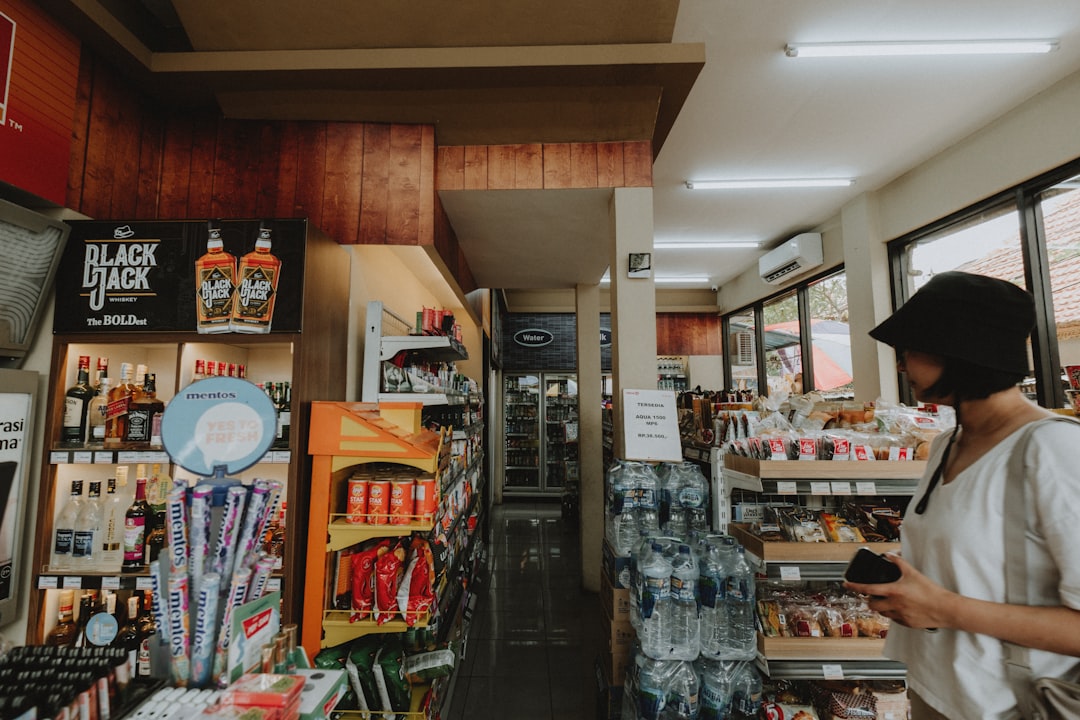 Photo by Galih Jelih
on Unsplash
Photo by Galih Jelih
on Unsplash
- The core program is a bundle: general liability, commercial property, crime, equipment breakdown, and workers' comp — most stores buy it as a Business Owner's Policy (BOP) and build it out.
- Crime and cash are the exposure retail policies underweight: extended hours, high cash volume, and larger staffs make robbery, cash theft, and employee dishonesty a real, dedicated coverage — not an afterthought.
- Equipment breakdown covers spoilage: a refrigeration or freezer failure that spoils inventory is an equipment-breakdown claim, not a standard property claim — confirm you carry it.
- Alcohol, tobacco, lottery, and fuel change the program: selling them raises premiums and adds coverages (liquor liability; for fuel, pollution/underground-tank exposure).
- Typical premiums: general liability averages about $857/year for convenience stores; a bundled BOP averages about $184/month — before workers' comp, which is payroll-based.
What insurance does a convenience or grocery store need?
A convenience or grocery store needs general liability for customer injuries, commercial property for the building and inventory, crime coverage for robbery and cash theft, equipment breakdown for refrigeration and point-of-sale systems, and workers' compensation for employees. Stores selling alcohol add liquor liability; stores selling fuel add environmental coverage. Most owners buy the core lines bundled and layer the rest on top.
It's a big, competitive category — there were 151,975 convenience stores in the U.S. in 2025, generating $341.2 billion in in-store sales — and carriers price each store on what it sells, its hours, its cash volume, and its claims history. A daytime-only grocery with no alcohol looks very different to an underwriter than a 24-hour store selling beer, cigarettes, lottery, and fuel.
- General liability: third-party bodily injury and property damage — most commonly a customer slip-and-fall.
- Commercial property: the building, coolers, shelving, POS systems, and inventory.
- Crime coverage: robbery, cash theft, and employee dishonesty — a dedicated line, not part of standard property.
- Equipment breakdown: mechanical failure of refrigeration, freezers, or POS — including the spoiled stock a breakdown causes.
- Workers' compensation: employee injuries — usually mandatory once you have staff.
- Business interruption: lost income while you're closed for repairs after a covered loss.
Many owners start with a Business Owner's Policy (BOP), which bundles general liability and property. The average BOP for convenience stores runs about $184/month at $1M-per-occurrence / $2M-aggregate limits with a $1,000 deductible — but a BOP does not automatically include crime limits that fit a cash business, liquor liability, or workers' comp, which is where under-built programs get exposed.
Cash, crime, and the coverage most owners under-buy
Convenience and grocery stores combine high cash volume, extended hours, and sizable hourly staffs — a risk profile that makes crime coverage essential, not optional. Crime insurance covers robbery, cash theft, forgery, and employee dishonesty, and it sits apart from standard property coverage. Stores that treat it as an afterthought often find their limits are far too low the day a loss actually happens.
The scale is real: the U.S. convenience industry moved $341.2 billion in in-store sales in 2025, much of it cash, and the average store employs about 19.9 people — a large, high-turnover staff that raises employee-dishonesty exposure alongside external robbery. Underwriters look closely at your cash-handling procedures, drop-safe use, camera coverage, and lighting; documenting them both lowers your risk and improves your terms. A modern wrinkle worth pairing with crime coverage is cyber liability — point-of-sale systems are a common target for payment-data breaches, which crime policies generally exclude.
How much does convenience store insurance cost in 2026?
Convenience store owners pay an average of about $857/year ($72/month) for general liability, with basic policies for small stores commonly running $500–$2,000/year. A bundled BOP averages about $184/month, and workers' compensation is priced separately on payroll. Stores selling alcohol, tobacco, or lottery pay more because those categories add risk.
| Coverage | Typical cost | Notes |
|---|---|---|
| General liability | ~$72/mo ($857/yr) | Basic policies ~$500–$2,000/yr for small stores |
| Business Owner's Policy (BOP) | ~$184/mo | $1M/$2M limits, $1,000 deductible; GL + property bundled |
| Workers' compensation | Payroll-based | Retail benchmark ~$1.66 per $100 payroll (2025) |
| Crime / liquor / equipment breakdown | Add-on | Priced to your cash volume, alcohol sales, and refrigeration |
The biggest premium drivers are what you sell (alcohol, tobacco, and lottery raise rates), your hours (24-hour operations cost more), location and crime rate, revenue, payroll, and claims history. Because so much of the premium is behavioral — cash controls, security, safety programs — a well-documented submission is the most effective lever a store owner has on price.
Workers' comp, slip-and-falls, and store-floor injuries
Workers' compensation is mandatory in nearly every state once a store has employees, and it is priced on payroll. Convenience and grocery stores are generally rated under class code 8006, with supermarkets that run a fresh meat, fish, or poultry department using code 8033. The 2025 retail benchmark runs about $1.66 per $100 of payroll, adjusted by state and claims history.
Slip-and-fall on wet floors is the single most common claim, followed by lifting and back injuries from stocking, lacerations from box cutters, and ladder falls. These are frequent and preventable, which is why anti-slip flooring, spill protocols, and stocking training are the levers that both cut injuries and lower long-run premium. An experience modifier below 1.0 — earned through a clean safety record — directly reduces what you pay.
Alcohol, tobacco, lottery, and fuel: what they add to your exposure
Selling alcohol, tobacco, lottery, or fuel doesn't just raise your premium — it adds coverages your base policy won't provide. Alcohol sales create liquor liability; fuel sales create environmental exposure from underground storage tanks that a standard property or liability policy excludes. Getting these right is where a convenience-store program is won or lost.
Liquor liability pays for bodily injury and property damage arising from selling alcohol — including harm caused by an intoxicated buyer after they leave your store. It is separate from general liability and is effectively required anywhere you sell beer, wine, or spirits. On the fuel side, 122,620 of the 151,975 U.S. convenience stores sell fuel, and those underground storage tanks are federally regulated under the EPA's underground storage tank (UST) program; a leak or spill triggers cleanup liability that the standard pollution exclusion leaves uncovered, so fuel stores need dedicated storage-tank / environmental coverage. Higher-limit protection over all of these usually comes from an umbrella policy, because a single serious liquor or pollution claim can pierce primary limits.
The freezer failed on a Friday — and the policy didn't cover the loss
A pattern we see with grocery and convenience accounts: the store carries solid property and liability limits but never added equipment breakdown, or set the crime limit at a token amount. Then a compressor fails over a weekend and thousands of dollars of frozen and refrigerated stock spoils — a mechanical-breakdown loss the property policy excludes — or a robbery clears the safe and the crime sublimit covers a fraction of what was taken.
The fix is inexpensive relative to the loss: add equipment breakdown with spoilage, set crime limits to your real peak cash exposure, and — if you sell alcohol or fuel — confirm liquor liability and storage-tank coverage are actually on the policy, not assumed. The theme repeats: the base policy looks complete until the specific convenience-store exposure is the one that hits.
Details anonymized and generalized to protect client confidentiality.
Frequently asked questions about convenience & grocery store insurance
At minimum: general liability, commercial property, crime coverage, equipment breakdown, and workers' compensation. Stores selling alcohol add liquor liability, and stores selling fuel add environmental/underground-tank coverage. Most owners buy the core lines as a Business Owner's Policy and layer the rest on.
Workers' comp is legally required in nearly every state once you have employees.
General liability averages about $857/year for convenience stores, with basic small-store policies commonly $500–$2,000/year. A bundled BOP averages about $184/month, and workers' compensation is priced separately on payroll (a ~$1.66 per $100 retail benchmark).
Selling alcohol, tobacco, lottery, or fuel and operating 24 hours all raise the premium.
Only if you carry equipment breakdown coverage. A refrigeration or freezer failure that spoils inventory is a mechanical-breakdown loss, which standard commercial property typically excludes. Equipment breakdown with spoilage covers both the repair and the lost stock.
Yes. Crime coverage — robbery, cash theft, and employee dishonesty — is separate from property insurance and is essential for a high-cash, extended-hours business. Owners frequently carry crime limits far below their real peak cash exposure; set the limit to what could actually be lost.
Yes. Any store that sells alcohol needs liquor liability, which covers bodily injury and property damage arising from a sale — including harm caused by an intoxicated buyer after leaving your store. General liability does not cover alcohol-related claims.
Significantly. Fuel means underground storage tanks regulated by the EPA, and a leak or spill creates cleanup liability that standard pollution exclusions leave uncovered. Fuel-selling stores need dedicated storage-tank / environmental coverage on top of the core program.
Convenience and grocery stores are generally rated under NCCI class code 8006. Supermarkets that operate a fresh meat, fish, or poultry department use code 8033. Retail workers' comp runs around $1.66 per $100 of payroll as a 2025 benchmark, adjusted by state and your experience modifier.
Not sure your store's crime and equipment limits are right?
Ask about crime limits, equipment breakdown with spoilage, liquor liability, or fuel/tank coverage for your store.
Get a convenience or grocery store quote that fits how you actually operate
We'll size your crime and garage-to-cooler exposures, confirm liquor and fuel coverage are really on the policy, and close the gaps before a claim finds them.