
Commercial Trucking Insurance FAQ:
25 Common Questions, Answered
Commercial trucking companies and owner-operators face a distinct set of insurance questions — from FMCSA financial responsibility minimums and CSA scores to nuclear verdict exposure, cargo coverage, new authority surcharges, and the insurance requirements for leased drivers. This FAQ compiles the 25 questions we hear most often from carriers, fleet owners, and owner-operators, with answers drawn from FMCSA regulations, CSA documentation, carrier appetite guidelines, and litigation trends in commercial trucking.
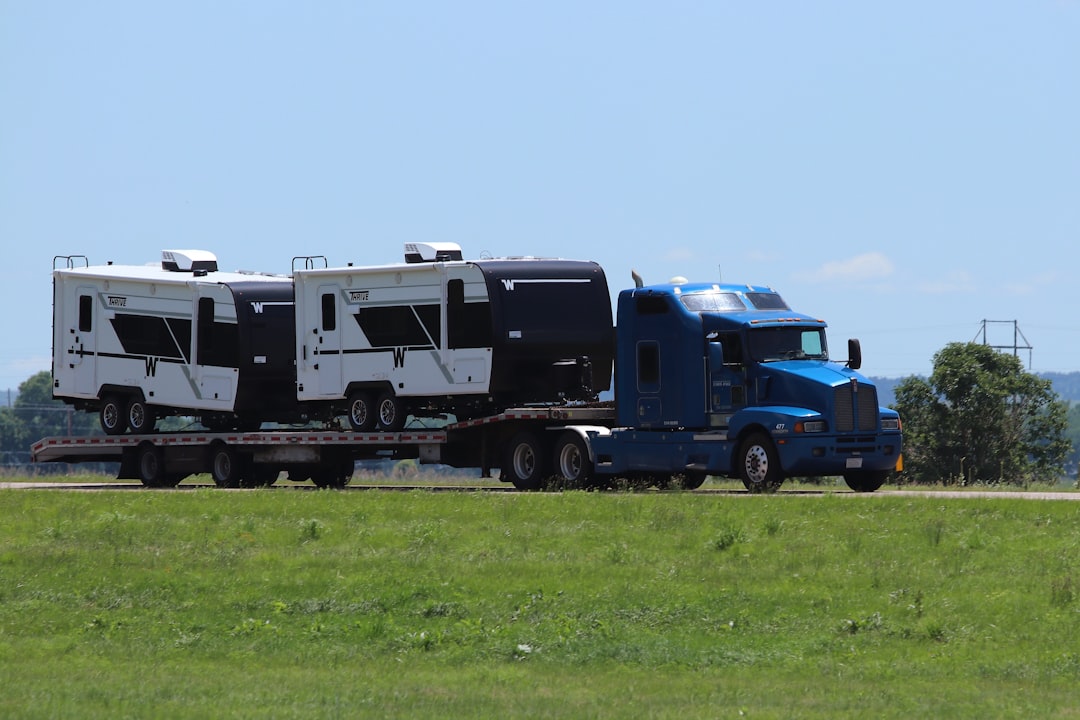 Photo by Bhargav Panchal
on Unsplash
Photo by Bhargav Panchal
on Unsplash
- FMCSA financial responsibility minimums range from $750,000 for dry freight under 10,001 lbs GVWR to $5 million or more for hazardous materials — but nuclear verdict exposure and shipper/broker requirements often necessitate $1M–$10M in total liability coverage.
- Commercial trucking insurance for owner-operators and small fleets ranges from $18,000–$30,000+ per year for new authorities (with a 25–50% surcharge), down to $4,000–$8,000 per truck per year for established carriers with clean CSA scores in moderate-cost states.
- BASIC scores (Safety Measurement System ratings) above 65% increase premiums by 30–60% or more, and carriers with Conditional ratings or poor loss history are written only by program markets or excess and surplus lines carriers at premium increases of 50–100%+.
- Nuclear verdicts in commercial trucking are trending upward — ATRI's 2023 data shows average verdicts of $22.3 million — making $5M–$10M in total liability coverage (primary + umbrella) the recommended minimum for any trucking operation.
- Owner-operators and leased drivers must confirm coverage structure: non-trucking liability (bobtail) for vehicles without cargo, motor carrier policy coverage for loaded operations, and full authority if the driver later obtains their own authority.
Federal financial responsibility minimums and MCS-90 endorsements
The Federal Motor Carrier Safety Administration (FMCSA) establishes minimum insurance requirements for interstate commercial trucking based on cargo type and gross vehicle weight rating (GVWR). These minimums are non-negotiable — failure to maintain them results in immediate suspension of interstate authority and exposure to federal penalties. Intrastate operations face different state-level requirements, which are often more lenient than FMCSA minimums but are superseded by shipper and broker contractual demands.
FMCSA financial responsibility minimums vary by vehicle GVWR and cargo classification. For vehicles under 10,001 lbs GVWR carrying non-hazardous freight, the minimum is $750,000. For vehicles 10,001 lbs and above carrying non-hazardous freight, the minimum is $1,000,000. For vehicles carrying hazardous materials in quantities requiring a placard (49 CFR §172.500–600), the minimum is $5,000,000. For certain specialized operations — such as household goods movers or commercial passenger carriers — different minimums apply.
These minimums are filed with FMCSA via Form MCS-90 (proof of insurance endorsement) or BMC-91X (surety bond) at the time of authority registration. Failure to maintain the required minimum results in automatic authority suspension and civil penalties up to $10,000+. Most shippers, brokers, and buyers require limits significantly higher than these minimums — it's rare to find a trucking operation that can operate with only the FMCSA minimum.
The MCS-90 is a standard endorsement that carriers file with FMCSA to prove they carry the required commercial auto liability insurance. Your insurance carrier completes and signs the MCS-90 endorsement, and you file it with FMCSA as part of your new operating authority application or within 30 days of any change in insurance coverage. The MCS-90 names the carrier as the insurer of record and authorizes FMCSA to inquire directly into your policy. If your policy lapses or is cancelled, your insurer must notify FMCSA within 30 days — failure to do so or to maintain continuous coverage results in immediate authority suspension.
In practice, your broker or insurance carrier handles MCS-90 filing. The critical thing to understand is that FMCSA can suspend your authority for non-compliance, even if the cancellation was involuntary (due to non-payment, for example). Do not allow a lapse in coverage between policies. Notify your broker immediately of any changes to your operating authority, vehicle fleet size, or cargo types, as these may trigger MCS-90 amendment requirements.
Interstate operations (crossing state lines) are subject to FMCSA regulations, including the financial responsibility minimums above and the MCS-90 filing requirement. Intrastate operations (operating entirely within a single state) are subject to that state's commercial vehicle insurance laws, which often specify lower minimums — for example, some states require as little as $50,000–$100,000 for intrastate truck liability. However, intrastate carriers are excluded from FMCSA's Hazmat registration and are not required to file MCS-90.
The practical distinction blurs quickly: most carriers start intrastate but expand into interstate lanes as business grows, at which point FMCSA rules take over. Many brokers and shippers require FMCSA-compliant coverage even for intrastate operations, because they work with interstate carriers. In our experience, it's simpler to write most trucking operations with FMCSA-compliant limits from day one rather than restructuring the policy later. Confirm your operating authority status and planned routes with your broker.
If your commercial auto insurance lapses — even for a single day — your FMCSA operating authority is automatically suspended. FMCSA maintains real-time records of MCS-90 filings, and your carrier reports any cancellation or lapse to FMCSA within 30 days. Once your authority is suspended, you cannot legally operate as an interstate carrier. You must file a new MCS-90 with proof of continuous coverage in force, and FMCSA will lift the suspension (though this can take 5–10 business days).
Beyond authority suspension, operating without required insurance triggers federal penalties ($1,000–$10,000+) and exposes you to personal liability for any accidents. If you are in an accident while uninsured, you are financially responsible for all damages. Many states also criminalize operating a truck without insurance. To prevent lapses, set up automatic renewals or reminders with your broker, and always have your renewal in place at least 30 days before your current policy expires.
How BASIC scores affect insurance pricing and carrier availability
The Compliance, Safety, Accountability (CSA) program uses the Safety Measurement System (SMS) to assign BASIC scores (percentile rankings) to each carrier based on compliance violations, safety inspection results, and crash data. A BASIC score above 65% signals elevated risk to insurers and results in premium increases of 30–60% or more — or complete non-availability from standard market carriers. Understanding your CSA scores and their components is essential to negotiating both insurance pricing and broker selection.
A BASIC score above 65% typically increases commercial auto insurance premiums by 30–60% compared to the same operation with a score below 50%. The precise increase depends on which BASIC is elevated (Unsafe Driving, Fatigued Driving, Driver Fitness, Substance & Alcohol, Vehicle Maintenance, and Cargo-Related are the six BASIC categories), your loss history, your operation size, and your state of operation. A single high BASIC may move you from standard market pricing to program market or excess and surplus market pricing with a 50–100%+ increase.
Standard carriers set underwriting guidelines with hard cutoffs — for example, "Do not underwrite carriers with Unsafe Driving BASIC above 70%." Carriers with multiple elevated BASICs (three or more above 65%) are typically excluded from standard markets entirely. See your CSA scores at FMCSA's Safety Measurement System portal and work with your broker to develop a remediation plan if any scores are trending upward.
Yes, but your options are severely restricted. A Conditional CSA rating (assigned when a carrier's safety performance falls below FMCSA thresholds) means you are being monitored by FMCSA and your operating authority could be revoked if performance does not improve. Standard insurers typically decline Conditional-rated carriers outright. Coverage is available only through program markets specializing in distressed trucking risk and excess and surplus lines carriers, and premiums are typically 80–150% above standard market rates.
Your first step is to file a corrective action plan with FMCSA demonstrating concrete safety improvements. Carriers with documented driver training, vehicle maintenance upgrades, and compliance improvements can move from Conditional to Satisfactory rating within 6–12 months, at which point standard market availability returns. If your operation is Conditional-rated, work simultaneously with FMCSA on remediation and with a broker who has E&S market relationships.
DataQs (Data Quality and Improvement System) is FMCSA's process for challenging inaccurate, untimely, or incomplete CSA data. If you believe your CSA scores include inspection results that were improperly closed or crashes that don't belong to your motor carrier number, you can file a DataQs challenge. The process typically involves gathering documentation (inspection reports, accident records from your state DMV, proof of driver reassignment) and submitting evidence to FMCSA showing why the data should be removed or corrected. FMCSA has 60 days to respond.
DataQs challenges are often successful when they target driver reassignments (a violation assigned to a driver who is no longer with your company) or crashes incorrectly attributed to your carrier. However, the process is time-consuming and requires strong documentation. If you have elevated CSA scores, consult with your broker about which issues are worth disputing and gather your evidence early. A successful DataQs challenge can lower your BASIC scores significantly and may restore standard market availability.
Insurance requirements and costs for new operating authorities
New operating authorities face a distinct insurance market with significantly higher premiums than established carriers. Underwriters view new carriers as high-risk — no loss history, no operating track record, and elevated probability of failure within the first three years. This results in a 25–50% surcharge over a comparable established carrier, placing a single-truck new authority in the $18,000–$30,000 annual insurance cost range even before adding specialized coverage.
A single-truck new authority OTR (over-the-road) operation typically costs $18,000–$30,000 per year for commercial auto liability, with the upper end applying to operations in high-cost states like California or New York, or with any driver history issues. This includes a 25–50% surcharge relative to an established carrier with clean loss history. Adding workers' compensation (if you plan to hire employees), general liability, cargo, and umbrella coverage can push total program cost to $25,000–$45,000+ for year one.
The new authority surcharge is driven by underwriting data: approximately 30% of new trucking authorities fail or become inactive within three years. Carriers have no track record, no CSA history, and no loss experience to underwrite against. Once you accumulate 12–24 months of clean loss history and CSA scores drop below 50% on all BASICs, rates typically decline 20–30% on renewal. Expect to budget for high first-year insurance costs as part of your startup capital.
You must secure insurance before FMCSA will approve your operating authority application. FMCSA requires proof of insurance (MCS-90 endorsement) as part of the authority application. In practice, this means you should: (1) Contact an insurance broker before or immediately upon submitting your authority application; (2) Get a quote and bind coverage; (3) Have your carrier issue the MCS-90 endorsement and submit it with your authority application; (4) Your authority is granted once FMCSA confirms your MCS-90 is on file and your insurance meets minimum requirements.
The timeline is typically 2–4 weeks from application to authority approval, assuming your MCS-90 is filed and valid. However, insurance underwriting for new authorities can take 1–2 weeks, so start the insurance process as early as possible. Do not submit your authority application until you have a binder or confirmation from your insurer that the MCS-90 will be issued — FMCSA will not grant authority without it.
Insurance requirements for independent owner-operators and leased drivers
Owner-operators and leased drivers face a different insurance landscape than fleet operators. When you are leased to a carrier, the carrier's primary commercial auto policy covers you when loaded and operating under the carrier's authority — but you need separate non-trucking liability (bobtail) coverage for vehicles without cargo. Understanding the coverage structure, policy limits, and endorsement requirements is critical to avoid gaps when transitioning between carriers or when a driver later obtains their own authority.
Non-trucking liability (also called bobtail coverage) is liability insurance that covers you when you are operating your truck for personal use or deadheading (empty miles) between loads, when you are not covered under a carrier's motor carrier policy. When you are leased to a carrier and hauling freight under the carrier's authority, you are covered under the motor carrier's policy — the carrier's insurer will defend and indemnify you for liability arising from the load. But when you drop the trailer, drive to the truck stop, or pick up your family, you are on your own — and a single accident without bobtail coverage could result in a judgment against you personally.
Owner-operators should carry non-trucking liability insurance with limits of at least $1,000,000 per occurrence. Cost is typically $1,200–$2,500 per year depending on your driving record and vehicle GVWR. This coverage is essential insurance, not optional. Confirm with your insurer that your bobtail policy defines "non-trucking" clearly and does not contain exclusions for commercial use — some poorly drafted policies exclude bobtail coverage for any trucking-related activities, defeating the purpose.
When you are leased to a carrier and operating under the carrier's authority with a load, the motor carrier's commercial auto liability policy covers you as an additional insured for liability arising from the transportation of that load. The carrier's insurer has a duty to defend you if a claim arises from an accident on a loaded mile. However, the scope of this coverage depends on the specific carrier's policy wording and endorsements. Some carriers' policies cover only the driver as an operator; others may restrict coverage to specific vehicle types or cargo categories.
As an owner-operator, request a copy of the carrier's Certificate of Insurance and confirm: (1) that you are named as an additional insured on the motor carrier policy, (2) that the policy covers your vehicle when you are leased to the carrier, and (3) that there are no exclusions for owner-operators or specific classes of carriers. Many carriers have standard endorsements that detail coverage for owner-operators, but some policies contain gaps. If the carrier's coverage is unclear, request a broker or attorney review before signing a lease.
Once you obtain your own operating authority, you are responsible for carrying all required insurance as a motor carrier — not as a leased operator. This includes: (1) Commercial auto liability meeting FMCSA minimums ($750,000–$5,000,000 depending on cargo), (2) Workers' compensation if you will employ drivers, (3) Commercial umbrella for additional liability capacity, and (4) Cargo insurance if you will haul freight for compensation. You no longer need non-trucking liability (bobtail) as your primary insurance, because your motor carrier policy now covers all commercial operations.
The transition from leased operator to motor carrier results in a significant insurance cost increase: from $1,500–$3,000/year in bobtail coverage to $18,000–$45,000+/year in full carrier coverage, depending on the size and specialization of your operation. Plan for this cost increase when budgeting for your own authority, and work with a broker who specializes in new carriers to understand the full program cost before committing.
Coverage for freight in transit and common cargo exclusions
Cargo insurance (motor truck cargo / inland marine) covers physical loss or damage to freight while it is in your possession and control. It is separate from commercial auto liability and covers the shipper's or owner's loss, not your liability for damages. Understanding what is and isn't covered — particularly exclusions for temperature-sensitive freight, spoilage, and the Carmack Amendment — is critical to avoiding disputes when cargo is damaged in transit.
Commercial auto liability covers your legal responsibility for third-party bodily injury and property damage caused by your vehicle — for example, if your truck hits a building or another car. Cargo insurance covers physical loss or damage to the freight you are transporting — goods that are crushed in a crash, damaged by weather, spoiled by temperature excursion, or stolen. Auto liability pays for damages to others' property caused by your vehicle's operation; cargo pays the shipper or freight owner for loss of the goods themselves.
A single accident can trigger both coverages: auto liability covers damage you caused to the other vehicle and any third-party injuries; cargo covers the value of your freight if it is damaged in the same accident. Both coverages are typically required by shippers and brokers. If you are hauling freight for a shipper or under a broker's load, the contract almost certainly requires both auto liability and cargo insurance.
Standard motor truck cargo policies exclude: (1) Temperature-related losses and spoilage (unless the policy includes specific temperature coverage), (2) Reefer equipment breakdown without a covered peril like collision, (3) Delay or loss of market value, (4) Losses arising from shipper-supplied documentation that is incomplete or inaccurate, (5) Losses covered by the shipper's own insurance (most policies are excess to the shipper), and (6) Losses from improperly loaded or secured cargo (your responsibility to load correctly). Additionally, some policies exclude or severely sublimit claims for highly perishable goods, fresh produce, and certain commodities with higher spoilage risk.
The most common gap is temperature-sensitive cargo: standard cargo policies will not cover a reefer unit that breaks down or a refrigerated product that spoils due to mechanical failure. If you regularly haul refrigerated or temperature-sensitive freight, request a cargo policy endorsement that explicitly covers temperature excursion losses including mechanical breakdown of the refrigeration unit.
The Carmack Amendment (49 U.S.C. § 14706) is a federal statute that governs liability for loss or damage to freight in interstate commerce. Under Carmack, a motor carrier is liable for loss or damage to freight in its care except where the loss or damage results from: (1) An Act of God (earthquake, hurricane), (2) A public enemy or war, (3) The inherent nature of the goods themselves, (4) Improper packing by the shipper, or (5) An act or omission of the shipper. Carmack also establishes a critical 9-month statute of limitations: any claim for cargo loss or damage must be filed within 9 months of the date the goods should have been delivered.
For trucking operations, this means: (1) You are presumed liable for cargo loss or damage unless you can prove one of the Carmack exceptions, (2) You must receive written notice of any damage or loss within a short timeframe (typically 48 hours for visible damage, 30 days for concealed damage), and (3) Claims filed after 9 months are barred. If a shipper notifies you of cargo damage, preserve all evidence immediately (photos of the freight, weather records, ELD data, maintenance records for your equipment) and notify your cargo insurer and broker within 24–48 hours. Late notice is grounds for coverage denial.
Insurance cost benchmarks and premium drivers
Commercial trucking insurance is primarily driven by fleet size, driver history, loss experience, CSA scores, operating geography, and cargo type. For carriers with clean safety records and low CSA scores, costs range from $4,000–$8,000 per truck per year for dry van operations, to $6,000–$12,000+ for specialized cargo like hazmat or reefer. New authorities, poor CSA scores, or distressed loss history move operations into higher tiers — $15,000–$30,000+ per truck per year — reflecting underwriting risk.
For an established trucking operation with clean CSA scores (below 50% on all BASICs), no recent losses, and operating in a moderate-cost state, expect $4,000–$8,000 per truck per year for commercial auto liability. Dry van operations are on the lower end; tanker, hazmat, and flatbed operations run higher. Refrigerated (reefer) operations typically cost $6,000–$12,000+ per truck due to the complexity of temperature-sensitive cargo and the higher value of potential losses.
These benchmarks assume a single commercial auto policy only. Adding workers' compensation (if you employ drivers), general liability, cargo, umbrella, and other coverages will increase the total program cost by 40–80% depending on your operation structure. For a 10-truck fleet, total insurance typically costs $80,000–$200,000 per year once all lines are included. New authorities, poor CSA ratings, or significant loss history can double these costs.
The single biggest premium driver is driver history and at-fault loss experience: a fleet with five at-fault accidents in the past three years will pay 2–3x the premium of an identical operation with zero accidents. CSA BASIC scores above 65% — particularly Unsafe Driving or Crash Indicator — increase premiums 30–60%+. Poor state (California, New York, Florida, and Texas command 30–50% premium increases over lower-cost states like Kansas or Texas for comparable operations). Cargo type (hazmat, explosives, radioactive materials require specialty carriers with 50–150%+ premium increases). Vehicle age (trucks over 15 years old typically cost 20–30% more to insure). And new carrier status (25–50% surcharge for authorities less than 12 months old).
To reduce premiums, focus on: (1) Driver safety and recruiting experienced, clean-record drivers, (2) Implemented telematics and dash cams to reduce accident frequency by 5–15%, (3) Regular vehicle maintenance to keep CSA Vehicle Maintenance BASIC low, (4) Documenting safety training and hazmat certification to demonstrate compliance, (5) Switching to program markets that specialize in trucking for better pricing than standard commercial carriers.
The most effective strategies are: (1) Implement a documented safety program: carriers with formal driver safety training, ongoing compliance reviews, and vehicle maintenance protocols regularly achieve 15–25% premium reductions on renewal. (2) Deploy telematics and dash cams: real-time GPS monitoring and driver behavior analytics reduce accident risk, and carriers offering telematics data to insurers get 5–15% rate discounts. (3) Maintain clean CSA scores: investing $10,000–$20,000 in compliance audits, driver training, and vehicle maintenance can lower CSA BASICs by 10–20 points, reducing premium by 20–40%+. (4) Work with a program market or broker with specialty trucking relationships: program carriers underwrite trucking as a class and often offer better pricing than standard commercial carriers. (5) Raise deductibles on non-critical coverages (if you can self-insure minor claims) and negotiate multi-year programs for rating stability.
Avoid common mistakes: do not under-report vehicle count or driver count to your insurer (this is fraud and will result in non-renewal and coverage denial if discovered). Do not ignore CSA improvements — communicate safety investments to your broker and request a re-quote once improvements are documented. Do not shop based on premium alone — a 30% lower premium from a carrier with poor claims-paying reputation can cost you far more in dispute and denial later.
Liability exposure trends and recommended insurance limits
Nuclear verdicts in commercial trucking cases — jury awards in excess of $10 million, frequently reaching $20M–$50M+ — have become increasingly common over the past decade. According to ATRI (American Transportation Research Institute) 2023 data, the average trucking verdict reached $22.3 million. This trend requires all commercial trucking operations to carry minimum $5M–$10M in total liability coverage (primary commercial auto + umbrella), with larger fleets and hazmat carriers needing $25M+.
A nuclear verdict is a jury award that dramatically exceeds typical settlement values — in commercial trucking, this typically means verdicts above $10 million. ATRI's 2023 data shows the average trucking verdict at $22.3 million, with the largest single verdict of $130 million in a fatality case. Nuclear verdicts result from a combination of factors: a single death or severe injury (brain damage, permanent paralysis), a sympathetic plaintiff (elderly person, child, multiple victims), clear liability on the trucker's part (at-fault accident), and aggressive plaintiff's counsel presenting evidence of trucker negligence, fatigue, or failure to inspect equipment.
The implication for your insurance strategy: a $1M primary commercial auto limit with a $3M umbrella leaves you with $4M in total coverage — insufficient for a single nuclear verdict claim. Industry consensus now recommends a minimum of $5M–$10M in total liability coverage for any trucking operation, with larger fleets and hazmat carriers maintaining $25M–$50M+. Nuclear verdict insurance (a specialized coverage that pays when a jury verdict exceeds a threshold set by the carrier) is also available from select carriers to protect against tail risk.
For a trucking company with 1–5 trucks, carry a minimum of $5M–$10M in total liability coverage (combination of primary commercial auto and umbrella). For a 6–20 truck fleet, $10M–$25M total is standard. For operations above 20 trucks, or those carrying hazmat or specialty cargo, $25M–$50M+ in total coverage is common. The rule of thumb is: your total liability limit (primary + umbrella) should be at least 3–5x your estimated maximum loss exposure — which for a trucking company means enough to cover a catastrophic loss scenario (multiple deaths, permanent injuries, punitive damages).
Your umbrella policy must "follow form" to your primary commercial auto policy — meaning it responds to the same covered losses. Some umbrella policies contain gaps (e.g., non-truck liability is excluded, or auto-only exposures are not covered). Work with your broker to ensure your umbrella explicitly covers commercial auto, workers' compensation, general liability, and any other primary policies you carry. The cost of adding $5M–$10M in umbrella coverage is typically $2,000–$8,000/year for small to mid-size fleets, a reasonable cost relative to the catastrophic loss exposure.
Specialty carriers and market options for trucking insurance
Program markets are specialty carriers or managing general agents (MGAs) that focus on insuring trucking operations and have underwriting guidelines, loss data, and pricing models specifically calibrated to the trucking industry. Program carriers typically offer better pricing, broader coverage, and more available capacity than standard commercial auto insurers — but they are only available through brokers with relationships to those programs.
Standard market carriers (large national insurers writing general commercial auto policies) apply generic commercial auto underwriting guidelines to trucking, which often results in conservative pricing, narrow coverage, and low appetite for trucking beyond a certain size or risk profile. Program markets are carriers that specialize in trucking and use trucking-specific underwriting. Rather than asking "What is your general business?" a program carrier asks "What cargo are you hauling? What is your CSA Unsafe Driving BASIC? Do you operate hazmat? What is your loss history over the past three years?" and has data to support better pricing and broader appetite.
For a well-managed trucking operation, program market pricing is typically 15–30% better than standard market pricing. For operations with challenging loss history or moderate CSA elevation, program carriers often have capacity when standard carriers decline entirely. The tradeoff is that program carriers require stronger underwriting information and are less flexible on policy changes mid-term. If your operation has any complexity beyond a single-truck owner-operator, work with a broker who has access to program markets.
Yes, but options narrow and costs increase significantly. Carriers with multiple at-fault losses in the past three years or a single serious injury claim are declined by standard admitted carriers and program markets. Coverage is available only through excess and surplus (E&S) lines carriers — specialty insurers licensed to write "high-risk" business that standard carriers decline. E&S market rates for distressed trucking risks typically run 50–150%+ above program market rates for comparable operations.
The path forward if you have poor loss history: (1) Invest in documented safety improvements — driver training, vehicle maintenance audits, telematics implementation — and gather evidence of these improvements. (2) Document a 6–12 month period of clean operations with no losses. (3) Have your broker resubmit to program markets with the improved loss data. A carrier with poor history that demonstrates clear safety turnaround can often move from E&S market pricing to standard or program market pricing within 12–24 months, generating 30–50%+ premium savings as underwriting appetite improves.
Trailer interchange, driver eligibility, and non-renewal response
Specialized exposures in trucking — such as trailer interchange (operating trailers owned by others), driver qualification requirements, and carrier non-renewal — require specific policy structures and endorsements to ensure adequate coverage.
If you operate trailers owned by another carrier under an interchange agreement, your commercial auto policy must include a trailer interchange endorsement. Standard commercial auto policies insure only the insured's own vehicles; they do not cover borrowed or interchange equipment. Under trailer interchange, you are responsible for the care and control of someone else's trailer while it is under your control. If you damage an interchange trailer, you are liable to the owner — and your insurer must cover this liability through an endorsed coverage.
Confirm with your broker that your policy includes trailer interchange coverage with no exclusions or sublimits. If you exchange trailers frequently or operate under a carrier that requires this, request a separate certificate of interchange coverage. Some carriers require proof of interchange coverage as a condition of doing business with them.
Commercial auto insurance policies contain driver eligibility requirements that must be met for coverage to apply. Typical requirements include: (1) All drivers must possess a valid commercial driver's license (CDL) appropriate for the vehicle class and cargo being transported; (2) Drivers must meet the FMCSA medical certification standards (CMV medical card current); (3) Drivers must pass a motor vehicle records (MVR) screen — policies typically exclude drivers with more than 2–3 moving violations in the past three years, DUI/DWI convictions, or serious violations like reckless driving; (4) Drivers must complete required training (hazmat training if transporting hazmat, pre-employment drug screening, etc.). If a driver fails to meet these criteria and causes an accident, your carrier may deny coverage on the grounds that the driver was ineligible under the policy.
As an operator, you are responsible for maintaining driver qualification files (DQFs) per FMCSA requirements and verifying that all drivers meet your insurance policy's driver eligibility criteria. Notify your broker immediately if a driver fails their medical certification, receives a DUI, or accumulates too many moving violations — your carrier may remove them from the policy or increase your premium to reflect the elevated risk.
Non-renewal is one of the most disruptive events in a trucking operation — if you lose coverage at renewal and do not have replacement insurance in place, your operating authority is suspended and you cannot legally operate. If you receive a non-renewal notice, take immediate action: (1) Contact your broker immediately and provide complete transparency about the reason for non-renewal (loss, CSA elevation, compliance issue, etc.). (2) Request your broker begin shopping alternative markets (program carriers, E&S market) before your current policy expires. (3) Do not sign renewal paperwork or make coverage changes without broker consultation — many non-renewals are carrier-specific and other markets may have appetite. (4) Plan for a potential rate increase (non-renewals typically precede 20–50% premium increases on replacement coverage).
Prevention is better than response: have an open conversation with your broker 90 days before renewal if you anticipate any issues (CSA elevation, recent loss, management changes, etc.) so your broker can identify potential carriers and proactively manage the renewal. Do not wait until you receive a non-renewal notice to start exploring options.
From Our Book
A carrier with a clean safety history and solid CSA scores below 50% approached renewal and received a quote for $22,000 per truck — a 37% increase from the prior year with no deterioration in loss history or compliance. Investigation revealed that the prior broker had submitted minimal documentation: no detailed loss run, no driver qualification summaries, no maintenance records, no safety protocol documentation. The previous underwriter was essentially pricing based on cargo type and basic vehicle information only. When we restructured the submission with complete documentation — five-year loss run, driver qual summaries, maintenance audits, DOT inspection reports, telematics participation, and safety training records — we were able to place the account with a program carrier at $13,500 per truck. The restructured submission generated $8,500+ per truck in savings, or $48,000+ annual savings for a six-truck fleet, for the exact same risk.
Have a question that isn't answered here?
Ask our AI assistant anything about commercial trucking insurance, FMCSA requirements, CSA scores, nuclear verdicts, or coverage planning — powered by Anvo's content library.
Need a trucking insurance quote or coverage review?
Most trucking programs we review have misaligned umbrella coverage, inadequate cargo limits for hazmat operations, or gaps between what the carrier's policy covers and what your shipper actually requires. A quick quote or coverage review takes 15–20 minutes and costs nothing — and typically identifies $5,000–$15,000+ in savings or coverage improvements.