
Commercial Trucking Insurance Cost 2026:
What Fleets Actually Pay and Why Costs Vary
Commercial trucking insurance for a standard over-the-road carrier typically costs $14,000–$25,000 per power unit per year for a complete program. Commercial auto liability alone ranges from $8,000–$12,000 annually for clean, established carriers, climbing to $10,000–$18,000+ for new operating authorities or carriers with compliance issues. These numbers reflect real placements from Anvo's trucking book across 2026, with variations based on CSA scores, loss history, commodity, operating radius, and state. Your actual premium depends on your specific risk profile — the ranges below show what different carrier segments typically pay.
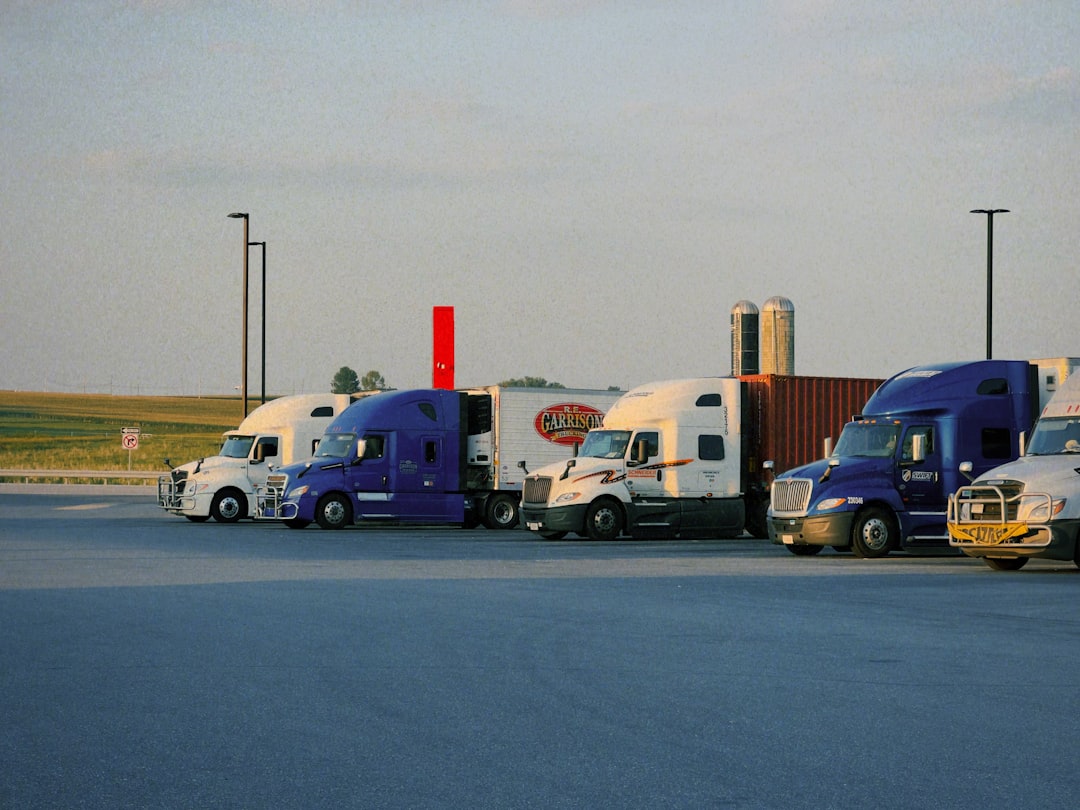 Photo by Marcin Jozwiak
on Unsplash
Photo by Marcin Jozwiak
on Unsplash
- A typical trucking program costs $14,000–$25,000 per power unit per year for clean, established carriers hauling general freight. New operating authorities pay 25–50% more; hazmat and specialized commodity carriers can exceed $35,000.
- Commercial auto liability is your largest cost line at $8,000–$12,000 per truck annually for established carriers with clean CSA scores. This single line accounts for 55–70% of your total insurance program cost.
- CSA scores are the single biggest pricing lever beyond loss history. Carriers with a BASIC percentile above 65% in any category face 30–50% premium surcharges, non-renewal, or market difficulty. Even moderate CSA scores (40–65%) can add 15–25% to your baseline rate.
- New operating authority penalty is severe — expect 25–50% higher premiums than established carriers for the first 2–3 years of operation, even with clean personal loss history. This reflects the industry's risk aversion to startup carriers.
- California, New York, and Pennsylvania operations cost 30–55% more than equivalent Kansas or Missouri operations for the same coverage profile due to litigation environment, medical costs, and state regulations.
- Full-service umbrella policies cost $8,000–$25,000+ per year depending on your primary limits ($1M–$5M) and exposures. Umbrella is non-negotiable for most fleets; it's where the catastrophic liability tail sits.
Commercial trucking insurance cost by fleet size and operating profile (2026)
The fastest way to estimate your trucking insurance cost is to know your fleet size, commodity type, CSA score range, and years of operating authority. The scenarios below show real cost ranges for different carrier types — all using consistent assumptions so you can compare apples to apples. Your actual cost may differ based on loss history, driver quality, and specific carrier market conditions.
| Carrier Segment | Fleet Size / Authority Age | Est. Annual Cost Range | Key Assumptions |
|---|---|---|---|
| Small Owner-Op (1–2 units) | 1–2 trucks, 3+ years authority | $14,000–$22,000 | Clean CSA score (< 40 percentile), no at-fault losses in 3 years, experienced drivers (5+ years CDL), general freight OTR, $750K/$2.25M auto / $1M GL / $1M umbrella |
| Small Fleet (3–5 units) | 3–5 trucks, 3+ years authority | $13,500–$21,000 per unit | Clean CSA, volume discount effect (~10%), no at-fault losses, drivers 25+, general freight OTR, $1M/$2.5M auto / $1M GL / $1M umbrella per unit |
| Mid-Size Fleet (6–25 units) | 6–25 trucks, 3+ years authority | $11,000–$20,000 per unit | Moderate CSA (40–55 percentile), 1 at-fault loss in past 3 years, strong safety culture, experienced drivers, regional + some OTR, $1M/$2.5M auto / $2M GL / $2M–$5M umbrella |
| Large Fleet (26–100+ units) | 26–100+ trucks, 5+ years authority | $9,000–$18,000 per unit | Moderate to slightly elevated CSA (45–65 percentile), formal safety program (SAFE, dash cams, ELDs), loss history mixed, professional driver hiring standards, multi-commodity, $2M/$5M auto / $2M GL / $5M–$10M umbrella |
| New Authority (any size, < 2 years) | Any fleet size, < 2 years authority | +25% to +50% above above baseline | Higher starting rates regardless of owner's personal loss history; non-standard or specialty markets; requires strong personal or business credit; no established fleet loss history to underwrite |
| Hazmat / Specialized | Any fleet size hauling hazmat / oversize | +40% to +100% above baseline | Hazmat commodity adds 40–100% surcharge; oversize/overweight adds 15–30%; refrigerated adds 10–20%; specialty markets only; strict CSA and safety requirements |
These cost ranges assume a standard commercial trucking program: commercial auto liability, physical damage (collision/comprehensive), cargo/inland marine, workers' compensation, general liability, and a commercial umbrella. They do not include commercial property, hired/non-owned auto, occupational accident, or specialized endorsements — those add $2,000–$8,000+ annually depending on your operations.
A critical note on variability: The ranges above are wide because trucking itself is not a homogeneous class. An owner-operator hauling produce for 6 months a year in the Midwest operates in a fundamentally different risk environment from a multi-unit carrier doing regional hazmat intermodal with a history of frequent CSA inspections. Both are "trucking companies," but their insurance profiles — and premiums — are dramatically different. The scenarios above help you find your segment; then you adjust within that segment based on your specific losses, CSA scores, and market conditions.
What each coverage line costs in a complete trucking program
A full commercial trucking program includes multiple coverage lines, each with its own cost. Below is a breakdown of what each line typically costs for a standard carrier, so you understand how the pieces fit together to make your total annual premium.
| Coverage Line | Typical Annual Cost Range | Notes |
|---|---|---|
| Commercial Auto Liability | $8,000–$12,000 per truck | Largest single line, 55–70% of total premium. Assumes clean CSA, no at-fault losses in 3 years, general freight OTR, established authority. New authority or poor CSA adds $2,000–$6,000 per truck. |
| Physical Damage (Collision/Comprehensive) | $1,500–$4,500 per truck | Varies by vehicle value, age, and deductible. Newer trucks ($120K+) may cost $3,000–$4,500; older/used trucks $1,500–$2,500. A $2,500 deductible vs $1,000 saves 10–15%. |
| Motor Truck Cargo / Inland Marine | $2,000–$6,000 per year | Depends on commodity type and cargo value limits. General freight with $100K limit: ~$2,000. Hazmat or high-value perishable: $4,000–$6,000+. Some commodities are non-standard or declined. |
| General Liability (non-auto) | $1,500–$4,000 per year | Covers premises, loading/unloading, drop-yard operations. Relatively stable cost across fleet sizes; goes up with additional locations or hazmat exposure. |
| Workers' Compensation | $5–$14 per $100 of payroll | For CDL driver (NCCI code 7219) typical range is $8–$12 per $100; for non-driving warehouse staff, $5–$9. A fleet with $2M payroll at $10 per $100 = $200,000/year. This scales with payroll and loss history. |
| Commercial Umbrella | $3,000–$8,000/year for $1M–$2M limit $8,000–$15,000/year for $2M–$5M limit $15,000–$25,000+/year for $5M+ limit |
Non-negotiable for trucking. Where catastrophic liability sits. Cost scales with limit, fleet size, and primary carriers. Multi-unit fleets with higher risk profiles pay premium; clean fleets negotiate rates well. |
| Non-Trucking Liability (for Owner-Ops) | $800–$2,500 per unit per year | Coverage for personal use of tractor. Required by many lease agreements. Owner-operators leasing to carriers must have this; cost depends on MVR and lease agreement terms. |
| Occupational Accident (for Owner-Ops) | $1,200–$3,000 per driver per year | Income replacement and disability coverage for owner-operator drivers. Not required but strongly recommended as substitute for workers' comp. Cost based on owner's age, health, and benefit limit. |
Notice that workers' comp is typically the second-largest cost line after commercial auto for larger fleets, and it scales with payroll rather than with the number of trucks. A 10-truck fleet with $2M payroll might pay $200K+ annually for workers' comp alone — larger than the cost of multiple other coverages combined.
The example above assumes standard coverage limits ($1M/$2.5M auto, $1M GL, statutory WC, $1M–$2M umbrella). If you increase limits, add additional coverages (cyber, property, loss of income), or operate in high-risk states, total cost climbs. A carrier with full integrated coverage (auto, GL, WC, cargo, umbrella, cyber, property) for a 20-truck fleet might total $250K–$400K+ annually depending on state, loss history, and commodity.
How state regulations and litigation environment affect trucking insurance costs
Your state of operations is a material insurance cost lever — sometimes more impactful than your CSA score or loss history. States with aggressive litigation environments, high medical costs, and stringent regulatory requirements cost significantly more than baseline states. Here's a state-by-state cost index for trucking insurance in 2026.
| State | Relative Cost Index | Primary Cost Drivers |
|---|---|---|
| Kansas | 1.0x (baseline) | Favorable regulatory environment, lower medical costs, moderate litigation rates, stable workers' comp. Good baseline for trucking. |
| Missouri | 1.0x–1.05x | Similar to KS; favorable trucking environment; moderate litigation; reasonable medical costs. |
| Pennsylvania | 1.15x–1.25x | Elevated litigation for auto liability; higher medical costs than Midwest; WC rates moderate; Pittsburgh and Philadelphia metro areas more expensive than rural PA. |
| Texas | 1.15x–1.25x | Large state, mixed markets. Houston and Dallas metro areas see higher litigation and medical costs; rural TX similar to Midwest. Oil/energy industry demand affects rates. Nuclear verdict precedent in major metros. |
| New York | 1.25x–1.40x | NYC and tri-state metro highly litigious; highest WC costs in nation (NCCI codes); aggressive claimant bar; nuclear verdict precedent; upstate NY more moderate but still above Midwest. |
| Florida | 1.30x–1.50x | Extremely high litigation rates ("nuclear verdict capital"); aggressive personal injury bar; medical cost inflation; high excess and umbrella costs; WC rates elevated. |
| Georgia | 1.25x–1.40x | Rising litigation environment; nuclear verdict precedent in Atlanta metro; medical cost inflation; higher ex-mod impact from claims. |
| California | 1.30x–1.55x | Highest cost state nationally for trucking. Highest medical and wage loss costs; workers' comp surcharges; aggressive litigation environment; "fend-for-yourself" liability standard; ABC test affects classification of drivers; prop 22 litigation uncertainty. |
Multi-state carriers: If you operate across multiple states, your cost is a weighted blend of state indices based on your exposure (miles driven, freight origin/destination, vehicles registered). A carrier operating 70% in Kansas and 30% in California might have a blended index of 1.20x–1.25x baseline, even though 70% of operations are in a baseline state. Your broker should provide a state-by-state loss run and exposure summary so you can see this blended impact.
Interstate commerce and nexus: FMCSA jurisdiction means federal standards apply to all interstate trucking, but state insurance regulations (filing requirements, rate approval, loss-sensitive pricing) vary. California and New York require specific rate filings; Texas uses filing with deviation. This affects both what rates are available and what your broker can negotiate. Interstate carriers should review state-specific requirements with their broker to understand filing constraints and potential negotiation windows.
How to reduce trucking insurance costs without reducing coverage
Your insurance cost is not fixed. Several levers directly reduce premiums — some are operational (driver hiring, safety programs), some are structural (deductibles, limits), and some are market-based (program selection, submission quality). Here are the proven ways to negotiate better trucking insurance rates.
1. Implement formal safety programs and documentation
Carriers that invest in formal safety programs — written safety manuals, driver training, dash camera systems, ELD compliance, DVIR processes — get materially better rates. A carrier with documented safety infrastructure can show underwriters systemic risk reduction, which translates to 10–20% rate discounts compared to carriers that operate safely but can't prove it.
Specific investments that underwriters reward:
- Dash camera systems: Inward and outward cams reduce liability disputes, improve driver training, and demonstrate safety commitment. Cost: $1,500–$5,000 per truck. Carrier discount: 5–10%.
- ELD compliance and monitoring: Demonstrates HOS compliance and creates audit trail. ELDs themselves cost $500–$1,500 per truck. Carrier discount from FMCSA compliance: 3–7%.
- Driver qualification file standards: Written hiring standards, MVR checks, employment history verification. Cost: internal (HR time). Carrier discount: 5–15%.
- Safety manual and policies: Written documentation of driver selection, maintenance, dispatch, and incident response procedures. Cost: $2,000–$10,000 to develop. Carrier discount: 8–15%.
2. Actively manage your CSA scores and address violations
Don't accept high CSA scores passively. If you receive an FMCSA inspection, scrutinize the violations — many are disputable. Work with a compliance consultant to challenge inaccurate citations and fix documented deficiencies immediately. Each BASIC score point you reduce typically saves 1–2% on premiums. Improving your Unsafe Driving BASIC from 70th percentile to 50th percentile (a meaningful but achievable goal) can save 15–20% on commercial auto premium.
3. Upgrade driver qualification standards and reduce MVR violations
Your drivers are your biggest insurance asset or liability. A fleet that requires minimum 2 years CDL experience, runs annual MVRs, and excludes drivers with DUI/DWI history pays 20–30% less than a fleet without these standards. These requirements also reduce loss frequency directly, improving your ex-mod over time.
4. Adjust deductibles strategically
Moving from $1,000 to $2,500 collision/comprehensive deductible typically saves 10–15% on physical damage premium. For a 10-truck fleet, that's $1,500–$2,500 in annual savings — enough to pay for a $5,000 loss every few years and come out ahead on premium alone. Only raise deductibles to levels your cash flow can absorb without stress.
5. Choose specialized trucking programs vs. standard markets
Specialty insurance programs designed for trucking (like National Interstate, Canal Insurance, Progressive Commercial) often provide better pricing and underwriting flexibility than standard commercial carriers evaluating trucking as a secondary line. A specialty program can save 15–25% vs. a standard market placement because their underwriters understand trucking risk deeply and can price based on actuarial data rather than broad category underwriting. Work with a broker who has access to multiple trucking programs.
6. Present high-quality, complete submissions to carriers
A well-prepared submission can save 10–20% compared to incomplete information. Carriers need:
- Three years of loss runs with detailed loss descriptions (date, severity, preventability)
- Current driver roster with MVRs and experience summary
- CSA SMS printout with BASIC scores
- Fleet schedule (unit count, vehicle values, VIN/gross vehicle weight, cargo capacity)
- Copies of your safety manual and driver qualification file standards
- Business plan summary if new authority
When a carrier can evaluate complete, organized information, they make underwriting decisions based on full context rather than assumptions. This drives better pricing and carrier interest.
7. Negotiate volume/multi-policy discounts
Fleets with 15+ units or those stacking auto, GL, WC, cargo, and umbrella with the same carrier often qualify for volume discounts. Carriers will waive surcharges, reduce loss-sensitive pricing percentages, or provide better umbrella pricing for committed multi-policy relationships. Get quotes with multiple carriers bundling all lines to see what volume discounts look like.
When documentation saved an OTR fleet 39% in insurance costs
An 8-truck OTR carrier came to us after an existing broker shopped them to the standard market. They got a renewal quote of $15,200 per truck annually ($121,600 total for the fleet). The carrier's loss history was actually clean — no at-fault accidents in the past three years — but the submission to the standard market was sparse. It was a basic ACORD form with loss runs and DOT inspection summary, nothing more.
We moved them to a specialty trucking program underwriter. But before presenting them, we invested a few hours organizing their submission: clean driver qualification files, documentation of their annual MVR check program, copies of the fleet maintenance log (showing preventive maintenance schedule), and a one-page safety philosophy statement from the owner. We also highlighted that their CSA scores were solid — Unsafe Driving in the 35th percentile, well below concern threshold.
The specialty program saw the actual risk quality in the documentation and underwriting was fundamentally different. They offered $9,200 per truck ($73,600 total) — a 39% reduction from the original renewal. Same fleet, same loss history, same trucks. The difference was that the specialty program could see the investment in safety infrastructure and driver management that the standard market couldn't evaluate from a basic ACORD.
Details anonymized and generalized to protect client confidentiality. Actual savings depend on fleet-specific factors and current market conditions.
Frequently asked questions about trucking insurance costs
For commercial auto liability alone, plan on $8,000–$12,000 per truck per year for established carriers hauling general freight with clean CSA scores and no recent at-fault losses. A complete program (auto, physical damage, cargo, GL, WC, umbrella) typically costs $14,000–$25,000 per truck per year, depending on fleet size, loss history, and state. New operating authorities and hazmat carriers pay substantially more.
New carriers (< 2 years operating authority) are penalized 25–50% above established carrier rates because underwriters have no fleet loss history to evaluate. Startup carriers statistically fail at higher rates than established operations, and without three years of loss runs and fleet management history, underwriters price conservatively. After 2–3 years of clean operations, the new authority surcharge begins to decline. This is not unique to insurance — it's how all risk pricing works with limited historical data.
Yes, dramatically. A carrier with any BASIC percentile above 65% faces 30–50% premium surcharges or non-renewal from standard carriers. Even moderate CSA scores (40–65th percentile) add 15–25% to baseline rates. CSA is the first underwriting filter because it correlates directly with loss frequency. FMCSA inspection violations, moving violations, and at-fault accident history all feed into BASIC scores. If your CSA is elevated, improving it is your single best way to reduce insurance costs.
Yes. Safety program documentation, strong driver hiring standards, and challenging elevated CSA scores directly reduce rates. You can also adjust deductibles (moving from $1,000 to $2,500 saves 10–15%) or choose specialty trucking programs instead of standard markets (often 15–25% cheaper). Most carriers also reward volume discounts for multi-policy stacking (auto, GL, WC, cargo, umbrella with one carrier). A well-organized submission showing loss history, driver qualifications, and safety infrastructure can save 10–20% vs. a sparse ACORD form.
Commercial umbrella for trucking typically costs $3,000–$8,000 per year for a $1M–$2M limit, $8,000–$15,000 per year for a $2M–$5M limit, and $15,000–$25,000+ per year for $5M+ limits. Cost scales with the size of your primary limits, fleet size, and your loss history. Carriers with clean records and specialized programs get better umbrella pricing; elevated CSA or loss history costs more. Umbrella is non-negotiable for trucking — this is where the catastrophic liability tail sits.
A complete program includes: (1) Commercial auto liability and physical damage; (2) General liability (non-auto); (3) Workers' compensation; (4) Motor truck cargo/inland marine; (5) Commercial umbrella; (6) If owner-operator: non-trucking liability and occupational accident. Additional coverages like cyber liability, commercial property, hired/non-owned auto, and loss-of-income are optional depending on operations. A broker can help scope what's essential vs. optional for your specific carrier profile.
Loss history is your experience modification (ex-mod). An ex-mod of 1.0 is neutral; 0.85 saves ~15%; 1.25 costs ~25% more than average. Frequency hurts more than severity — a carrier with two small claims in three years is riskier than one with a single large loss. One preventable accident ($4K–$8K in costs) can elevate your ex-mod from 0.95 to 1.05 for 12 months, adding 10% to annual premiums. For a 10-truck fleet, that's $10K–$20K additional annual cost from one accident, which is why safety and driver management are direct financial decisions.
Unsure what you should budget for insurance?
Tell us about your fleet, commodity, and operating profile. We'll help you estimate an insurance budget and identify what drives your costs. Read more on our commercial trucking insurance guide.
Get a cost estimate for your trucking operation
Insurance costs vary based on your specific fleet profile, loss history, and state. We can provide a customized benchmark and identify the levers that will save you money. Share your fleet details and we'll deliver a realistic cost estimate based on current market conditions.