
Commercial Trucking Insurance Claims:
What to Do After an Accident or Loss
The actions taken in the first 60 minutes after a trucking accident often determine whether the claim resolves efficiently or becomes a contested dispute with six-figure legal costs. This guide covers the step-by-step response for the four most common trucking claim types — commercial auto accidents, cargo damage claims, workers' compensation injuries, and DOT-recordable incidents — along with evidence preservation deadlines, regulatory reporting requirements, and the critical mistakes that consistently escalate claims to nuclear verdict territory.
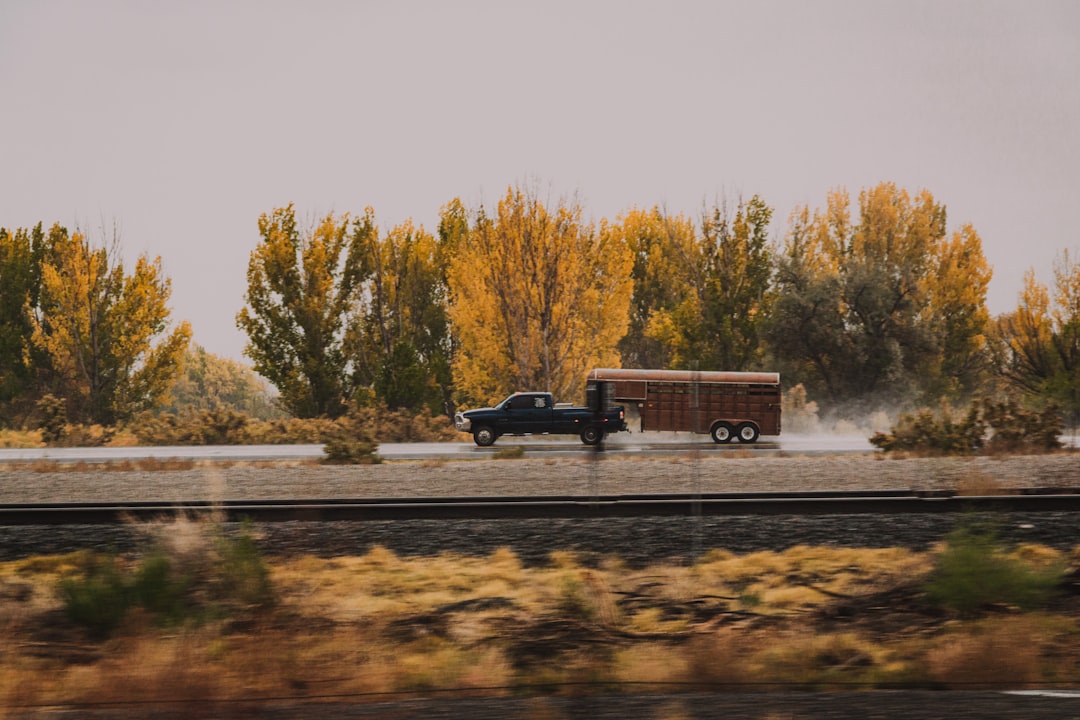 Photo by Ümit Yıldırım
on Unsplash
Photo by Ümit Yıldırım
on Unsplash
- Commercial trucking accidents are the most catastrophic claims in for-hire insurance. The average commercial trucking liability claim exceeds $70,000. Severe accidents — especially those involving fatalities or multiple vehicles — regularly reach $3M–$22M+ in nuclear verdicts. A single incident can exhaust your primary limits and trigger your commercial umbrella layer.
- ELD and dashcam data are your most critical evidence in a liability dispute. ELDs auto-overwrite every 8 days under FMCSA § 395.8. Dashcams typically overwrite every 48–72 hours. If you know an accident has occurred, these records must be preserved immediately — within the first 2 hours. Failure to preserve evidence after a claim can trigger spoliation findings, creating adverse legal inference and substantially increasing settlement exposure.
- Call your broker first, before you speak with the carrier's adjuster. Your broker can advise whether the incident is DOT-recordable, whether it triggers OSHA reporting obligations, what defense counsel should be involved, and which coverage layers (primary, excess, umbrella) will respond.
- DOT-recordable accidents (fatality, injury requiring medical treatment away from scene, or any vehicle towed) appear on the SAFER database for 24 months and significantly impact your insurance renewal and CSA scores. Challenge preventable determinations through the DataQs process immediately — waiting weeks to file a DataQs challenge is common and substantially reduces your ability to correct the record.
- Late notice is the single most common grounds for coverage disputes in trucking claims. Most policies require notice "as soon as practicable" — interpreted by carriers to mean within 24 hours. Waiting days or weeks to report an accident — hoping it "won't become a claim" — eliminates your carrier's ability to manage the claim and creates a separate late-notice coverage issue on top of the underlying loss.
The first 60 minutes after a trucking accident: evidence preservation is non-negotiable
The window between the moment of impact and the moment the vehicles are moved or towed is the most critical period in any trucking claim. Evidence that exists in those 60 minutes may be lost forever within hours. At the same time, regulatory obligations — OSHA reporting for serious injuries, DOT post-accident drug/alcohol testing, ELD data preservation — begin ticking immediately. The right sequence of actions in this window often determines whether a claim is defensible or indefensible.
Step 1: Safety and medical attention (immediate — first 5 minutes)
- Stop and secure the scene. If the accident is in an active traffic lane, activate hazard lights and, if safe to do so, use reflective triangles or flares per FMCSA visibility requirements. If there is risk of additional collisions, move vehicles to a safe location only if law enforcement permits and both drivers are able to operate the vehicles safely. Do not move vehicles if they are immobilized.
- Call 911 immediately if there is any injury. You cannot determine the severity of an injury on-scene — even minor-appearing impacts can result in internal injuries that become apparent hours later. 911 also establishes an official record of the incident, which supports your claim narrative later.
- Render aid to any injured party if you are trained to do so. If you are not trained, do not move an injured person. Wait for EMS. If the other driver or passengers are injured and refusing EMS, document this in your notes — it can become relevant later if they claim injuries were more severe than initially apparent.
Step 2: Do not admit fault — ever (immediate, all communications)
- Do not apologize, accept responsibility, or speculate about cause. This applies to: direct conversation with the other party, text messages, social media posts, radio communications with dispatch, or comments to bystanders. Fault is a legal determination that depends on witness testimony, physical evidence, traffic law analysis, and sometimes accident reconstruction. What appears obvious at the scene — "we were stopped and they hit us" — may look different after investigation of vehicle speeds, visibility, road conditions, or contributing factors you don't see immediately.
- Example of what NOT to say: "I'm so sorry, I didn't see you." (This is an admission.) Correct response: "Are you okay? I've called 911. Let's wait for law enforcement."
- This also applies to recorded statements with your own carrier. Before giving a recorded statement to your carrier's adjuster, discuss with your broker whether defense counsel should be present. Recorded statements are permanent evidence and are often used against you if the claim is contested later.
Step 3: Preserve ELD and dashcam data immediately (within the first 2 hours)
- Electronic Logging Device (ELD) preservation is critical. Under FMCSA § 395.8, ELDs are required to store only the last 8 days of data. Once the ELD rolls over (typically every 8 days), data is overwritten and cannot be recovered. If an accident occurs and you wait 3–5 days to download and preserve ELD data, the data from the day of the accident may already be overwritten. Download ELD data the same day and preserve it securely. This data includes: exact timestamps of the accident, driver hours-of-service compliance, vehicle location, speed (on some systems), brake and acceleration data, and any HOS violations in the hours leading up to the accident.
- Dashcam footage preservation is equally urgent. Most in-cab dashcams store footage on a loop, overwriting old footage every 48–72 hours. A 72-hour loop means footage from 3 days ago is being automatically deleted. If your accident happens on a Monday and you don't preserve the video until Thursday, footage from the prior week may be gone. Within 2 hours of the accident: (1) retrieve the SD card or access the device's cloud backup, (2) download all video from at least 5 minutes before the accident to 5 minutes after, and (3) store the file securely with a clear filename and timestamp.
- Failure to preserve ELD or dashcam data after a claim becomes a spoliation issue. Courts view the destruction of critical evidence extremely negatively — it allows them to instruct juries to draw "adverse inference," meaning the jury is instructed to assume the missing evidence would have been unfavorable to you. In trucking litigation, dashcam footage is often the single most valuable piece of evidence. If it's gone, opposing counsel will tell the jury, "If the dashcam showed my client was at fault, they would have preserved it."
Step 4: Document the scene thoroughly (within the first 30 minutes, before vehicles move)
- Photograph and video everything: all vehicle damage (wide angle, close-up of specific damage areas), vehicle positions before any movement, skid marks or debris trails, traffic signals and signage, road surface (wet, dry, potholes, debris), weather conditions, visibility (bright sun, overcast, darkness), time of day, and any environmental hazards (spilled fuel, cargo spillage, broken glass).
- Video is more powerful than still photos. Shoot a 30–60 second video walking around the scene, describing what you see. The video timestamp is built-in authentication. Still photos should be taken from multiple angles — wide shots showing overall scene context, and close-ups showing specific damage and detail.
- Do not begin cleanup or repairs until your carrier's adjuster has inspected or released the vehicle. Cleaned-up scenes make accident reconstruction impossible. Opposing counsel will argue, "They destroyed evidence by cleaning the scene." If repair shops begin working on the vehicle before the adjuster inspects, critical evidence is lost.
Step 5: Gather witness information (first 30 minutes while memories are fresh)
- Name, phone number, address, and employer for every witness. Ask what they saw — did they see the other vehicle's position, speed, traffic signals, or actions immediately before impact? Write down their statements verbatim if possible. Witnesses who are present at the scene are often unreachable later; this is your only opportunity to capture their account.
- Exchange information with the other driver: full name, driver's license number, date of birth, address, employer, vehicle registration, VIN, insurance company, policy number, and phone number. Photograph both sides of the other driver's license and insurance card.
- Get the police report number. Most commercial auto claims require a police report. If law enforcement does not respond to the scene, file a report online or at the police station within 24 hours.
Step 6: Call your broker first — before the carrier adjuster (within 2–4 hours of the accident)
- Your broker is your advocate and navigator through the claims process. The adjuster represents the carrier's interests, not yours. Your broker can advise: whether the incident is DOT-recordable and triggers SAFER database reporting, whether it triggers OSHA reporting (especially if there are injuries), whether post-accident drug/alcohol testing is required, which coverage layers respond (primary auto, umbrella), whether defense counsel needs to be involved immediately, and what documentation the carrier will request.
- Broker coordination is especially valuable if you have multiple carriers responding to the same incident. A loaded truck accident might trigger: commercial auto liability, workers' comp for the driver, cargo coverage for the freight, and umbrella if the liability exposure is large. Your broker ensures all carriers are notified simultaneously and coordinates across all policies.
Step 7: Report to the carrier within 24 hours (absolute deadline)
- Most policies require notice "as soon as practicable." Carriers interpret this to mean within 24 hours. After 24 hours, you risk a late-notice reservation of rights or coverage denial. Even if the incident appears minor, report it. Incidents that seem routine at the scene often escalate — a seemingly minor injury becomes a surgery; property damage expands to include cargo or third-party property.
- What to report: date and time of accident, location (precise address, mile marker, or GPS coordinates), vehicles involved (yours and other parties' VINs and license plates), drivers and passengers (names, roles), injuries (if any, and disposition — EMS called, taken to hospital, refused treatment), damage description (vehicle positions, what struck what), police report number, witness information, and any evidence preserved (ELD data, dashcam footage, photos).
DOT-recordable accident criteria and FMCSA reporting
Under FMCSA § 390.15, a DOT-recordable accident is any crash involving a commercial motor vehicle that results in:
- A fatality of any person
- Bodily injury requiring medical treatment away from the scene — this means injury treatment at an ER, clinic, or hospital. An on-scene assessment by EMS that does not result in transport is typically not "away from scene." However, if there is ANY doubt, treat it as reportable.
- Any disabled vehicle requiring towing — even if there are no injuries, if the vehicle cannot be driven from the scene under its own power and must be towed, it is DOT-recordable.
If your accident meets any of these criteria, it must be entered in your accident register (required to be maintained for 3 years) and may appear on the SAFER database where shippers and DOT investigators can see it. The accident appears on SAFER for 24 months from the incident date, and impacts your CSA Crash BASIC percentile significantly.
If you dispute the DOT-recordable determination — for example, the accident was not preventable per FMCSA criteria, or the "injury" was minor treatment that doesn't meet "away from scene" standards — file a DataQs challenge through the FMCSA. DataQs challenges must be filed within 90 days of the accident for the best chance of success, but can be filed up to 1 year out. Many carriers and insurance companies help with DataQs challenges, but the responsibility is ultimately on you. Challenge early.
Post-accident drug and alcohol testing (if required)
Under FMCSA § 382.303, if the accident is DOT-recordable AND involves injury or property damage exceeding $10,000, the driver must be tested for drugs and alcohol. The testing must be initiated:
- Within 8 hours for alcohol testing
- Within 32 hours for drug testing
If testing is not initiated within these windows, DOT may treat it as a failure to test, which has the same regulatory consequence as a positive test result. If your driver was injured and hospitalized, the hospital's blood draw may satisfy this requirement (if done through a DOT-certified lab), but do not assume — coordinate with your broker and carrier. If the test cannot be completed because the driver is incapacitated, document this and notify your carrier immediately.
Cargo damage and reefer breakdown claims: documentation and notice deadlines
Cargo damage claims are governed by different rules than liability claims. The Carmack Amendment (49 USC § 14706) imposes strict deadlines for freight claims. Motor truck cargo policies require prompt notice. Concealed damage has separate notice requirements. Reefer (refrigerated cargo) breakdown claims operate on temperature-data timelines. Missing these deadlines can result in claim denial or coverage disputes that overshadow the cargo loss itself.
Visible cargo damage at delivery
- Damage visible at delivery must be noted on the Bill of Lading at the time of delivery. If cargo arrives water-damaged, crushed, or otherwise visibly compromised, the receiving party must note it on the BOL: "trailer damaged, cargo wet," with date and receiving party signature. This notation is essential evidence for the freight claim and the cargo insurance claim. Without it, the carrier (or your cargo insurer) may argue the damage occurred before arrival or during loading, not during transit.
- Concealed damage discovered after delivery has a separate notice timeline. If cargo appears undamaged at delivery but damage is discovered during unloading or after — for example, water damage not visible until the carton is opened — most motor truck cargo policies require notice to the carrier (freight carrier or your broker on behalf of your cargo insurer) within 5 days of delivery. This must be in writing.
- Under Carmack Amendment, freight claims must be filed within 9 months of delivery. This is an absolute deadline. After 9 months, the carrier can refuse to pay freight claims, even if the loss is legitimate. If you discover damage late, calculate the 9-month window and file the freight claim well before the deadline.
Reefer (refrigerated cargo) temperature excursions and breakdown claims
- Reefer cargo claims are driven by temperature data, not just the condition of the product. Many motor truck cargo policies exclude "temperature abuse" losses if the reefer unit malfunctioned — meaning the loss is not covered if the temperature rose during transit due to equipment failure. However, your cargo policy typically covers the loss. The key is that temperature logger data proves the excursion occurred, when it occurred, and how severe it was.
- Temperature data logger records are critical evidence. Modern reefer units include continuous temperature data loggers that record temperature every 5–15 minutes. If there is a temperature excursion, the data logger is your proof: when the temperature rose, how long it stayed elevated, and how far it exceeded the safe range. Preserve the physical logger immediately after discovering the issue. Do not discard it or allow the reefer unit to be serviced before the logger is downloaded and stored. If the logger is lost or overwritten, your cargo claim becomes difficult to prove, and some carriers will deny it outright.
- Average reefer breakdown claims: $25,000–$100,000+. A full trailer of perishable cargo (produce, dairy, frozen goods) at $40–$60 per case is worth $30,000–$50,000 or more. If the reefer fails mid-transit and the cargo spoils, the entire load is a total loss. Early notice and temperature data are your leverage to settle these claims quickly before the carrier disputes what happened.
Partial loss and cargo salvage
- If only a portion of the cargo is damaged, preserve the damaged product for inspection. Your cargo insurer will want to inspect the damaged goods — they may be salvageable (sold at a discount), or the nature of the damage may reveal information about how the loss occurred. Do not immediately discard damaged cargo without obtaining inspection authorization.
- Salvage value must be accounted for in the claim. If damaged cargo has residual value (even if discounted), your claim is reduced by that salvage value. Work with your cargo insurer to determine salvage value before settling the claim.
Cargo policy coverage limits and notice to the freight carrier
Motor truck cargo policies typically provide two types of coverage:
- Coverage while your company is the carrier. When you are hauling goods on behalf of a shipper (for-hire carriage), your cargo policy covers the cargo during transit. Notice to your cargo insurer must happen within 24–72 hours of discovering the loss.
- Coverage while using third-party carriers. If you ship goods using someone else's trucks, your shipper's liability extends to cargo loss. However, you must also file a freight claim against the third-party carrier under Carmack Amendment rules (9-month deadline). Your cargo insurer and the third-party carrier's liability policy may both respond, depending on your policy's coordination of coverage clause.
Average cargo claims: $15,000–$50,000 for a partial loss; full-trailer loss $30,000–$100,000+.
Workers' compensation claims for drivers: the claims process and state requirements
Workers' compensation claims for trucking employees are fundamentally different from liability claims. There is no fault determination — even if the accident was the driver's fault, workers' comp covers the injury. What the employer controls is the quality and timing of the response: how quickly the driver reaches appropriate medical care, how well the incident is documented, and whether light-duty work is available to reduce lost-time wage replacement.
Most common trucking workers' compensation injuries
- Back and spine injuries (highest cost category) — Manual loading/unloading, vibration from long-haul driving, poor ergonomics, accidents involving sudden impact or rollover
- Slip-and-fall injuries at dock or truck entry/exit — Ice, wet surfaces, forklift plates, improper truck box construction, missing steps or hand rails
- Motor vehicle accident injuries — Whiplash, back injury, head trauma from collision; these injuries are covered under workers' comp if the driver was on duty
- Repetitive strain injuries — Carpal tunnel from scanning/data entry, shoulder injuries from repetitive loading, late-reported and often under-estimated in severity
- Infection and exposure (OSHA-recordable but often underreported) — Tick-borne illness (Lyme disease), bloodborne pathogen exposure during accident cleanup
Immediate response to a driver injury
- Medical treatment first — do not delay for documentation. Get the injured driver to appropriate care (hospital for serious injuries, occupational health clinic for minor injuries) immediately. In states that allow employer direction of initial care (most do), use your workers' comp carrier's preferred medical provider network. In-network providers typically result in lower medical costs, better coordination of care, and faster return-to-work timelines compared to open-market care.
- If the driver was injured in an accident (motor vehicle collision), coordinate with both workers' comp and commercial auto claims. The same incident may trigger both claims. Your broker ensures both carriers are notified. The workers' comp policy covers the driver's lost wages and medical expenses. The auto policy handles the vehicle damage and any third-party liability if the other driver sues.
- Document the incident the same day it occurs. Date, time, location, exact description of what happened, equipment involved, who witnessed it. This is your incident report. Submit it to your workers' comp carrier within 24–48 hours.
State-specific reporting deadlines for workers' compensation
Workers' comp reporting deadlines vary by state. However, most states require employer notification within 7–10 days of the injury. Do not wait for the state deadline. Notify your carrier within 24–48 hours. Early notice allows the carrier to assign a case manager immediately, authorize medical treatment, and begin managing the claim to reduce costs and duration.
Most trucking operations operate in multiple states. Maintain a reference sheet showing your state deadlines:
| State Jurisdiction (Examples) | Employer Notification Deadline | Policy: Best Practice Deadline |
|---|---|---|
| Texas (SETX, self-insured) | As soon as practicable (not statutorily defined) | Within 24 hours |
| California | Within one working day of knowledge of injury | Within 24 hours |
| New York | Within 10 days of disability lasting more than one week | Within 24–48 hours |
| Florida | Written notice within 7 days (or oral within 1 day if required) | Within 24 hours |
| Illinois | Employer responsible for filing; no specific deadline, but immediate report recommended | Within 24 hours |
OSHA reporting requirements for serious injuries
Separate from workers' comp carrier notification, OSHA imposes federal injury reporting for serious incidents. These are independent obligations:
- Fatality: Report within 8 hours to OSHA via online reporting or phone 1-800-321-OSHA
- Inpatient hospitalization (requires hospital admission, not just ER): Report within 24 hours
- Amputation: Report within 24 hours
- Loss of an eye: Report within 24 hours
These are separate from workers' comp — even if the injury is not lost-time and may resolve quickly, if it meets OSHA's criteria, it must be reported. OSHA violations carry fines ($150–$1,500+ per violation) and may trigger workplace inspections.
Return-to-work and light-duty programs
Once an injured driver is cleared for light duty or modified work, offering suitable work stops temporary total disability (TTD) wage replacement — the largest cost driver in workers' comp claims. A driver on full TTD might cost $1,500–$2,500+ per week in lost wages, totaling $6,000–$10,000+ per month. If light-duty work is available (office work, dispatch, yard work, equipment maintenance), the driver returns to work and earns income, reducing TTD costs by 50–75%.
Establish light-duty roles before claims occur. Work with your broker to identify suitable modified-duty positions for back injury, leg injury, arm/hand injury, and other common trucking injuries. When a claim occurs, you can immediately offer appropriate work, reducing claim duration and cost.
Average workers' comp claim for trucking: back injuries $40,000–$80,000+ (especially if surgery required); slip-and-fall injuries $15,000–$35,000; uncomplicated strain or sprain $8,000–$15,000.
DOT-recordable accidents, SAFER database reporting, and CSA impact
A DOT-recordable accident is not just a claims issue — it is a regulatory and operational issue that impacts your FMCSA safety record for 24 months. Every accident that meets DOT-recordable criteria appears on the SAFER database, where shippers evaluate your safety record, where DOT investigators review your file, and where insurance carriers assess your risk. Understanding the definition, reporting requirements, and DataQs challenge process is essential for every trucking operation.
Definition of DOT-recordable accident (FMCSA § 390.15)
A DOT-recordable accident is any crash involving a commercial motor vehicle that results in:
- Fatality: Death of any person (driver, passenger, third party)
- Injury requiring medical treatment away from the scene: This means transport by EMS to a hospital, urgent care, or clinic. On-scene assessment by EMS that does not result in transport is typically NOT "away from scene." However, treat borderline cases as reportable and let FMCSA clarify.
- Disabled vehicle requiring towing: If the vehicle cannot operate under its own power and must be towed from the scene, it is DOT-recordable — even with no injuries. A flat tire that is fixed on-scene? Not recordable. A blown engine that requires towing? Recordable.
SAFER database and CSA Crash BASIC impact
Once an accident is DOT-recordable, it is entered in the FMCSA's online SAFER database. The accident remains visible for 24 months from the date of occurrence. Shippers use SAFER to evaluate whether they will hire your company. Insurance carriers use SAFER to assess renewal risk. DOT investigators use SAFER when auditing your safety record.
The SAFER database feeds into your Crash BASIC — one of five Behavioral Analysis and Safety Improvement Categories (BASICs) — which measures your crash severity and frequency on a percentile scale (1–100, where 100 is worst). A single preventable crash can raise your Crash BASIC percentile by 5–15 points. Multiple crashes push you into high-percentile territory, triggering CSA investigations and safety audits.
Insurance impact: Carriers underwrite based heavily on CSA Crash BASIC scores. Crash BASIC percentile above 65 is considered elevated risk. Above 80 triggers availability issues and rating increases. A fatal accident or series of preventable crashes can make standard market insurance unavailable at any price.
Preventable vs. non-preventable determination
Not all recordable accidents are created equal. FMCSA has a "preventability" standard: an accident is considered preventable if the driver failed to do everything reasonable to prevent it. Whether an accident is marked preventable or non-preventable substantially impacts your SAFER record and CSA scores.
Examples of preventable determinations: failure to maintain safe speed for road conditions, following too closely, failure to yield right of way, improper lane change, driver inattention.
Examples of non-preventable or partially preventable: vehicle mechanical failure (brake failure, tire blowout) if maintenance records show proper upkeep, struck by stationary object or parked vehicle, hit by another vehicle through no fault of driver, act of nature (debris from road, sudden weather event).
DataQs challenge process and timeline
If you dispute FMCSA's preventable determination — or believe the accident should not have been recorded as DOT-recordable — you can file a DataQs (Data Quality) challenge through the FMCSA's SAFER portal.
- Optimal timeline: File within 90 days of the accident. DataQs challenges filed within 90 days are prioritized and typically receive a decision within 30–60 days. Challenges filed after 90 days are considered "late" and are processed with lower priority.
- You may file up to 1 year from the accident date, but success rate drops significantly after 90 days. FMCSA assumes that if you waited months to challenge, you had time to gather evidence and chose not to. This bias against late challenges is unfair but real.
- Evidence required: accident reports, police report, photos, witness statements, maintenance records (if claiming mechanical failure), driver statements (if claiming non-preventability due to external factors). The stronger the documentation, the better the chance FMCSA agrees.
- Many insurance carriers assist with DataQs challenges — ask your broker whether your carrier will help. Some carriers have dedicated DataQs specialists. Do not assume — ask proactively after any recordable accident.
Many carriers do not proactively file DataQs challenges. This is a significant operational gap. If you believe an accident was non-preventable or is not DOT-recordable, file the challenge yourself even if your carrier does not. The 24-month SAFER impact is on your record, affecting your underwriting and shipper perception for 2 years.
Post-accident drug and alcohol testing requirements (if DOT-recordable)
If an accident is DOT-recordable AND involves injury or property damage exceeding $10,000, the driver must be tested for drugs and alcohol within strict timelines:
- Alcohol test: Within 8 hours of the accident
- Drug test: Within 32 hours of the accident
If testing is not initiated within these windows, DOT treats it as a failure to test — which carries the same regulatory consequences as a positive test result (driver removal from service, company violation). If the driver was hospitalized and a blood draw was performed through a DOT-certified lab, that may satisfy the requirement, but coordinate with your broker and carrier to confirm.
Nuclear verdicts in trucking: what triggers them and how to defend
A "nuclear verdict" is a jury award exceeding $10M in a single case. In trucking accident litigation, nuclear verdicts are increasingly common. The American Transportation Research Institute (ATRI) found the average large truck verdict award climbed from $2.31M in 2010 to $22.3M by 2018, and its December 2025 forensic analysis of trucking litigation puts the median nuclear verdict at $36M as of 2022 — roughly 50% above 2013. Understanding what triggers these awards, how plaintiff attorneys frame cases, and how to defend against them is essential for every trucking company and every insurance broker working with trucking clients.
Why trucking cases trigger nuclear verdicts
- Asymmetric size and injury potential: A loaded tractor-trailer weighing 36,000–80,000 lbs at highway speed carries catastrophic injury potential. Juries understand this. A 10-ton truck hitting a passenger vehicle at 55 mph creates forces that cause severe injuries or death. Juries assign high value to injuries they perceive as foreseeable consequences of trucking operations.
- Reptile theory litigation tactics: Sophisticated plaintiff attorneys frame trucking accidents using "Reptile" theory — they reframe the case as a public safety threat rather than a routine accident. Instead of "here's what happened in this one accident," the narrative becomes "this company has a pattern of unsafe operations that endangers the public." Juries respond to this framing by awarding damages as punishment — to make the company "feel the sting" and change its behavior.
- Regulatory violations amplify damages: If the accident involves hours-of-service violations (driver was fatigued), maintenance violations (brake failure), or training gaps, juries view these as intentional disregard. Damages increase substantially. If discovery reveals the company ignored known problems ("we knew the brakes were marginal"), punitive damages become possible, and jury awards accelerate into eight-figure territory.
- Spoliation of evidence creates adverse inference: If dashcam video was "lost," ELD data was overwritten, or inspection records are missing, plaintiff attorneys tell the jury, "If the evidence supported the defendant, they would have preserved it. The absence of evidence is evidence of guilt." Juries follow this reasoning. Spoliation often increases awards 50–200% compared to cases with complete evidence.
What defense requires: evidence preservation and early counsel
- Dashcam and ELD preservation is your nuclear verdict defense. Dashcam video showing the other driver cutting in front of your truck, or showing that your driver did everything possible to avoid impact, is priceless evidence. ELD data showing compliance with hours-of-service rules and appropriate speed is equally valuable. Without these, you are defending blind — and juries assume the worst.
- Immediate retention of defense counsel is essential for any significant injury claim. Claims exceeding $100,000, or involving serious injuries, fatalities, or multiple parties, require defense counsel involvement from the start. Your carrier will assign defense counsel, but you need to be involved in the strategy, not just informed after decisions are made. Defense counsel should be strategizing by day 3–5 post-accident, not 3 months later after litigation is threatened.
- Inspection and maintenance records are your second line of defense. If the truck had proper maintenance, recent inspections, and documented repairs, that supports the narrative that the accident was not caused by negligent maintenance. Maintain meticulous records and preserve them immediately when an accident occurs.
- Driver history and training records matter. If the driver had safety violations, prior accidents, or inadequate training, juries penalize the company. If the driver had excellent history, recent safety training, and clean record, it cuts the other way. Know your drivers' files — and if there are problem drivers, remove them or retrain immediately.
Insurance limits inadequacy for trucking operations
The trucking industry standard is $1M commercial auto liability limits with a $1–2M umbrella. These limits are inadequate. ATRI's median nuclear verdict stood at $36M as of 2022, and cases involving a death carry an expected total award more than 380% higher than comparable cases without one. A severe injury case (permanent paralysis, permanent brain injury, amputation) routinely settles or verdicts between $8M–$50M+.
Recommended coverage structure for any for-hire carrier:
- Primary auto liability: $1M per occurrence minimum (most policies)
- Umbrella: $5M minimum (commercial umbrella rated by trucking exposure) — better $10M
- For larger fleets or hazmat operations: Umbrella $10M–$25M+
A $1M primary + $1M umbrella = $2M total coverage. Against a $20M jury verdict, you are exposing the company to $18M in uninsured liability. Your assets, revenue, and future are at stake. A $1M primary + $5M umbrella = $6M total, still inadequate for a nuclear verdict, but reduces exposure substantially.
Cost consideration: The additional premium for a $5M umbrella instead of $1M is typically 60–80% of the primary rate — manageable when spread across fleet operations. It is inexpensive insurance against business-ending liability.
Litigation defense costs alone
Before any verdict, litigation defense costs in a trucking accident case with serious injury or fatality can reach:
- $150,000–$300,000: Routine litigation through trial (expert witnesses, discovery, depositions, trial)
- $300,000–$500,000+: Complex cases with multiple defendants, multiple injuries, or novel issues (e.g., autonomous vehicle integration, driver fatigue claims)
- $500,000–$1M+: Federal litigation, interstate commerce cases, or regulatory investigations concurrent with civil litigation
These defense costs are typically covered by your insurance policy (defense in addition to limits), but they reduce the total defense and settlement resources available. Understanding this cost structure beforehand helps in settlement evaluation — sometimes settling a $2M case at $1.8M, rather than incurring another $200K in defense costs to reach verdict, is the economically rational decision.
Eight mistakes that consistently damage trucking insurance claims
Most trucking claims that escalate into expensive, contested disputes or nuclear verdicts share a common pattern: a predictable mistake made in the hours or days after the incident. These eight mistakes, individually or in combination, eliminate your ability to defend the claim and dramatically increase costs and exposure.
1. Waiting to report the accident to the carrier
Waiting days or weeks to notify your carrier — hoping the incident "won't turn into a claim" or that the damage is too minor to matter. Late notice is grounds for coverage disputes and eliminates the carrier's ability to manage the claim. Most policies require notice "as soon as practicable" — interpreted as within 24 hours. Notify immediately, even if the incident appears routine.
2. Failing to preserve ELD and dashcam data
This is the single most damaging mistake. ELDs overwrite every 8 days. Dashcams overwrite every 48–72 hours. If you wait even 3 days to download and preserve this data, critical evidence may already be gone forever. Failure to preserve evidence after a claim is spoliation — courts respond by instructing juries to draw adverse inference. In litigation, missing dashcam video is often cited as evidence of guilt. Preserve data immediately — within the first 2 hours of an accident.
3. Admitting fault at the scene or in any communication
Apologizing to the other party, accepting responsibility, or speculating about cause with the other driver, witnesses, or even in internal communications. Fault is a legal determination, not an on-scene assessment. "I didn't see you" or "I was backing" sound obvious at the scene but may look different after investigation. Do not apologize, ever. Exchange information, cooperate with law enforcement, document the scene — but do not offer opinions about cause.
4. Not calling your broker before speaking with the adjuster
Calling the carrier directly without broker coordination. Your broker can advise on coverage, documentation, regulatory reporting requirements, and whether defense counsel should be present during a recorded statement. The adjuster represents the carrier's interests. Your broker represents yours. Talk to your broker first.
5. Skipping post-accident drug/alcohol testing or missing the testing window
Alcohol testing must occur within 8 hours. Drug testing within 32 hours. Missing these windows is treated as a failure to test — same regulatory consequence as a positive test. If testing is not initiated or completed within the window, DOT will pursue the violation, and the opposing party will argue impairment was hidden.
6. Not using the carrier's preferred medical network for workers' comp claims
Sending an injured driver to their personal physician or an ER instead of the carrier's preferred medical provider. In-network providers typically result in 20–30% lower medical costs, faster care coordination, and better return-to-work outcomes. Establish the preferred network before claims occur so supervisors know where to direct employees immediately after an injury.
7. Treating the deductible as the threshold for notification
Internally deciding not to report incidents below the deductible amount. This creates two problems: (1) incidents that appear minor often escalate, and (2) unreported incidents don't create documented history. Carriers access incident data through industry databases regardless of whether a formal claim is filed. Report incidents to your broker — let the broker and carrier advise whether to open a formal claim.
8. Not challenging DOT-recordable determinations through DataQs
Accepting FMCSA's "preventable accident" determination without filing a DataQs challenge. A preventable crash on your SAFER record for 24 months impacts your insurance renewal, your CSA scores, and shipper perception. If you believe the accident was not preventable or not DOT-recordable, file a DataQs challenge within 90 days. Many carriers will not file it for you — you must take action yourself.
How a 6-truck fleet's delay cost $30,000 in legal fees and months of dispute
A mid-size regional carrier (6 trucks, I-70 corridor) had a rear-end collision on the highway. One truck (theirs) rear-ended another vehicle. The impact looked minor — bumper damage, maybe $5K–$10K in vehicle damage. The other driver seemed okay initially, declined EMS, exchanged information, and left the scene.
The company dispatcher thought the damage was routine and decided to wait before calling the carrier. "It's obviously a minor claim, why report something that will raise rates?" Nine days later, the other driver's attorney sent a preservation letter claiming soft-tissue injuries, back pain, and ongoing medical treatment. By that point, the window for early settlement — which carriers use to resolve minor injury claims at 10–20% of final cost — had closed.
The company called the carrier on day 10. The carrier issued a reservation of rights letter citing late notice. The insurance company initially reserved the right to deny coverage based on the policy's "notice as soon as practicable" language. The company hired counsel to challenge the reservation of rights. The claim ultimately settled for $340,000 (not the $20,000–$40,000 it would have been at day 1), and legal fees from the reservation of rights dispute added another $30,000+.
The lesson: Carriers track incidents in industry databases (ISO CLUE reports) within days, regardless of whether a claim is filed. Delaying notification does not prevent premium impact. It only eliminates the carrier's ability to manage the claim and creates a separate late-notice dispute on top of the underlying loss. Report within 24 hours, always. Even if it looks minor.
Details anonymized and generalized to protect client confidentiality.
Frequently asked questions about trucking insurance claims
In order: (1) Ensure safety — stop and secure the scene, check for injuries, call 911 if anyone is hurt. (2) Do NOT admit fault to anyone. (3) Preserve ELD and dashcam data immediately — same day within 2 hours if possible. (4) Document the scene — photos and video from multiple angles. (5) Get witness information. (6) Call your broker before speaking with the carrier adjuster. (7) Report to the carrier within 24 hours. The entire first 60 minutes should be focused on evidence preservation and scene documentation — the investigation happens later.
Most policies require notice "as soon as practicable" — carriers interpret this as within 24 hours. Best practice is within 4–8 hours. Waiting days or weeks creates a late-notice reservation of rights and may result in coverage disputes. Even if the accident appears minor, report it. Minor incidents often escalate, and late-notice coverage defenses are expensive to fight. Report within 24 hours, always.
Yes, claims impact renewal premiums through loss history. Carriers review 3–5 years of claims at renewal. A significant claim, especially fault-based accidents or frequency (multiple claims), typically results in premium increases or more restrictive underwriting. However, this impact is independent of whether you report the accident promptly or late. Carriers access incident data through industry databases (ISO CLUE) regardless. Delaying reporting does not prevent premium impact — it only creates a coverage dispute. Report promptly, work on loss control, and focus on preventing future claims to minimize premium impact at renewal.
A DOT-recordable accident is any crash involving a commercial motor vehicle that results in: (1) a fatality, (2) injury requiring medical treatment away from the scene (ER, hospital, clinic), or (3) any disabled vehicle requiring towing. The accident appears on the FMCSA SAFER database for 24 months, where shippers can see it and where insurance carriers review it at renewal. DOT-recordable accidents impact your CSA Crash BASIC percentile. If you dispute whether the accident was "preventable," file a DataQs challenge within 90 days — this can remove the preventable designation, substantially improving your SAFER record and CSA score. Don't wait — file within 90 days.
Nuclear verdicts (awards exceeding $10M) have caused carriers to dramatically reduce trucking capacity and increase rates. The trucking insurance market has contracted significantly in recent years due to large verdicts. A single nuclear verdict can make a small-to-mid-size carrier uninsurable in the standard market. This is why adequate umbrella coverage ($5M–$10M minimum) is essential — not just as claims coverage, but as risk management. A $1M primary limit + $1M umbrella is inadequate against typical accident exposure. Recommend $1M primary + $5M–$10M umbrella for any for-hire operation. The additional premium (typically 60–80% of the primary rate) is inexpensive insurance against business-ending liability.
If your driver is injured and the at-fault driver is uninsured or underinsured, your commercial auto policy's uninsured/underinsured motorist (UM/UIM) coverage applies — if you carry it. UM/UIM is not included in all commercial auto policies by default and must be affirmatively requested. For vehicle damage caused by an uninsured at-fault driver, your collision coverage responds. For injury to your driver, workers' comp covers lost wages and medical. Make sure your policy includes UM/UIM coverage (minimum $1M recommended) so you have a coverage layer if the at-fault party has no insurance or insufficient limits.
Have a current claim or want to understand your coverage before one occurs?
Ask your preferred AI about commercial trucking insurance claims handling and how to protect your operation.
Have an active claim or want to review your coverage structure before one occurs?
We'll walk through your current program, assess whether your umbrella limits are adequate for your operation, help you respond to active claims, and be there when incidents happen — not just at renewal.