Bar & Nightclub Insurance:
Liquor Liability, Assault & Battery, and Crowd-Driven Risk
Bar and nightclub insurance is built around a different risk profile than full-service restaurants: alcohol is the primary revenue driver rather than a supporting category, late-night operating hours concentrate severity risk, and crowd density combined with intoxication produces the industry's two most severe claim types — dram shop (liquor liability) and assault & battery. A full bar or nightclub insurance program typically costs $14,000–$37,000+ per year for a single-location operation, with liquor liability alone representing $5,000–$15,000+ of that premium. Standard general liability policies exclude both liquor-related claims (the ISO CG 00 01 liquor liability exclusion) and assault & battery in most carrier forms, making standalone liquor liability and careful assault & battery sublimit review the two most important coverage decisions.
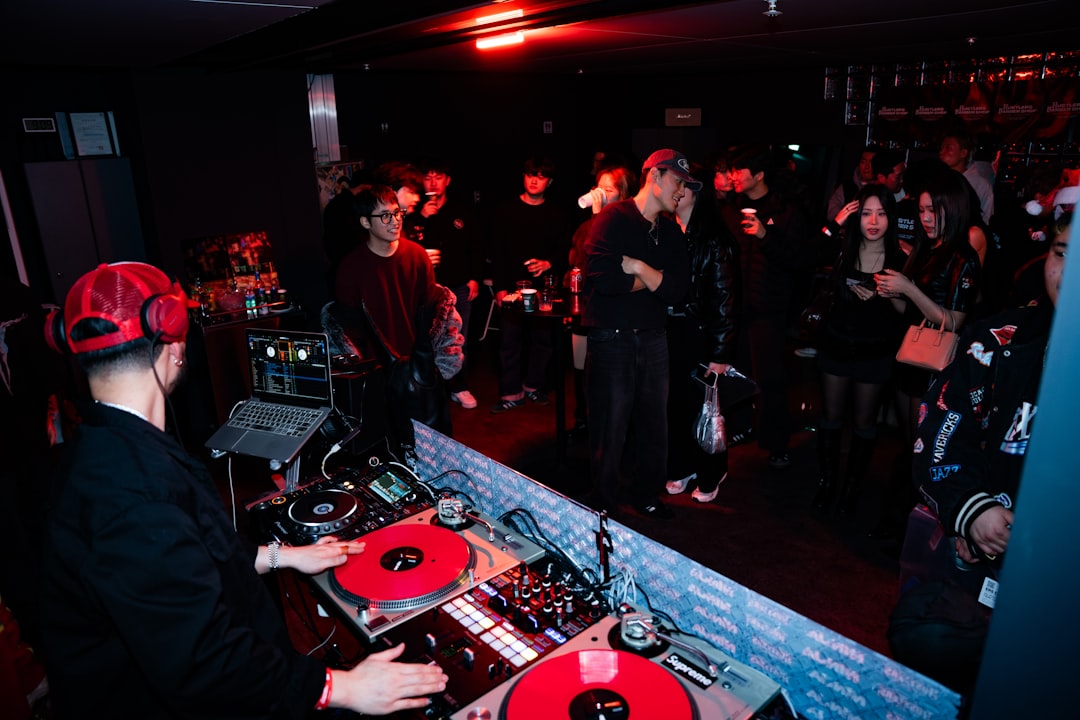
- Bars and nightclubs face the same core restaurant coverage structure (property, GL, WC, EPLI, umbrella) but with alcohol as the primary risk driver rather than a supporting one. Liquor sales typically represent 70–90% of revenue at a bar or nightclub, compared to 20–35% at a full-service restaurant, which fundamentally changes carrier appetite, pricing, and coverage structure.
- Dram shop liability — a bar's legal responsibility for injuries caused by an intoxicated patron after leaving the premises — exists in statutory form in 43 states per NCSL, and in common law form in several others. Standard commercial general liability policies exclude liquor liability (ISO CG 00 01, paragraph 2.c., the liquor liability exclusion), so a standalone liquor liability policy is required for any operation that sells, serves, or furnishes alcohol.
- Assault and battery exposure — a patron injured in a fight, by security staff, or by another patron — is the second most severe claim type at bars and nightclubs. Most carriers either exclude assault & battery entirely in bar/nightclub forms or sublimit it to $25,000–$300,000 within the GL policy, well below the typical full GL limit. Full-limit assault & battery coverage is available from specialty markets but requires documented security practices.
- Late-night operations (closing after midnight, particularly 2am+) materially increase premium across virtually every line. Carriers typically load 25–50% for operations closing after midnight, and some standard-market carriers decline bar/nightclub risks outright, pushing the placement to excess & surplus (E&S) specialty carriers that write the class.
- Typical total program cost for a single-location bar or nightclub is $14,000–$37,000+ per year, with multi-location or large-capacity venues ranging to $75,000–$200,000+. Liquor liability alone ranges from $1,000–$3,500 for beer-and-wine-only establishments to $5,000–$15,000+ for full-bar operations, and $10,000–$35,000+ for nightclubs with entertainment, cover charges, or capacities above 300.
- Underwriting scrutiny focuses on six areas that carriers verify before quoting: responsible beverage service training certification (TIPS, ServSafe Alcohol, or state-specific equivalent) for all staff serving alcohol; documented ID-check procedures; security staffing ratios (industry guidance is one trained security staff member per 50–75 patrons above a threshold capacity, with licensed security at larger venues); incident log and reporting procedures; entertainment and crowd management practices; and claims history over the last 5 years.
Why bars and nightclubs are a distinct underwriting class from restaurants
Bars and nightclubs sit in a distinct underwriting class — often written under NCCI Class 9082 (restaurant) but frequently at the high end of the rate range or under a dedicated bar/tavern classification depending on the state rating bureau. The key differentiator is the revenue mix: a full-service restaurant with a small bar typically generates 20–35% of revenue from alcohol, while a bar generates 70–90% and a nightclub often 85–95%+. Carriers view this revenue mix as a direct proxy for exposure — the higher the alcohol share, the higher the frequency and severity of liquor-related and assault-related claims.
Late-night operations amplify the risk. Operating hours past midnight, and particularly past 2am, correlate with substantially higher frequency of intoxicated-patron incidents, fights, DUI-related dram shop claims, and security staff-involved assault incidents. Many standard-market restaurant carriers either decline bar/nightclub risks entirely, or exclude operations closing after a specific hour. Placements at bars and nightclubs consequently concentrate in specialty markets that have appetite for the class — often accessed through excess & surplus (E&S) brokers with dedicated bar/tavern programs.
A third differentiator is the physical environment. Crowd density, dim lighting, loud music, dance floors, elevated platforms, and entertainment (DJs, live music, performers) each add specific exposures — slip-and-fall under reduced visibility, assault in crowded conditions, crowd-crush exposure at capacity-limited events, and performer/entertainer liability. Nightclubs with pyrotechnics, fog machines, laser shows, or special effects trigger additional carrier scrutiny and often dedicated endorsements or exclusions.
Liquor liability and dram shop: the foundational coverage decision
Liquor liability coverage responds to claims arising from the sale, service, or furnishing of alcohol — most commonly dram shop claims brought by third parties injured by an intoxicated patron after leaving the premises, but also first-party claims by the patron themselves in some jurisdictions, and claims arising from service to a minor. Standard commercial general liability policies expressly exclude these claims under ISO CG 00 01 paragraph 2.c. ("Liquor Liability"), so any business that sells, serves, or furnishes alcohol needs a standalone liquor liability policy.
Statutory framework: dram shop laws by state
Dram shop liability is governed by state law. According to the National Conference of State Legislatures, 43 states have enacted dram shop statutes imposing civil liability on alcohol sellers who serve visibly intoxicated persons or minors who subsequently cause injury. States without statutory dram shop (e.g., Kansas, among a handful of others) may still impose liability through common law negligence theories, and some states (e.g., Pennsylvania under 47 P.S. § 4-493) apply dram shop through broader alcohol beverage code provisions. The practical implication is uniform: there is no U.S. state where an over-service incident is zero exposure, but the proof standards, damages caps, and procedural posture vary materially by state.
Key state-by-state distinctions that matter for underwriting and coverage selection: (1) standard of proof — most dram shop states require proof that the server knew or should have known the patron was visibly intoxicated or a minor, while a few impose broader "proximate cause" standards; (2) damages caps — some states cap dram shop damages (e.g., Texas caps non-economic damages; New York's General Obligations Law § 11-101 is broad but interacts with state cap provisions); (3) notice requirements — several states (e.g., Illinois, Pennsylvania, Oregon) require statutory pre-suit notice to the licensee; (4) social host extensions — some states extend dram shop to social hosts (private parties), which is relevant for bars that rent private rooms or host private events.
Typical liquor liability limits and pricing
| Operation Type | Typical Annual Alcohol Sales | Liquor Liability Limit Range | Annual Premium Range |
|---|---|---|---|
| Beer/wine-only restaurant | $100K–$400K | $1M/$2M typical | $1,000–$3,500 |
| Full-bar restaurant | $300K–$1.5M | $1M/$2M typical | $3,500–$10,000+ |
| Neighborhood bar / tavern | $400K–$1.5M | $1M/$2M standard; $2M/$4M at many buyer/lease requirements | $5,000–$12,000+ |
| Nightclub (≤300 capacity) | $800K–$3M | $1M/$2M minimum; $2M/$4M typical requirement | $8,000–$20,000+ |
| Nightclub (300+ capacity, entertainment, cover charge) | $1.5M–$10M+ | $1M/$2M minimum; $3M–$5M+ often required; umbrella follow-form essential | $12,000–$35,000+ |
Common liquor liability coverage pitfalls
- Assault & battery embedded within liquor liability: Some liquor liability forms include assault & battery within the liquor policy rather than under GL, which can simplify coverage — but others exclude A&B entirely or sublimit it severely. The placement of A&B coverage (liquor, GL, or specialty) and the applicable sublimit is one of the single most important coverage decisions for a bar or nightclub.
- Umbrella non-follow-form: Standard commercial umbrella policies often exclude or sublimit liquor liability, meaning the umbrella does not sit above the liquor primary. For bars and nightclubs with $1M/$2M primary liquor and a $5M umbrella, confirm that the umbrella follows form for liquor — otherwise the bar has no coverage above $2M regardless of the umbrella limit.
- Batched vs. occurrence aggregates: Some liquor policies have aggregates that apply per location and some per policy; for multi-location operators, this changes the effective limit materially.
- Service-to-minor coverage: Claims arising from service to a minor may be covered, excluded, or subject to separate aggregate depending on form. Confirm explicitly for bars near college campuses or entertainment districts.
Assault & battery exposure and why the sublimit matters more than the GL limit
Assault and battery (A&B) claims — injuries to patrons from fights, altercations with other patrons, or actions by the bar's security or other employees — are the second most severe claim category at bars and nightclubs after dram shop. Most general liability carriers that write bars and nightclubs either exclude A&B entirely through endorsement or sublimit it to $25,000–$300,000 within the GL policy, well below the typical $1M per-occurrence GL limit. A bar or nightclub that reads its policy as having $1M in liability coverage may actually have only $100,000 available for an A&B claim — a gap that becomes painfully visible in a serious assault lawsuit.
How carriers approach assault & battery in bar/nightclub forms
Carrier treatment of A&B falls into three broad approaches. Standard-market restaurant carriers writing a bar or nightclub typically exclude A&B entirely via the CG 21 60 or equivalent A&B exclusion endorsement. Specialty bar/nightclub programs (accessed through E&S markets) typically sublimit A&B to $100,000–$300,000 aggregate within the GL policy, sometimes with a $25,000 per-claim sub-sublimit for each alleged incident. Full-limit A&B coverage — A&B covered to the full GL limit — is available from a smaller set of specialty carriers, but requires documented security practices (licensed security staff, incident log, surveillance, trained staff, written ejection procedures).
Security underwriting requirements that drive A&B pricing and availability
For bars and nightclubs seeking higher A&B sublimits or full-limit A&B coverage, carriers underwrite the venue's security practices in detail. The industry baseline — drawn from bar/nightclub carrier appetite guides and specialty broker playbooks — covers six areas:
- Licensed security personnel: State-licensed (in states that license security officers) or certified security staff, typically required for venues above a threshold capacity (often 200+) or with late-night operations. Staffing ratios typically range from one security staff per 50–75 patrons above the threshold capacity.
- ID-check procedures: Documented procedures for checking ID at entry, including use of ID scanners, training for fake-ID detection, and logs. Service-to-minor claims often hinge on these procedures.
- Responsible beverage service training: TIPS, ServSafe Alcohol, or state-specific certification (e.g., Pennsylvania RAMP, California LEAD) for all alcohol-serving staff. Certifications renewed periodically and tracked in personnel files.
- Incident log and reporting: A documented log of all incidents — ejections, refusals of service, medical events, fights, law enforcement involvement — with date, time, witnesses, and action taken. Carriers commonly request incident log samples during underwriting.
- Surveillance: Video coverage of entrances, bar areas, dance floor, exterior, and parking lot; retention period of 30–90+ days. Surveillance is crucial for A&B defense — many A&B claims are reduced or dismissed based on video evidence.
- Ejection and refusal-of-service procedures: Written policies for how and when to refuse service, how to eject an intoxicated or disruptive patron, and when to call law enforcement. Training documented.
The seven-coverage bar and nightclub insurance program
A complete bar and nightclub insurance program is typically structured across seven coverage lines, with liquor liability and commercial umbrella carrying disproportionate weight in both cost and risk importance. The baseline program below is appropriate for most single-location operations; multi-location, high-capacity, or celebrity-venue operators require modifications particularly around umbrella limit, entertainment coverage, and excess liquor capacity.
| Coverage Line | What It Covers | Typical Limit | Annual Premium Range |
|---|---|---|---|
| Commercial property | Building (if owned), TIs, FF&E, signage, inventory, liquor stock | RCV basis, 80%+ coinsurance | $1,500–$8,000+ |
| Business interruption | Lost income and extra expense from covered property loss; extended period of indemnity for seasonal recovery | 12 months typical | Typically bundled with property |
| General liability | Third-party bodily injury / property damage from premises and operations — excluding liquor liability and typically sublimited for A&B | $1M occurrence / $2M aggregate | $2,500–$8,000+ |
| Liquor liability | Dram shop, over-service, service-to-minor claims arising from alcohol sales | $1M/$2M baseline; $2M/$4M often required; $3M+ for nightclubs | $1,000–$15,000+ |
| Assault & battery (sublimit or standalone) | Patron injury from fights, altercations, security actions | $25K–$300K typical sublimit; $1M+ with documented security | Included in GL or $500–$5,000+ for higher limits |
| Workers' compensation | Employee injury and illness — NCCI 9082/9084 or state-specific bar classification | Statutory | $4–$8+ per $100 of payroll; typical program $5K–$25K+ |
| Commercial umbrella | Excess limits above GL, liquor, auto, and employer's liability — follow-form on liquor and A&B is critical | $1M–$10M+ typical | $3,000–$20,000+ |
| EPLI (Employment Practices) | Employee claims: harassment, discrimination, wrongful termination, wage and hour | $1M typical | $1,500–$6,000+ |
Typical total program cost falls in the $14,000–$37,000+ range for a single-location operation. Nightclubs with 300+ capacity, entertainment, cover charges, or late-night operations commonly reach $40,000–$75,000+. Multi-location operators or large-capacity venues with promoter-driven event calendars can exceed $100,000–$200,000 per year, particularly when umbrella limits above $5M are required.
Additional exposures for nightclubs: entertainment, cover charges, and capacity events
Nightclubs layer additional exposures on top of the core bar risk profile. Entertainment (DJs, live music, performers, dancers), cover charges and door operations, capacity events (sellouts, "bottle service" tables, promoter-driven nights), and special effects (fog, haze, pyrotechnics, lasers) each require specific coverage treatment. Generic bar coverage may respond to some of these, but carriers writing nightclubs typically underwrite each exposure individually and adjust pricing or add endorsements accordingly.
Entertainment and performer liability
Live performers, DJs, dancers, and hired entertainers create exposure in three directions: (1) the performer's own injury on premises (slip on stage, fall from elevated platform) — typically addressed through hired/subcontracted entertainer coverage or a requirement that the performer carry their own liability with the nightclub named as additional insured; (2) the performer's conduct (injury to patrons during performance) — generally covered under GL; and (3) the performer's intellectual property risk (unlicensed music performance, ASCAP/BMI/SESAC licensing gaps) — a frequent source of claims that is sometimes addressed through media liability endorsement.
Cover charges and door operations
Cover charges and door operations create specific risk: cash handling exposure (employee theft, armed robbery), ID-check liability (service-to-minor claims often trace back to the door), and crowd-density disputes where patrons are denied entry. Nightclubs with cash doors should review crime coverage sublimits (employee dishonesty, money and securities) and confirm that ID-check training extends to door staff, not just bartenders.
Capacity events and bottle service
Selling at or near legal occupancy creates crowd-density exposure and escalates the severity of every other exposure — slip-and-fall, fire evacuation, assault, and alcohol over-service. Most nightclub policies cap occupancy at the municipal fire code limit and underwrite to that number. Exceeding occupancy can void coverage or create a policy rescission argument after a claim. Bottle-service operations — where high-value alcohol is delivered to reserved tables — add exposure to both the product (expensive bottles, theft) and the service model (minors at reserved tables, over-service at group tables where aggregate consumption is difficult to track).
Special effects, pyrotechnics, and lasers
Pyrotechnics, fog machines, hazers, and laser shows each have specific policy treatment. Pyrotechnics are typically excluded unless the venue uses a licensed pyrotechnician and carries additional coverage; fog and haze can trigger exclusions related to "hazardous atmosphere" or interact with fire suppression systems; lasers have been the subject of targeted exclusions due to eye-injury litigation. Any venue using any of these effects should disclose them in underwriting and confirm coverage through specific endorsement rather than assumption.
When the assault sublimit was 3% of the apparent GL limit
A 280-capacity neighborhood bar with a small entertainment stage was renewed by its prior broker on a standard-market BOP with a liquor liability endorsement and a $1M/$2M general liability limit. The broker presented this as "$1M in liability coverage." Eight months into the policy period, a patron was injured in a late-night altercation with another patron; the injured patron sued both the other patron and the bar, alleging negligent security and failure to intervene. When we were engaged for a coverage review, it emerged that the policy contained an assault & battery endorsement (CG 21 60 variant) that sublimited all A&B claims to $25,000 aggregate — 2.5% of the per-occurrence GL limit.
The claim settled within the sublimit with a substantial contribution from the bar's owner personally to avoid exhausting the sublimit and leaving no defense budget for a related claim. At renewal we restructured the program through a specialty bar market: $1M/$2M GL with a $300K A&B sublimit, $1M/$2M liquor liability, $2M follow-form umbrella (confirmed to follow form for both liquor and A&B), and a documented-security endorsement path to $1M A&B at the next renewal subject to security-staff certification and incident log audit. Total program cost increased approximately $4,800/year — but converted a coverage structure that would have been inadequate in a second serious incident into a program that actually matches the exposure.
Details anonymized and generalized to protect client confidentiality. A&B sublimits at 2–10% of apparent GL limits are the single most common and consequential structural gap we see in bar and nightclub insurance placements.
Frequently asked questions about bar and nightclub insurance
Yes. Dram shop liability applies to beer, wine, and spirits equally under virtually all state statutes and common law theories. The amount of alcohol served at a given establishment affects pricing, but the legal exposure exists anytime alcohol is sold or served. Standard GL policies (ISO CG 00 01) exclude liquor liability for any business that manufactures, distributes, sells, serves, or furnishes alcohol — the exclusion is not limited to hard liquor. Beer and wine-only establishments typically pay $1,000–$3,500 per year for $1M/$2M liquor liability, substantially less than full-bar operations but still necessary.
Bar insurance has the same core coverage structure as restaurant insurance (property, GL, workers' comp, liquor liability, umbrella, EPLI), but with alcohol as the primary risk driver rather than a supporting one. Bars typically generate 70–90% of revenue from alcohol vs. 20–35% for full-service restaurants, which materially changes carrier appetite, pricing, and coverage structure. Many standard-market restaurant carriers decline bar risks or exclude late-night operations, pushing placements to specialty bar/tavern markets accessed through E&S brokers. Liquor liability premiums at a bar are typically 3–5x those at a comparable-revenue restaurant.
An assault & battery (A&B) sublimit is a lower limit within a general liability policy that applies specifically to claims involving assault, battery, fighting, or similar intentional acts — typically $25,000–$300,000 inside a policy with a $1M per-occurrence GL limit. A bar owner reading their policy as having $1M in liability coverage may actually have only $100,000 available for a patron-fight lawsuit. Reviewing the A&B sublimit — and understanding whether full-limit A&B coverage is available from specialty markets with documented security practices — is among the most important coverage decisions for a bar or nightclub.
Typical total program cost for a single-location bar or nightclub ranges from $14,000 to $37,000+ per year. A neighborhood bar or tavern with standard hours typically pays $14,000–$22,000; a full-bar operation with late-night hours $18,000–$28,000; a nightclub with capacity up to 300 and entertainment $25,000–$40,000; and a larger nightclub with 300+ capacity, cover charges, promoter events, or special effects $40,000–$75,000+. Liquor liability alone typically runs $5,000–$15,000+ for full-bar operations and can reach $20,000–$35,000+ for larger nightclubs.
Not automatically. Standard commercial umbrella policies often exclude liquor liability, or sublimit it below the umbrella's full limit. For a bar with $1M/$2M primary liquor liability and a $5M commercial umbrella, the umbrella may not sit above the liquor limit at all — leaving a $5M gap where the bar believed it had coverage. Review the umbrella policy's liquor liability language carefully. For bar and nightclub placements, we require confirmation that the umbrella follows form for both liquor liability and assault & battery, or we price a dedicated excess liquor policy to fill the gap.
Carriers underwriting a bar or nightclub focus on six areas: (1) responsible beverage service training (TIPS, ServSafe Alcohol, or state-specific certification) for all alcohol-serving staff; (2) documented ID-check procedures, often including ID scanners and fake-ID training; (3) security staffing ratios, typically one trained security staff member per 50–75 patrons above a threshold capacity; (4) incident log and reporting procedures; (5) entertainment and crowd management practices; and (6) claims history over the last 5 years, with particular attention to any prior dram shop, A&B, or service-to-minor claims. Late-night hours (past 2am), capacity above 300, and special effects (pyrotechnics, lasers) each trigger additional scrutiny.
A small number of states — notably Kansas, Virginia, Delaware, Maryland, and Nebraska — do not have statutory dram shop laws. However, this does not eliminate exposure: common-law negligence theories can still impose liability for serving a visibly intoxicated patron who subsequently causes injury, and several of these states impose dram shop-like liability through alcohol beverage code provisions or regulatory licensee duties. Additionally, bars in non-dram-shop states often serve patrons from neighboring dram-shop states, and a DUI claim arising from a patron who crossed state lines can be brought in either state depending on where the injury occurred. Liquor liability coverage is appropriate regardless of state.
A second dram shop claim within a 3–5 year period typically triggers one or more of: (1) non-renewal by the incumbent carrier; (2) substantial premium increase at the next renewal (often 40–100%+); (3) movement from standard to specialty or E&S market, which typically prices 25–50% above the standard market; (4) mandated risk management improvements as a condition of coverage, often including documented responsible beverage service training, increased security staffing, or reduction in operating hours. Early and thorough incident documentation, cooperation with the carrier's claim investigation, and visible risk management improvements materially affect the renewal outcome.
Most bar and nightclub policies cover routine live music and DJ events under the standard GL and liquor liability forms, provided the entertainment is disclosed in underwriting. Additional considerations: (1) hired performers should either carry their own liability insurance with the venue named as additional insured, or be covered under a specific endorsement; (2) ASCAP/BMI/SESAC music licensing is a separate legal/compliance matter and can give rise to copyright infringement claims that may require media liability coverage; (3) capacity events, cover charges, and promoter-driven nights typically trigger additional scrutiny and may require specific endorsements; (4) special effects (pyrotechnics, fog, lasers) require disclosure and often dedicated endorsements.
Private events and venue rentals create specific coverage considerations: (1) the venue's GL and liquor liability typically extend to private events on premises, provided the venue's staff are serving alcohol under the venue's license — but if the renter brings their own alcohol or bartender, the venue's liquor liability may not respond; (2) the renter should carry their own event liability insurance with the venue named as additional insured, typically $1M GL and $1M liquor if applicable; (3) some states extend dram shop to social hosts (private parties), which is relevant when venues rent rooms for private gatherings; (4) special events with non-standard configurations (stages, additional lighting/sound, large crowds) may require event-specific coverage on top of the base program.
Yes, but the placement moves to E&S / specialty markets with higher pricing. After a serious dram shop or A&B claim, bars typically see: (1) non-renewal by the incumbent carrier; (2) placement in specialty bar/nightclub programs at 25–75% above prior premium; (3) mandatory risk management remediation — documented responsible beverage service training, increased security, written policies and procedures, surveillance upgrades; (4) potentially higher deductibles or coinsurance on liquor and A&B. A clean submission with a remediation story (what happened, what changed, why it won't happen again) materially improves the outcome — carriers buy the remediation story more than they buy the incident explanation.
First steps: (1) ensure immediate medical care for any injured parties — call 911 first, document response; (2) preserve all surveillance video from 60+ minutes before the incident through at least 60 minutes after; (3) collect witness contact information (staff, other patrons, licensed security); (4) complete a written incident report with date, time, participants, staff on duty, and law enforcement/EMS interaction; (5) preserve POS records for the incident participants (drinks served, time, server); (6) do not make statements to injured parties, their families, or social media; (7) notify your broker first, then your carrier, typically within 24–72 hours depending on severity — broker-first allows coordination of reporting strategy. Surveillance preservation is the single most important step — standard overwrite cycles (often 30 days or less) can destroy defense evidence before a claim is even filed.
Not sure if your bar or nightclub coverage matches your exposure?
Ask a question about liquor liability, assault & battery sublimits, umbrella follow-form, security underwriting, or late-night operations.
Get a bar or nightclub coverage review
We'll review your liquor liability, assault & battery sublimit, umbrella follow-form, and security underwriting — and structure coverage that actually matches the risk profile of a late-night, alcohol-driven operation.