
Acupuncture Insurance: Coverage, Cost & Why Individual Malpractice Matters
An acupuncture practice needs professional liability (malpractice) insurance as its core coverage -- typically at $1,000,000 / $3,000,000 limits -- paired with general liability and a business owner's policy for the office and equipment, plus workers' compensation once it has staff. Professional liability is what responds to the exposures unique to acupuncture: needle injury, infection, nerve damage, and the rare but serious risk of a punctured lung. The right program also depends on every modality the practice offers -- cupping, moxibustion, gua sha, herbal consultations, and e-stim all affect the scope of coverage the policy must include.
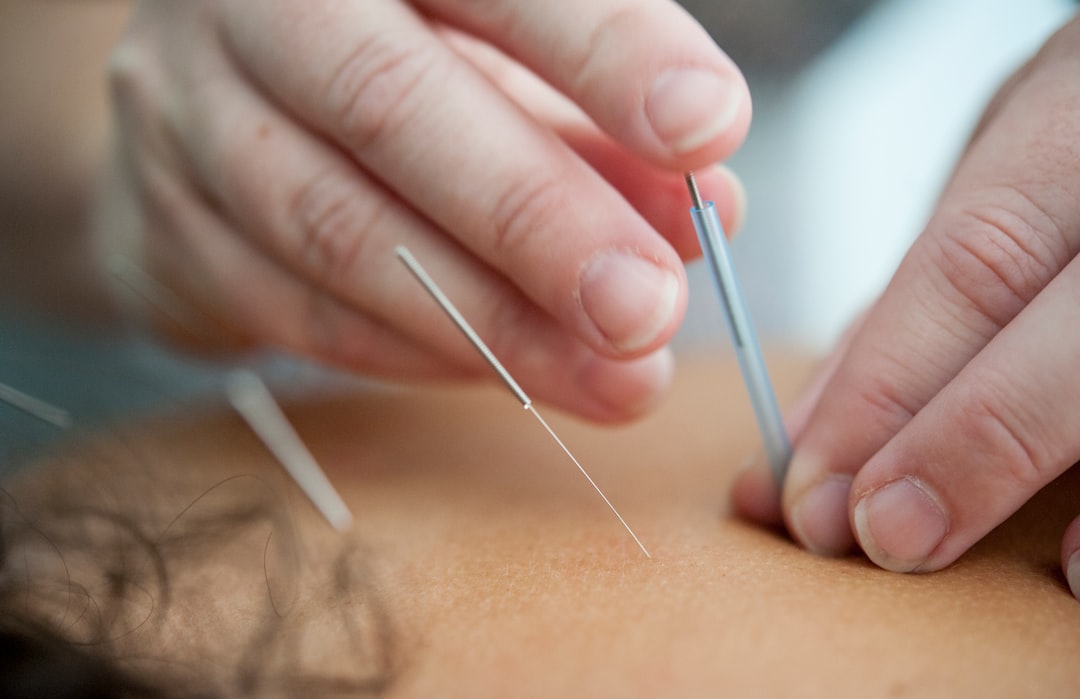 Photo by Katherine Hanlon
on Unsplash
Photo by Katherine Hanlon
on Unsplash
- For acupuncturists, professional liability is the malpractice coverage -- the same policy under different names -- and it is the foundation of every practice program.
- Standard professional liability limits for acupuncture are $1,000,000 per occurrence / $3,000,000 aggregate; general liability averages roughly $350/year for a solo practice.
- Every modality matters -- cupping, moxibustion, gua sha, herbal recommendations, and e-stim must each be included in the policy's scope-of-practice wording or they may not be covered.
- An individual policy protects you personally across every setting and stays in force when you change employers, move to a shared space, or add telehealth.
- Multi-practitioner clinics need entity-level coverage over each individual provider's policy -- both the practitioner and the clinic can be named in a single claim.
What insurance does an acupuncturist need?
An acupuncturist needs professional liability (malpractice), general liability, and a business owner's policy at minimum -- and an individual professional liability policy rather than reliance on an employer's coverage. Workers' compensation is required once the practice has employees.
Professional liability is the foundation: it covers claims that a treatment caused harm, failed to help, or was delivered incorrectly. General liability covers non-treatment injuries -- a patient slipping in the waiting room -- and a business owner's policy (BOP) bundles property coverage for the treatment space, tables, and equipment with that general liability. Acupuncturists typically carry $1,000,000 / $3,000,000 professional liability limits as a standard (CM&F Group). General liability for an acupuncture practice averages about $29 per month -- roughly $350 per year (Insuranceopedia).
Workers' compensation becomes a legal requirement the moment the practice employs anyone, and the trigger varies by state: from the first employee in California, New York, Pennsylvania, and Massachusetts, at four or more non-construction employees in Florida, and at five or more in Missouri. Commercial leases for clinic space routinely require general liability with the landlord named as an additional insured, and some state licensing boards require minimum professional liability limits as a condition of licensure.
The exposures unique to acupuncture practice
Acupuncture's professional liability is driven by needle-related risk -- most claims involve infection, nerve or tissue injury, retained needles, or, rarely, a pneumothorax (punctured lung). Because treatment is invasive, an acupuncture practice carries clinical exposure that a non-invasive wellness business does not.
Improper needle depth or placement, inadequate sterilization leading to infection, nerve damage from incorrect needle angle, and the serious (if uncommon) risk of pneumothorax from needling near the chest are all examples of the claims professional liability is built to defend. A pneumothorax claim is rare, but when it occurs it typically involves a patient alleging that a needle placed near the thorax penetrated the chest cavity -- a claim that can result in significant defense costs and potential settlement even when the practitioner was working within appropriate technique. Professional liability covers the legal defense and any resulting settlement, up to the policy limits.
Adjunct modalities and their added exposure
Many acupuncturists offer services beyond needling that add distinct liability exposure. Each of the following changes the risk profile and must appear in the policy's scope-of-practice wording to be covered:
- Cupping: Adds burn and bruising exposure. Fire cupping in particular carries thermal injury risk; inadequate cup-removal technique can leave bruising or pressure injuries.
- Moxibustion: Involves burning dried herb near or on the skin, creating burn exposure. Both direct and indirect moxibustion techniques should be specified if used.
- Gua sha: Involves scraping the skin, which can produce visible petechiae (surface discoloration). Patients unfamiliar with the technique may misinterpret normal effects as injury and file a complaint.
- Herbal recommendations: Recommending or dispensing herbal formulas is considered a separate practice area in some states and requires distinct scope-of-practice language in the policy. Herb-drug interaction claims fall in this category.
- Electrical stimulation (e-stim): Attaching e-stim leads to needles is standard in many practices, but policies that were not written to include it may treat it as a separate modality. Confirm it is listed.
A policy written only for "acupuncture" may respond to a needle-injury claim while excluding a burn from moxibustion performed in the same session. The carrier's underwriting questionnaire asks about modalities for exactly this reason -- answering it accurately and confirming the policy language matches your actual services is not optional.
General liability and premises coverage for acupuncture practices
General liability covers third-party bodily injury and property damage that is not related to the treatment itself -- the patient who slips on a wet floor in the waiting room, a visitor who trips over equipment, or damage to a landlord's property during the tenancy. Every acupuncture practice needs it, and it is typically required by the commercial lease.
A business owner's policy (BOP) bundles general liability with commercial property coverage, which is the most efficient way for a solo or small practice to insure the physical space. The property side of a BOP covers the treatment tables, needles and supplies, acupuncture equipment (including e-stim units and cups), office furniture, and any tenant improvements the practice has made to the space. Practices that own or lease significant equipment should confirm the policy's property limit is sufficient -- equipment replacement costs have risen, and an underinsured limit at a total-loss claim is a real-world gap.
General liability for an acupuncture practice is generally the least expensive piece of the program, averaging roughly $29 per month. For practices that share space -- working out of a wellness center, a chiropractic clinic, or a spa -- the general liability needs to follow the practitioner to each location, or the alternate location may be uncovered. Mobile and home-visit practices similarly need to confirm their general liability covers those settings, not just a fixed address.
Why an individual policy, and what scope-of-practice wording means
An individual professional liability policy protects the acupuncturist personally -- even when they are also covered by an employer -- and can extend to multiple licensed modalities under one policy when written correctly.
Relying only on an employer's policy is a common and risky gap: if you are named personally in a claim, the employer's coverage may not fully protect you, and it ends when the employment does. An individual policy gives you protection across every practice setting -- full-time clinic, part-time shared space, mobile work, and telehealth consultations. It also stays in force after a job change, which matters because professional liability is often written on a claims-made basis: the policy in force when a claim is filed, not when the treatment occurred, is the one that responds. Leaving an employer without a tail endorsement or an individual policy means past treatment is exposed.
For practitioners licensed in more than one discipline -- an acupuncturist who also holds a massage therapy license, an herbalist license, or a naturopathic license -- services under each license can often be covered on a single policy, but only when the policy is written to include them. Getting the scope-of-practice wording right is where coverage is won or lost. The underwriting form will ask what services you offer; the answer needs to match your actual practice, not just the base license.
For multi-practitioner clinics and group practices, see the full allied health insurance guide for how individual practitioner policies and entity-level coverage work together -- both the provider and the clinic can be named in a single claim, and both layers need to be in place.
Coverage gaps acupuncture practices discover too late
Most uncovered acupuncture claims trace to a few structural gaps that existed before the claim -- each avoidable at policy placement.
- A modality not listed in the policy: Cupping, moxibustion, gua sha, e-stim, or herbal consultations left off the scope-of-practice section can leave that treatment's claim uncovered. The fix is confirming every service you offer is in the underwriting questionnaire and reflected in the policy language.
- Relying only on employer coverage: An associate covered solely under the clinic's policy can be named personally and find the coverage does not fully protect them -- and it ends when the job does. An individual policy follows the practitioner.
- No tail coverage after leaving a claims-made policy: Claims-made professional liability responds when the claim is filed, not when the treatment occurred. Without a tail endorsement or continuous individual coverage, treatments performed under a prior employer's policy may be unprotected after separation.
- Limits below the board or lease minimum: Carrying less than your state licensing board or landlord requires can stall a license renewal or block a lease. Confirm the required minimums before placement.
- Telehealth and mobile work outside the policy: Coverage written for a fixed clinic may not follow the practitioner to shared spaces, home visits, or virtual consultations. If you see patients in more than one location or setting, the policy needs to cover all of them.
When a service outside the policy's scope wasn't covered
An acupuncturist who had carried professional liability for several years added electrical stimulation to their practice -- attaching e-stim leads to needles as part of a pain-management protocol for a subset of patients. The policy had been renewed annually without updating the underwriting questionnaire, which still listed only acupuncture. When a patient filed a claim alleging injury from a session that included e-stim, the carrier raised a coverage question: e-stim was not a listed modality, and the policy had not been underwritten to include it. The claim was ultimately resolved, but not without a coverage dispute that delayed the defense response and created out-of-pocket exposure during the gap.
The fix was straightforward: update the underwriting submission to list every modality the practice actually offers, confirm the carrier includes them, and review the policy at each renewal as the scope of services evolves. Scope-of-practice wording is not boilerplate -- it is the boundary of what the policy will defend. An experienced broker makes it a point to walk through the full service list at placement and at renewal, not just at the first application.
Representative scenario, anonymized and generalized to protect client confidentiality.
Frequently asked questions about acupuncture insurance
General liability for an acupuncture practice averages about $29/month -- roughly $350/year -- with standard professional liability limits of $1M/$3M. Professional liability is priced separately based on your scope of practice, the modalities you offer, and your claims history.
These are planning ranges; the only way to know your actual premium is to quote the specific practice, its services, and its claims history with a broker who places allied health accounts.
It is strongly recommended. An employer's policy protects the employer and may not fully cover you if you are named personally, and it ends when the job does. An individual professional liability policy follows you across every setting -- clinic, shared space, mobile, and telehealth -- and stays in force after employment ends.
It can, but the policy must be written to include the modalities you actually offer. Moxibustion and cupping add burn and bruising exposure beyond needling, so confirm your professional liability lists every technique in your scope of practice rather than assuming they are covered.
The most serious (though uncommon) is pneumothorax -- a punctured lung from needling near the chest. More frequent claims involve infection, nerve or tissue injury, and retained needles. Professional liability defends all of these, which is why it is an acupuncturist's core coverage.
Only if those services are included in the policy's scope-of-practice wording. Herbal consultations and electrical stimulation are treated as distinct modalities by many carriers and must be listed in the underwriting questionnaire. A policy written only for acupuncture needling may not respond to a claim arising from a herbal recommendation or an e-stim session.
A claims-made professional liability policy responds when the claim is filed, not when the treatment occurred. That means if you leave a job or let a policy lapse, treatments performed while the policy was in force may be unprotected unless you purchase a tail endorsement or maintain continuous individual coverage. Understanding this structure is one of the key reasons an independent broker adds value when placing allied health coverage.
Not sure if your acupuncture coverage matches your full scope of practice?
Ask our AI assistant about professional liability, modality coverage, and what an acupuncture practice program should include.
Start a quote for your acupuncture practice
Tell us your modalities, setting, and whether you practice under more than one license, and we will structure professional and general liability that covers your full scope.